
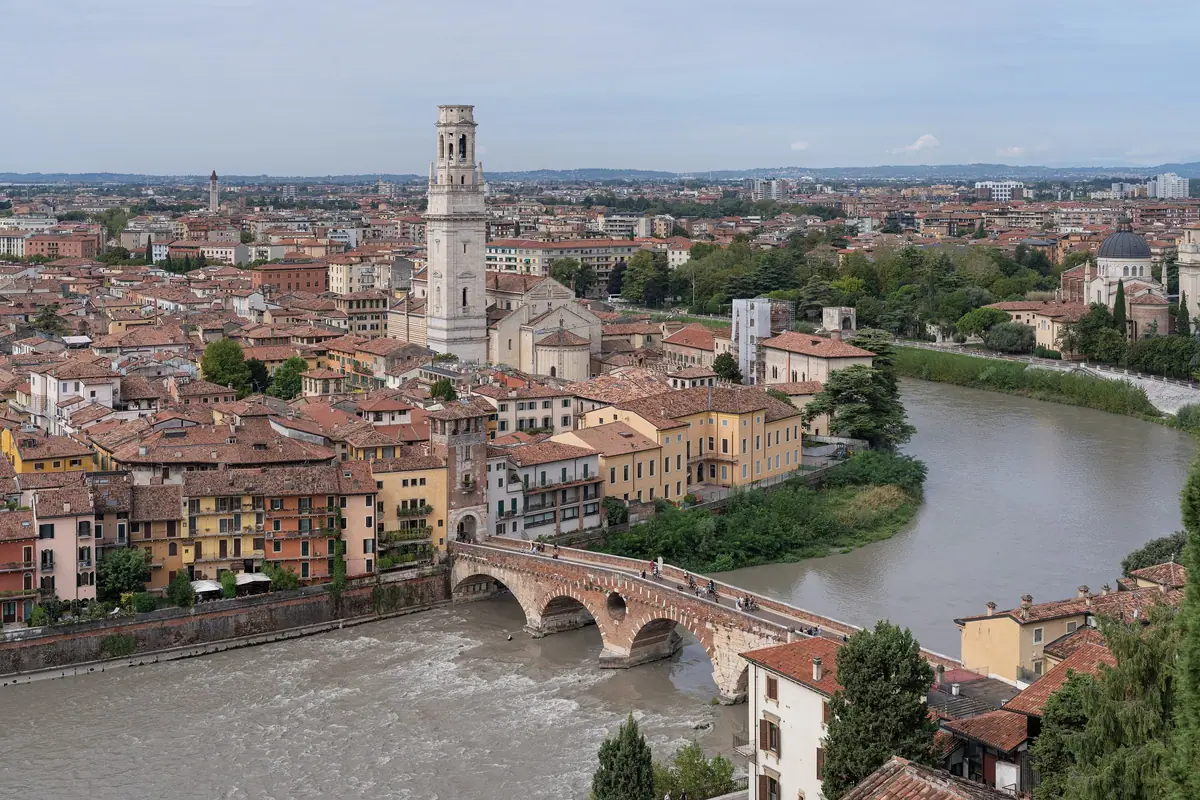
Verona
Things to do in Verona
The Romans left Verona an arena and a theatre, and the 20th century gave Juliet her balcony.
Things to do in Verona start with the Arena on Piazza Bra, the Roman amphitheatre the city calls its most famous monument, where gladiators fought and opera plays on summer nights. Around it are Juliet's House and its balcony, the Lamberti Tower over Piazza delle Erbe, Castelvecchio's paintings, the Roman Theatre and Mantegna's altarpiece at San Zeno. The VeronaCard includes almost all of them, and the city buses, for 24 or 48 hours.
The Arena and the Maffeiano share Piazza Bra, about a kilometre and a half from Porta Nuova station, and the old centre around Piazza delle Erbe holds the Lamberti Tower, Juliet's House, the Scaliger Tombs, Sant'Anastasia and, a walk away, the cathedral. Across the river by the Ponte Pietra are the Roman Theatre, Castel San Pietro and the Giardino Giusti. Castelvecchio stands on the Adige with San Zeno beyond it, and the Museo Nicolis is out in Villafranca, near the airport.
Map of things to do in Verona
Described on this page
Verona Arena
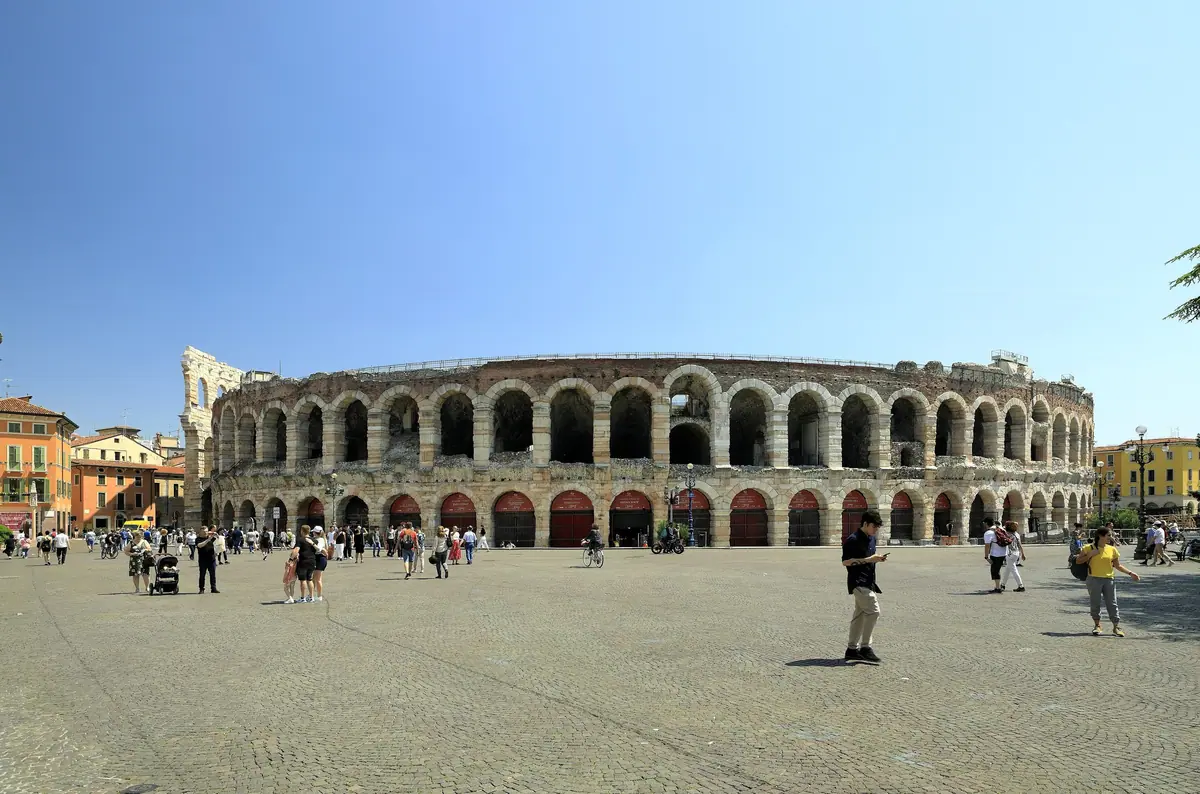
The Romans built the Arena on Piazza Bra in the 1st century AD for gladiator fights and wild-animal hunts in front of about 30,000 people, and since Aida, by the Italian composer Giuseppe Verdi, was staged there in 1913 it has been Verona’s summer opera house. By day you climb its stone tiers and look across to the Ala, the one stretch of the outer ring still standing.
It’s closed on Mondays, and from April to October the opera stage fills part of the inside. The tickets we sell are guided visits with the entry built in, and the next opera festival runs from mid-June to 11 September 2027.
Included in the VeronaCard
Piazza Bra and the Liston
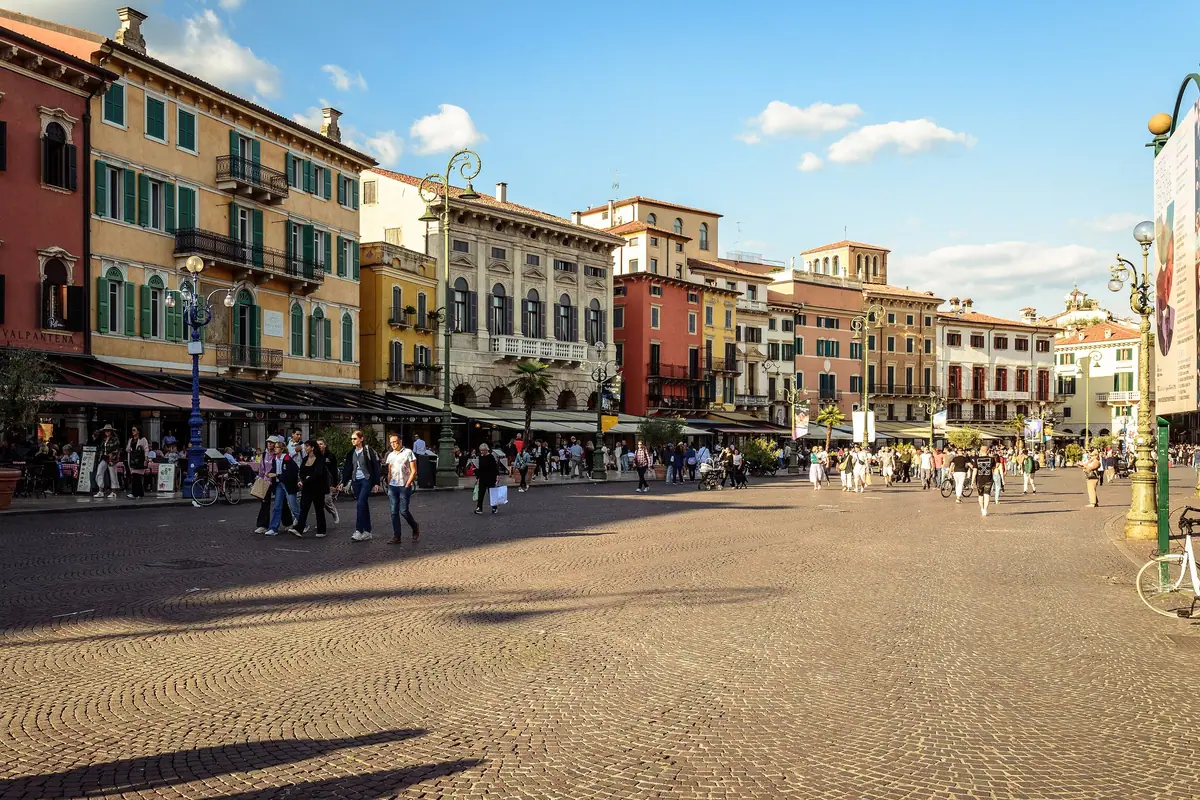
Around the Arena spreads Piazza Bra, the largest square in Verona, open at all hours. Porta Nuova station is about a kilometre and a half away along the Corso Porta Nuova, which brings you in through the Portoni della Bra. They’re two arches of the old walls, with a clock set between them in 1872.
Along one side runs the Liston, a pavement of red Valpolicella marble, the Arena’s own stone, laid in 1770-82 and lined with café tables. Two buildings tell of Verona’s rulers: Palazzo Barbieri, now the town hall, was built as an Austrian barracks, and the Gran Guardia was begun under Venice and finished under Austria.
The name Bra comes from braida, an open space, after an old Germanic word for broad, and the gardens in the middle date from 1873. Their fountain was a gift from Munich, Verona’s twin city, in 1975, and Verona sent back a copy of its Juliet statue; the Veronese call the fountain the lemon squeezer.
Museo Lapidario Maffeiano
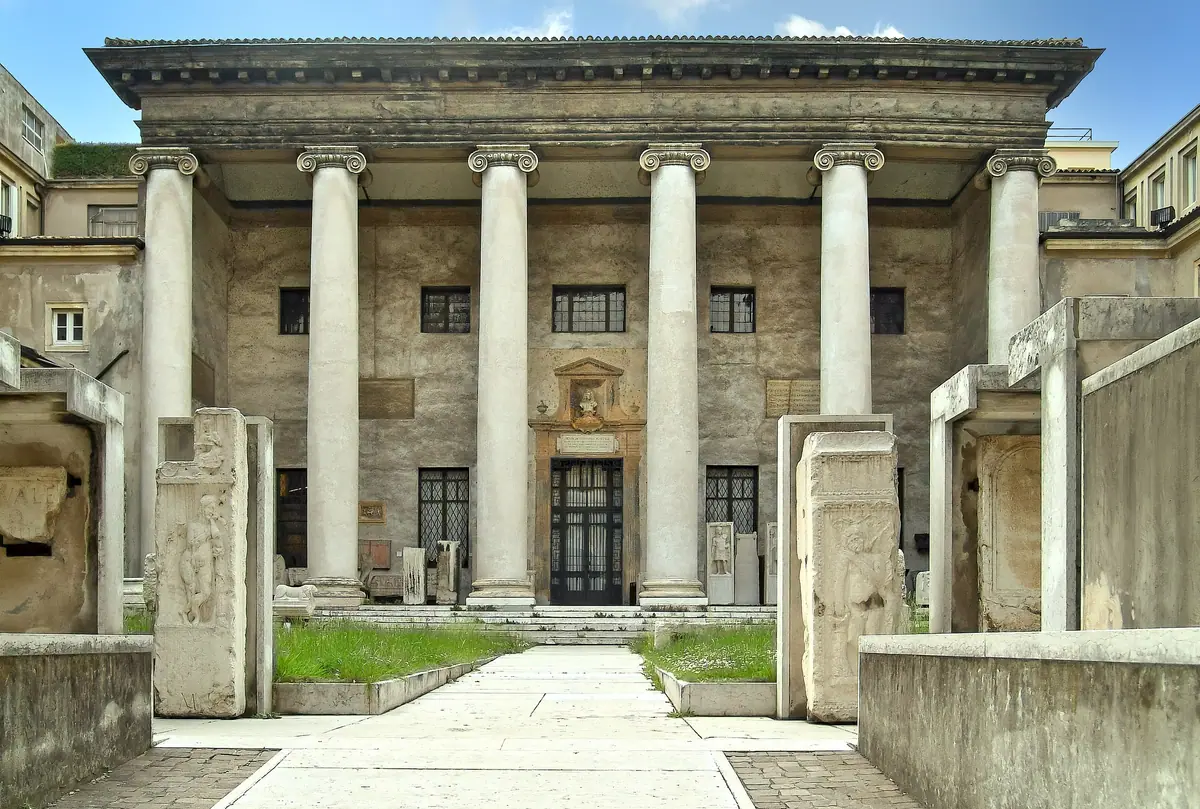
Scipione Maffei, an 18th-century Veronese scholar, opened his collection of inscriptions to the public on the same square, at number 28: Roman milestones and gravestones under a colonnade, Greek and Etruscan stones on the floors above, and the gravestone of a Veronese gladiator that ties the museum to the Arena.
There’s no ticket office at the museum, so buy online or at the Arena’s ticket office, or come with the VeronaCard, which includes it.
Included in the VeronaCard
Piazza delle Erbe
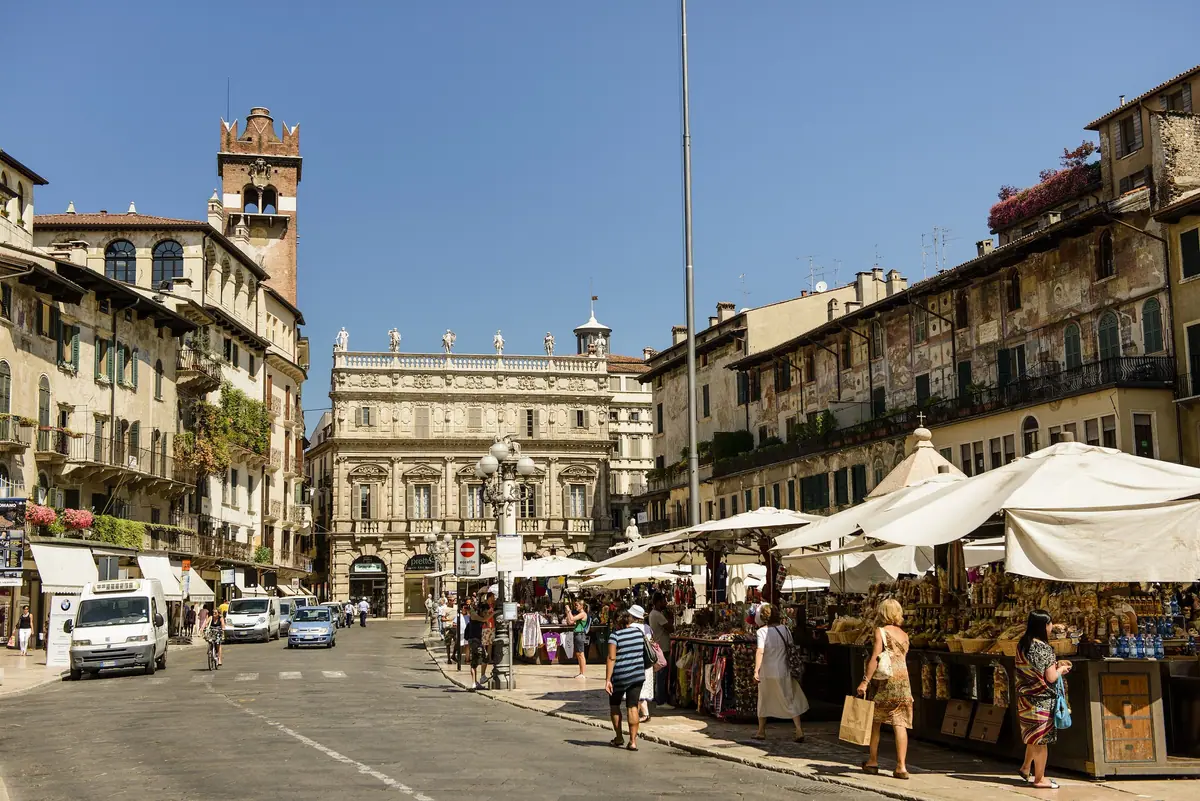
Piazza delle Erbe was laid out where the Roman forum stood, and walking it costs nothing. The Lamberti Tower rises over it, and UNESCO picks out this square and Piazza dei Signori in its listing of Verona.
At number 38, Palazzo Maffei Casa Museo shows the private collection of Luigi Carlon, more than 850 works with the Great Wave by the Japanese artist Hokusai among them. The VeronaCard gives a reduced ticket there, and the palazzo closes on Tuesdays.
Juliet’s House
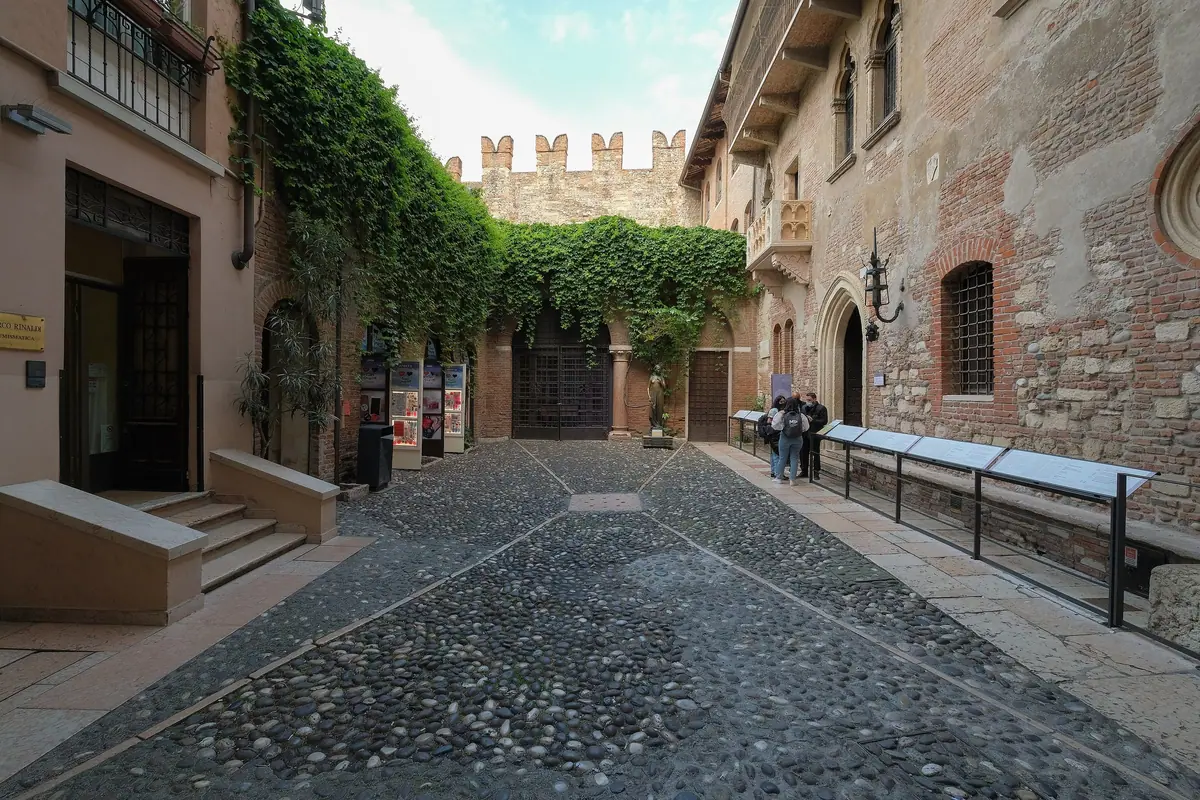
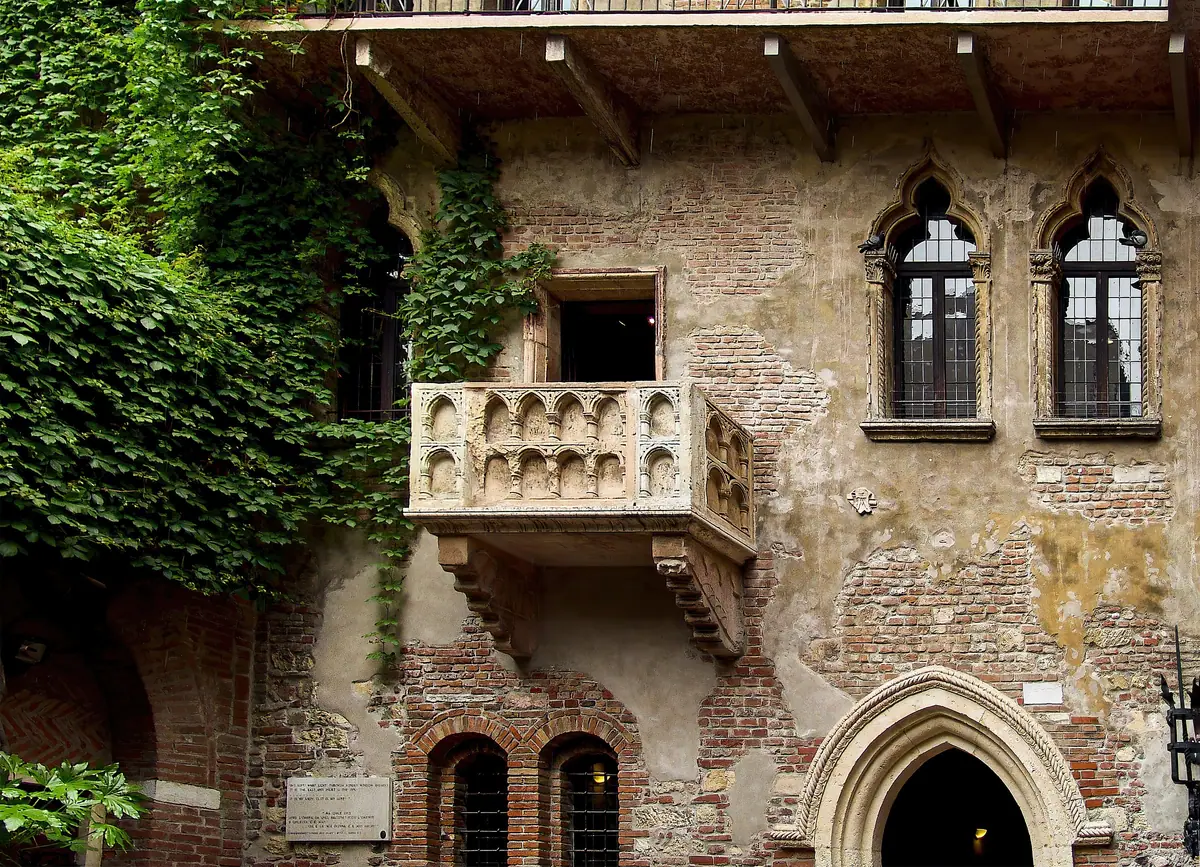
The house on Via Cappello, a few steps from Piazza delle Erbe, was first recorded in 1351 as an inn and belonged to the Dal Cappello family, not the Capulets; travellers started calling it Juliet’s in the late 18th century. The balcony went up in 1939-40, built around a 14th-century stone slab, and the bronze Juliet in the courtyard is a 2014 copy of the original, now kept inside.
Since April 2026 every visit, the courtyard included, is bought online, and you go in through the Teatro Nuovo on piazzetta Navona. The VeronaCard includes the house with a booked time. The house opens on Monday afternoons, when the Arena and the civic museums are shut.
Included in the VeronaCard
Juliet’s Tomb and the fresco museum
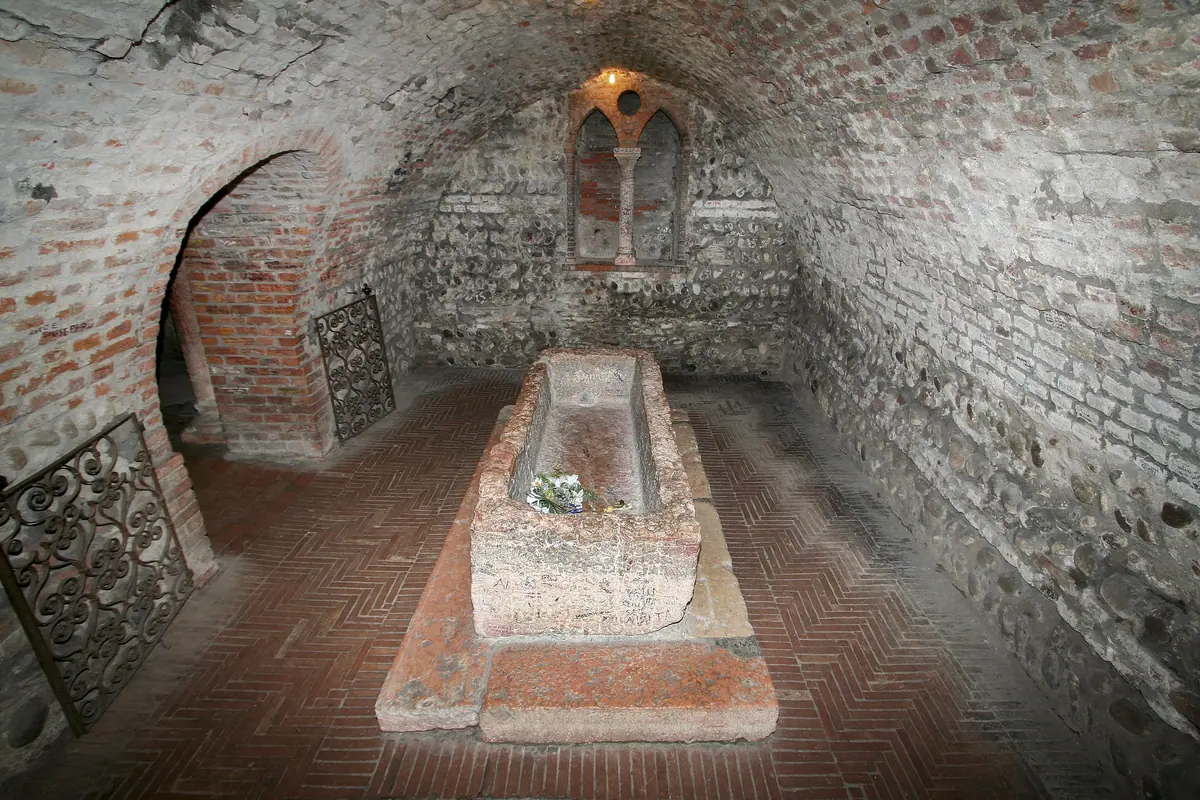
Verona has a second Juliet address. Juliet’s Tomb is a red marble sarcophagus that local tradition has called hers since the 16th century, and it lies in the former convent of San Francesco al Corso, on Via Luigi da Porto, named after the writer whose novella of 1531 started the story.
The convent is now a museum of frescoes taken off the walls of Verona’s churches and palaces, and one ticket covers the museum and the tomb. Like the other civic museums, it’s shut on Mondays.
Included in the VeronaCard
Torre dei Lamberti
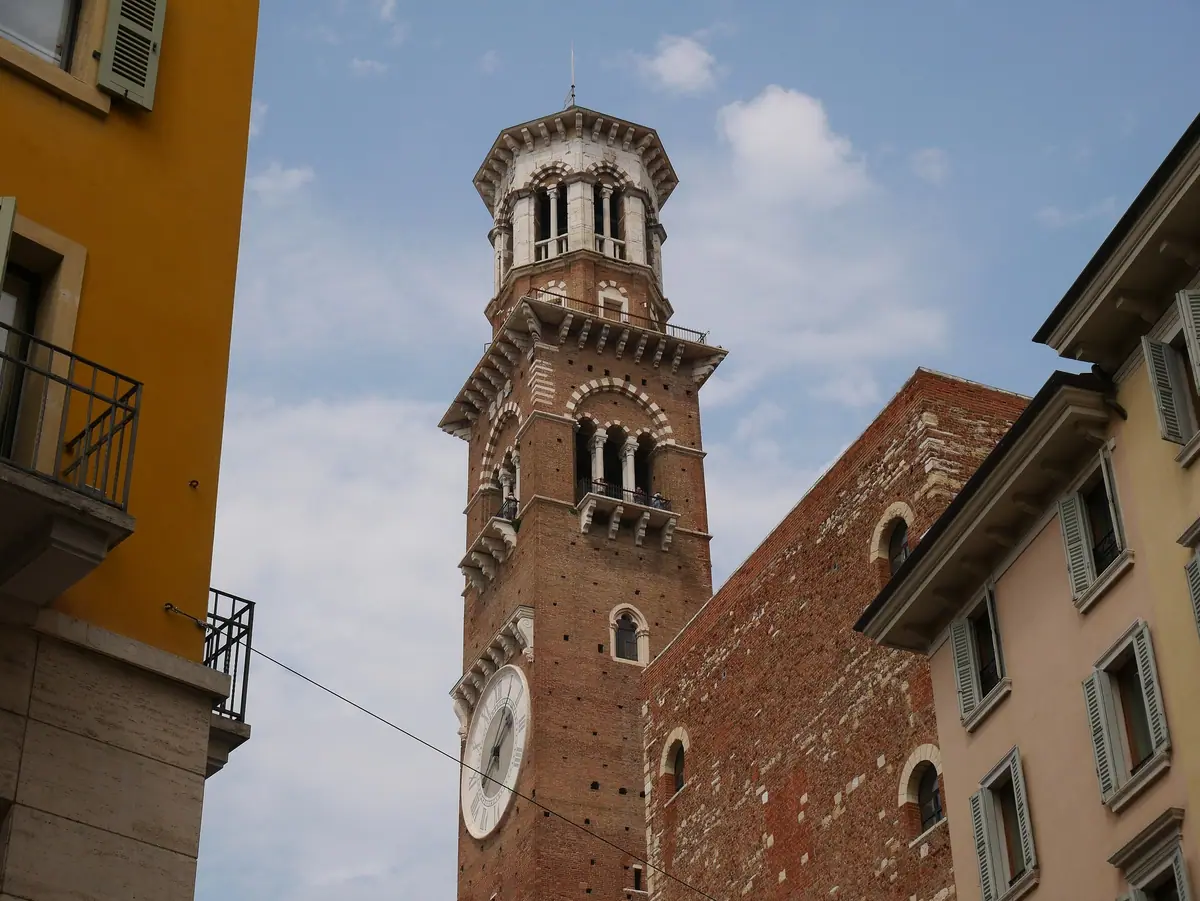
For the view over the old centre, climb the Torre dei Lamberti: at 84 metres it’s the tallest building in Verona, begun in 1172 and topped with its octagonal bell stage in the 15th century. Stairs or a transparent lift take you to a terrace that looks down on Piazza delle Erbe and across the roofs to the Arena.
It opens every day, Mondays included, which makes it one for the day the Arena is shut. The VeronaCard covers the stairs, and card holders pay extra for the lift.
Included in the VeronaCard
Piazza dei Signori and the Scaliger Tombs
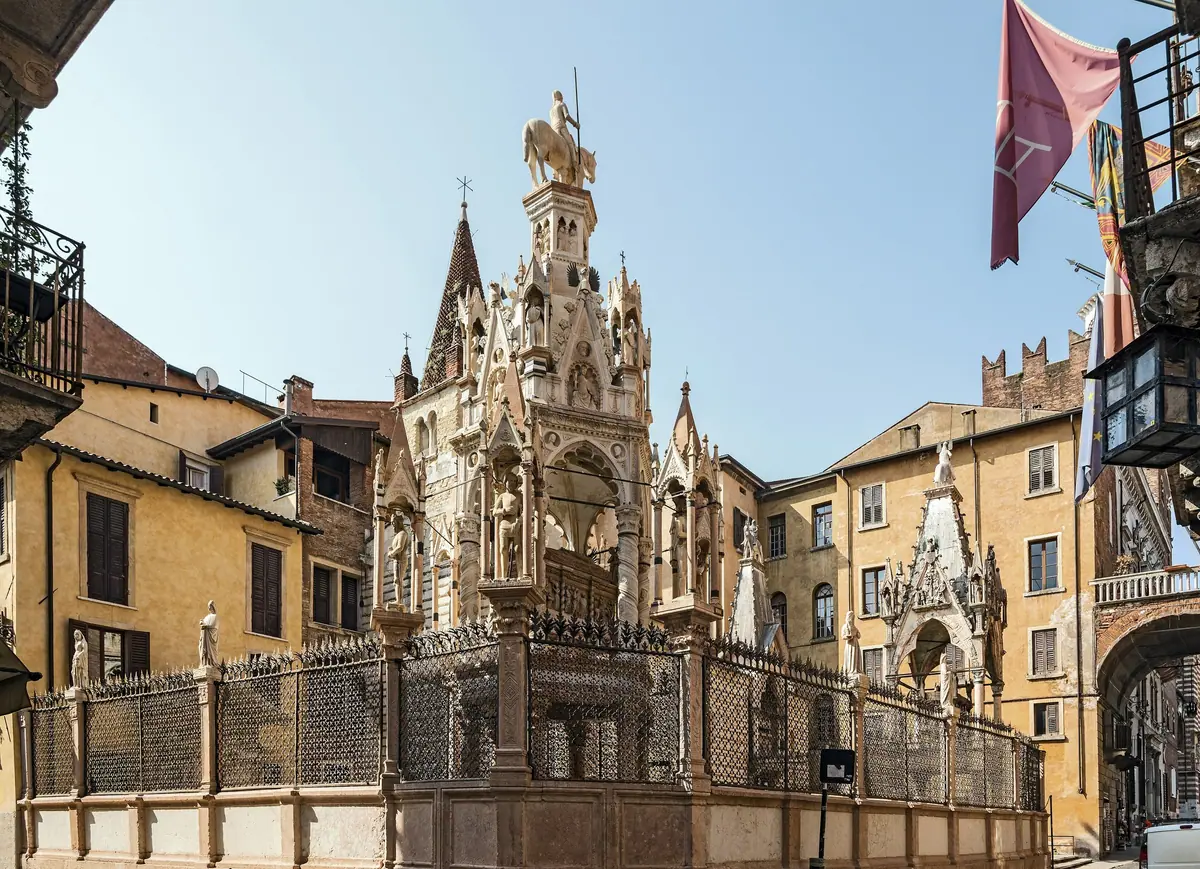
Close to Piazza delle Erbe and to Piazza dei Signori, the other square UNESCO picks out, the Scaliger Tombs stand beside the church of Santa Maria Antica. They’re the Gothic monuments of the Della Scala family, the lords of medieval Verona: Cangrande I, who welcomed Dante, the poet of the Divine Comedy, to his court, lies in the tomb above the church door, and the canopied tombs of Mastino II and Cansignorio rise inside an iron fence worked with ladders, the scala of the family’s name.
The enclosure opens only in the summer months and stays shut until the summer of 2027. Then a civic museum ticket used the same day, or the VeronaCard, gets you in.
Included in the VeronaCard
Basilica of Sant’Anastasia
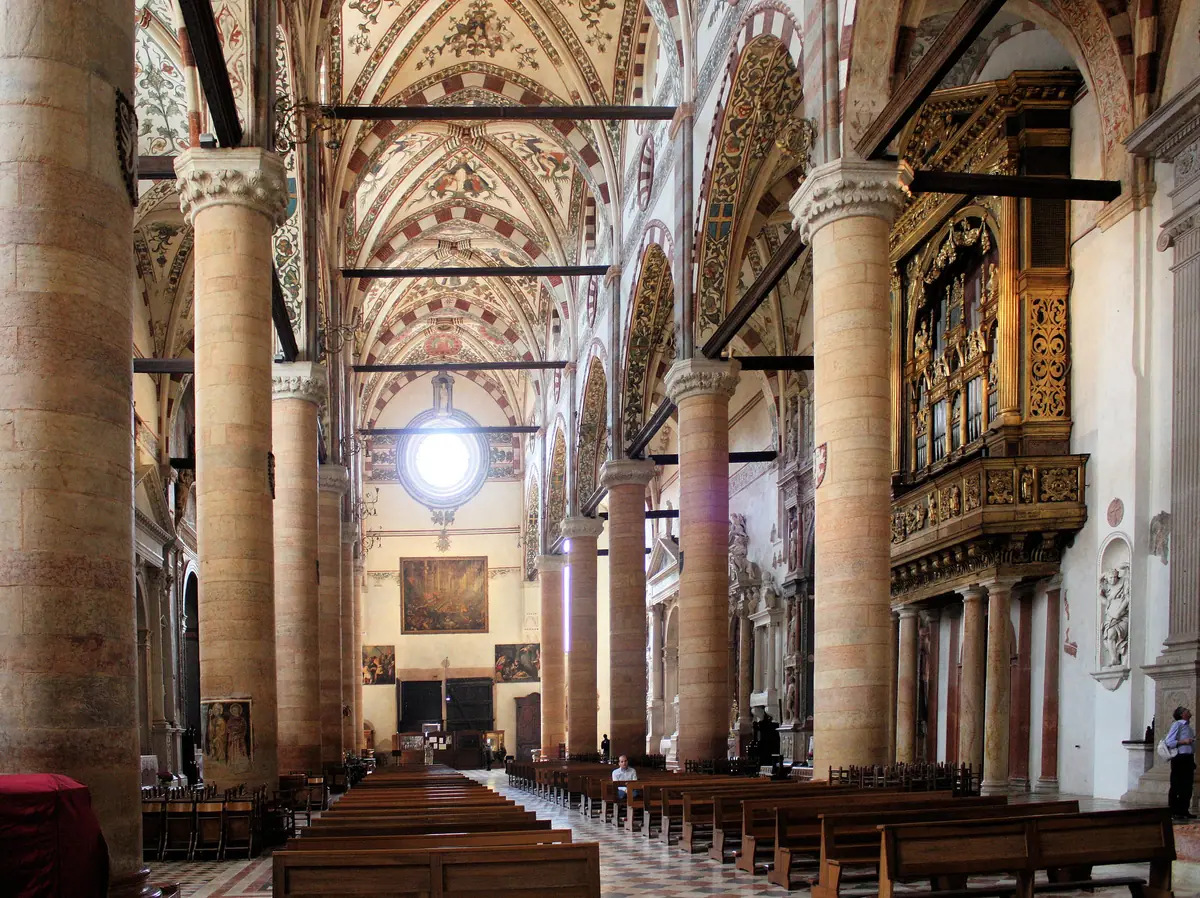
Six minutes from Piazza delle Erbe, along the Corso Sant’Anastasia, stands the largest church in Verona. Dominican friars began it around 1290, backed by the Della Scala, and finished all but the front by the mid-15th century. Its name comes from an older church on the site, dedicated to Anastasia, a fourth-century martyr.
By the door, two hunchbacks, the gobbi, carry the holy-water stoups; touching a hump is said to bring luck. Over the arch of the Pellegrini Chapel, right of the high altar, is the painter Pisanello’s St George and the Princess, of the 1430s. St George is mounting his horse, with the dragon across the lake.
A visit costs €4 at the church, and the VeronaCard includes it, as it does the cathedral and San Zeno. Going in to pray costs nothing. Until the end of February the church opens 10:00 to 17:00 on weekdays, 9:30 to 18:00 on Saturdays, and on Sundays only from 13:00, after Mass.

Verona Cathedral
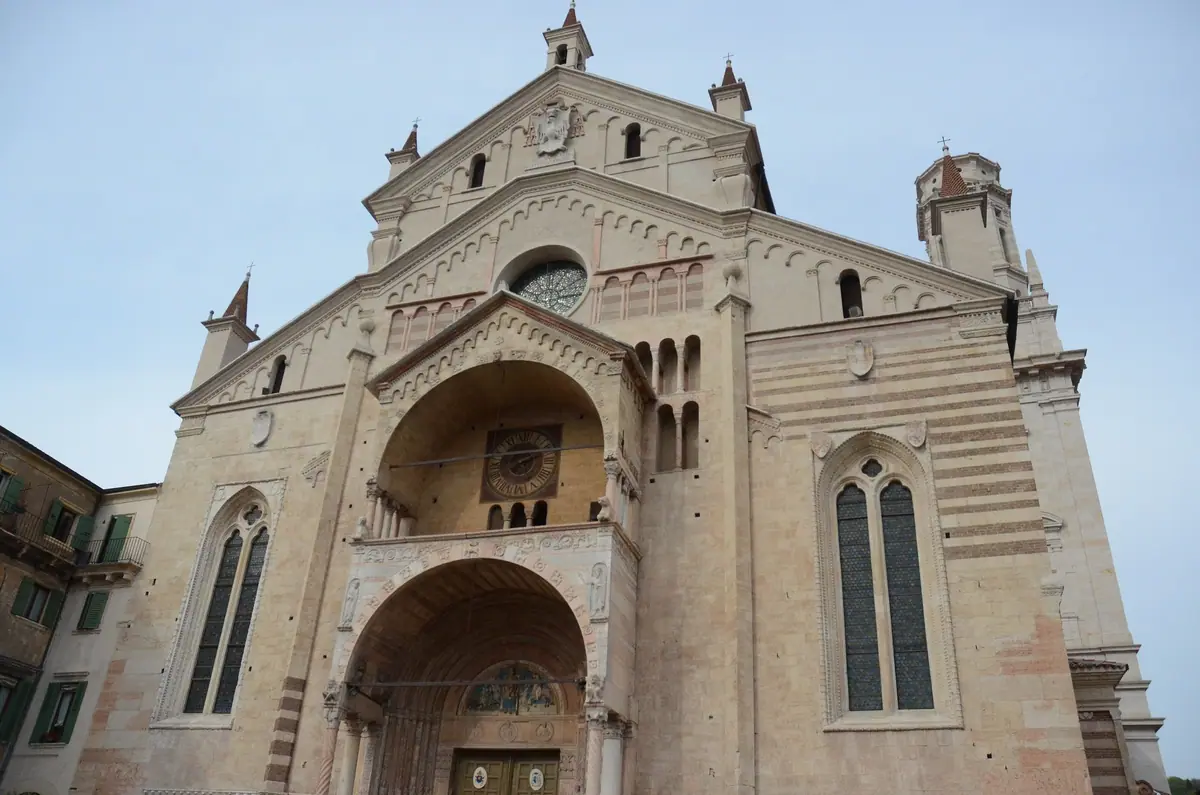
Verona Cathedral stands on Piazza Duomo, within walking distance of Piazza delle Erbe, and one ticket takes you round the whole complex: the Romanesque cathedral with an Assumption by Titian, the great painter of Renaissance Venice, in a side chapel, a baptistery, and the church of Sant’Elena over the mosaic floors of two early Christian basilicas.
Going in to pray is free, and the visit ticket is sold at the church. This winter it opens to visitors only in the afternoon on Sundays and closes at 15:30 on Saturdays.
Included in the VeronaCard
Ponte Pietra and Castel San Pietro
The Ponte Pietra is one of the Roman works UNESCO names in its listing of Verona, with the Arena, the Roman Theatre, the Porta Borsari gate and the Arco dei Gavi, and it carries you across the Adige to the Roman Theatre. Beside the theatre, a funicular climbs to Castel San Pietro, Verona’s other castle, on the hilltop.
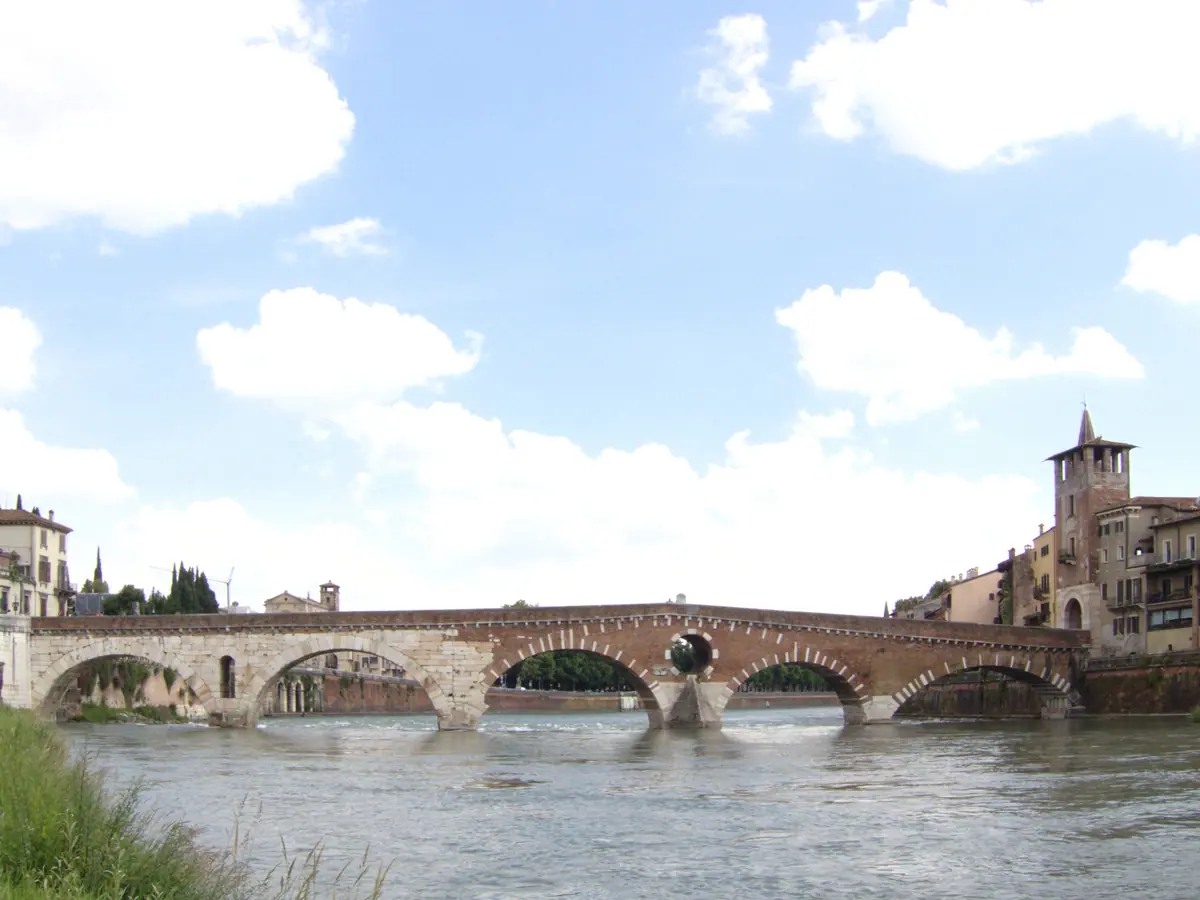
When the castle’s foundations were dug in 1851, they turned up a Roman temple on the summit of the same hill as the theatre.
Roman Theatre and Archaeological Museum
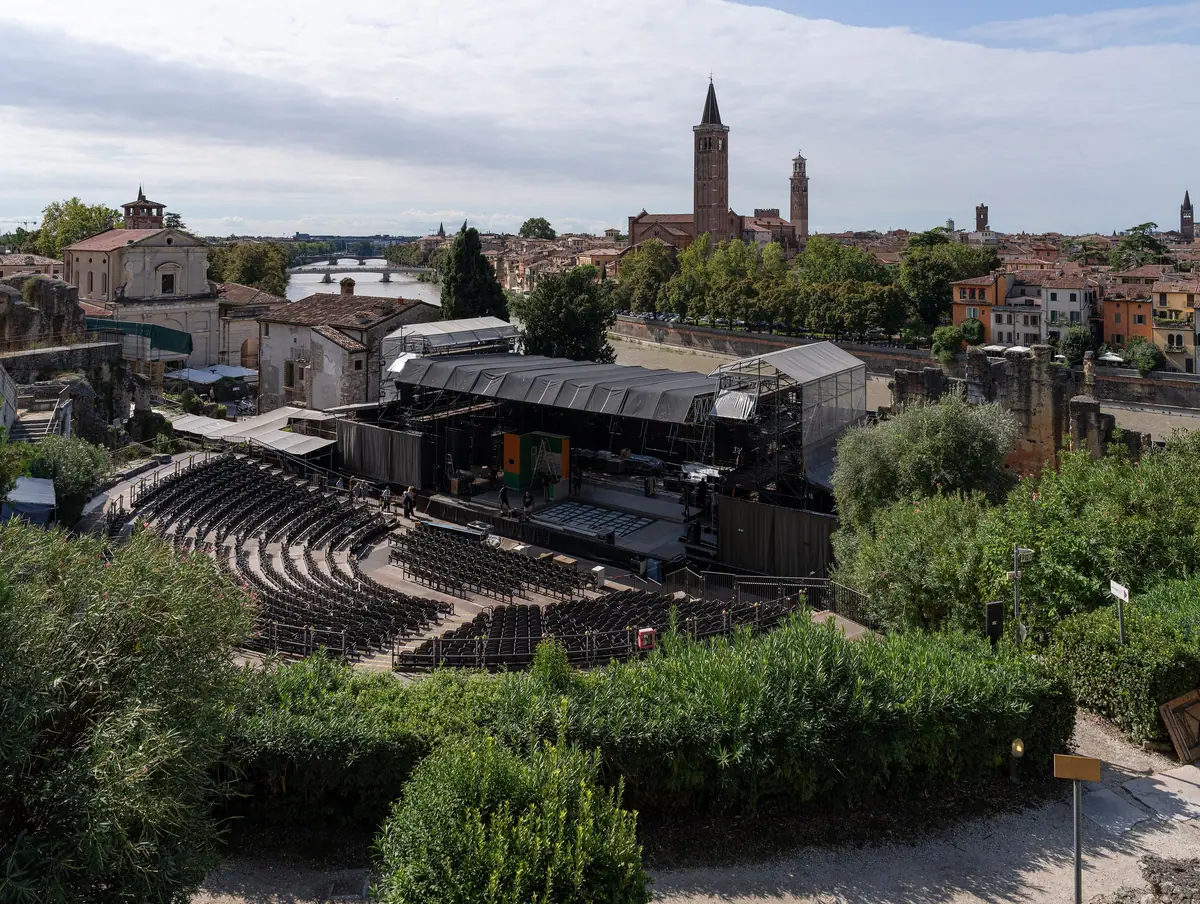
The Romans cut their theatre into that hillside at the end of the 1st century BC, and houses and churches covered it for centuries until it was dug out in the 19th century. Its steps carry on up to the archaeological museum in the former convent of San Girolamo, with Roman statues, a model of the theatre and a garden of capers, palms and olive trees.
Because the museum can only be reached by those steps, it isn’t accessible to wheelchair users. One ticket covers the theatre and the museum, and in summer a modern stage goes up among the seats for a festival built around Shakespeare.
Included in the VeronaCard
Giardino Giusti
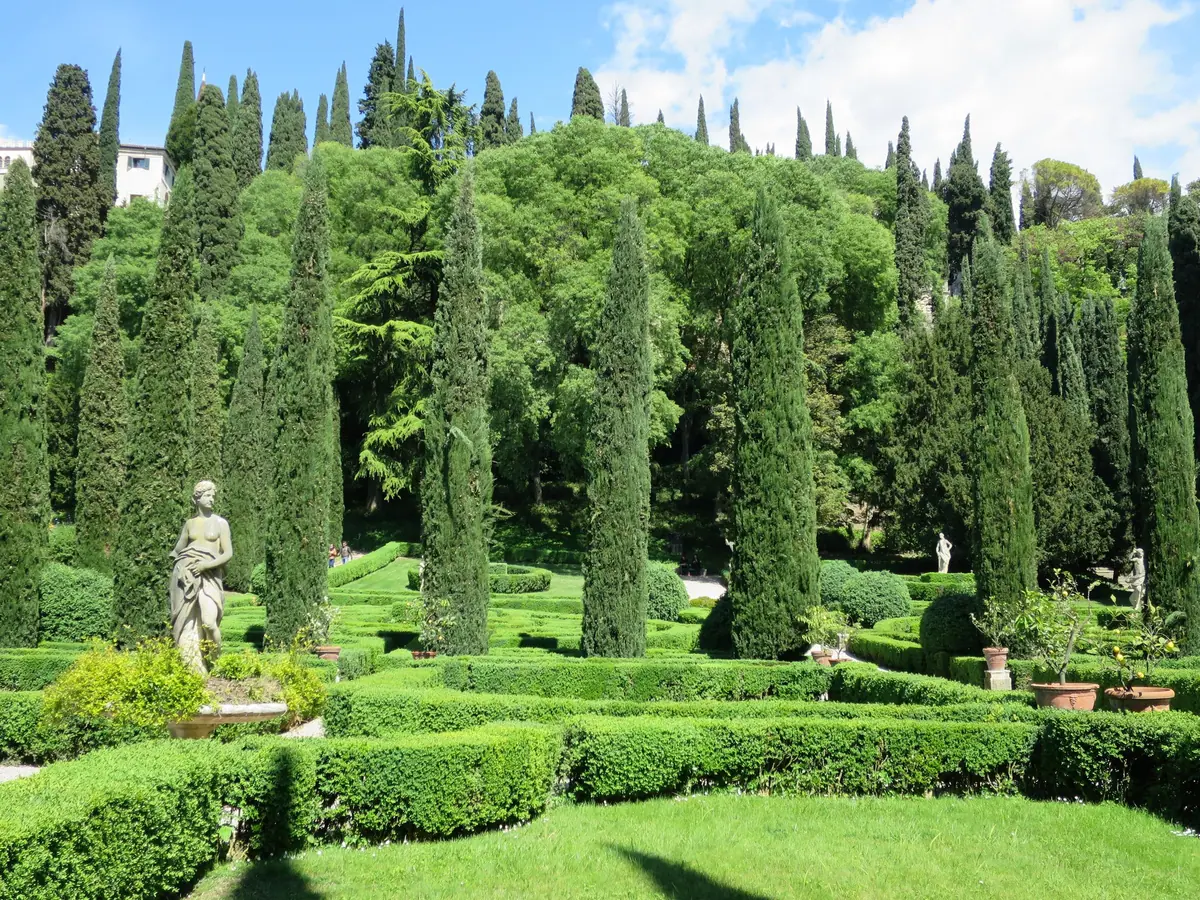
On the same bank, ten minutes’ walk from the theatre, the Giardino Giusti climbs a hillside in Veronetta, across the Adige from the old centre. The Giusti, a family of wool dyers, laid it out in the 16th century. Goethe, the German writer, admired a cypress here in 1786; it fell in 2020.
An avenue of cypresses leads past the parterre and its statues to a huge carved mask, the mascherone, which once breathed fire and smoke at visitors. Above it, the belvedere has one of the best-known views of Verona. The box maze, redrawn in the late 18th century, is among the oldest in Europe.
A ticket to the garden costs €14, or €10 with the VeronaCard, and in winter the garden opens every day from 10:00 to 17:00, with the last entry at 16:00. The upper terraces are up steps, so wheelchairs reach only the lower garden.
Castelvecchio Museum
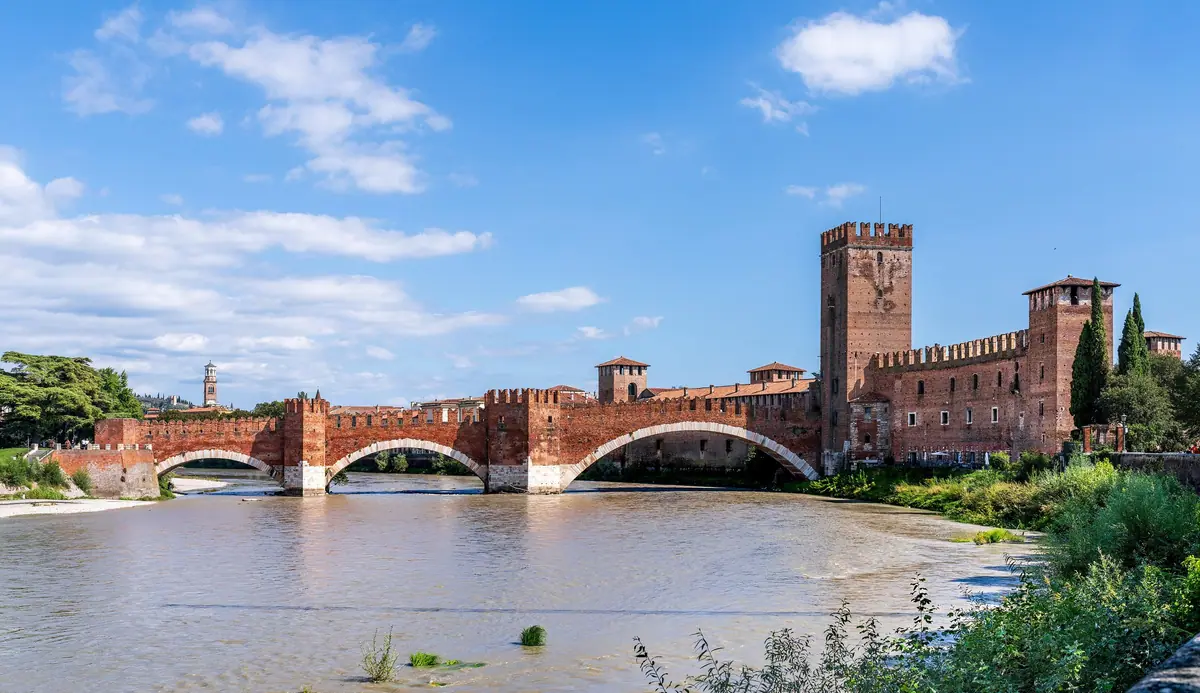
Back across the river, Castelvecchio was built by Cangrande II della Scala in 1354-56, and since 1926 it has been the city’s art museum, reshaped by the architect Carlo Scarpa. Cangrande I rides at the centre of it, on Scarpa’s concrete plinth, and the rooms around him hold work by the Renaissance painters Pisanello, Mantegna and Veronese.
Until 31 January 2027 the ticket includes an exhibition built around Titian’s Venus, lent by the Prado in Madrid; the VeronaCard includes entry, though the city doesn’t say whether it opens the exhibition. The museum closes on Mondays.
Included in the VeronaCard
Basilica of San Zeno
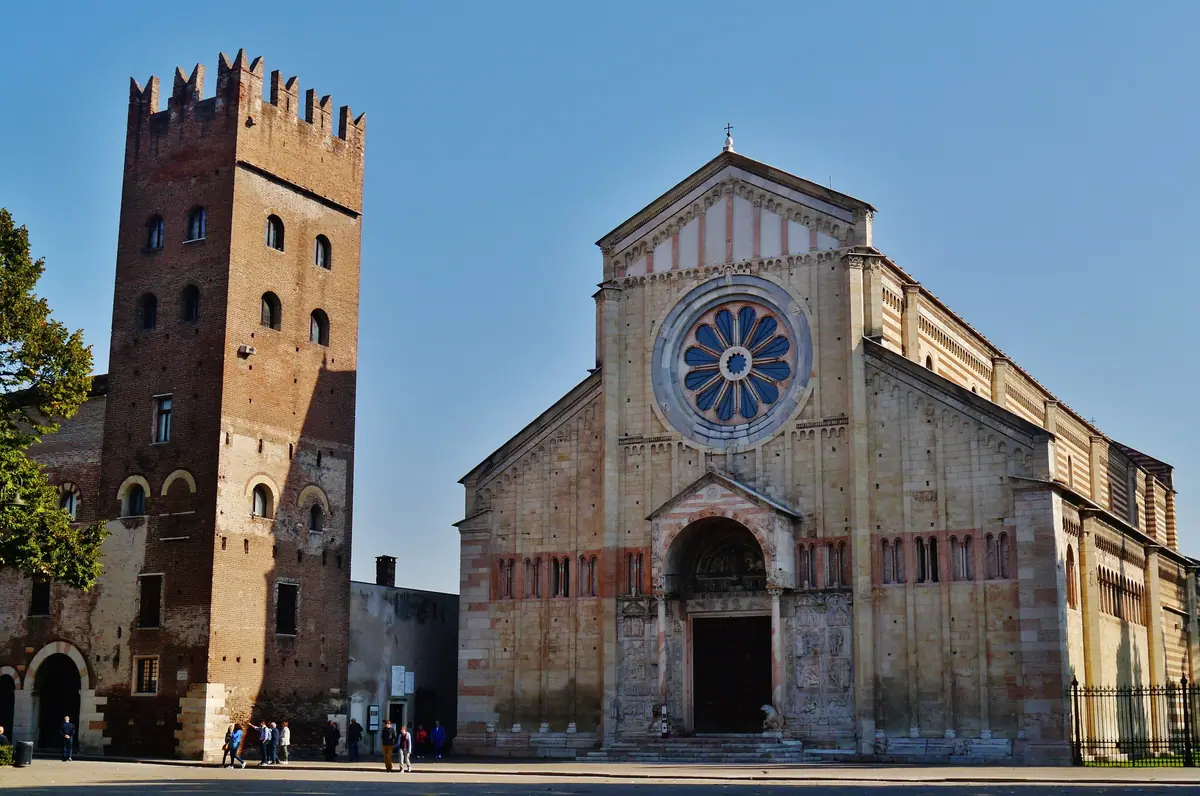
Walk on about ten minutes from Castelvecchio, outside the old centre, for San Zeno Maggiore, the Romanesque church with bronze doors covered in Bible scenes and Andrea Mantegna’s altarpiece on the high altar. The three small scenes beneath the altarpiece are copies, since Napoleon took the originals to Paris in 1797, and tradition puts Romeo and Juliet’s wedding in the crypt.
The visit ticket is sold at the church, and on Sundays it opens to visitors only from 13:00, after the morning Masses.
Included in the VeronaCard
Museo Nicolis, out in Villafranca
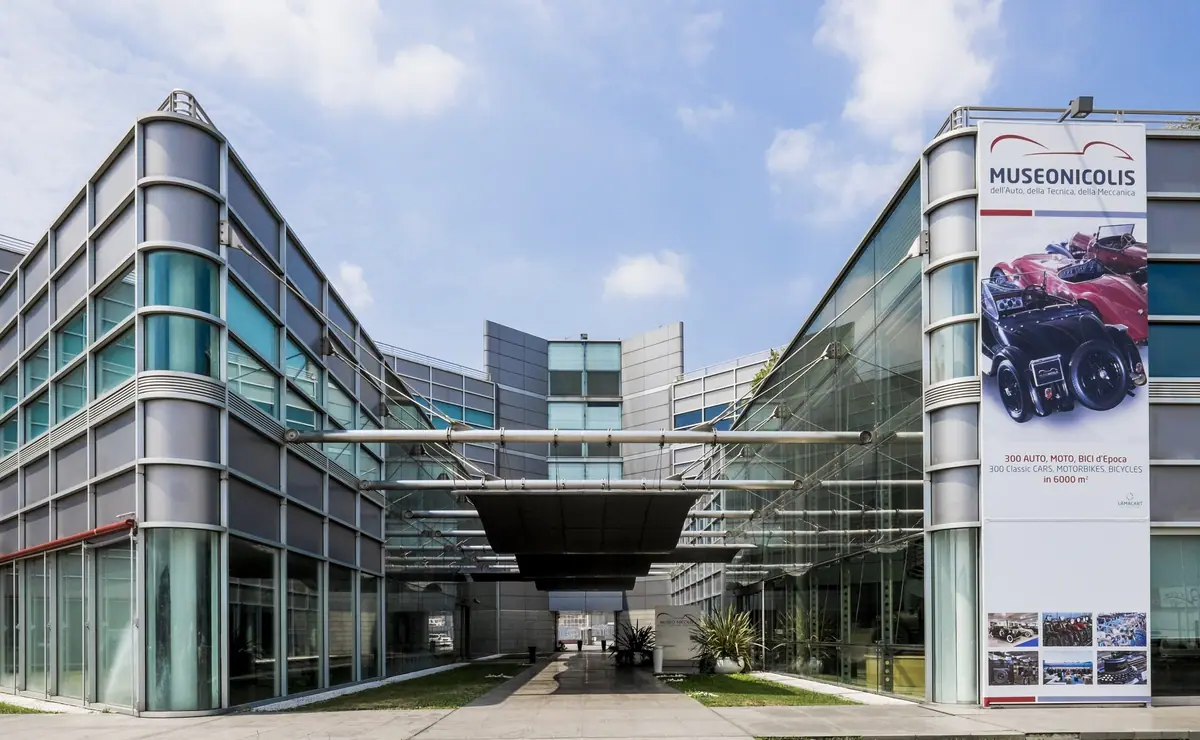
The Museo Nicolis is the one museum here outside the city, in Villafranca di Verona, about 3 kilometres from the airport: a private collection of 20th-century cars, motorbikes, bicycles, cameras and typewriters, in a glass building with aircraft on the roof. It opens to the public on Saturdays and Sundays. ATV buses 157, 158 and 159 run there from Porta Nuova, and the VeronaCard gives only a reduction.
Lake Garda, a day out from Verona
For a day beyond the city, our two Lake Garda tours leave from Verona, one of five hours and one of about seven and a half, both with a boat round the Sirmione peninsula.


Planning your days in Verona
Apart from the Museo Nicolis and Lake Garda, everything here is in and around the old centre, and the ATV city buses, which the VeronaCard includes, save your feet on the way back to Porta Nuova. With Juliet’s House on your list, the 24-hour VeronaCard has paid for itself once you’ve added Castelvecchio and the Lamberti Tower.
When Verona's sights close
- Mondays
- The Arena and the civic museums; Juliet's House opens at 14:00, and the Lamberti Tower, the Giardino Giusti and the churches stay open
- Sunday mornings
- The churches close to visitors for Mass: visits start at 13:00 at San Zeno and Sant'Anastasia and 13:30 at the cathedral
- Tuesdays
- Palazzo Maffei
- Monday to Friday
- The Museo Nicolis, open to the public only at weekends
- Until summer 2027
- The Scaliger Tombs
Verona
All 11 sights in Verona on our list
With the ticket price where we sell one, and the pass that covers each.
- Basilica of San Zeno In the VeronaCard
- Castelvecchio Museum In the VeronaCard
-
 Juliet's House In the VeronaCard €24.50
- Juliet's Tomb In the VeronaCard
- Lamberti Tower In the VeronaCard
- Maffeian Lapidary Museum In the VeronaCard
- Museo Nicolis €14
- Roman Theatre and Archaeological Museum In the VeronaCard
- Scaliger Tombs In the VeronaCard
- Verona Arena In the VeronaCard
- Verona Cathedral In the VeronaCard
People also ask
Frequently asked questions
What's famous about Verona?
Its Roman Arena, which has staged opera on summer nights since 1913, and Juliet's balcony, because Shakespeare set Romeo and Juliet in Verona. The city itself calls the Arena its most famous monument.
Can you stand on Juliet's balcony in Verona?
Yes. The ticket for the house, €24.50 on our site, takes you through the courtyard and the rooms and out onto the balcony, and the VeronaCard includes it with a booked time. Since April 2026 even the courtyard needs a ticket bought online.
Can you walk from Verona train station to the city centre?
Yes. From Porta Nuova, the main station, it's about a kilometre and a half to Piazza Bra and the Arena. ATV city buses make the trip too, and the VeronaCard covers them.
Is the VeronaCard worth it?
If Juliet's House is on your list, yes: our ticket for the house, Castelvecchio and the Lamberti Tower already add up to more than the 24-hour card's €39, and the Arena and the buses come with it. It doesn't pay on a Monday, or on the first Sunday of the month from November to March, when the civic museums charge €1, or €4 at Castelvecchio until 31 January.
What's closed in Verona on Mondays?
The Arena and the civic museums, Castelvecchio, the Roman Theatre, the fresco museum at Juliet's Tomb and the Maffeiano among them, and the Museo Nicolis. Juliet's House opens at 14:00, and the Lamberti Tower, the Giardino Giusti and the churches stay open. On Monday 7 December 2026 the civic museums open too.
What can you do for free in Verona?
Walk Piazza Bra, Piazza delle Erbe and Piazza dei Signori, cross the Ponte Pietra, and step into the churches to pray, though a visit takes a ticket. Under-18s go into the Arena and the civic museums free, and under-11s into the churches, but Juliet's courtyard isn't free any more.
