
Verona · VeronaCard
Juliet's Tomb
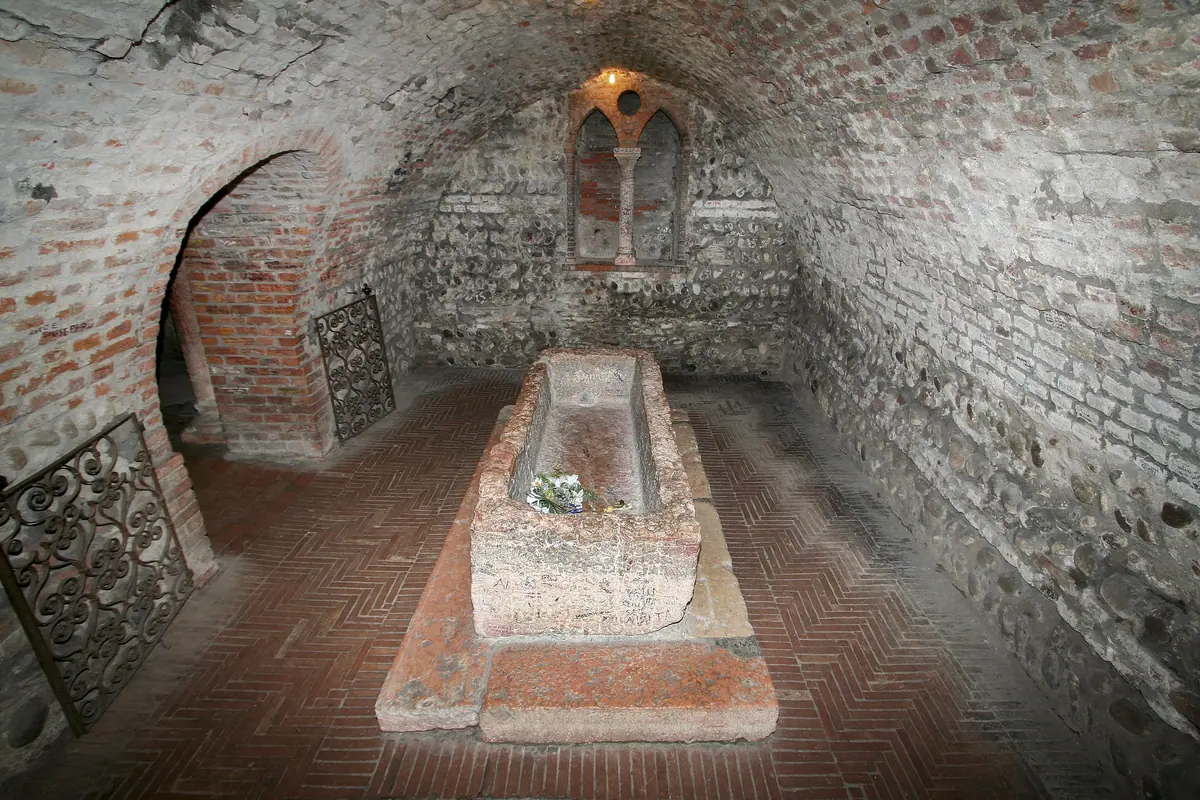
Nineteenth-century visitors chipped bits off this red marble sarcophagus as relics, and in 1868 it was given a chapel of its own.
Juliet's Tomb in Verona is a red marble sarcophagus that local tradition has called Juliet's since the 16th century, in the former Franciscan convent of San Francesco al Corso. The convent is now the Museo degli Affreschi G.B. Cavalcaselle, a museum of frescoes taken off the walls of Verona's churches and palaces, and one ticket covers the museum and the tomb. The VeronaCard includes it.
The red marble sarcophagus held to be Juliet’s
Juliet’s Tomb is a sarcophagus of red marble in the old convent of San Francesco al Corso, now Verona’s fresco museum. Juliet herself is a character from fiction, from a novella by Luigi da Porto, a writer from Vicenza, published in 1531, so what you’re looking at is a 16th-century tradition rather than a grave anyone can prove.
In the 16th century the scholar Girolamo dalla Corte was already writing about Juliet’s grave at San Francesco. Then, around 1560, Gherardo Boldieri, who had put the story into verse, suggested that a medieval sarcophagus in the convent garden was hers, and Verona’s own Juliet legend took off. By the 1700s travellers on the Grand Tour were coming to see it.
Early in the 19th century the visits turned into what the city calls a vaguely superstitious cult, and people broke off fragments to keep as relics. In 1868 a charity, the Congregazione della Carità, built a small chapel around the tomb, and a fence followed at the end of the century.
A bust of Shakespeare by Renato Cattani arrived in 1910. In 1938 Antonio Avena, who gave Juliet’s House its balcony a year later, restored the site and moved the tomb to where it lies today.
One ticket for Juliet’s Tomb and the fresco museum
There’s no ticket for the tomb on its own. It belongs to the Museo degli Affreschi G.B. Cavalcaselle, and the museum ticket covers both. You buy it at the museum’s ticket office or online at verona.coopculture.it, and booking isn’t required.
Museum and tomb tickets
- Full ticket
- €6
- Reduced, €4
- Over-65s, groups of 15 or more and holders of cards such as ISIC
- EU citizens aged 18 to 25
- €2
- Free
- Under-18s, disabled visitors and a companion
- VeronaCard
- Entry included
- First Sunday, November to March
- €1; the next are 6 December, 3 January, 7 February and 7 March
Under-14s have to come with an adult, and the cloakroom is free. Small dogs can come in a carrier.
Juliet’s Tomb and Juliet’s House on one VeronaCard
The tomb and Juliet’s House are both on the VeronaCard, so one card covers both stops on the Juliet trail. Here you just walk in with it; at the house you book a time first, even with the card.
The card also covers the Arena, Castelvecchio and the Lamberti Tower.

Inside the Museo degli Affreschi: frescoes from Verona’s walls
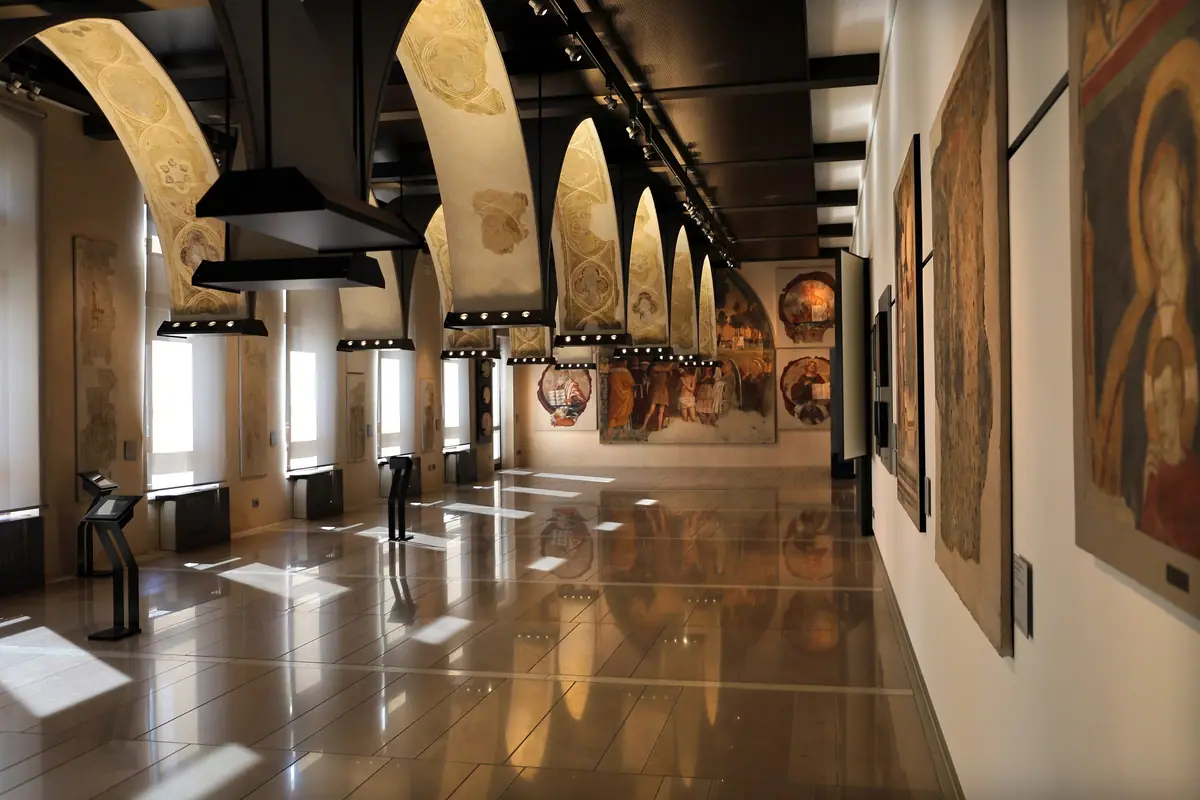
The convent around the tomb is now a museum of frescoes detached from the walls of Verona’s churches and palaces, from the 10th to the 16th century. The oldest is a Maiestas Domini, Christ in majesty, dated 996, and there’s a St Michael from the 12th century.
The 14th century gets a whole cycle, grouped around the painter Altichiero da Zevio, with his arches of 1364-68 from the Loggia del Consiglio, and Turone de Maxio from around 1360. Later rooms bring 16th-century work by Francesco Morone and the school of Giulio Romano, and a few Roman amphorae.
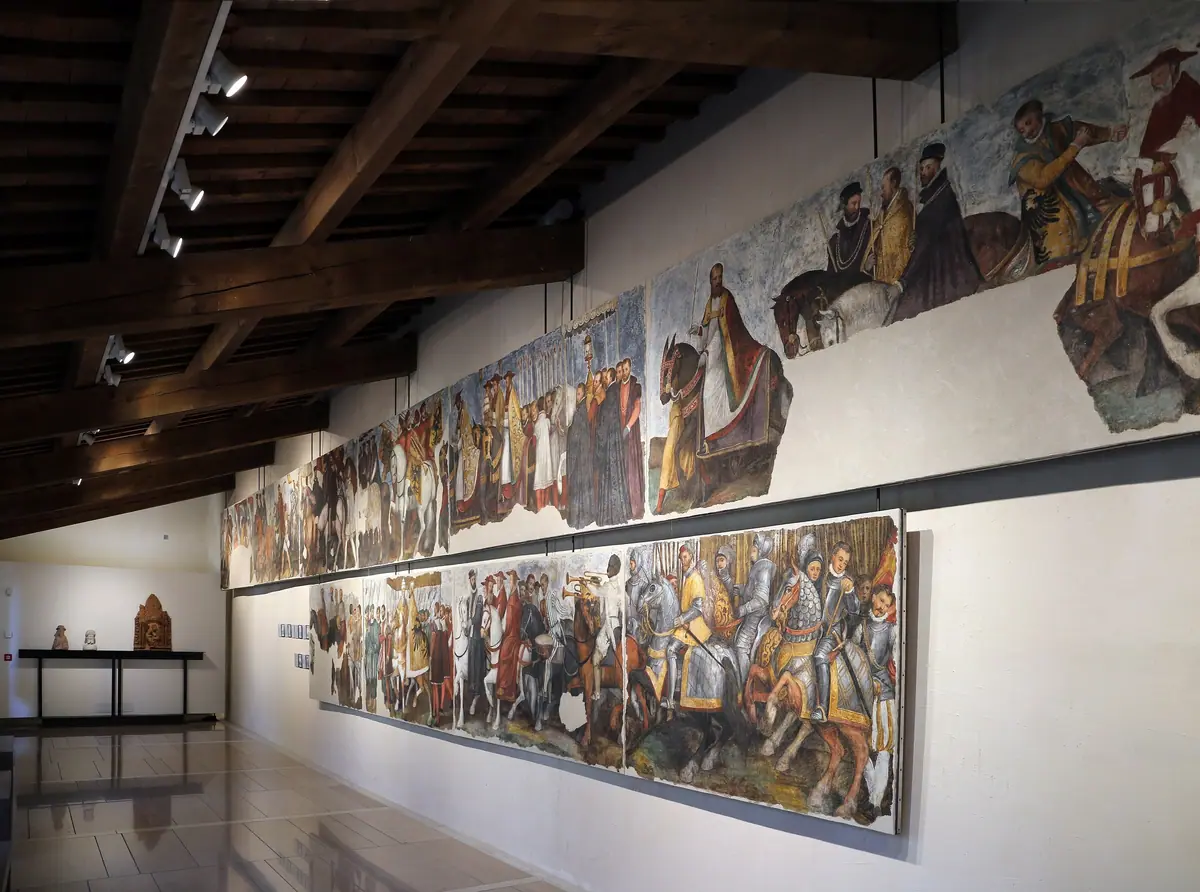
Look out for Jacopo Ligozzi’s cavalcade of Emperor Charles V and Pope Clement VII, from around 1575, a long procession of horsemen. Since February 2026 the museum has also paired Giulio Carpioni’s painting Venus and Adonis with Brusasorci’s frescoes from the Palazzo Fiorio della Seta, in an exhibition called Divine passioni that the ticket includes.
When Juliet’s Tomb is open, and the guided visits
Opening hours
- Tuesday to Sunday
- 10:00–18:00, last entry 17:30
- Monday
- Closed, except Monday 7 December 2026
- Also closed
- 25 December and 1 January
On Sunday 15 November and Sunday 13 December 2026, both at 11:00, the museum runs guided visits of its collections at no extra cost. You book them by phone with the museums’ education office, on 045 8036353, and pay only the entry.
Finding Juliet’s Tomb on Via Luigi da Porto
The museum is at Via Luigi da Porto 5, off Via del Pontiere, and the street carries the name of the writer whose novella started the whole story.
Tickets
Popular tickets around Verona
The ones other visitors book most.


People also ask
Frequently asked questions
Where is Juliet's grave?
In the Museo degli Affreschi G.B. Cavalcaselle, at Via Luigi da Porto 5 in Verona, in the former convent of San Francesco al Corso. The museum ticket covers it, and the VeronaCard includes it.
Why do people rub Juliet's breast in Verona?
For luck in love. The custom belongs to the bronze statue of Juliet in the courtyard of Juliet's House, not to the tomb. The statue there is a copy from 2014, the original is inside the house, and the touching has already worn small holes in the copy's bronze.
Is Juliet's balcony real in Verona?
Only in part. The slab at its centre is 14th-century stone from the Scaliger palaces, but the balcony at Juliet's House was put together in 1939-40, four centuries after the story was first published.
What were Juliet's last words before she died?
In Shakespeare's play they are: "O happy dagger, This is thy sheath. There rust, and let me die." They come in Act 5, Scene 3.
Is Juliet's Tomb open on Mondays?
No. The museum opens Tuesday to Sunday, 10:00 to 18:00, with the last entry at 17:30. The exception this winter is Monday 7 December 2026, when it opens.
