
Verona · VeronaCard
Juliet's House
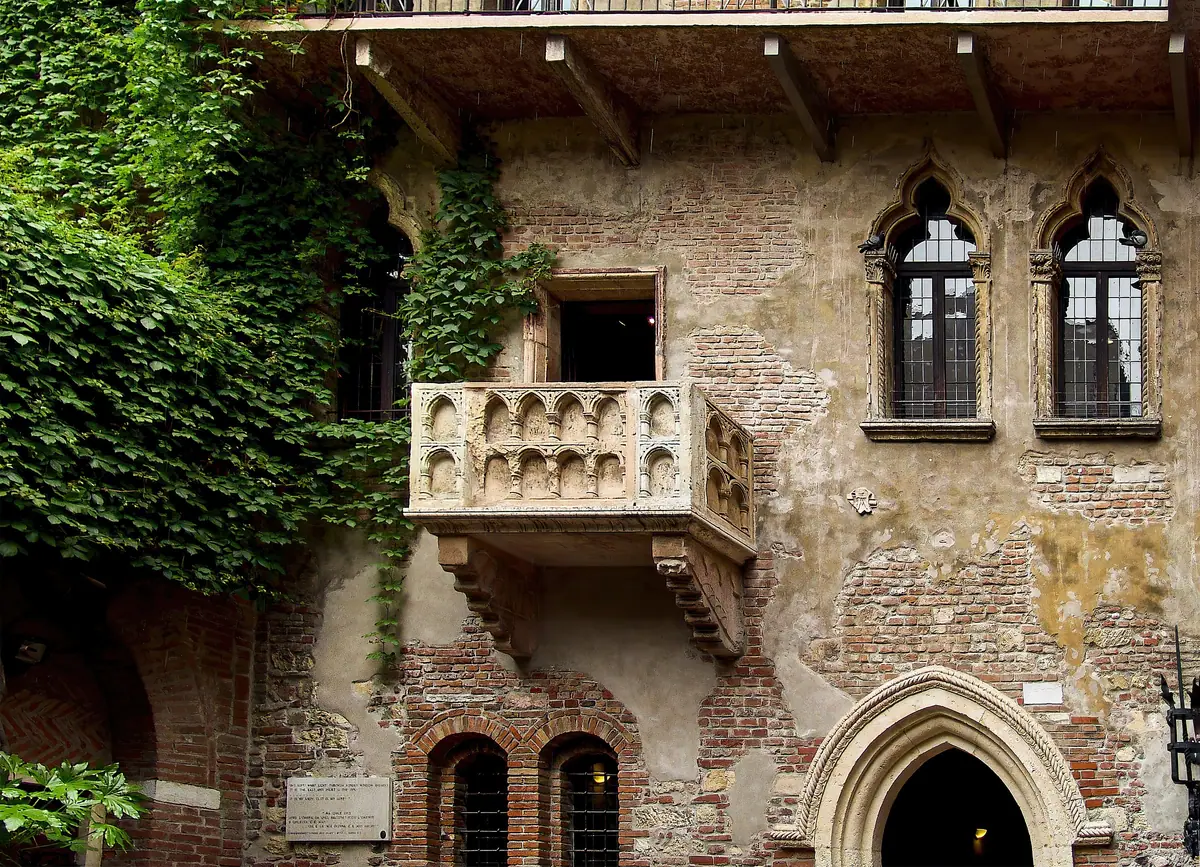
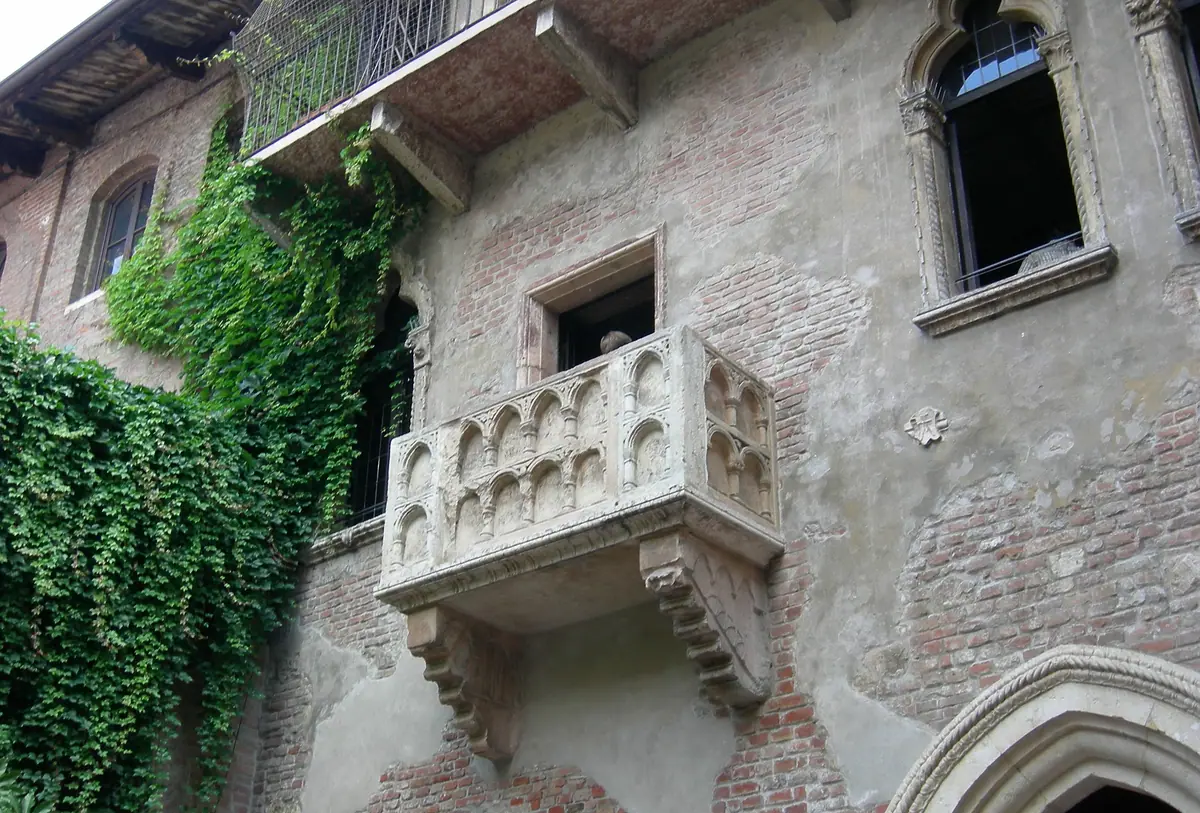
From the balcony you look down on the courtyard and the bronze Juliet that visitors touch for luck in love.
Juliet's House is the medieval house on Via Cappello in Verona that tradition gave to Shakespeare's heroine, with the balcony above the courtyard. Inside, four floors of rooms hold medieval paintings and 19th-century canvases of the two lovers, and the ticket takes you through the courtyard, the house and out onto the balcony. The VeronaCard includes it, with a booked time.
Before you go
- ClosedMonday mornings (opens at 14:00)
- EntryTimed slot
TipThere is no ticket office at the house, so book before you go; on Mondays it only opens at 14:00.


Juliet’s House tickets: bought online, entered through the Teatro Nuovo
Since April 2026 every visit to Juliet’s House, the courtyard included, is bought online before you go, because there’s no ticket office at the door. The way in has moved as well: you enter through the Teatro Nuovo on piazzetta Navona, walk a one-way route through the courtyard and the house, and come out under the arch on Via Cappello. Tickets are in the visitor’s name, so bring an ID.
The ticket we sell, at €24.50, covers the house, the courtyard and the balcony, with an audio guide on your phone in English, Spanish, French, Italian or German. Bring your own headphones. Children under 5 go free, and you can cancel up to 24 hours before.

From the age of 5, children pay like adults, because the house doesn’t follow the rules of Verona’s civic museums: the free entry they give under-18s and their reduced rate for young people don’t apply here.
Juliet’s House with the VeronaCard: included, with a booked time
The VeronaCard includes Juliet’s House, and it’s the one place on the card where you still book. On verona.coopculture.it you pick the free VeronaCard ticket, a day and a time, and at the entrance you show the booking with the card. Choose a time inside the card’s 24 or 48 hours, which run from when you activate it in the app.
Everywhere else on the VeronaCard, from the Arena to Castelvecchio, you simply show the card when you arrive.

Juliet’s House opening hours: Monday afternoons too
Opening hours
- Tuesday to Sunday
- 9:00–19:00
- Monday
- 14:00–19:00
- Last tickets
- 18:30; in at piazzetta Navona by 18:35 and into the house by 18:40
- Closed
- 25 December and 1 January
On days with a show at the Teatro Nuovo, some time slots may not be available. Prams can’t go in, and dogs are allowed in the courtyard but not the house.
The courtyard’s cobbles are very uneven. Visitors with disabilities can see the house if they can move fairly independently and come with a companion, and then only the floor with the balcony. There’s an accessible toilet in the Teatro Nuovo.
Inside Juliet’s House: the courtyard, the statue and the rooms
The route through Juliet's House
- 1The Teatro Nuovo, on piazzetta Navona: the entrance. The hall and foyer hold an installation on the lovers' story and the myth around it, and CoopCulture, which runs the ticketing, says it includes costumes, furniture and pieces from the 1968 film by the director Franco Zeffirelli.
- 2The courtyard: the balcony above you and Juliet's bronze statue below it.
- 3The house: four floors, with a bookshop on the ground floor, the balcony room, the ballroom and the bedroom, and the way out onto the balcony.
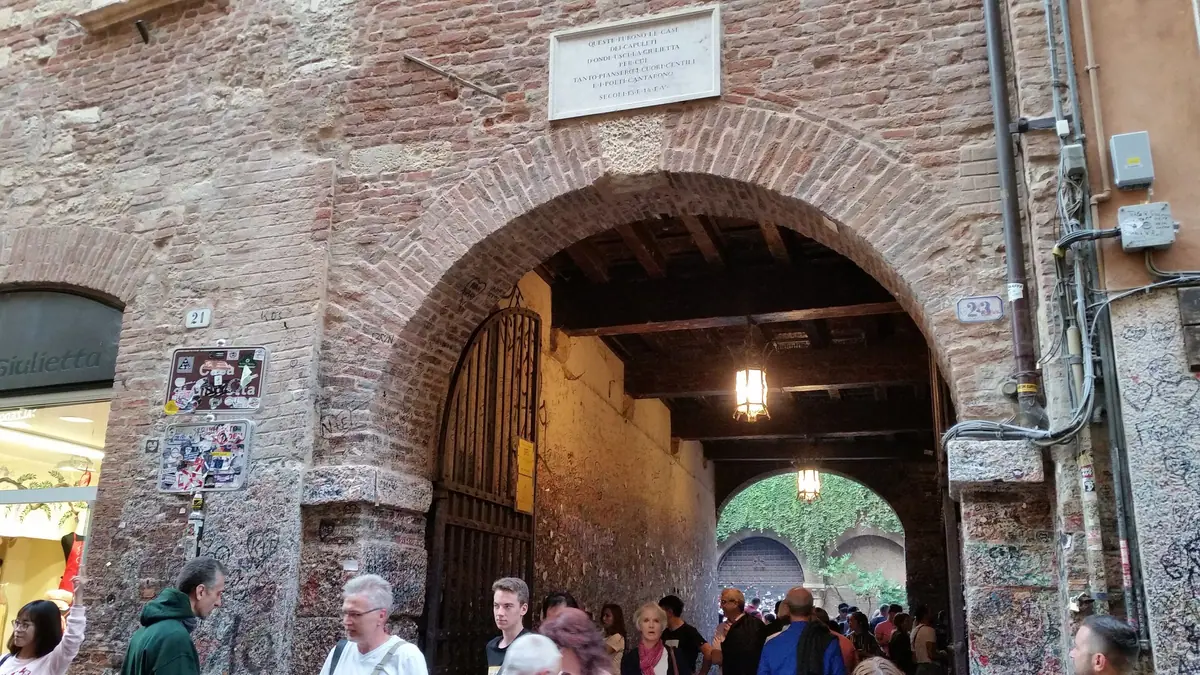
- 4Out through the arch: you leave under the arch at Via Cappello 23.
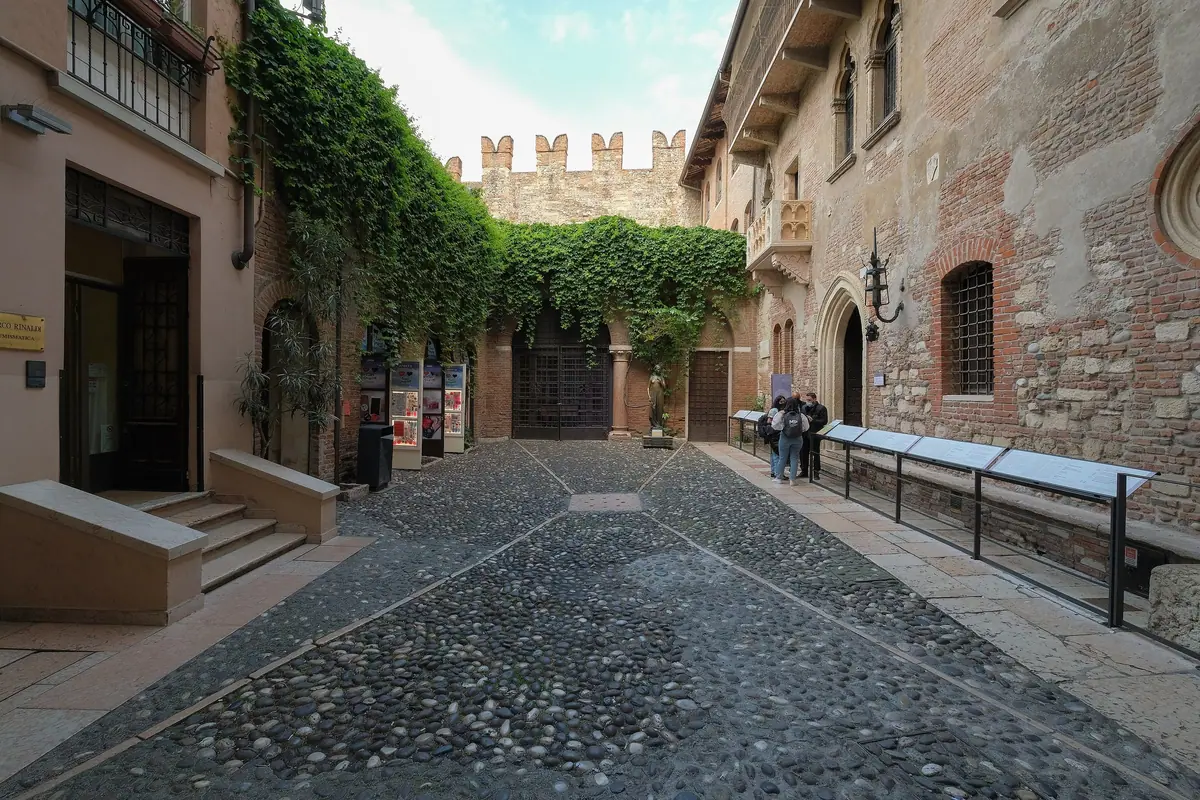
In the courtyard stands Juliet in bronze, by the sculptor Nereo Costantini, and touching her right breast is said to bring luck in love. The statue you touch is a copy made in 2014 to protect the original, which is now inside the house, and visitors’ hands have already worn holes a few millimetres wide in the copy’s bronze.
Inside, the balcony room takes its look from The Last Kiss of Romeo and Juliet, an 1823 painting by the Romantic painter Francesco Hayez, now at Villa Carlotta in Tremezzo, on Lake Como. The walls carry paintings from the 14th and 15th centuries, taken from palaces of the Scaligeri, the family that ruled medieval Verona, and 19th-century canvases of the lovers.
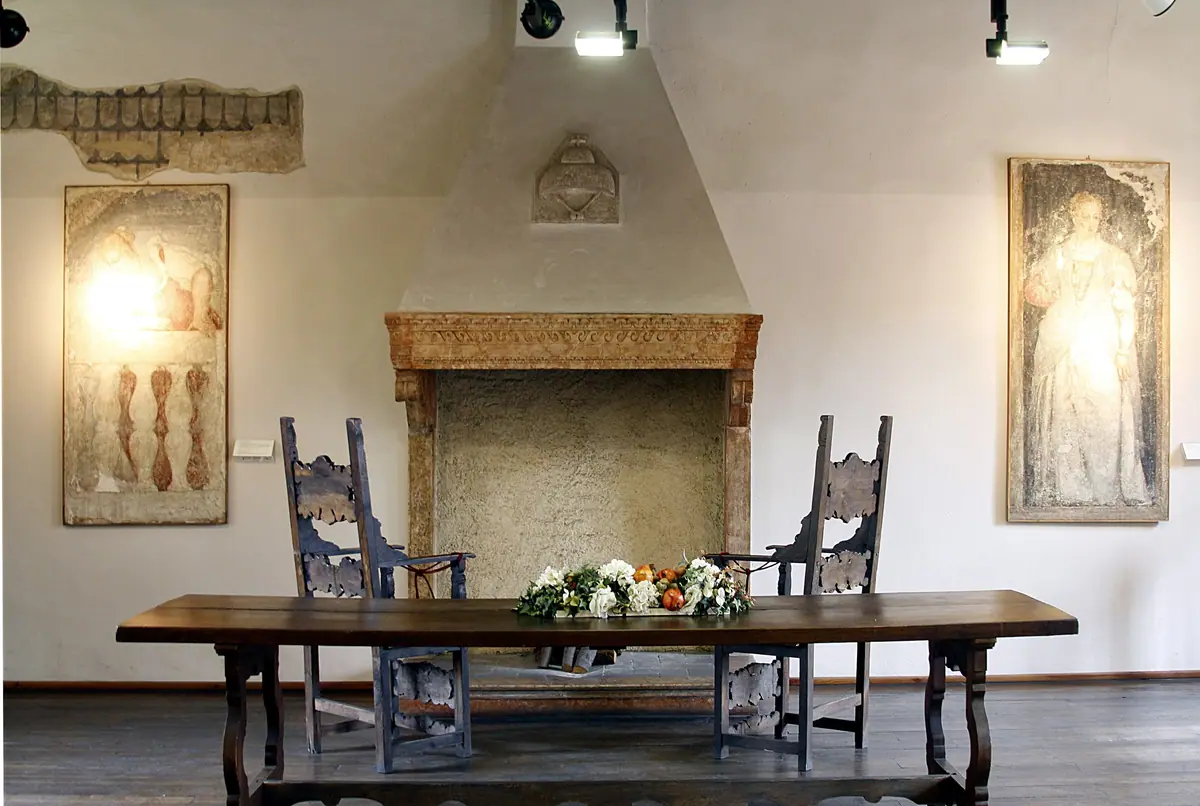
Among the canvases are Cosroe Dusi’s Giulietta e Romeo of 1838, which has a display of its own at the moment, and Pietro Roi’s Giulietta, painted around 1882 and given to the house in 2020.
Juliet’s balcony and the house behind it: how a 1351 inn became Juliet’s
The house never belonged to the Capulets. It’s a medieval tower-house first recorded in 1351 as the Cappello inn, owned by the heirs of one Antonio Cappello, and his family, the Dal Cappello, had nothing to do with the Cappelletti, the Capulets of the story. Their hat is carved on the keystone of the courtyard arch.
Travellers on the Romantic trail started calling it Juliet’s house between the late 18th and early 19th century. The Danish writer Hans Christian Andersen described it in 1833-34, and the English novelist Charles Dickens found it run down, with carts and geese in the yard.
The city bought the house at auction in 1905. In 1939-40 Antonio Avena, the director of Verona’s civic museums, restored it in a medieval style: he reworked the courtyard front, redecorated the rooms and added the balcony. Its central slab is genuine 14th-century soft stone, with two supporting brackets, taken from the Scaliger palaces; the other pieces were made to match, on the model of the hanging tombs of the 1300s, such as the one at the Scaliger Tombs. The house opened as a museum on 1 June 1973.
Romeo and Juliet in Verona: from Luigi da Porto to Shakespeare
Shakespeare set Romeo and Juliet in Verona because the story was Italian before it was his. It begins with a novella by Luigi da Porto, a writer from Vicenza, published in 1531; the writer Matteo Bandello retold it in prose, and the poet Gherardo Boldieri in verse in 1553, and Shakespeare’s play was staged in England in 1596.
The two families have real Verona roots, up to a point. The Montecchi, Romeo’s Montagues, lived in the city in the 1200s, while the Cappelletti came from Cremona and were later taken for Veronese. Dante, the poet of the Divine Comedy, named both in its second part, the Purgatorio. The other stop on the Juliet trail is Juliet’s Tomb, a red marble sarcophagus in a former Franciscan convent.
Near Juliet’s House: Piazza delle Erbe and the Lamberti Tower
Juliet’s House is a few steps from Piazza delle Erbe, and the Lamberti Tower on the square is a short walk from the house. The tower is open on Mondays too, when the Arena is shut.
Tickets
Popular tickets around Verona
The ones other visitors book most.


People also ask
Frequently asked questions
Where is Juliet's home?
At Via Cappello 23 in Verona, a few steps from Piazza delle Erbe, with the way in at the Teatro Nuovo on piazzetta Navona. It was the house of the Dal Cappello family, not of the Capulets of the play; tradition gave it to Juliet in the late 18th and early 19th century.
Why is Juliet's balcony so famous?
It gives Shakespeare's balcony scene a real address. The balcony you see went up in 1939-40, built around a 14th-century stone slab from the Scaliger palaces.
Is Romeo and Juliet set in Verona, Italy?
Yes. Shakespeare set the play in Verona, and the story goes back to a novella by Luigi da Porto, a writer from Vicenza, published in 1531.
Can you visit Juliet's balcony?
Yes. The house ticket takes you through the courtyard and the rooms and out onto the balcony. It's bought online, and the VeronaCard includes it with a free booking.
Is Juliet's House free?
Not any more. Since April 2026 even the courtyard takes a ticket bought online. Children under 5 go free, and the VeronaCard includes the house.
Is Juliet's House open on Mondays?
Yes, from 14:00 to 19:00. From Tuesday to Sunday it opens at 9:00.
