
Rome · Roma Pass
Ara Pacis Museum
Augustus's altar of peace left the road it was built on and now stands in glass beside the Tiber.
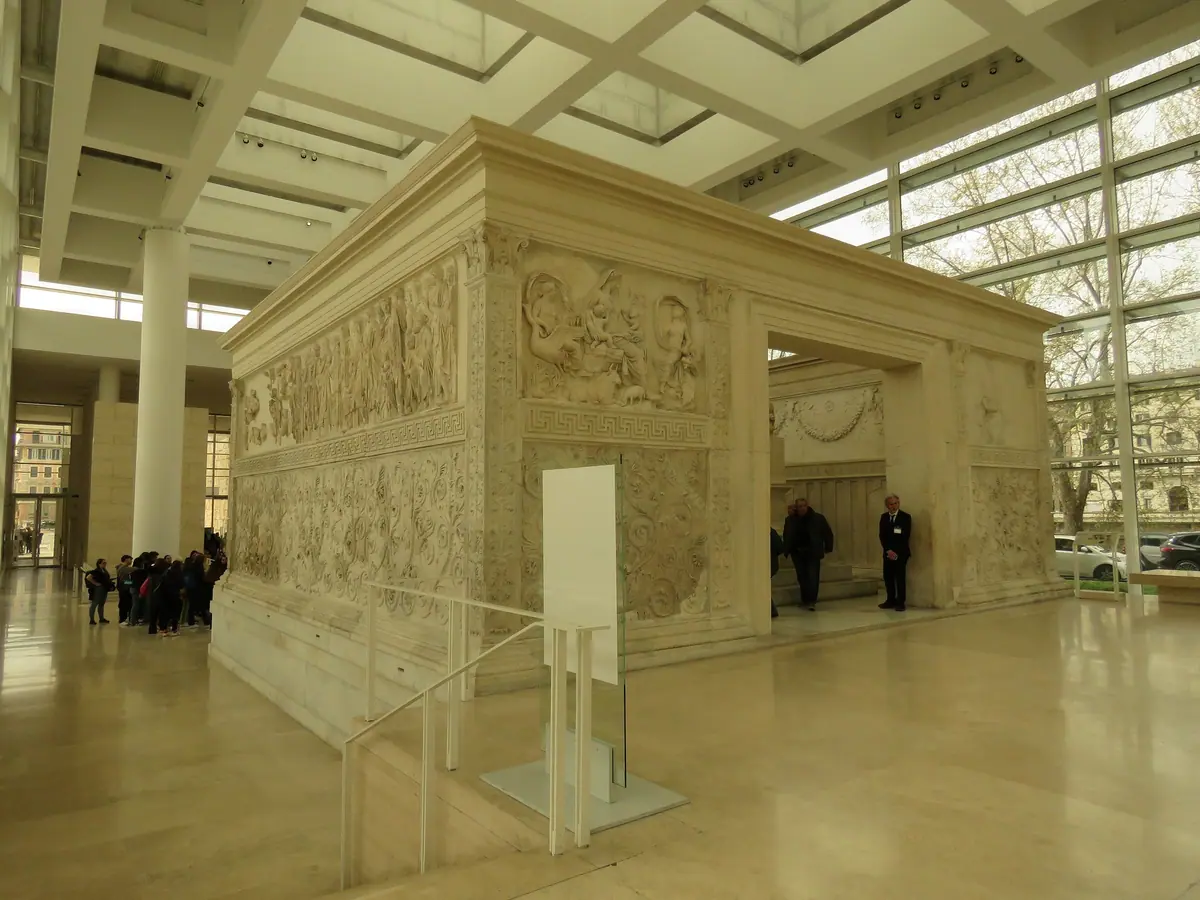
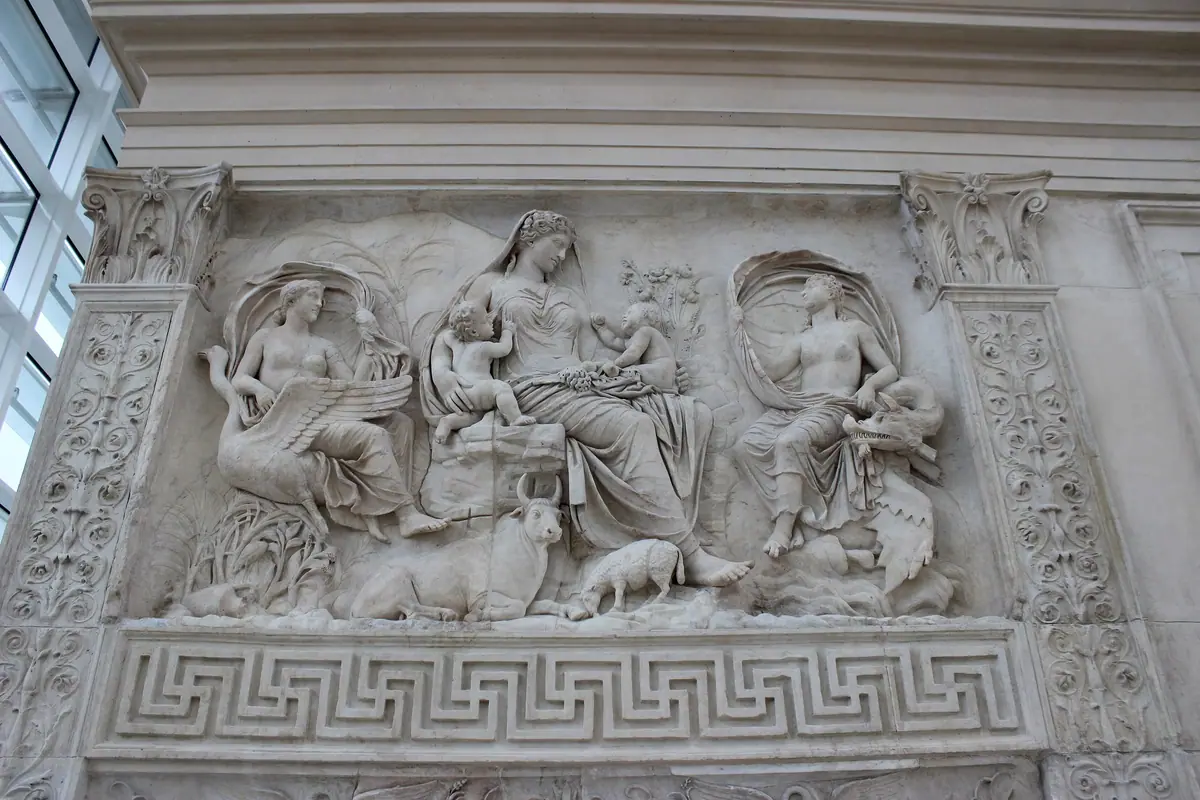
Rome's Ara Pacis is the marble Altar of Peace that the Senate voted for the emperor Augustus in 13 BC, and today it stands on its own in a glass and travertine pavilion by the architect Richard Meier, on the bank of the Tiber. Its carved walls show a procession of Romans in togas and Tellus, the Earth goddess, with two children on her lap. The ticket we sell gets you into the museum and up close to the altar, and the Roma Pass counts it as an included entry or a reduced one.
Before you go
- Time inside1–2 h
- OpenEvery day
TipThe museum ticket covers the altar only; the temporary exhibition in the exhibition space, entered from Via di Ripetta 180, has its own ticket.


Ara Pacis location: the museum on the Tiber, at Via Tomacelli
The Ara Pacis Museum stands on the Lungotevere in Augusta, the road that runs along the Tiber, at the corner of Via Tomacelli and just west of Piazza Augusto Imperatore, beside the Mausoleum of Augustus. That’s the address for your map. The altar itself was built a few streets away, near today’s Via del Corso, and only came to this spot in the 20th century.
From the metro it’s a short walk. Spagna, on line A, is about 10 minutes away along Via Condotti and then Via Tomacelli, the street on the museum’s corner, and Flaminio, on the same line, 10 to 12 minutes. Buses 70, 81, 87 and 628 stop nearby too, and the temporary exhibition has its own door and ticket office, at Via di Ripetta 180.
Ara Pacis Museum tickets: the altar, the exhibition and who goes in free
The two doors also mean two tickets. The ticket we sell, at €15, is the museum ticket: it takes you into the hall with the altar, and the temporary exhibition isn’t on it. If another site quotes a lower flat price, it’s from before February 2026, when residents of Rome started going in free and visitors from elsewhere kept paying. There’s nothing to book, either.

Visitors aged 6 to 25 who don’t live in Rome have a reduced ticket, and ours has a single price for everyone who pays. Bring ID for any reduced or free entry.
Who pays what at the Ara Pacis
- Under 6
- Free
- First Sunday of the month
- Free for everyone, next on 6 December 2026
- Residents of Rome and its metropolitan area
- Free, with ID
- Non-residents aged 6 to 25
- Reduced ticket
- Other adults
- €15 with us
The exhibition space is changing shows this autumn. From 6 November 2026 to 2 May 2027 it has Il potere del ritratto. Egitto e Roma. I volti del Fayum, “The Power of the Portrait. Egypt and Rome. The Faces of Fayum”, with a ticket of €17 for the exhibition alone, sold at Via di Ripetta 180.
Ara Pacis with the Roma Pass: the altar is covered, the exhibition isn’t
With the Roma Pass, the Ara Pacis counts as one of the card’s included entries, or you can use the card for the reduced ticket and save the included entry for another site. You decide which at the museum, and there’s no time to book.
The included entry covers the altar and stops at the exhibition. For the Fayum show, the card gets you the reduced exhibition ticket, which you buy on Vivaticket.
-
Roma Pass
An included entry or the reduced ticket, chosen at the museum. Nothing to book; the exhibition is extra, at the reduced price
from €44.90
Buy pass→ -
Omnia Card 72h
Through the adult Roma Pass inside it, with the same rules. The Omnia Card can be used until 31 December 2026
from €149
Buy pass→


The Rome Tourist Card, the Vatican City Pass, Go City and the Turbopass don’t include the Ara Pacis, and our page on Roma Pass and Rome’s other city passes sets them side by side, with the Omnia Card on a page of its own. If your visit falls on 6 December, we’d keep the card’s included entry for somewhere else, because the museum is free for everyone that day.
Ara Pacis Museum opening hours, seven days a week
Some listings still show a Monday closing, but the museum opens every day of the week with the same hours, and the last entry is an hour before it closes.
Opening hours
- Every day
- 9:30–19:30, last entry 18:30
- 24 and 31 December
- 9:30–14:00
- Closed
- 1 May and 25 December
Inside the Ara Pacis Museum: Augustus’s altar and its carved walls
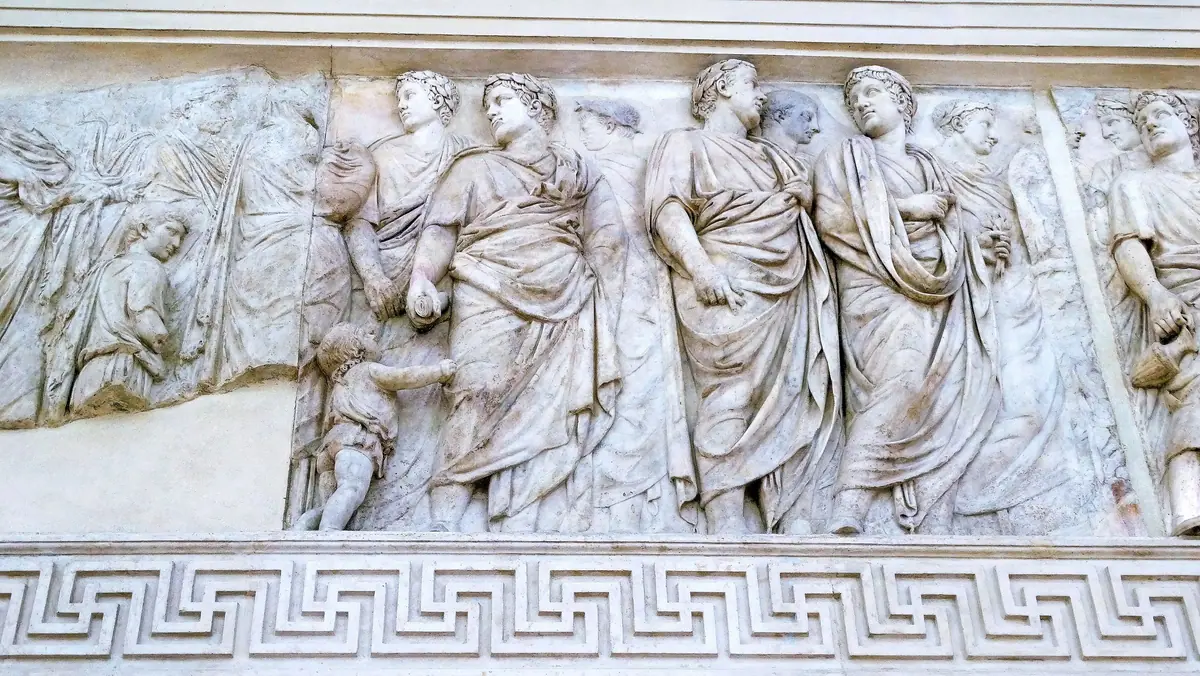
The main hall holds one monument, the altar, in a pavilion of glass and travertine with nothing else competing for the space. The marble altar measures 11.6 by 10.6 metres and stands 3.6 metres high, and you walk all the way round it.
Along the sides runs a procession of Romans in togas, walking one behind the other in a long row, and the stretch in the photo above is on the north wall.
On another panel sits Tellus, Mother Earth, with two children on her lap, between figures of Air and Water, above a band of Greek-key pattern.
L’Ara si rivela: the Ara Pacis Museum at night
From Friday to Sunday, until 31 December 2026, the museum opens in the evening for L’Ara si rivela, “the Ara reveals itself”, a night visit of about 45 minutes built around video mapping. It has its own ticket, which our museum ticket doesn’t cover, and you book it by phone on 060608, from 9:00 to 19:00, or at the museum’s ticket office.
When it launched, the evenings ran from 20:00 to 23:00 in three sessions an hour apart, for groups of up to 25, and the museum says the times change during the year, so ask for the current ones when you book. Visitors with reduced mobility can take part.
The night ticket is €15, or €13 reduced, and families pay one price for the group: €22 for two adults with their children under 18, and €11 for one adult with theirs.
Where the Ara Pacis first stood, and how it got to the Tiber
The Senate voted for the altar on 4 July 13 BC, when Augustus came back to Rome from Spain and Gaul, and it was dedicated on 30 January 9 BC. So when you read “13 BC” on a sign, that’s the vote, and the finished altar came four years later.
It stood on the Campus Martius, about 30 metres west of the Via Flaminia, on the stretch inside the city then called Via Lata. That street is today’s Via del Corso, a few minutes’ walk from the museum, which is why the altar’s location has two answers.
In 1938, under Mussolini, Italy’s Fascist dictator, the altar was rebuilt and set up in a shelter next to the Mausoleum of Augustus, on the spot where you see it now.
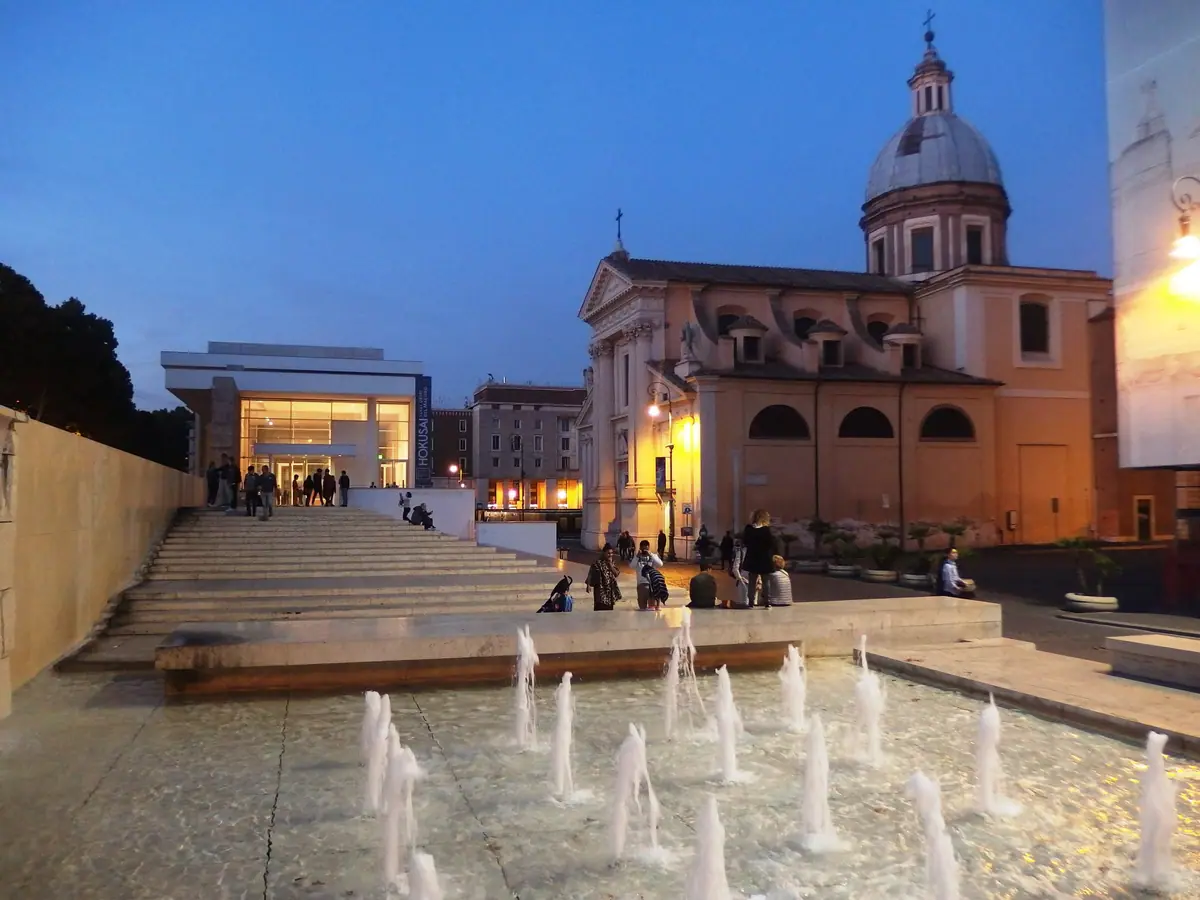
Richard Meier’s pavilion replaced that shelter on the same site and opened on 21 April 2006. The museum calls it the first new architecture in Rome’s historic centre since the fall of Fascism, and it was fiercely argued over when it opened.
Tickets
Popular tickets around Rome
The ones other visitors book most.


People also ask
Frequently asked questions
Where is the Ara Pacis located?
The Ara Pacis Museum is on the Lungotevere in Augusta, the road along the Tiber, at the corner of Via Tomacelli, just west of Piazza Augusto Imperatore. Spagna, on metro line A, is about 10 minutes away on foot. The altar first stood somewhere else, on the Campus Martius beside the road that's now Via del Corso, and was reassembled on this spot in the 20th century.
Is the exhibition included in the Ara Pacis ticket?
No. The museum ticket covers the altar, and the temporary exhibition has its own ticket and its own entrance, at Via di Ripetta 180. The next show, on the Fayum portraits, runs from 6 November 2026 to 2 May 2027, at €17 for the exhibition alone. The Roma Pass doesn't include it either, though it gets you the reduced price.
Is the Ara Pacis Museum open on Mondays?
Yes. It opens every day from 9:30 to 19:30, with last entry an hour before closing, and closes only on 1 May and 25 December. On 24 and 31 December it closes at 14:00.
When is the Ara Pacis Museum free?
On the first Sunday of every month, for everyone, the next being 6 December 2026. Children under 6 go in free on any day, and since February 2026 so do residents of Rome and its metropolitan area, with ID. Other visitors pay.
Is the Ara Pacis included in the Roma Pass?
Yes. It counts as one of the card's included entries, or you can use the card for the reduced ticket and keep the included entry for somewhere else; you choose at the museum, and there's nothing to book. The temporary exhibition isn't part of the included entry.
