Milan
Milan metro, trams and buses
In Milan the metro gates want your bank card twice: once on the way in, and once on the way out.
Milan's metro has five lines, M1 to M5, and one ticket costs €2.20 for 90 minutes on the metro, trams and buses (fares of ATM, the city's transport company, October 2026). Paper tickets went at the start of 2026: you tap a contactless bank card or phone at the gate, or use the ATM Milano app or a RicaricaMi card. Tapping is capped at €7.60 a day, and under-14s ride free.
Paying for the Milan metro: tap in, tap out
The easiest way to pay for the Milan metro is the bank card you already carry. Tap a contactless Visa, Mastercard, American Express, Maestro or V Pay card, or a phone with Apple Pay or Samsung Pay, on the reader at the gate, and each ride costs €2.20, with no registration and no fees.
From the fourth ride in a day you stop paying by the ride: the taps are capped at €7.60, the price of the day ticket, counted over 24 hours from your first tap. Three rides come to €6.60, and from the fourth the taps stop at €7.60 however many you make, so with a card that works there’s no point buying a day ticket at all.
Tapping in and out on the Milan metro
- 1Tap at the gate going in, and again going out, even when the exit gate is open. Forget the exit and ATM adds €1.30; no tap going in costs €5. Both are charged four or more days later.
- 2Use the same card or the same phone every time. The plastic card and the card on your phone count as two, and switching between them loses the daily cap.
- 3One card per person. You can't tap twice to pay for a friend.
- 4On trams and buses, tap as you board. You only tap again to get off on lines 121, 130, 140, 165, 166 and 327.
The tap works on the whole metro, the M4 included, and on ATM buses, trams and trolleybuses, but not on trains: the suburban S lines, the Passante and the Malpensa Express all need a ticket of their own. If you change from the metro to an S line at Porta Venezia, Repubblica, Garibaldi or Dateo, tap out of the metro and buy a separate ticket for the train. Two Italian cards, Postepay prepaid and PagoBancomat, don’t work at the gates.
Milan metro ticket prices in 2026
If you’d rather not tap a bank card, or you’re paying for someone else, ATM’s tickets do the same job, and their prices didn’t go up in 2026. They now come on a phone or a card, because the last paper tickets were sold on 31 December 2025.
ATM fares for the city, zones Mi1 to Mi3 (October 2026)
- Single ticket
- €2.20 for 90 minutes on the metro, trams, buses and the S lines inside the zone; in that time you can leave the metro and go back in
- Day ticket
- €7.60, for 24 hours from validation
- Three-day ticket
- €15.50, three days in a row, until 3:45 after the third day
- Carnet of 10
- €19.50, each ticket for one person at a time
- Contactless card or phone
- €2.20 a ride, capped at €7.60 from the fourth ride in 24 hours
- Under 14
- Free, with an ID document
We found no reduced fare for visitors aged 14 to 26.
The ATM app, RicaricaMi and where to buy Milan metro tickets
Every metro station has ticket machines, and authorised tobacconists and kiosks all over the city sell tickets too. At M4 stations, the machines that sell RicaricaMi cards take cards only, not cash. What you get is loaded onto a RicaricaMi card or held in the app.
The RicaricaMi is an anonymous, rechargeable card that you tap on the readers. It holds up to 30 singles, five carnets or one day or multi-day ticket, one kind at a time.
Using a ticket in the ATM Milano app
- 1Buy it in the app, paying by card, PayPal or Satispay.
- 2Validate it in the app before you go in.
- 3Scan the QR code at the gates, going in and coming out.
A ticket in the app only counts while your phone is on. A flat battery in front of an inspector is the same as no ticket at all, so a RicaricaMi card is the safer choice if your phone tends to run low.
Milan’s five metro lines and the stops for the sights
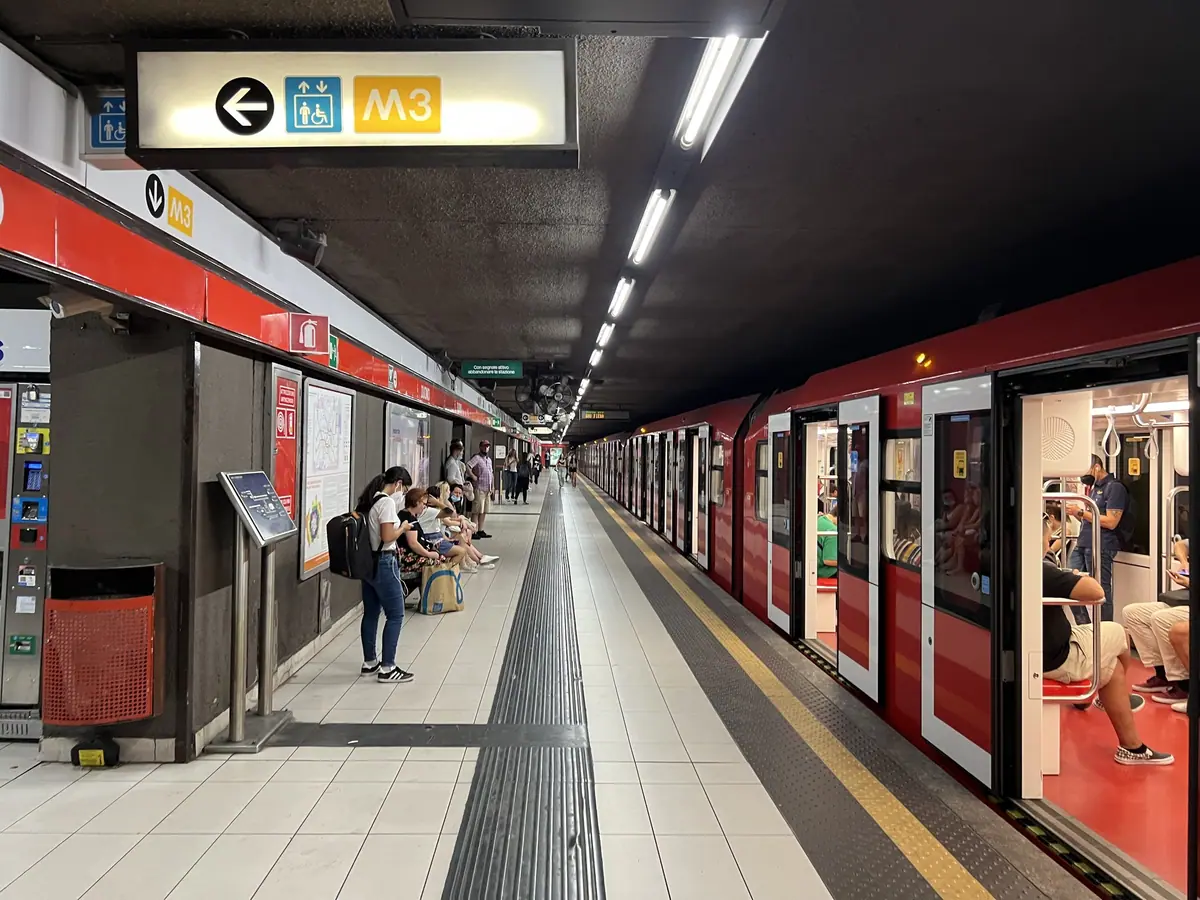
Each line has a number and a colour: the red M1, the green M2, the yellow M3, the blue M4 and the lilac M5. They cross in the centre: M1 and M3 meet at Duomo, M1 and M2 at Cadorna, M2 and M3 at Centrale, and M2 and M5 at Garibaldi.
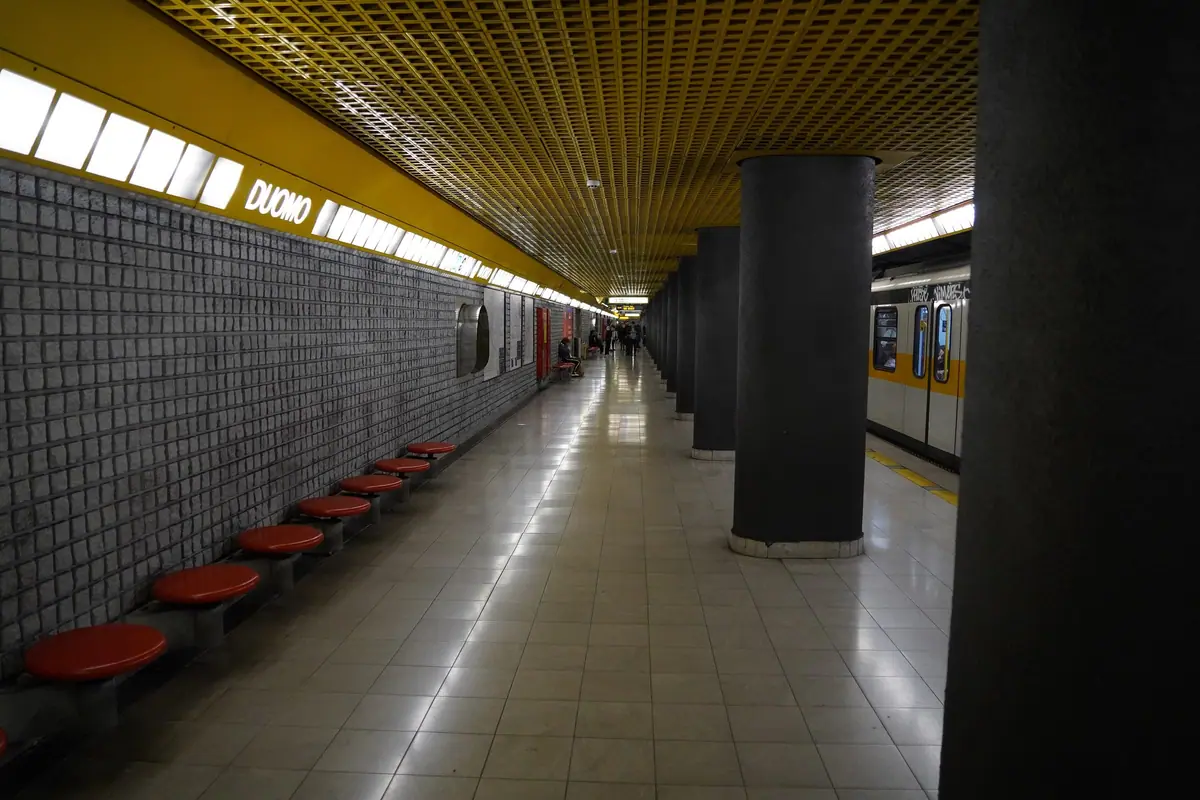
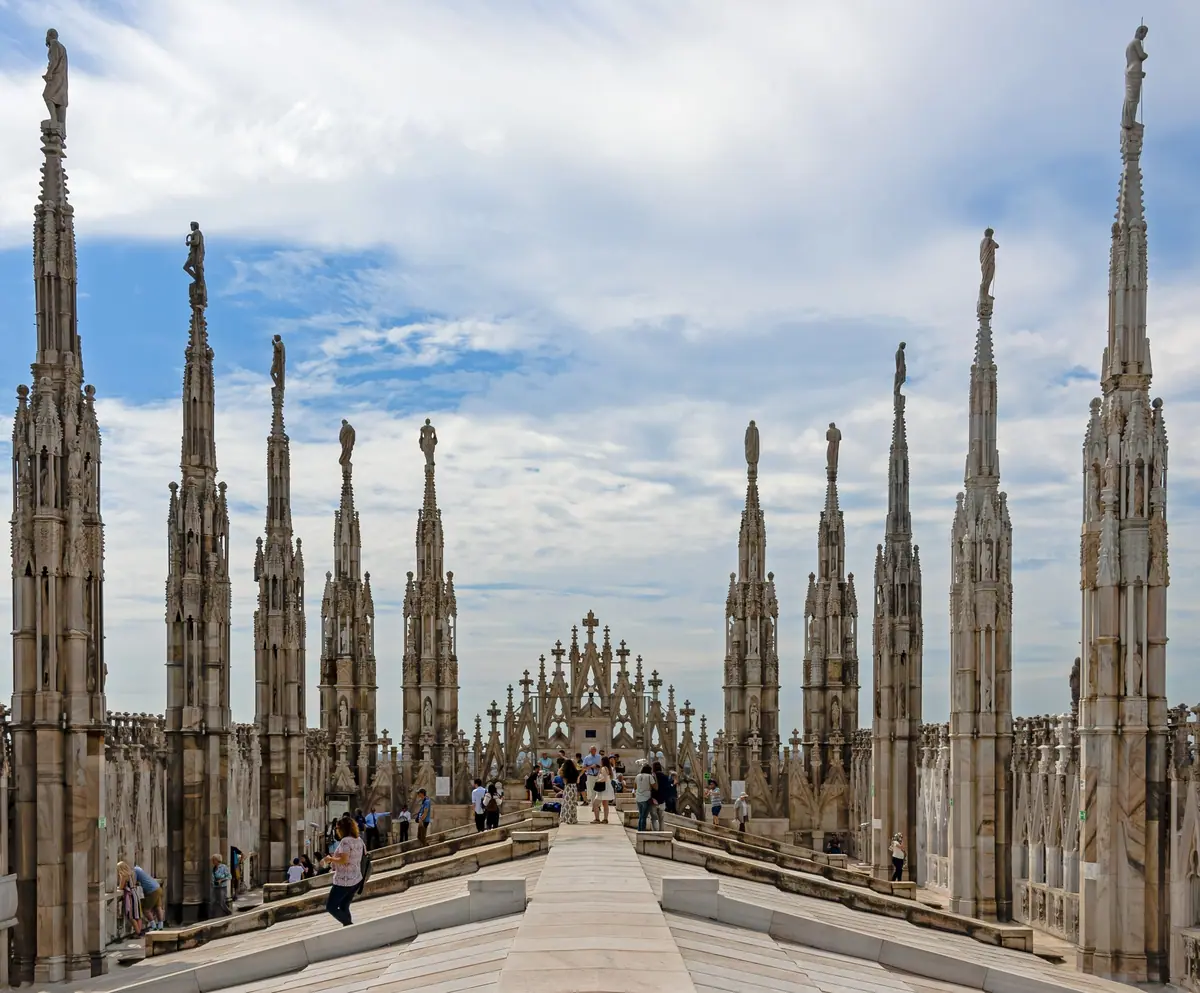
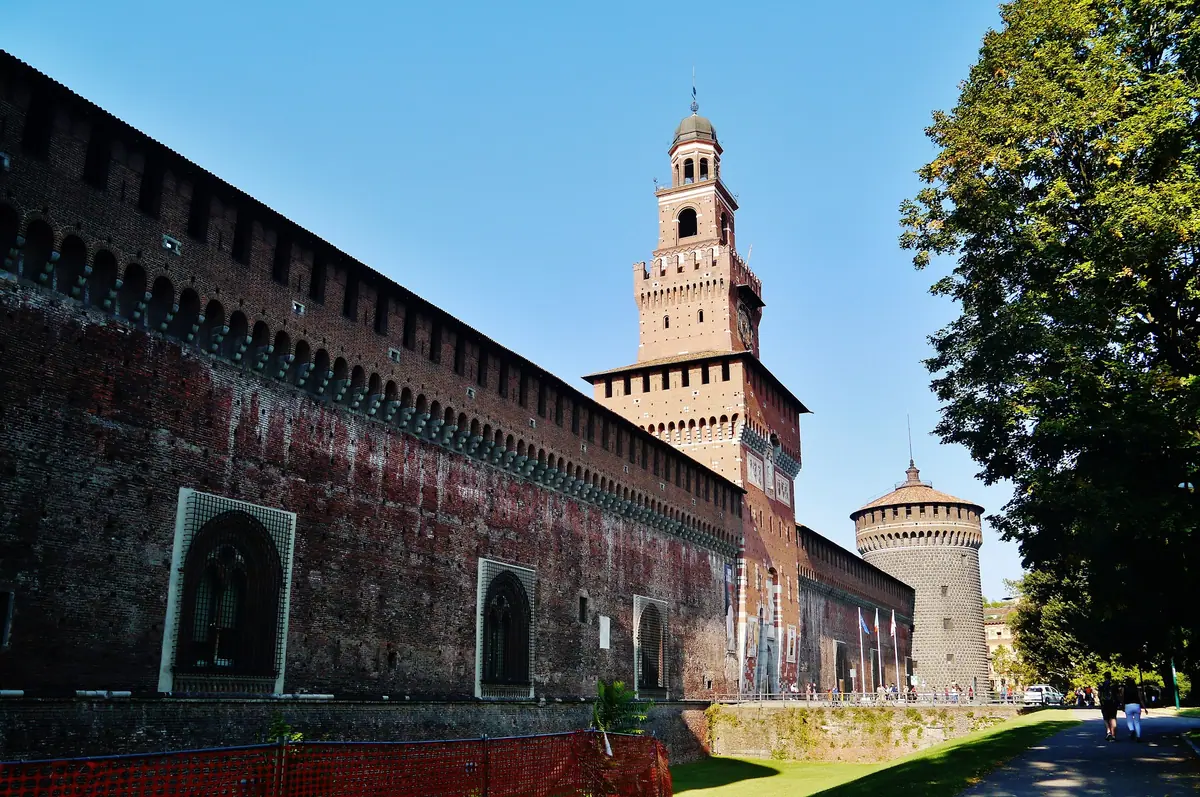
For the sights, Duomo station is the one for the Duomo and the Galleria and its Highline, and Cairoli, on the M1, for the Sforza Castle. Cadorna has the Malpensa Express and Parco Sempione, with the Torre Branca, while Centrale is the main railway station, where the Malpensa Express from the airport arrives. Porta Genova, on the M2, is the stop for the Navigli, the canal district, and San Siro Stadio, on the M5, for the San Siro stadium.
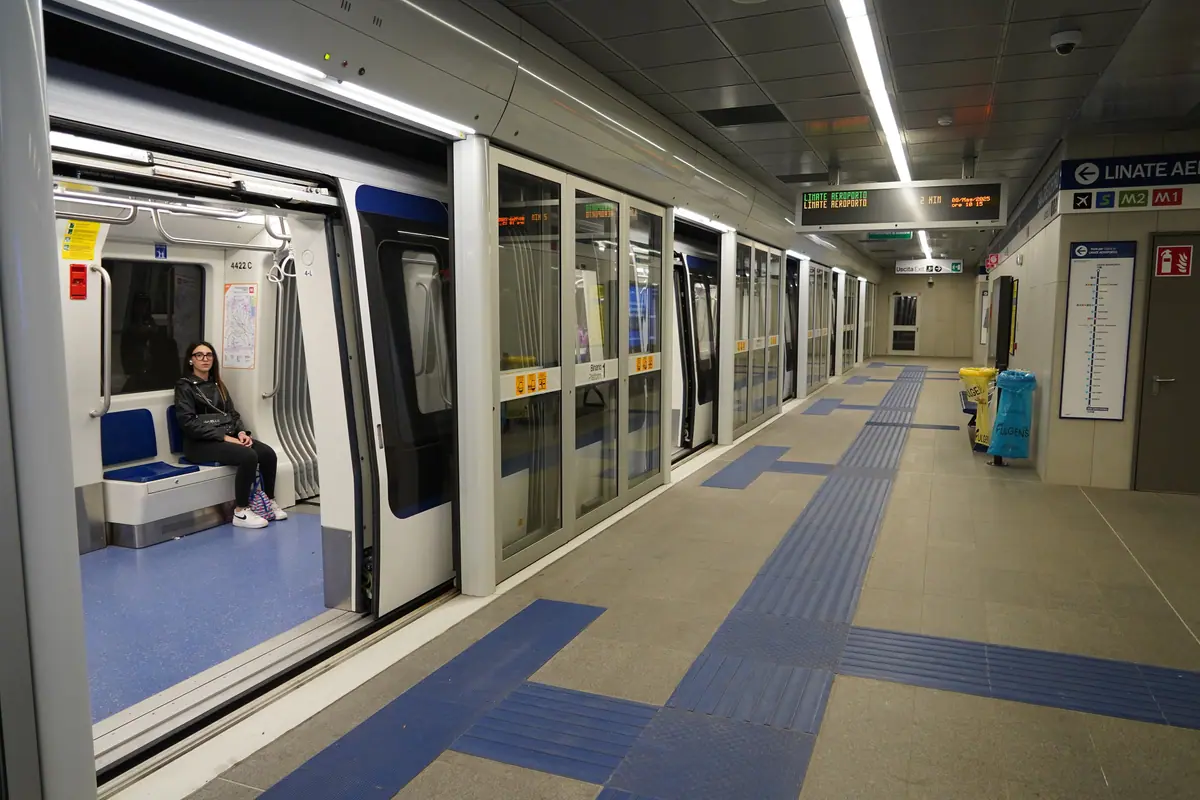
The M4 is the newest line, 21 stations and about 15 km from San Cristoforo to Linate airport, crossed end to end in about 30 minutes. It meets the M1 at San Babila, the M2 at Sant’Ambrogio and the M3 at Sforza-Policlinico, and at those changes you pass the gates again with the same ticket. Every M4 station has a lift.
Trams in Milan on the same ticket
Above ground, the city has 17 tram lines, and nearly half of them pass through or end at Piazza del Duomo. Several lines start in the centre: the 3 and the 15 from the Duomo, the 24 from Piazza Fontana and the 4 from Cairoli, by the castle. The 9 runs from Centrale to Porta Genova and the canals.
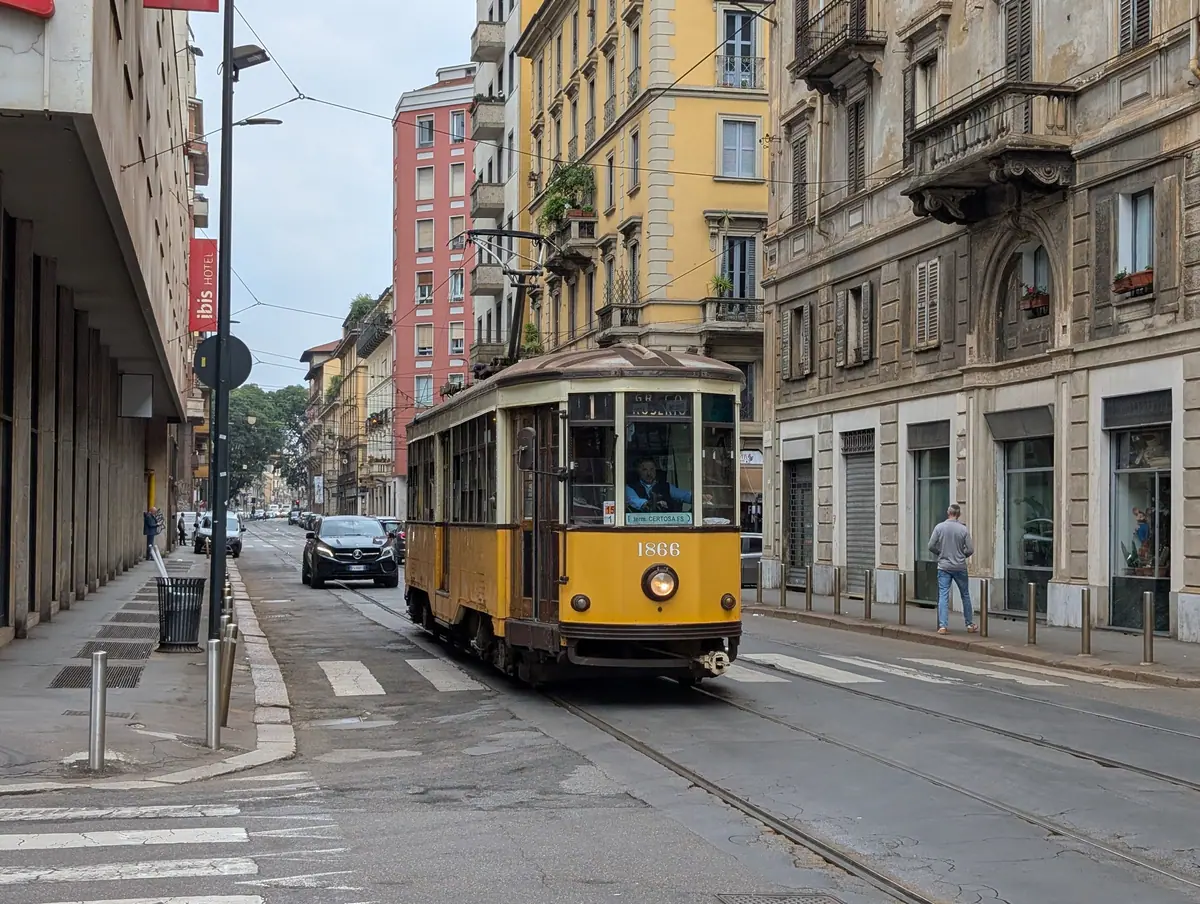
Some of the trams on the streets are the old 1500 series, the Ventotto, from 1928, and they’re still in service. Buy your ticket before you board, at a metro machine or a tobacconist, or tap your contactless card on the reader once you’re on.
Validating, inspectors and fines on Milan public transport
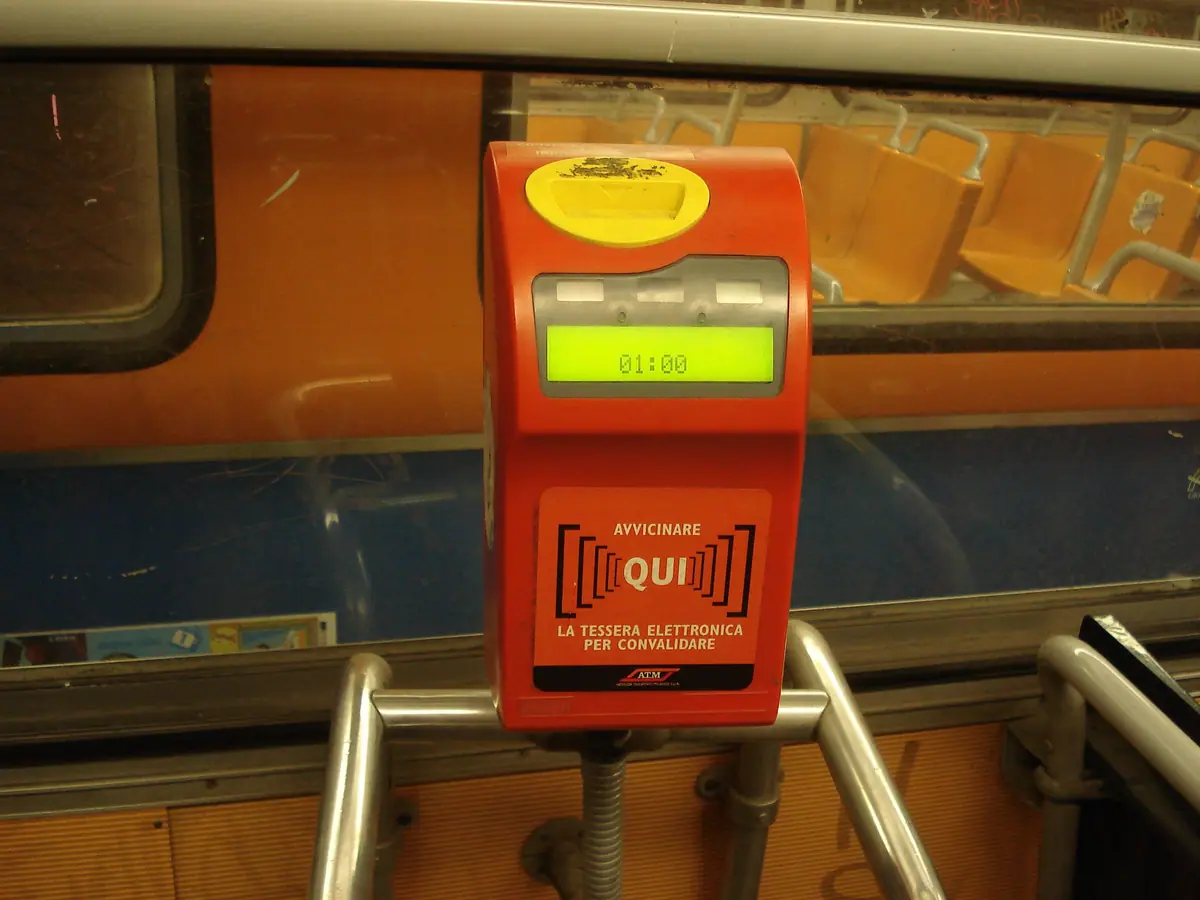
You validate when you start a journey and again every time you change, and in the metro on the way out too. Inspectors fine you for having no ticket, for a ticket you didn’t validate or that has run out, for travelling outside its zone, and for a phone ticket you can’t show. The trap for visitors is the contactless card: it only counts as a ticket if you tapped in, and a metro tap doesn’t cover an S-line train.
Paid to the inspector on the spot, the fine is €39.30 plus the fare. Within 5 days it’s €56.50, within 60 days €71.50 and after that €170, always plus the fare. Those amounts come from an ATM tariff dated January 2023, the latest we found.
Milan metro hours, night buses and strikes
The metro runs from early morning until about half past midnight, and the M5 stops around midnight. After that the night buses take over, and on Friday and Saturday nights more of them run.
After the metro closes
- Every night
- NM1, NM2, NM3 and NM4, which follow the metro lines; trolleybuses 90 and 91; buses N25 and N26
- Friday and Saturday nights, and nights before holidays
- N15, N24, N27, N42, N54, N57, N80 and N84
- The M5
- No night bus
- Radiobus
- Buses on request, 22:00 to 2:00, booked on 02 4803 4803
The night buses take the same tickets as the rest of the network. Strikes are the other thing that stops the trains. ATM’s 24-hour strikes are announced only a few days ahead, and in recent ones the guaranteed service ran until 8:45 and from 15:00 to 18:00. The press has reported one for Friday 13 November 2026, so check ATM’s site and app that week.
Where a Milan city ticket reaches: Linate yes, Malpensa no
Milan’s fares go by zone, and the city tickets cover zones Mi1 to Mi3: Mi1 and Mi2 are the city itself, and Mi3 adds the first ring of towns around it, plus Rho Fiera. That takes in the M1, M3, M4 and M5 from end to end, out to Linate airport on the M4, the Rho Fiera exhibition centre, San Donato, Sesto San Giovanni and San Siro. On the M2 they stop short of Gessate: they reach Cascina Burrona, Assago Forum, Piazza Abbiategrasso and Cologno Nord.
Malpensa and Bergamo airports are outside the zone, and so are the trains to Lake Como. For Malpensa the train is the Malpensa Express, with a ticket of its own, and our page on getting from Milan’s airports to the city centre has all three airports; for the lake, see Lake Como from Milan.
Milan city passes with public transport included
Four of the passes we sell include the metro, trams and buses, so if you’re buying one of them for the museums, the transport is already paid for.
-
YesMilano City Pass Standard
ATM transport in Mi1 to Mi3 for three calendar days, Linate included, with the Duomo, the civic museums and one premium activity
from €60
Buy pass→ -
YesMilano City Pass All-Inclusive
The same three days of transport, with the Duomo terraces by lift and all 14 premium activities
from €90
Buy pass→ -
The Milan Pass
ATM transport for 48 or 72 hours, depending on the option, plus the hop-on hop-off bus
from €99
Buy pass→ -
Milan City Card
A transport card for the metro, trams and buses (not the airports or Rho Fiera), with the cathedral, Leonardo3 and an audio guide app
from €48
Buy pass→


The YesMilano passes count calendar days, not 72 hours, so activate yours early in the morning to use the first day in full; at the metro gates you scan its QR code going in and coming out. Neither YesMilano pass covers Malpensa or Bergamo.
City cards
Milan city cards and passes
Pick the one that fits your trip. Prices are per adult, and you choose your dates on the next page.


See what you’d save, if anything
Which Milan pass pays off for your trip?
Pick how many days you’ve got and the sights you want to see. The calculator adds up the tickets and rides, sets them against the card and tells you right away whether it pays off, and by how much, at today’s prices. No email, no sign-up.
Step 1 of 3
How long, and who’s going?
People also ask
Frequently asked questions
How much does public transport cost in Milan?
A single ticket costs €2.20 and lasts 90 minutes on the metro, trams and buses. A day ticket is €7.60 for 24 hours, a three-day ticket €15.50 and a carnet of 10 singles €19.50 (ATM fares, October 2026). Paying by contactless card costs €2.20 a ride, capped at €7.60 a day, and under-14s travel free.
How do you pay for public transport in Milan?
Tap a contactless bank card or phone at the metro gate going in and coming out, or on the reader when you board a tram or bus. You can also buy tickets in the ATM Milano app, or at machines in every metro station and at tobacconists, loaded onto a RicaricaMi card. Paper tickets ended on 1 January 2026.
Is there a day pass for the Milan metro?
Yes: ATM's day ticket costs €7.60 and lasts 24 hours from when you validate it. With a contactless card you don't need to buy it, because from your fourth ride in 24 hours the taps are capped at the same €7.60.
How much is a three-day metro pass in Milan?
ATM's three-day ticket costs €15.50 and runs for three days in a row from validation, until the end of service on the third day, at 3:45 the next morning. The YesMilano City Pass also includes three calendar days of metro, trams and buses.
Which metro card should I buy in Milan?
If your bank card or phone pays contactless, none: tap it at the gates and the daily cap does the rest. Without one, get a RicaricaMi card at a station machine and load the ticket that fits your stay, or buy in the ATM Milano app.
Do children pay on Milan public transport?
Not under 14: they travel free on the metro, trams and buses with an ID document. We found no reduced fare for visitors aged 14 to 26.
Read more