
Verona · VeronaCard
Basilica of San Zeno
Napoleon took the heart of Mantegna's altarpiece to Paris in 1797, and the three little scenes beneath it never came back.
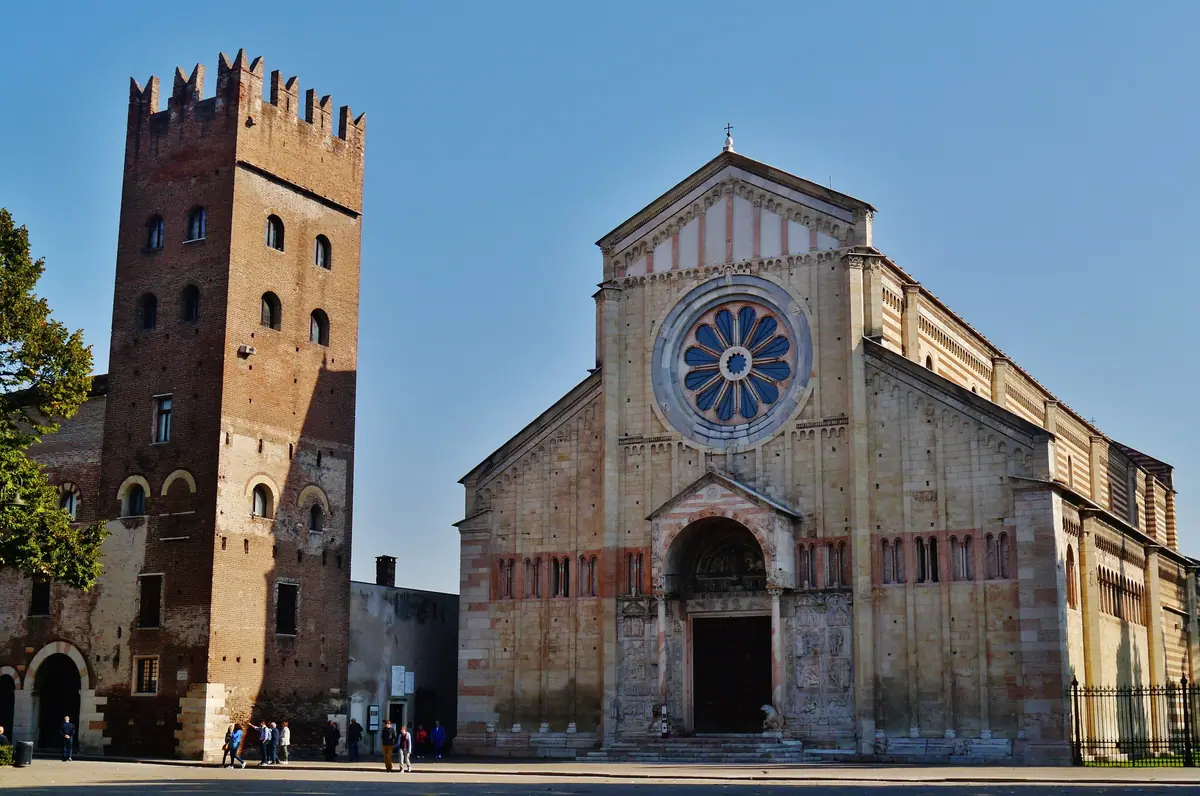
The Basilica of San Zeno Maggiore is Verona's great Romanesque church: its front of tufa and brick frames bronze doors covered in Bible scenes, and the Renaissance painter Andrea Mantegna's altarpiece stands on the high altar. It was rebuilt after the earthquake of 1117 where Zeno, the eighth bishop of Verona, is said to have been buried, and the crypt and the cloister complete the visit. A visit takes a ticket bought at the church, or simply the VeronaCard.
The Basilica of San Zeno: its striped front and bronze doors
The Basilica of San Zeno Maggiore stands in its own square, Piazza San Zeno, outside the old centre, about ten minutes’ walk from Castelvecchio. The walk ends at a front of tufa and brick in alternating bands, between two towers: the slender bell tower of the 12th century and the tower of the old monastery, from the 13th.
On the front, the rose window is known as the Wheel of Fortune, and its maker, Brioloto de Balneo, signed it in an inscription dated 14 April 1189. Lower down, at the entrance, are the bronze doors.
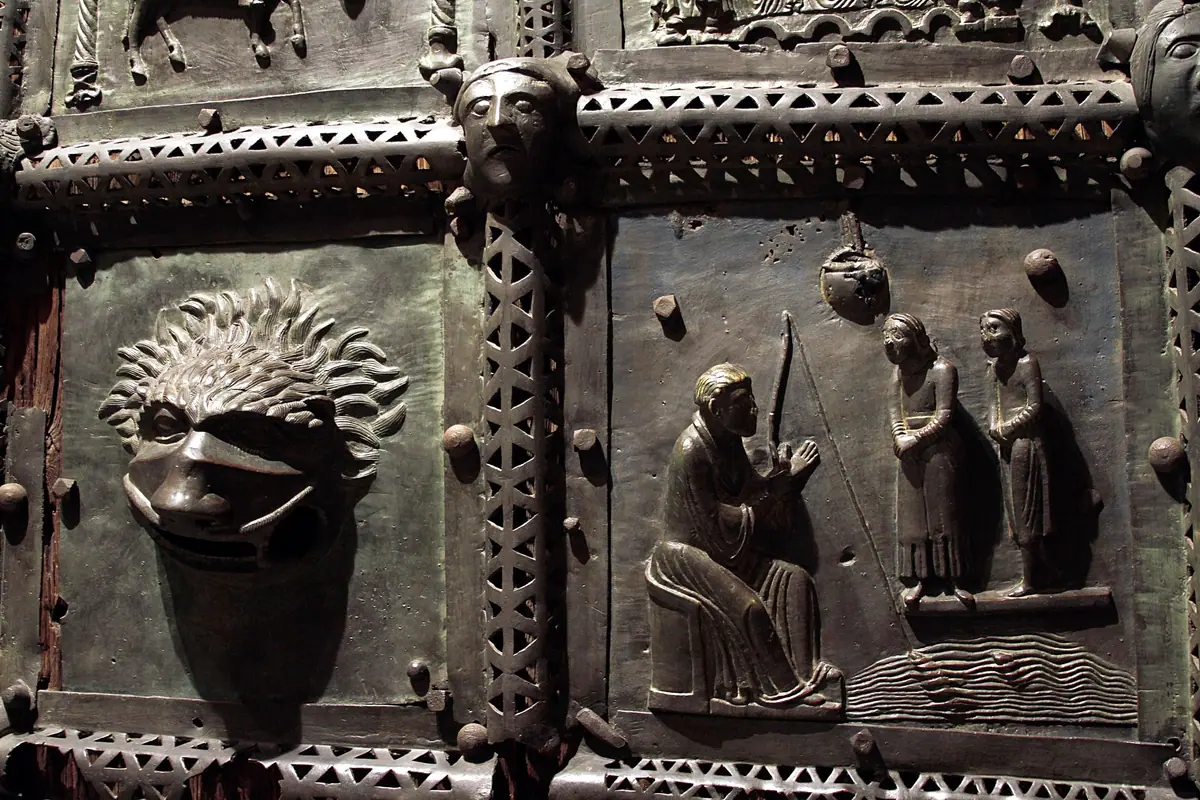
They’re made of 73 bronze panels fixed onto boards of larch, over a surface of roughly four metres by nearly five. The larger panels tell 42 stories from the Old and New Testaments and four miracles of St Zeno.
San Zeno tickets: €4 at the church
A visit to San Zeno costs €4, paid at the church’s own ticket office when you arrive, and there’s no booking. Going in to pray is always free, and so is a visit for children under 11; for every two adults who pay, up to three under-18s also go in free. An audio guide in seven languages costs €1 more.
San Zeno and the other Chiese Vive churches on the VeronaCard
The tickets are sold by the Fondazione Chiese Vive, which opens four of Verona’s main churches to visitors, and the VeronaCard includes all four: San Zeno, the Duomo, Sant’Anastasia and San Fermo.

Mantegna’s San Zeno Altarpiece and the copies beneath it
On the high altar stands the San Zeno Altarpiece, which the Renaissance painter Andrea Mantegna made in tempera on wood around 1456-59 for the abbot, Gregorio Correr. It’s 2.12 metres high and 4.6 wide, with the Virgin and Child at the centre among eight saints, Zeno one of them.
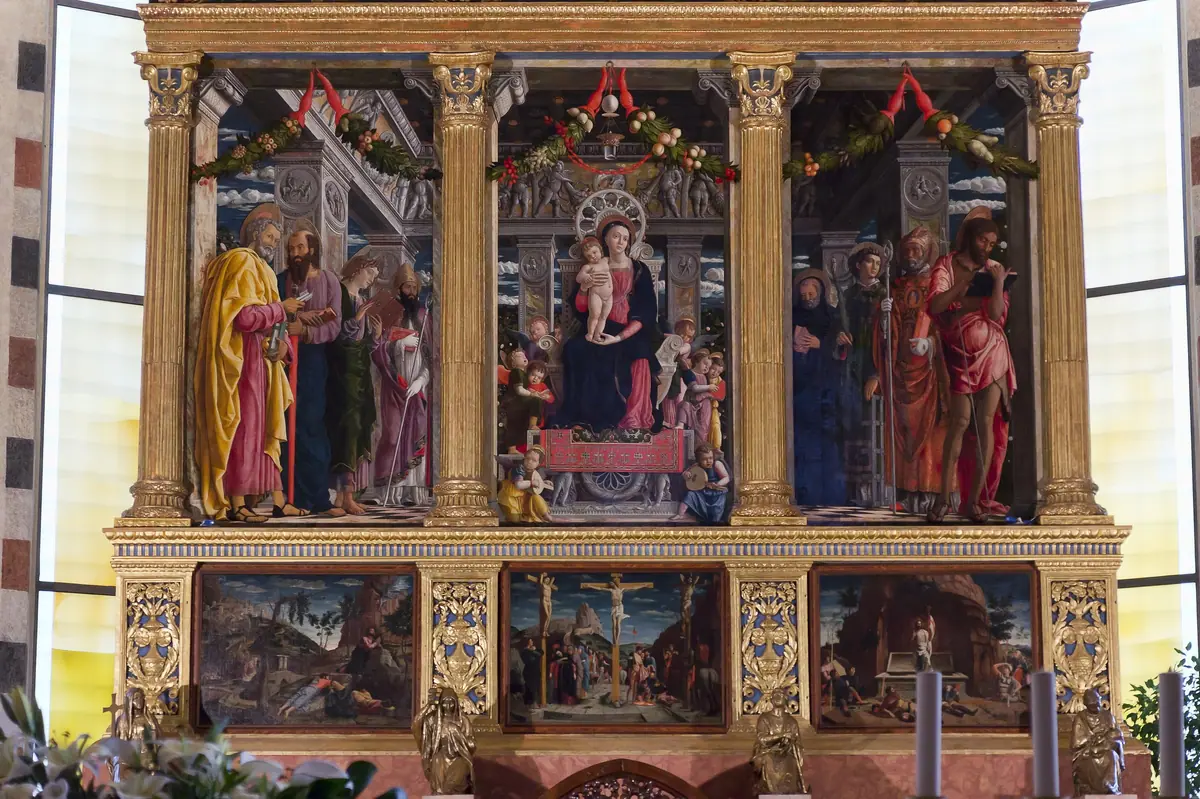
Those three small paintings along the bottom, the predella, are the copies. Napoleon had the central panel and the predella taken to Paris in 1797; the central panel came back in 1815, but the predella never did. Its Crucifixion is now in the Louvre, and the Resurrection and the Agony in the Garden are in Tours, in France.
Zeno’s crypt, and the church rebuilt after 1117
Zeno was the eighth bishop of Verona, and he’s believed to have died between 372 and 380. The first church and convent here went up over a Roman and early Christian cemetery along the Via Gallica, and that’s where he’s said to have been buried. His body was laid in the crypt on 21 May 807 and found again in 1838, and tradition makes the crypt the place where Shakespeare’s Romeo and Juliet were married.
The church you visit was rebuilt after the earthquake of 1117, with its long side walls going up between 1117 and 1138, and the cloister beside it was finished in 1123. Dante puts one of the abbey’s abbots, Gerardo, into canto XVIII of the Purgatorio, the middle book of his Divine Comedy.
San Zeno opening hours this winter, and Mass times
San Zeno visiting hours, 1 November 2026 to 28 February 2027
- Monday to Friday
- 10:00–17:00
- Saturday
- 9:30–17:30
- Sundays and religious holidays
- 13:00–17:30
Mass is said on Sundays at 8:00, 10:00 and 11:30, which is why visits only start at 13:00, and on any day tourist visits stop while a service is on. The hours from March 2027 haven’t been published yet.
In a wheelchair you can reach only part of the basilica, and disabled visitors and a companion go in free.
Tickets
Popular tickets around Verona
The ones other visitors book most.


People also ask
Frequently asked questions
Who is Saint Zeno?
The eighth bishop of Verona, who is believed to have died between 372 and 380. The basilica stands where he's said to have been buried, and his body was laid in its crypt in 807.
Is the Basilica of San Zeno free?
Only to pray. A visit costs €4, paid at the church, children under 11 go in free, and the VeronaCard includes it.
Is San Zeno open on Sunday mornings?
Not for visits. On Sundays and religious holidays it opens to visitors at 13:00, after the morning Masses, and this winter it closes at 17:30.
What are churches in Italy called?
A church is a chiesa. A large or important one can be a basilica, like San Zeno Maggiore, and the bishop's church is the duomo or cattedrale.
What is the most famous thing about Verona, Italy?
The Arena, the Roman amphitheatre that the city itself calls its most famous monument, and the story of Romeo and Juliet, with Juliet's House as its best-known address. San Zeno has its own link to the play: tradition puts the lovers' wedding in its crypt.
