Venice
Venice 2-day itinerary
Day one stays on St Mark's Square until a boat takes you down the Grand Canal, and day two ends in a gondola.
A 2-day itinerary for Venice gives the first day to Piazza San Marco, with St Mark's Basilica at 9:30, the campanile, the Doge's Palace from 12:00 and a vaporetto down the Grand Canal from Rialto. The second goes to Murano and Burano out in the lagoon, or to the Peggy Guggenheim and Ca' Rezzonico in Dorsoduro, with a gondola at the end.
Venice in 2 days: St Mark’s on day one, the lagoon or Dorsoduro on day two
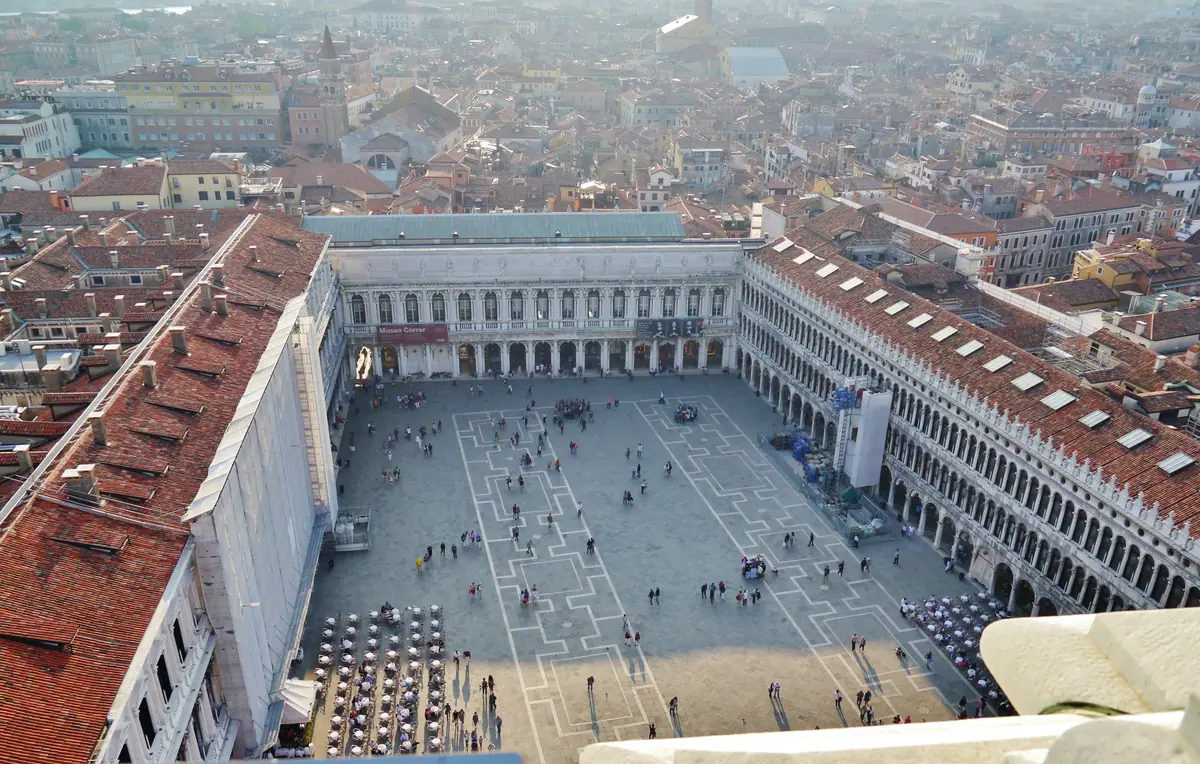
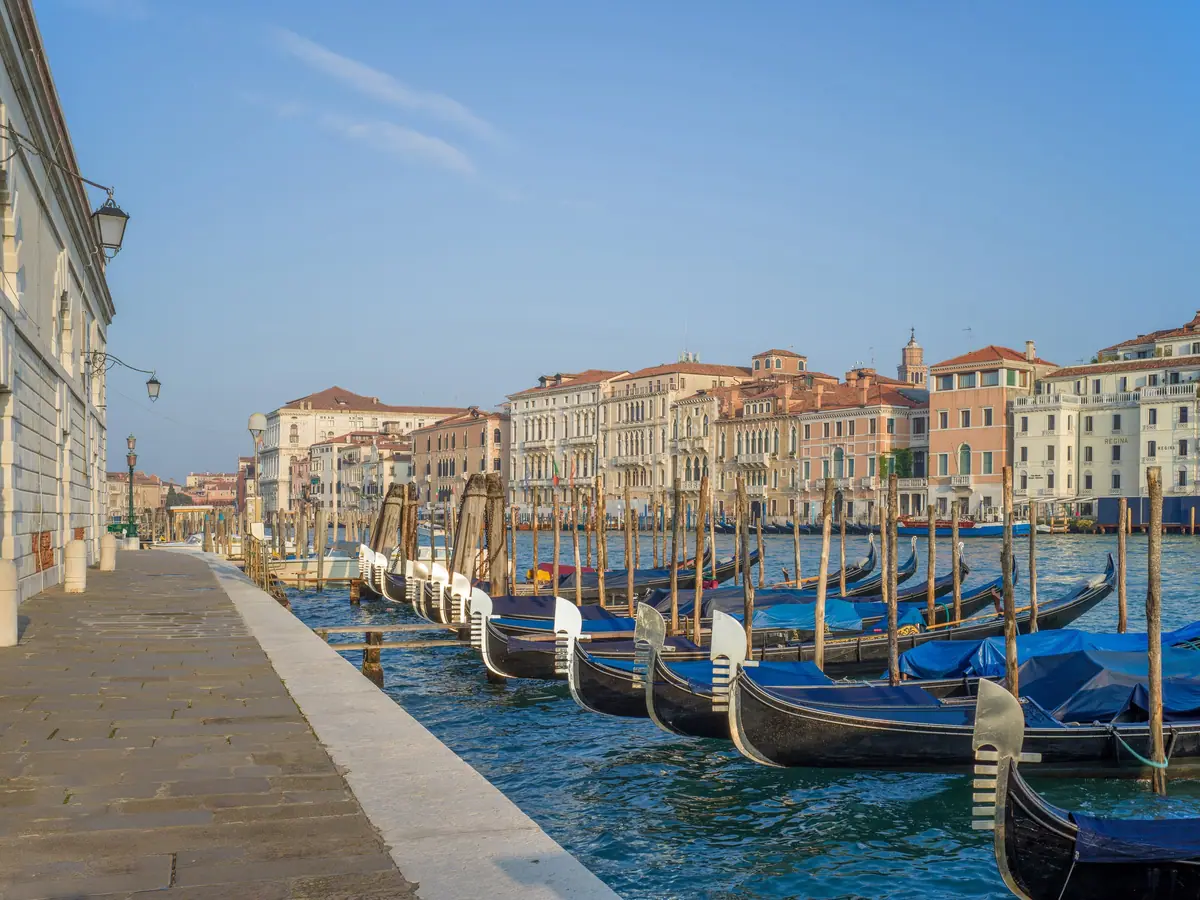
Three of Venice’s big visits stand side by side on Piazza San Marco, so the first of your two days stays there: St Mark’s Basilica as it opens, the campanile beside it and the Doge’s Palace from midday. In the afternoon you walk to the Rialto Bridge and ride the vaporetto, Venice’s water bus, down the Grand Canal. The second day goes out across the lagoon to Murano and Burano, or over the Accademia bridge to Dorsoduro for the Peggy Guggenheim and Ca’ Rezzonico, and it ends in a gondola.
Two days leave out Ca’ Pesaro, the modern art gallery in a Baroque palace on the Grand Canal, and the daytime visit to Teatro La Fenice, the opera house where Verdi’s La traviata had its first night. Torcello, the island with a cathedral founded in 639, is five minutes from Burano by boat, but on this plan it only fits if you cut the walk on Burano short or take the boat tour, which gives it half an hour.
Your dates set the order, since the basilica opens late on Sundays and some of the museums close one day a week.
Matching the days to your dates
- Day one: the basilica, the campanile, the Doge's Palace, Rialto
- Monday to Saturday; on a Sunday, take the palace in the morning with a booked time and the basilica from 14:00
- Day two on Murano and Burano
- Any day but Monday, when only the Glass Museum is open
- Day two in Dorsoduro
- Any day but Tuesday, when both museums close
- A Sunday and a Monday
- Swap them: day one on the Monday, day two on the Sunday
The basilica is the first thing to book, because its 9:30 slot is the one the whole first day hangs on.
What to reserve once your dates are fixed
- 1St Mark's Basilica, 9:30: every visit has a ticket with your name and a half-hour slot. Our hosted entry can't be cancelled or moved; the 30-minute guided tour can be cancelled up to 48 hours before.
- 2The campanile: our ticket is for the day you pick and can't be moved.
- 3The Doge's Palace: without a booked time you go in from 12:00, which is when this plan goes in. Our fast-track ticket has a time you choose, from 9:00.
- 4The Peggy Guggenheim, if day two is Dorsoduro: booking isn't compulsory, but the online entry times can sell out.
- 5The gondola: the shared rides sell seats for a set time, and the classic ride can be cancelled until the end of the day before.
- 6The 48-hour vaporetto pass: book it whenever you like, since it only starts when you first validate it.
St Mark’s Square, the Doge’s Palace and the Grand Canal: day one
-
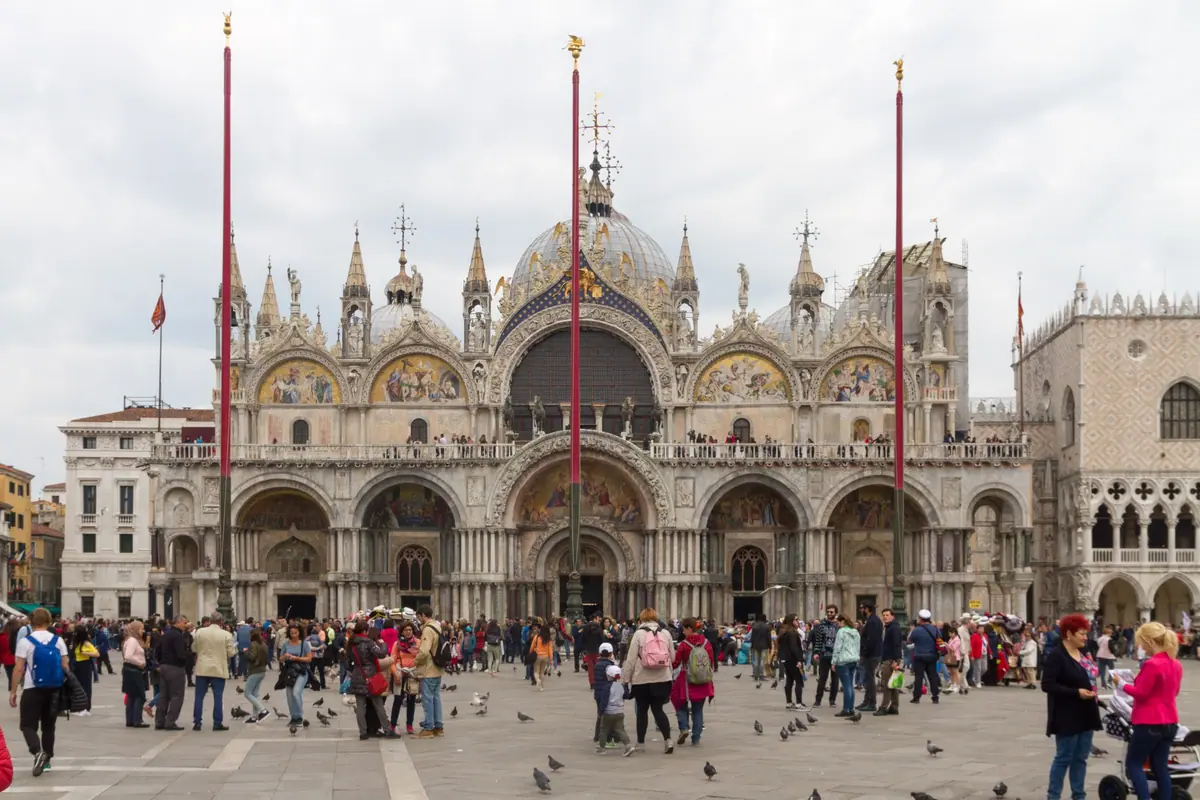 9:30 St Mark's Basilica → The first slot, Monday to Saturday. Tiqets allows 30 minutes to an hour in all: 20 on the route, plus 10 at the Pala d'Oro if your ticket has it. €17
-
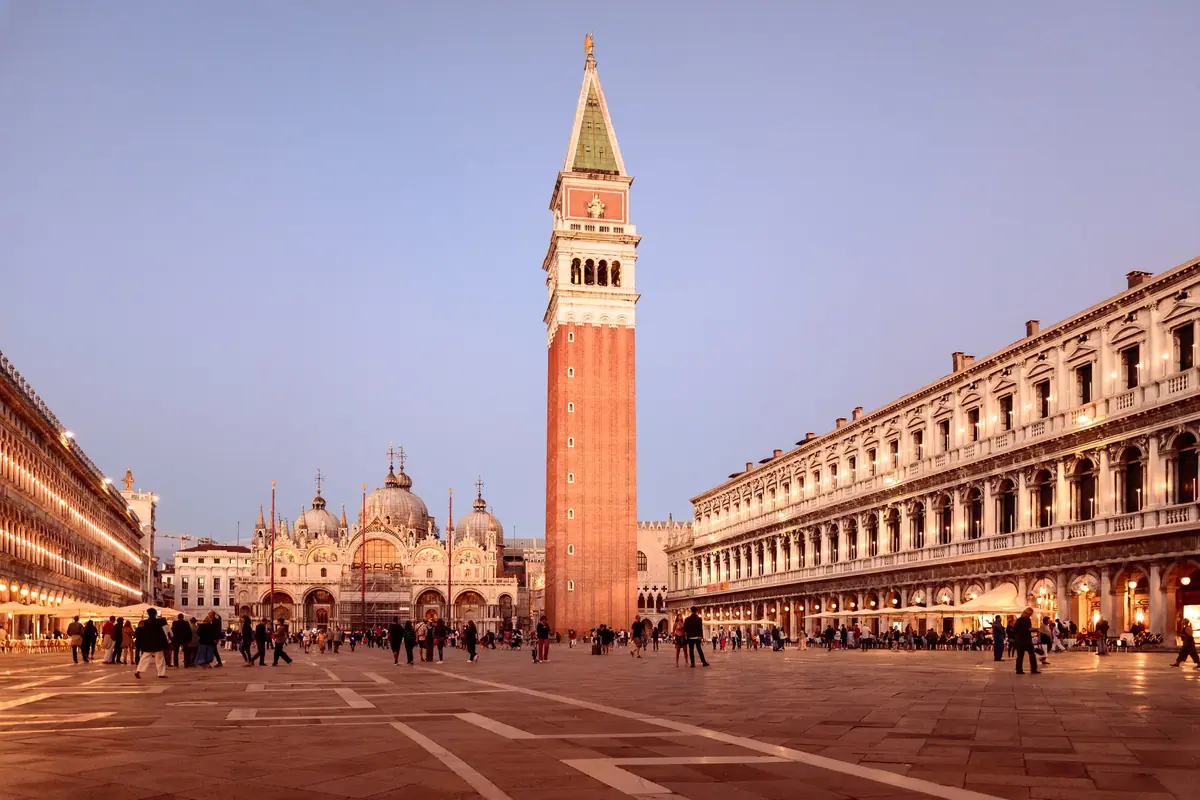 10:30 St Mark's Campanile → Next to the basilica, in the same square. About 40 minutes, with the lift up in 30 seconds. €25
-
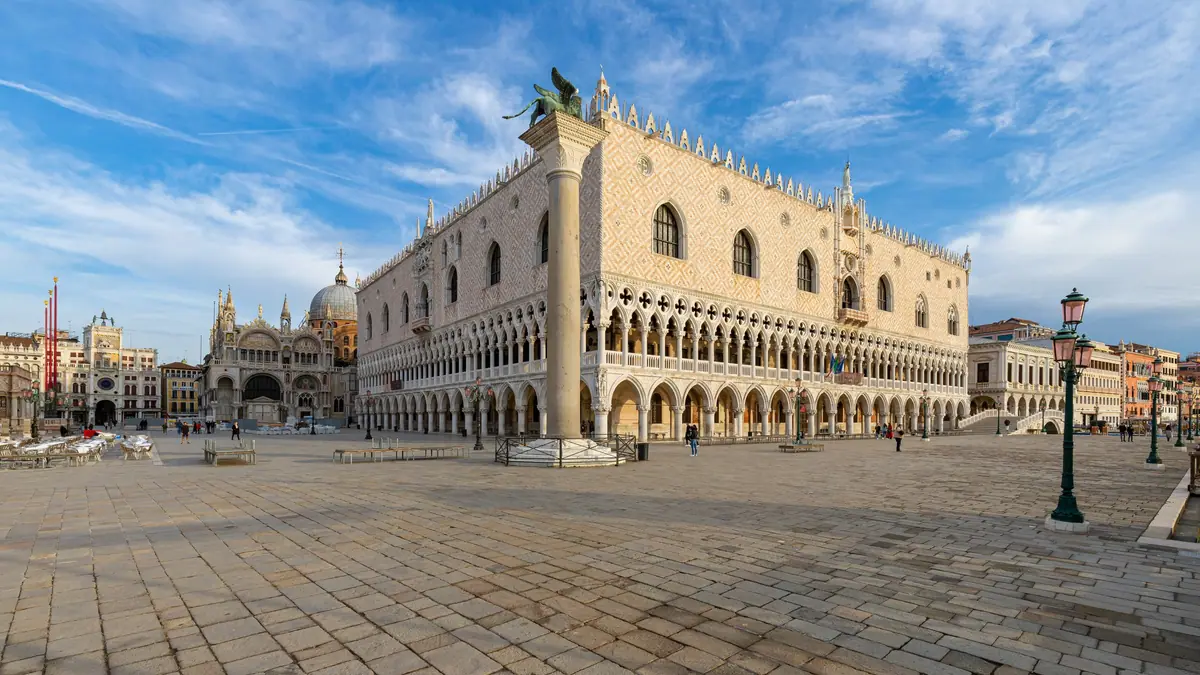 12:00 Doge's Palace → Beside the basilica, on the Piazzetta. Two to three hours.
€35 -
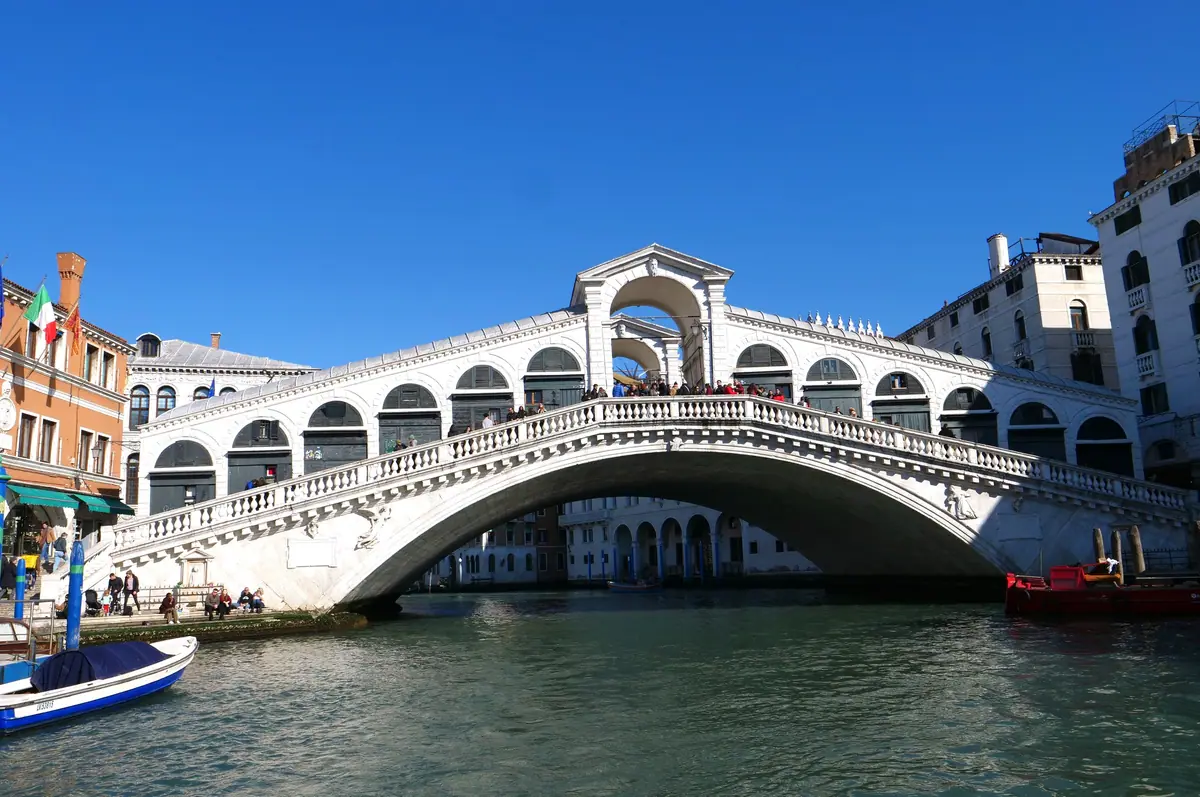 15:30 Rialto Bridge 5 to 10 minutes' walk through the lanes from the square.
-
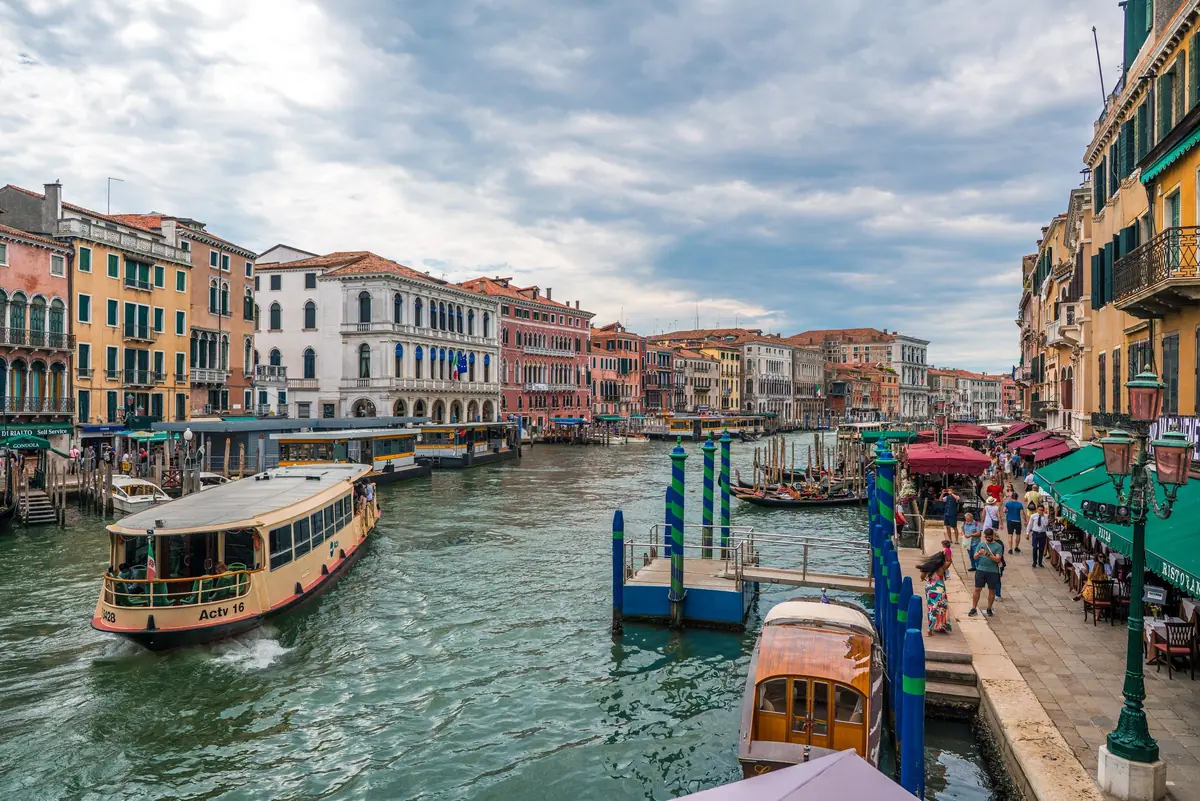 The Grand Canal by vaporetto Line 1 from Rialto up to Ferrovia, the station stop, then the whole canal back down to San Marco, up to 45 minutes.
Come to the 9:30 slot with a small bag. Nothing bigger than 40 × 30 × 20 cm gets into the basilica, or into the campanile after it, and everyone goes through a metal detector at the door. Shoulders have to be covered, with no shorts, short skirts or low-cut tops, and the staff do turn people away for it.
Inside, the route between ropes gives you up to 20 minutes under the gold-ground mosaics, begun in the 1070s, that cover the domes and arches. Behind the high altar stands the Pala d’Oro, a Gothic altarpiece of gilded silver set with 1,927 gems, where the rules allow another 10 minutes.
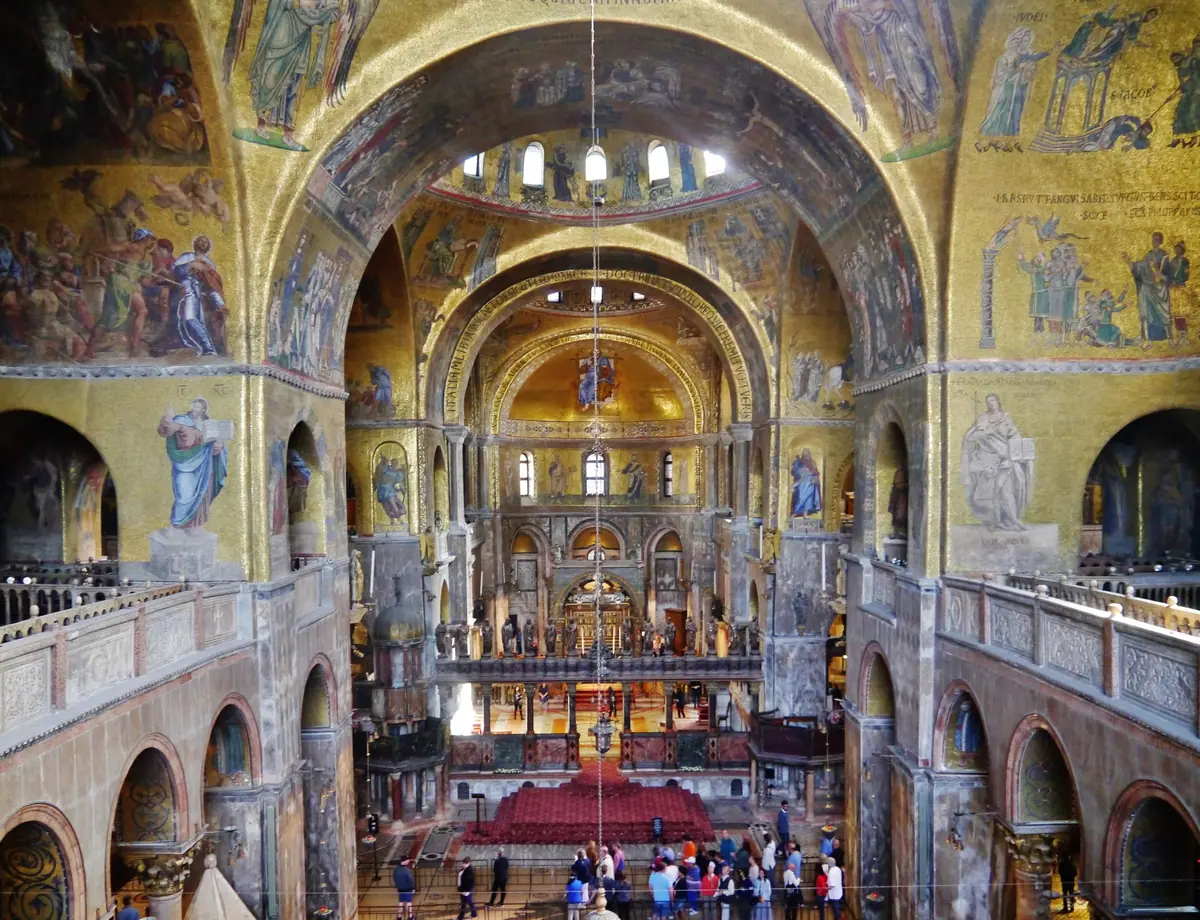
Our hosted entry costs €17, with someone who meets you and takes you in, and the options at checkout add the terrace, or the terrace and the Pala d’Oro. The terrace takes you through the basilica’s museum, past the four original bronze horses brought from Constantinople in 1204, and out above the square, where copies now stand.
Included in the Venice Pass
Step out of the basilica and the campanile is right there in the same square. Go up now, while it’s still morning: the lift is small, and in high season a queue builds at the foot of the tower. The ride to the bell chamber takes about 30 seconds, and the visit about 40 minutes.
Up among the five bells you have the basilica’s domes below you and, to the south, San Giorgio Maggiore across the water. The tower itself is a rebuild. The old one collapsed on 14 July 1902, and the city put it back “as it was and where it was”, opening it again on St Mark’s Day in 1912.
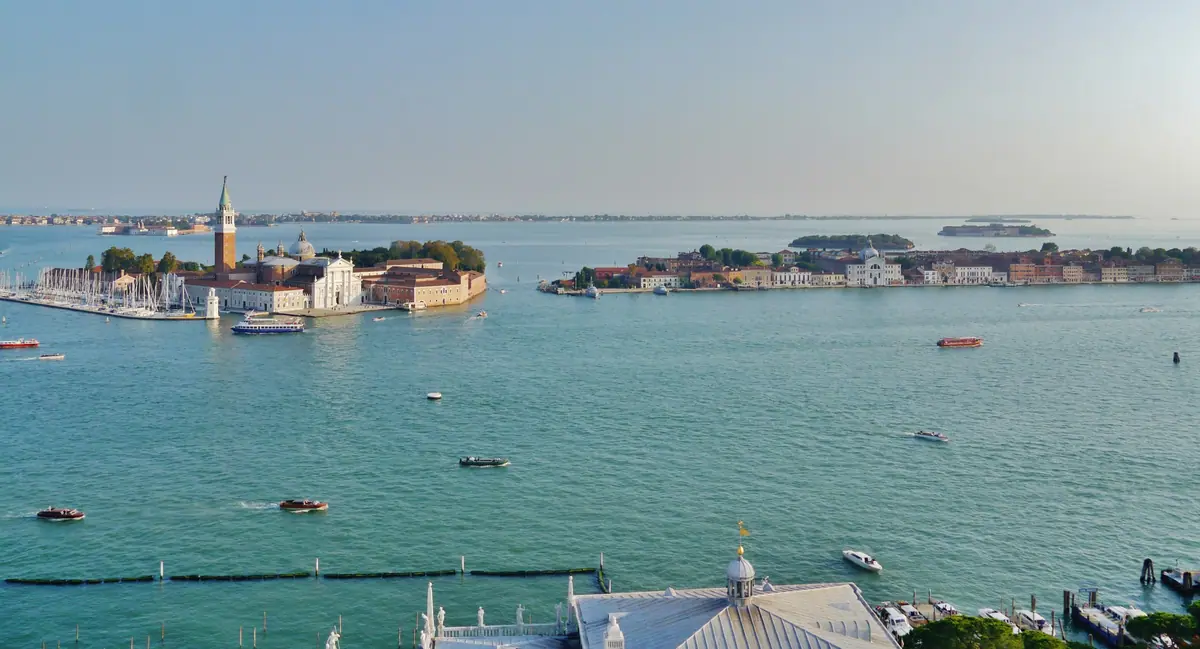
Our campanile ticket costs €25 and comes with an audio guide on your phone. No Venice pass includes the tower.
That leaves time for an early lunch before the Doge’s Palace at 12:00, the hour from which the palace takes visitors without a booked time, so the plan works the same with our ticket or with a pass. Backpacks go into the free cloakroom, but suitcases, trolleys and anything over 1 metre in length, width and depth added together can’t come in, and there’s nowhere at the palace to leave them.
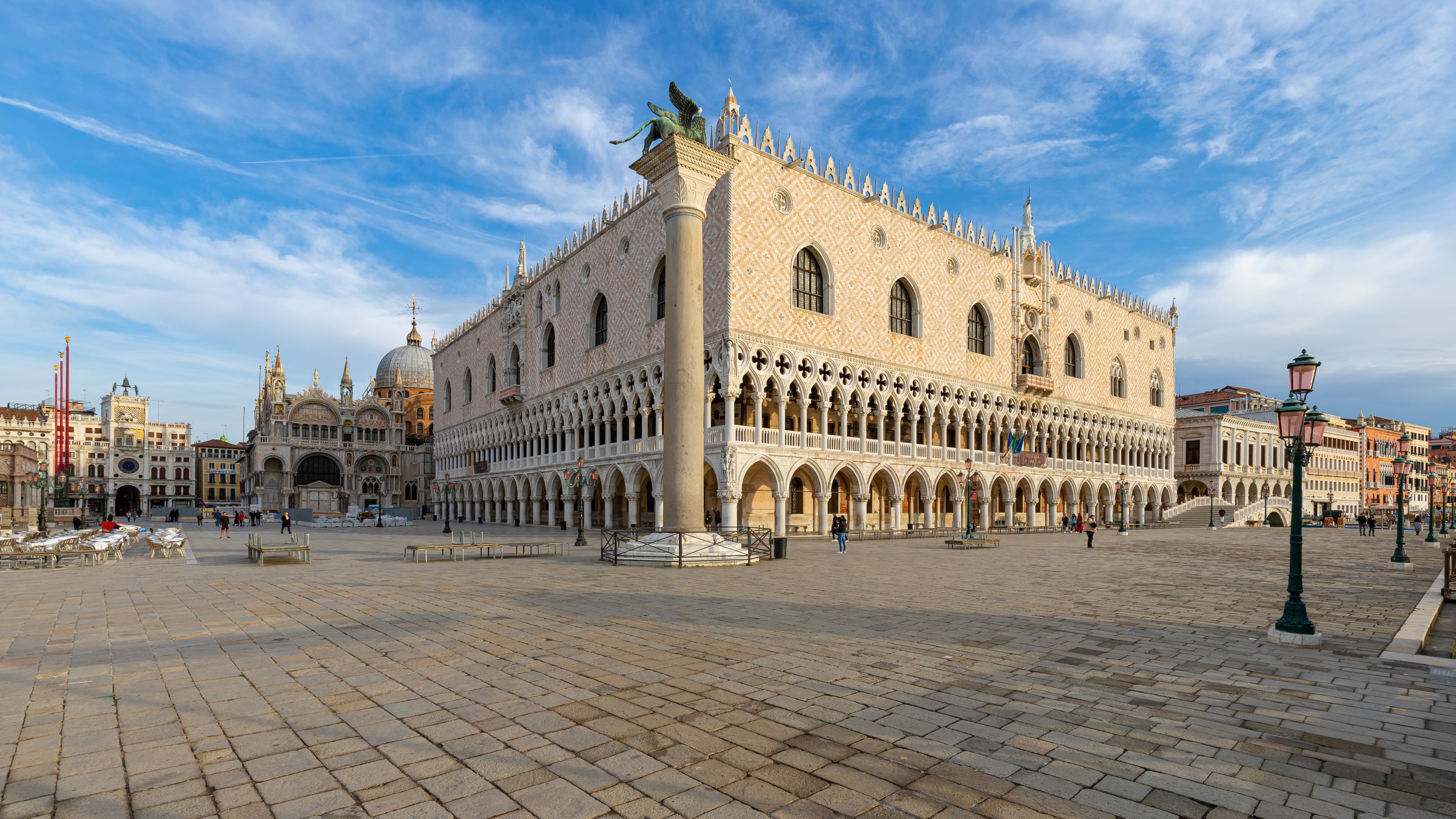
The doge, the Republic’s elected head, lived here, and Venice was governed and judged in these rooms; give them two to three hours. The route climbs from the courtyard by the Giants’ Staircase to the rooms where the Senate and the Council of Ten met, then comes down to the Hall of the Great Council, 53 metres long. Behind the throne hangs Paradise, painted by Jacopo Tintoretto and his workshop between 1588 and 1592, one of the longest canvas paintings in the world.
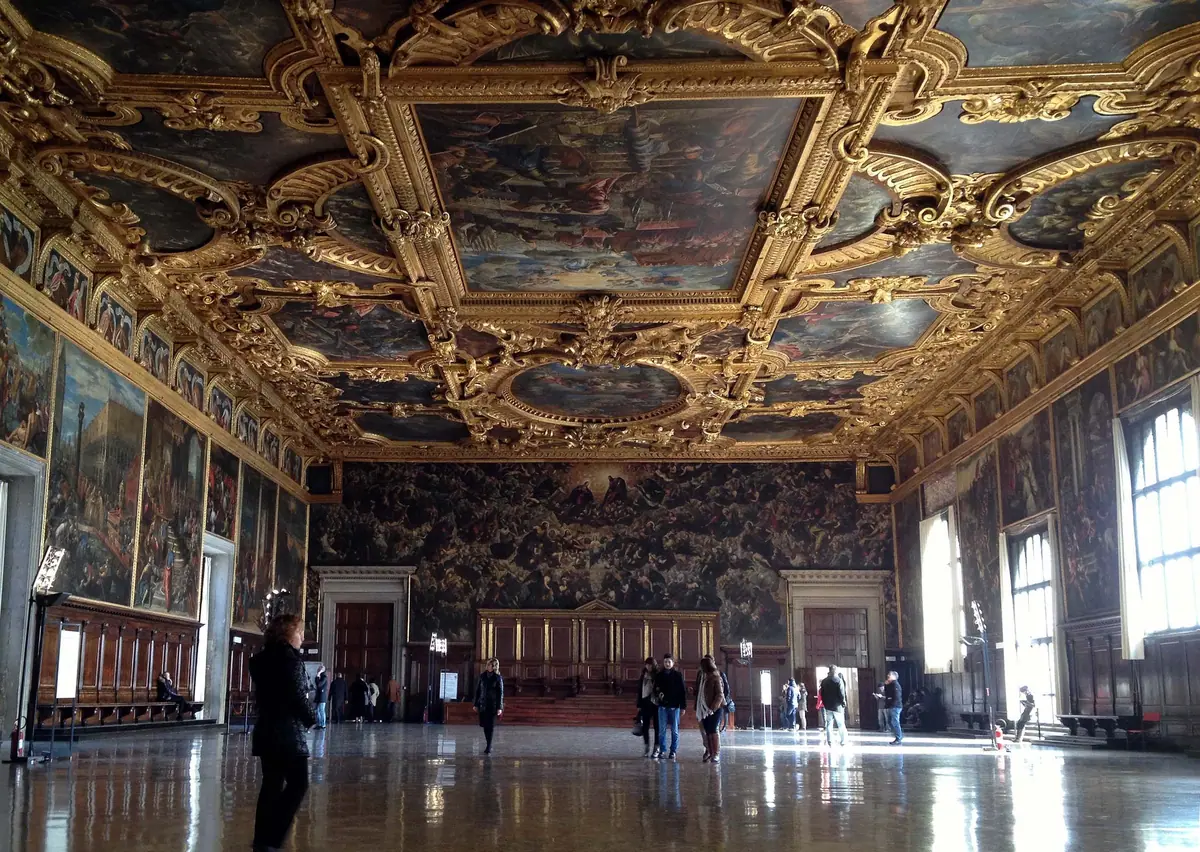
From the last rooms you cross the Bridge of Sighs, built in 1614 to take prisoners from the courtrooms to the New Prisons across the canal, and it’s on every ticket. Our fast-track ticket costs €35 and also covers the Correr Museum, the Archaeological Museum and the Marciana Library at the far end of the square, within 24 hours of your palace visit, if you find room for them.
Included in the Venice Museum Pass
From the palace, the lanes bring you to the Rialto Bridge in 5 to 10 minutes. It’s one of only four bridges across the Grand Canal, and the Rialto vaporetto stop is at its foot. Validate your ticket or pass at the entrance to the pontoon before you board, here and again at Ferrovia; on the 48-hour pass, this first tap starts its clock.
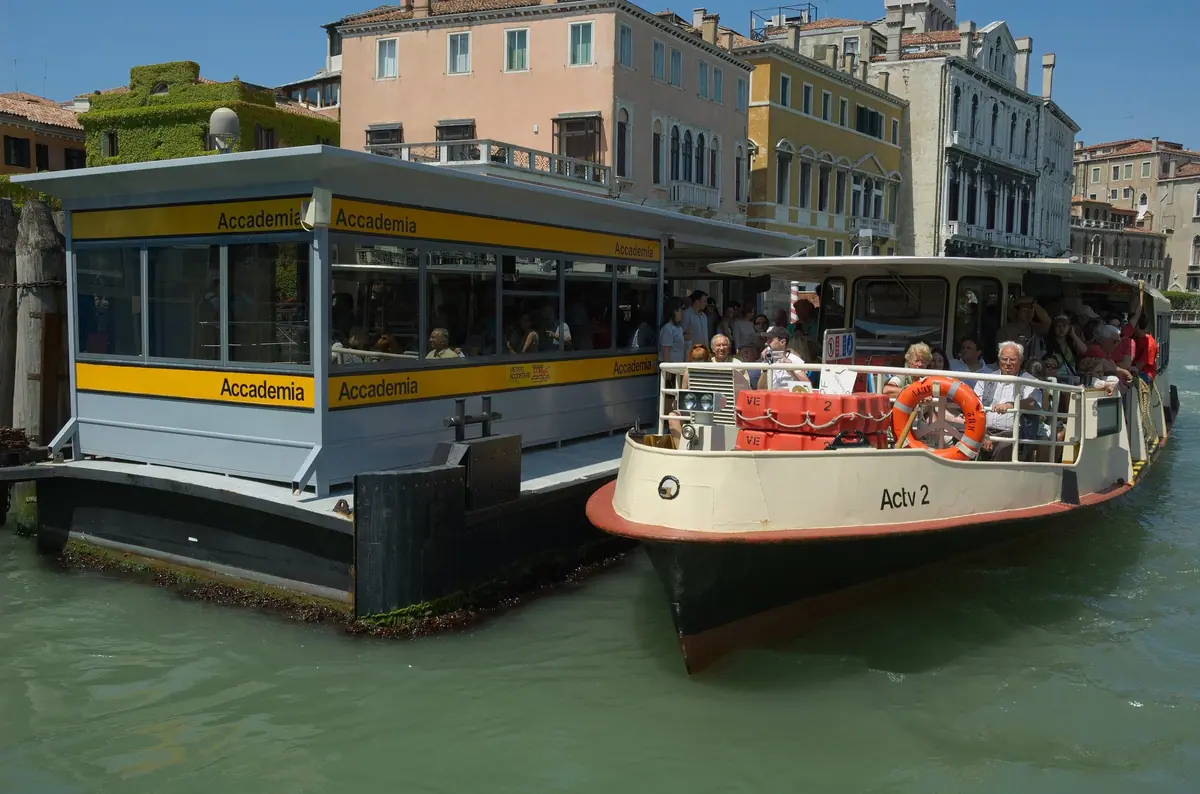
Take line 1 towards Piazzale Roma and get off at Ferrovia, the railway station stop. There, board a line 1 boat going back the other way and stay on for the whole canal. It calls on one bank and then the other, at Ca’ d’Oro, Rialto again, Ca’ Rezzonico and Accademia, and reaches San Marco in up to 45 minutes. Rick Steves times this ride for the end of the day, when the boats empty out, so there’s no need to rush from the palace: the 48-hour pass covers the ride whenever you take it.
Day two on the lagoon: Murano’s glass and Burano’s lace by vaporetto
-
 10:00 Murano and the Glass Museum → Line 4.1 from San Zaccaria, or 4.2 from the station, to Murano Museo. The museum opens every day.
€20 -
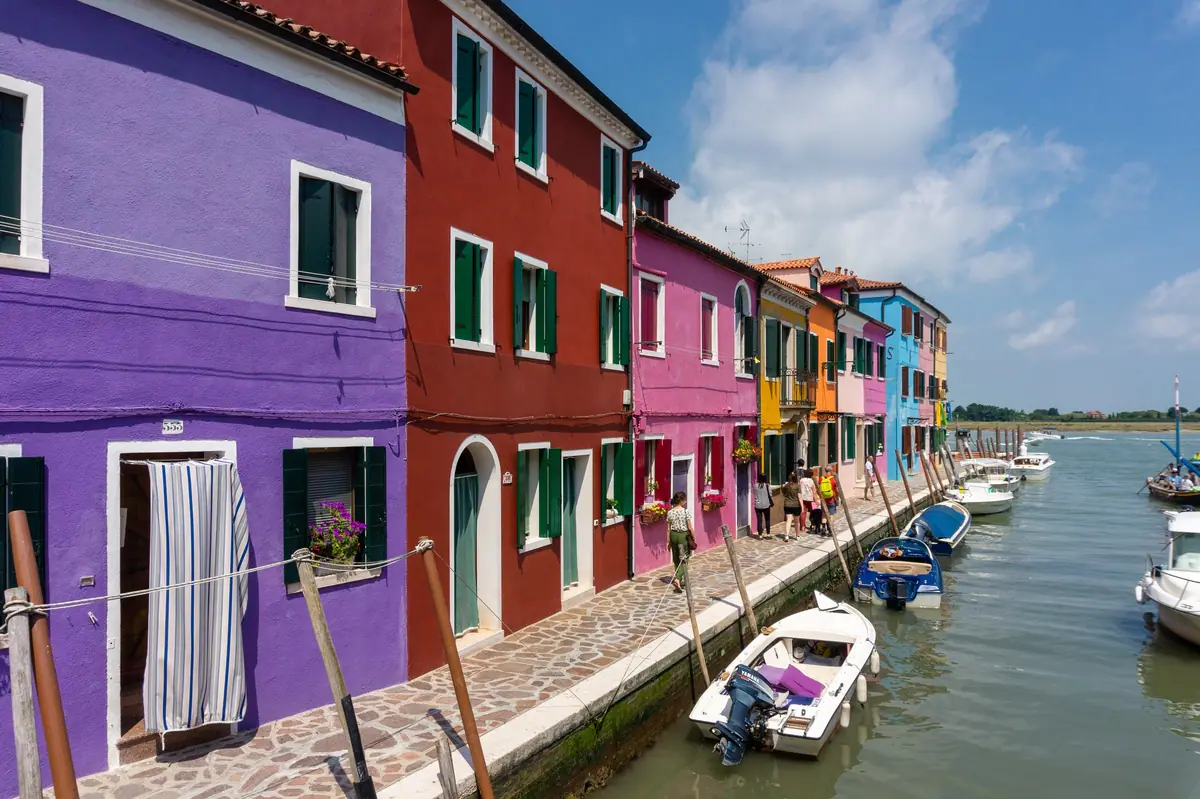 Early afternoon Burano and the Lace Museum → Line 12 from Murano Faro, 30 minutes. Last entry 15:30; closed on Mondays.
-
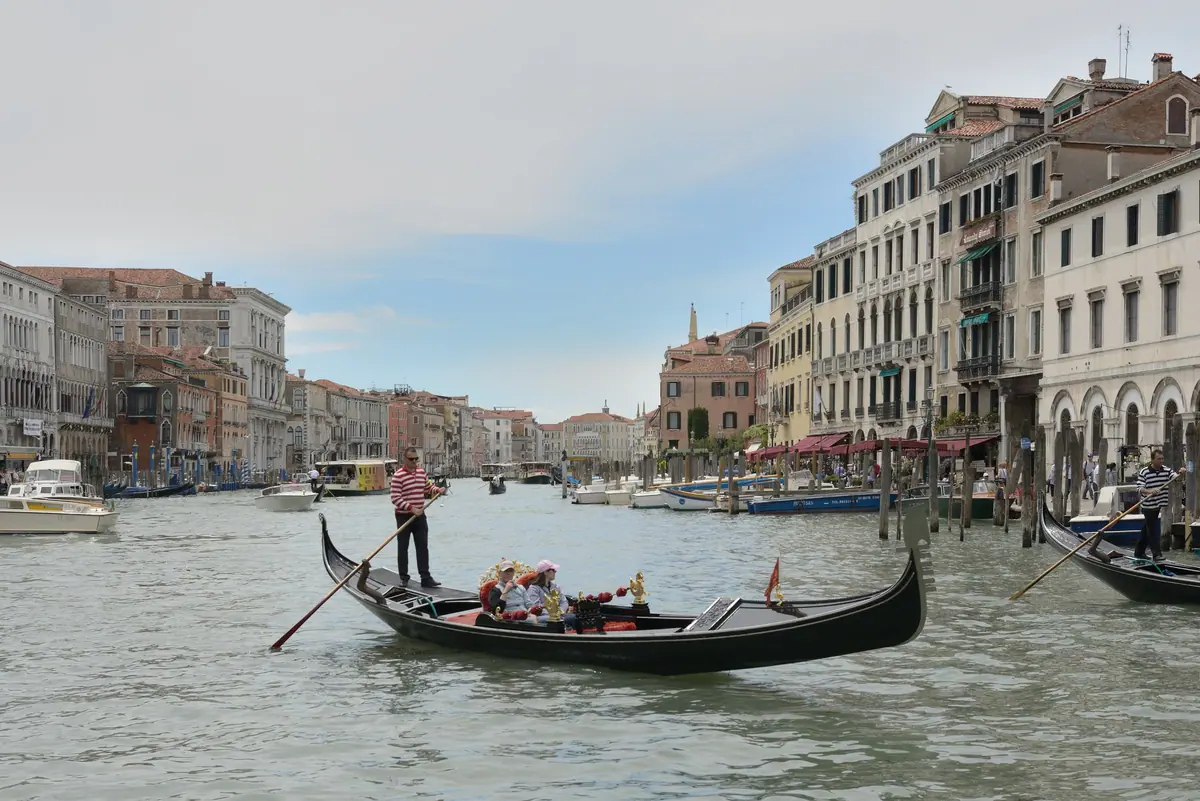 Evening Gondola ride → Line 12 back to Fondamente Nove, then the shared evening ride on the Grand Canal, off Campo San Gallo near the square. €42.90
Each of the two islands kept a craft. Glass has been made on Murano since a 13th-century law moved Venice’s furnaces there, and Burano, the island of painted houses, makes lace with a needle and thread. Going by vaporetto, you set your own pace and see both museums.
Lines 4.1 and 4.2 go round the city in opposite directions, and both stop at Murano Museo, by the Glass Museum. From San Zaccaria, by St Mark’s, take the 4.1, which heads east past the Arsenale to Fondamente Nove, on the north shore, and from there it’s 18 minutes to Murano. From the station or Piazzale Roma, the 4.2 goes up past Madonna dell’Orto and reaches Murano without that detour.
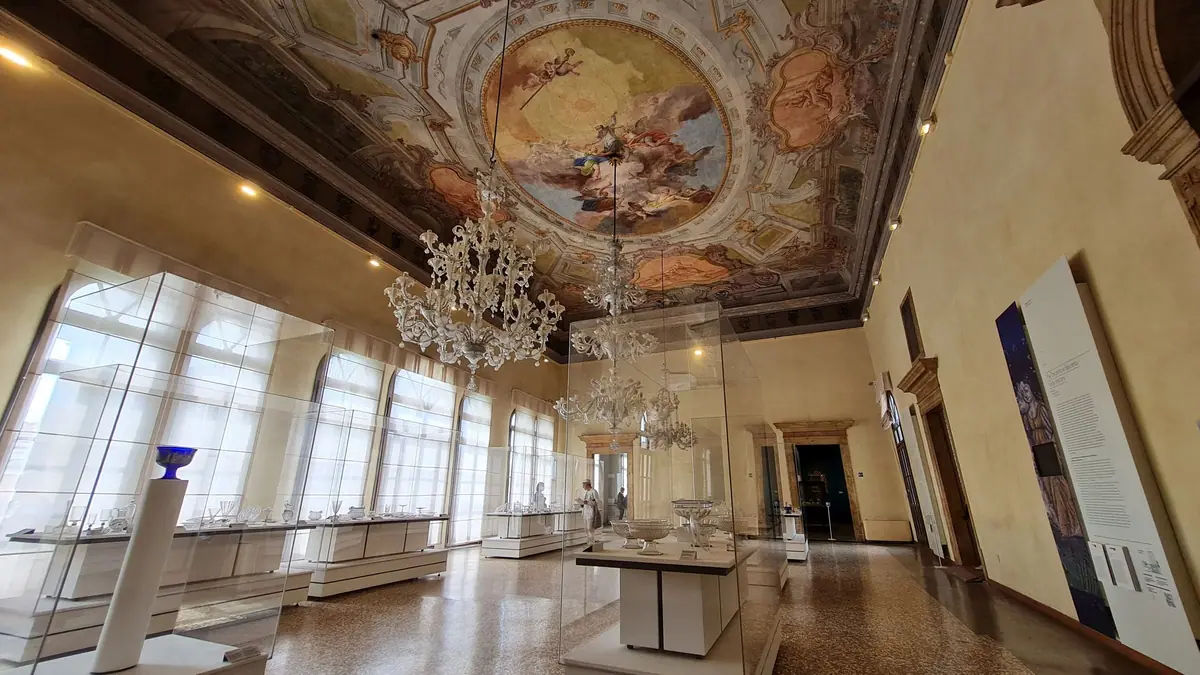
The museum opens at 10:00 in Palazzo Giustinian, a Gothic palace, with Roman glass on the ground floor and, upstairs, the largest historic collection of Murano glass, from the 15th century to the 20th. In the main hall hangs a 60-arm chandelier that won the gold medal at the first Murano glass exhibition, in 1864. One ticket at €20 covers this museum and the Lace Museum on Burano, one entry to each with no booking, and both are on the Museum Pass.
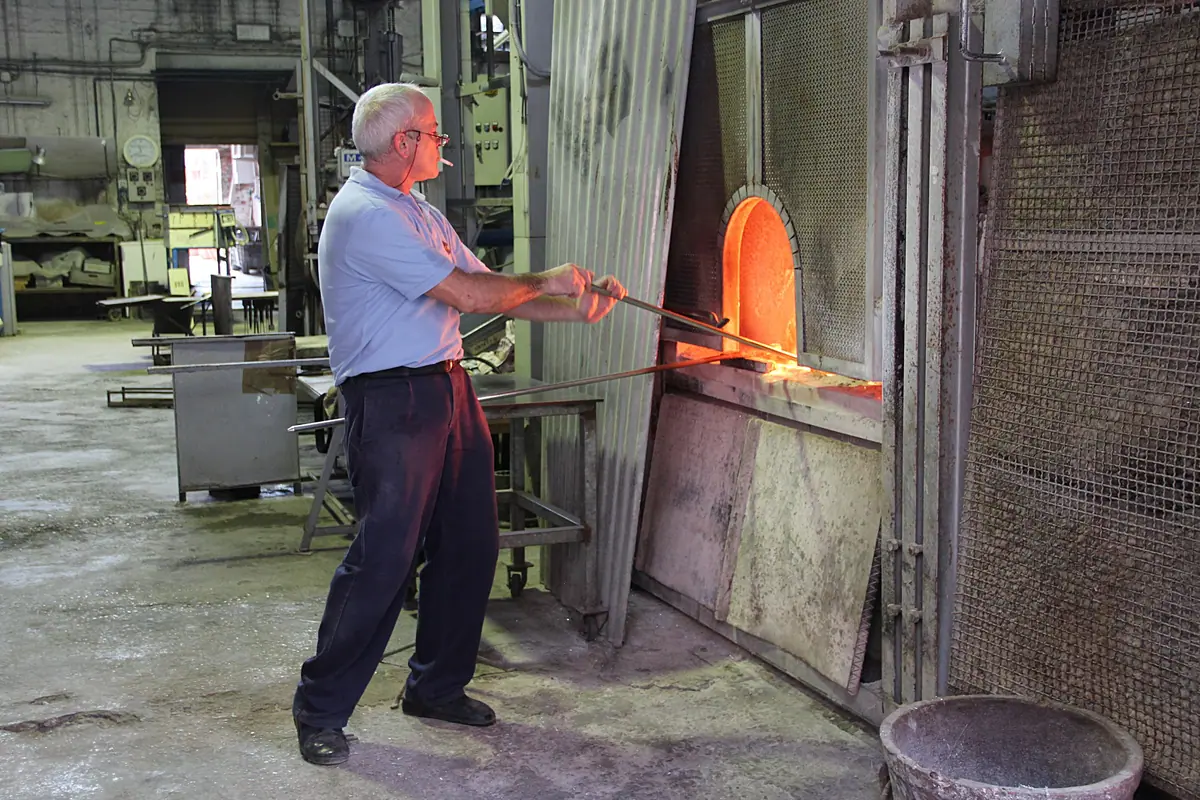
Watching glass being blown is another visit. For that, a 30-minute demonstration in the old church of Santa Chiara on Murano costs €14, and the boat tours further down stop at a working furnace too.
After lunch on Murano, line 12 takes 30 minutes from Murano Faro to Burano. Go to the Lace Museum first, since its last entry is at 15:30 all year. A film subtitled in English explains the stitches, four rooms upstairs cover five centuries of lace, and lacemakers work in the museum while it’s open.
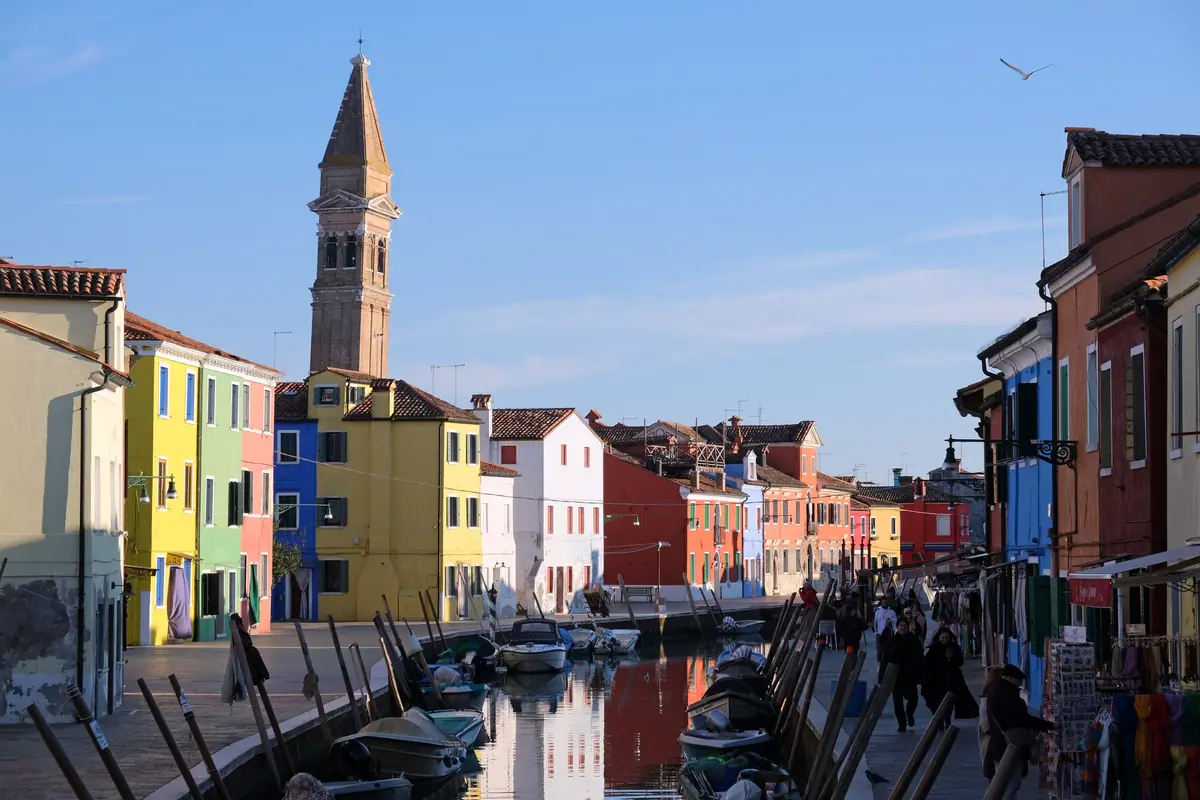
Then walk the painted canals, and stay until late afternoon, when the shops close and the groups head back to Venice. Line 12 runs between Burano and Fondamente Nove in 41 minutes. On the winter timetable the day boats leave Burano at 25 and 55 past the hour until 17:55, and the winter notice doesn’t say whether the late boats carry on.
If you’d rather leave the boats to someone else, the tours do the islands in half a day, glass-blowing demonstration included. The one to Murano, Burano and Torcello starts at €18; the option that leaves from St Mark’s Square takes four hours, with about 20 minutes on Murano, 50 on Burano and 30 on Torcello, so it’s a first look rather than the museums.


Back in the city, the day ends on the water again, more slowly. Rick Steves calls a gondola ride the ultimate after-dark activity in Venice, and the shared evening ride on the Grand Canal, from €42.90 a seat, starts with 20 minutes on land, an introduction to the gondola and a visit to the Gondola Gallery, before half an hour on the water with up to five passengers.
The ride meets at Sotoportego del Cavalletto 1117, off Campo San Gallo, so pick a time that leaves you room to get back from Fondamente Nove. Since 1 November the Gondola Gallery’s meeting point has been at Calle de le Rasse, past the Bridge of Sighs, and Tiqets hasn’t said whether the rides moved with it, so check the address on your voucher.
Dorsoduro instead of the islands: the Peggy Guggenheim and Ca’ Rezzonico
-
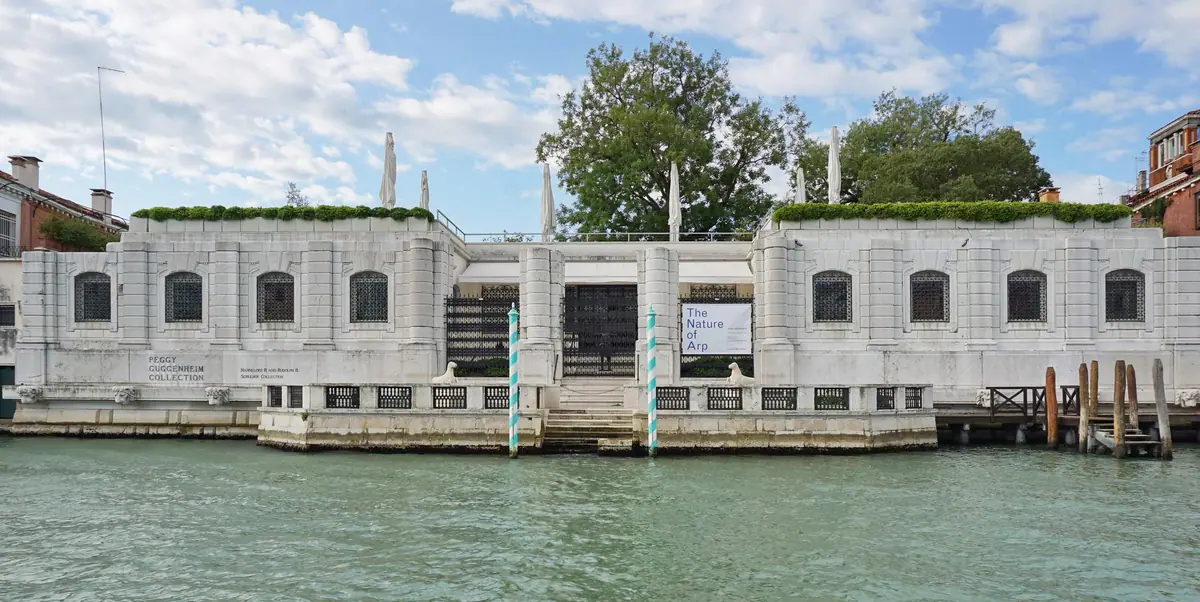 10:00 Peggy Guggenheim Collection → Across the Accademia bridge from San Marco, or line 1 to Accademia or Salute. Closed on Tuesdays. One to two hours. €20
-
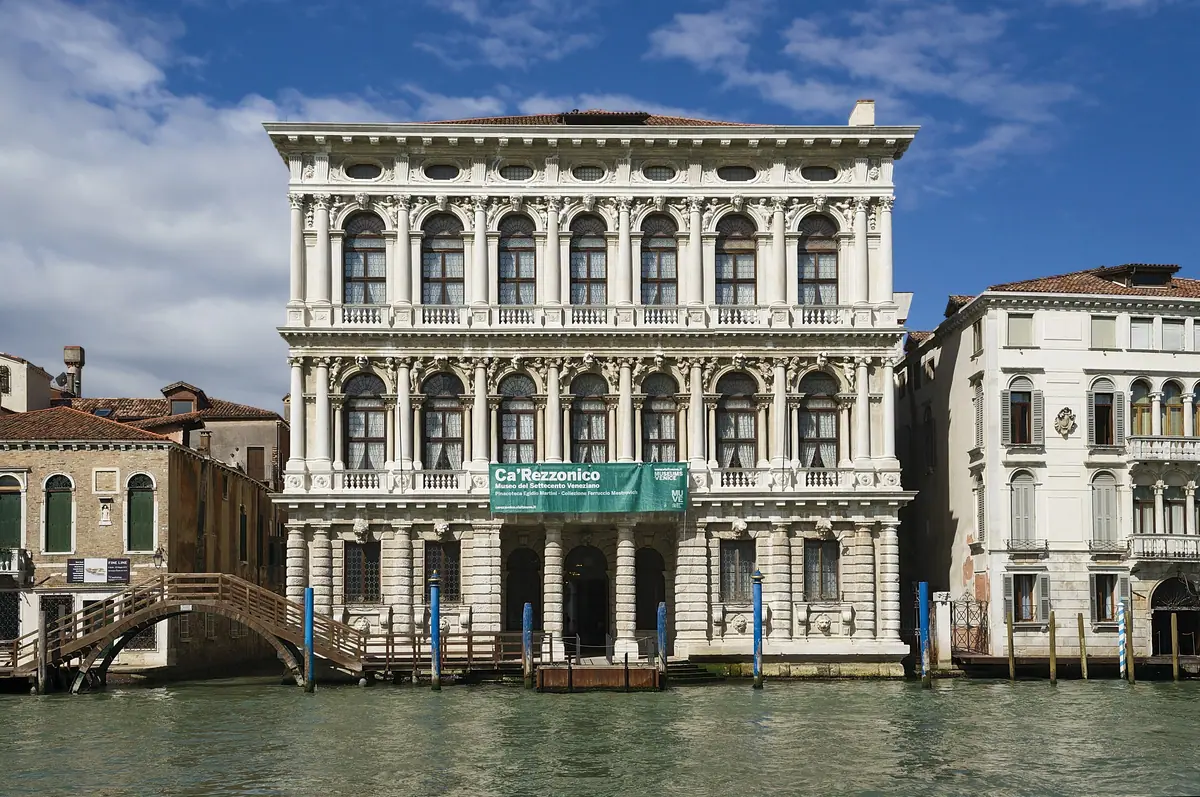 13:30 Ca' Rezzonico → Line 1 from Accademia, one stop up the canal. Closed on Tuesdays; last entry 17:00, or 16:00 from November to March.
€15 -
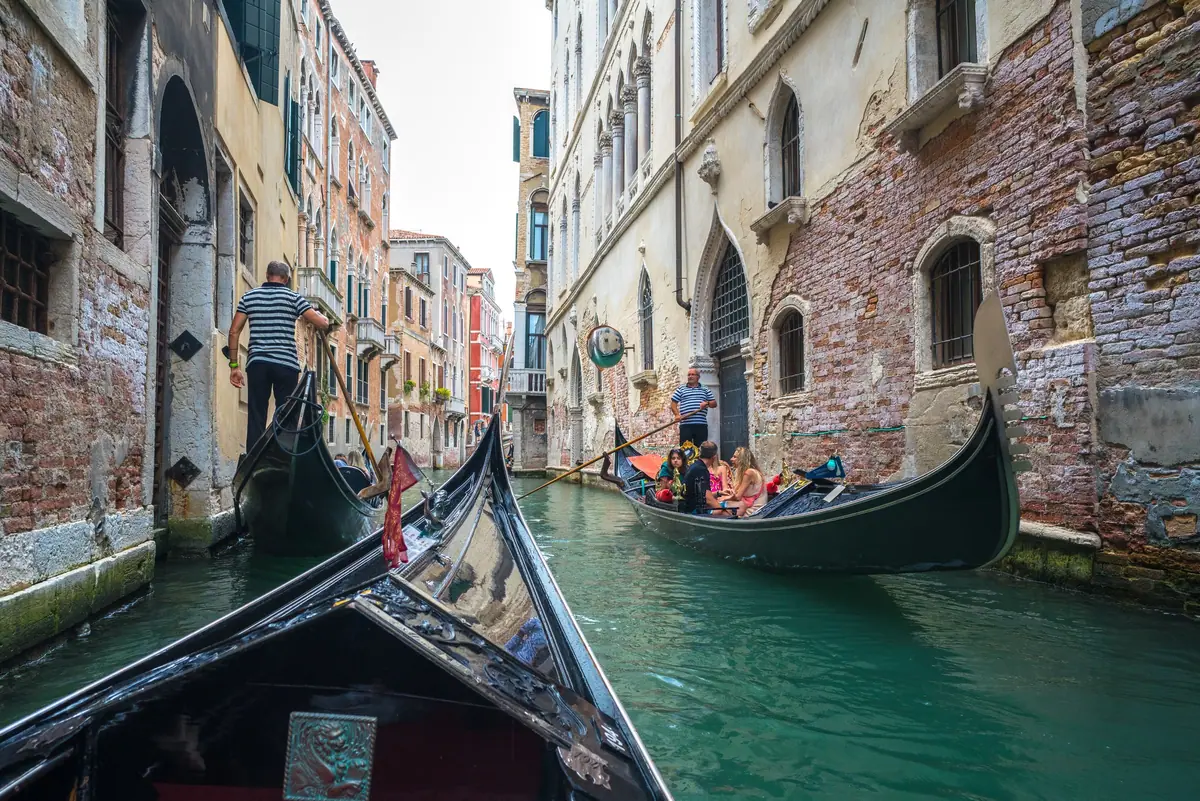 Late afternoon Gondola ride → Line 1 back down to San Marco; the classic ride meets off Campo San Gallo. €39
If paintings appeal to you more than the lagoon, cross the Accademia bridge instead. Dorsoduro, on the far bank of the Grand Canal from San Marco, has two museums a vaporetto stop apart, one of modern art and one of 18th-century Venice.
Peggy Guggenheim, the American collector, lived in Palazzo Venier dei Leoni, a palace whose building stopped at the first of the five floors it was meant to have, and her collection hangs in the same rooms: Picasso, Pollock, Magritte, Max Ernst, Brancusi and Kandinsky. From the entrance hall you walk out onto the terrace over the Grand Canal, where Marino Marini’s sculpture The Angel of the City stands, and her ashes lie in a corner of the sculpture garden.
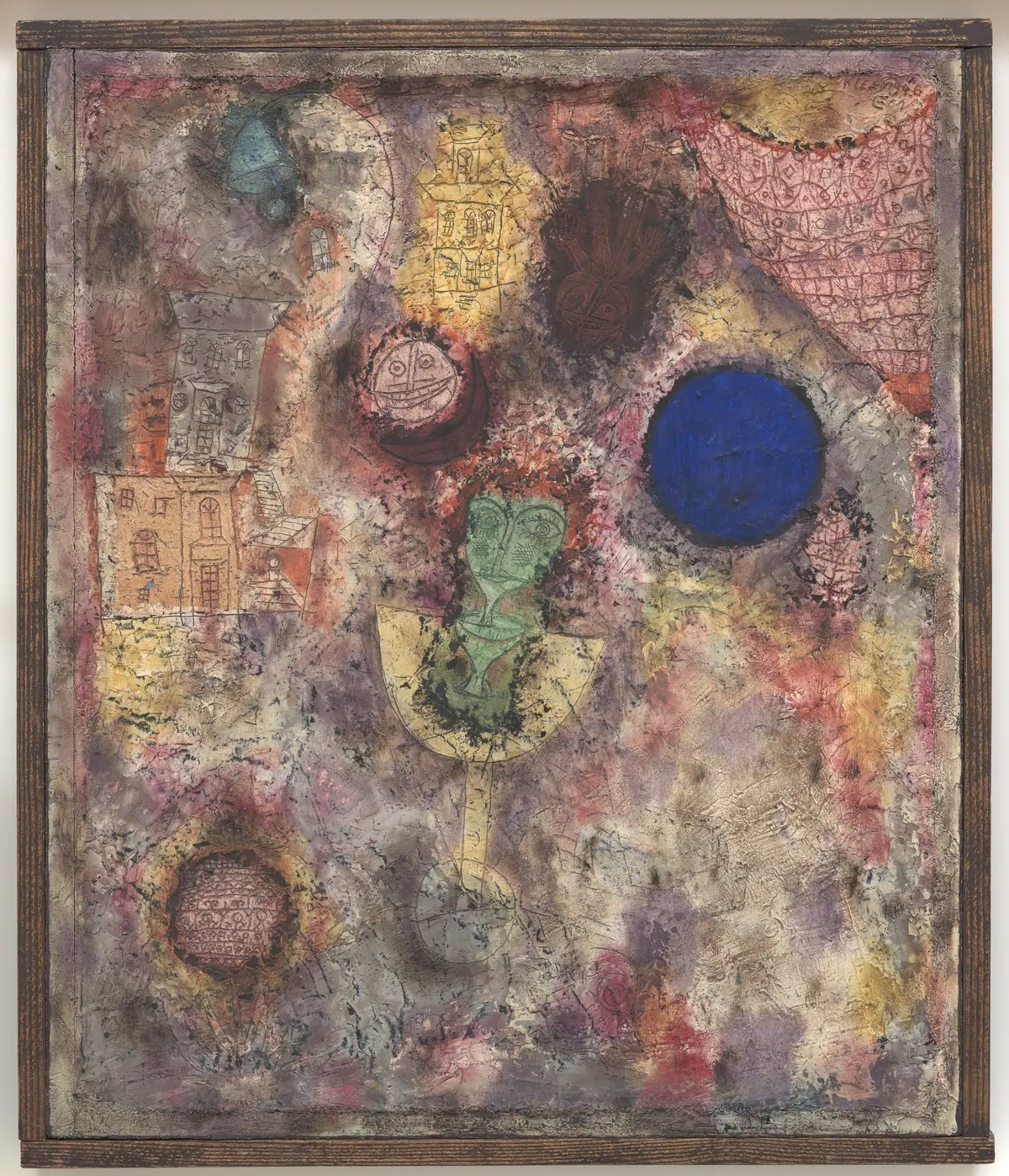
From 14 November to 29 March 2027 the garden pavilion has Fucina degli Angeli, a show about Peggy Guggenheim and 20th-century art glass, the kind of glass the islands version of this day goes to see.
Visitors in 2025 found a queue of about 20 minutes at opening time, so come with a ticket. Our Fast Track entry costs €20, and bags go into free lockers at the ticket office. It’s a private museum, so no Venice pass covers it.
After lunch, line 1 takes you one stop up the canal from Accademia to the Ca’ Rezzonico stop, at the palace door. The city bought the palace in 1935 and furnished it with pieces from other palaces as the home of a noble family of the 1700s, and it’s now the Museum of 18th-century Venice.
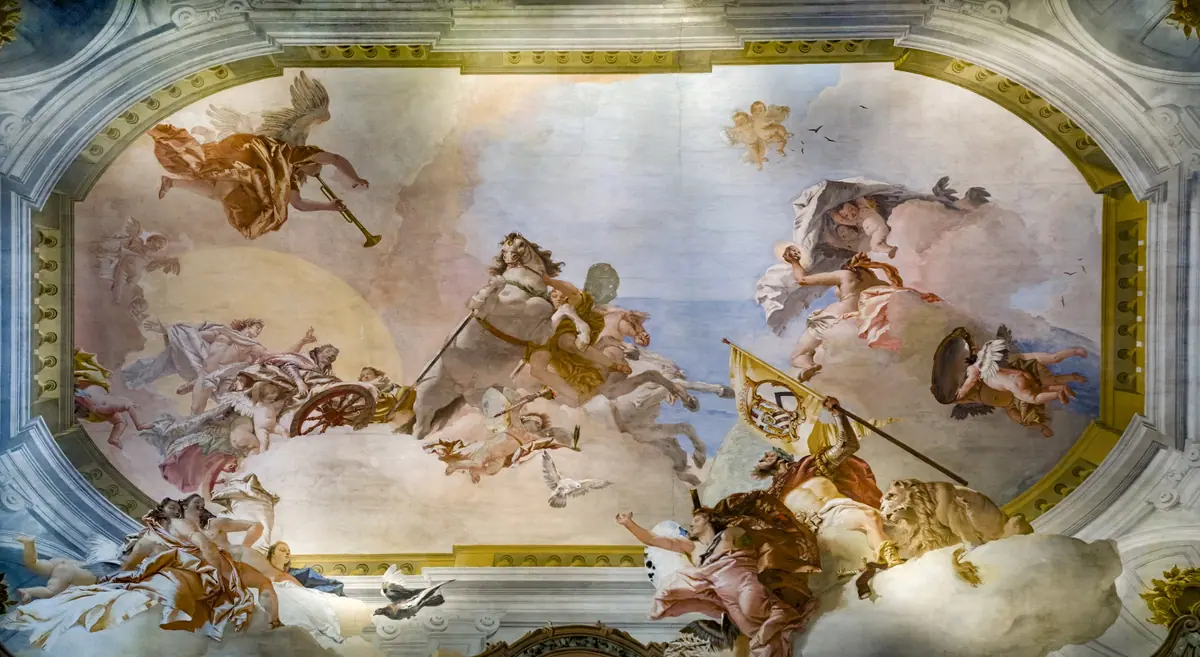
Tiepolo painted that ceiling for the wedding of Ludovico Rezzonico and Faustina Savorgnan, the couple carried across the sky in Apollo’s chariot. Upstairs, the long central hall holds the only two Canaletto views in the city’s public collections, and the Longhi Room is hung with Pietro Longhi’s small scenes of Venetians at home and out on the town. The ballroom is under scaffolding for now, and you cross it along a corridor.
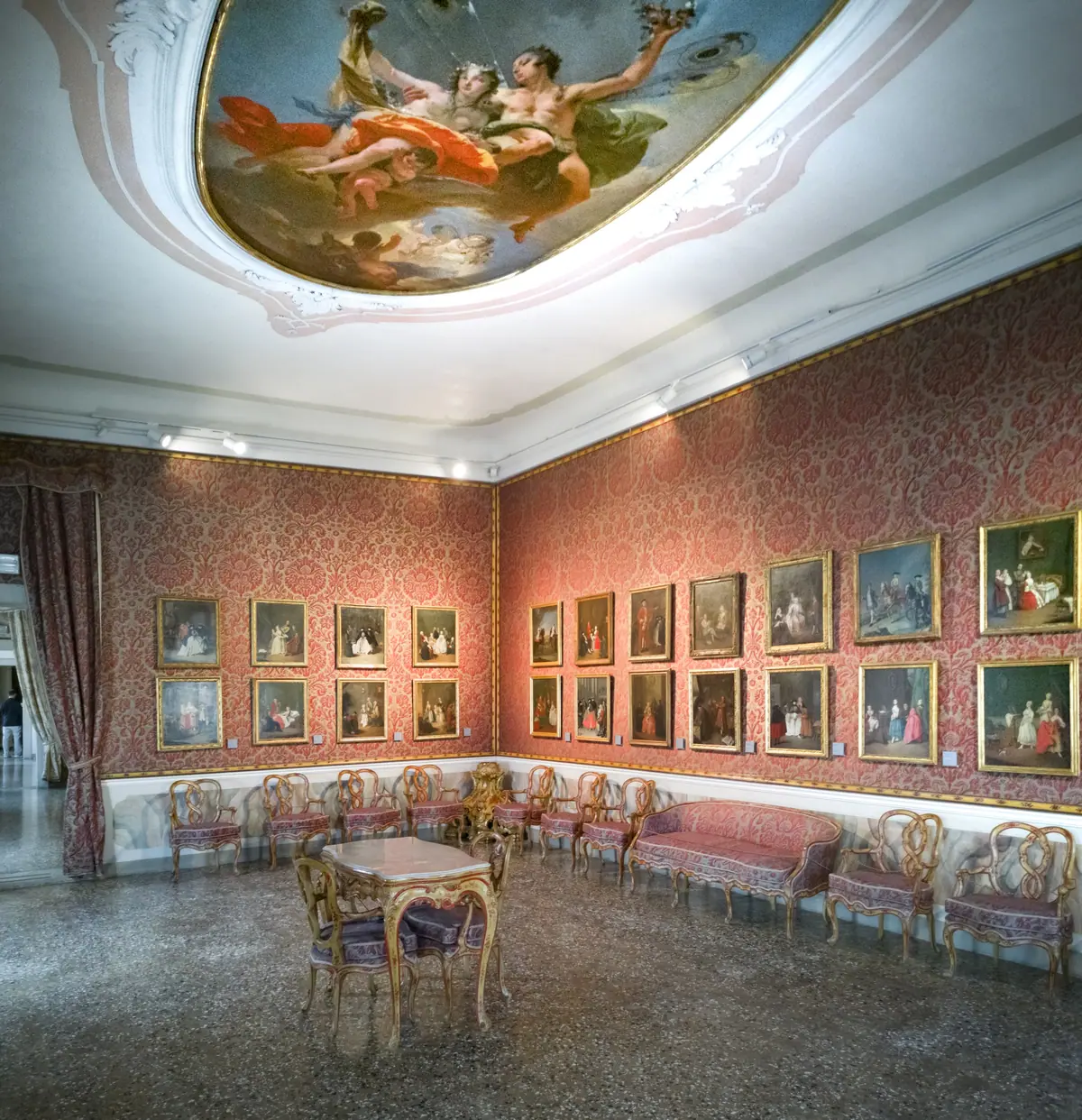
Until 31 March it opens 10:00 to 17:00, with the last entry at 16:00, and the rooms start closing half an hour before the doors; from April it stays open until 18:00. The Museum Pass includes it, or our ticket is €15.
Included in the Venice Museum Pass
For the gondola, ride line 1 back down to San Marco. The classic shared ride, from €39 a seat, meets at Calle San Gallo 1093/b, off Campo San Gallo behind the Procuratie, though the Gondola Gallery moved on 1 November, so check the address on your voucher. After 20 minutes on land, the half hour on the water slips through the narrow canals near the square and comes out on the Grand Canal, past the Peggy Guggenheim and the Salute church, the Dorsoduro bank you walked in the morning.
Getting around on the 48-hour vaporetto pass
Both days lean on the vaporetto. The 48-hour ACTV pass costs €40 and gives you unlimited rides from the first time you validate it.
The boats on this plan
- Day one
- Line 1 from Rialto up to Ferrovia, then back down the whole Grand Canal to San Marco
- Day two on the islands
- Line 4.1 from San Zaccaria or 4.2 from the station to Murano Museo, line 12 to Burano, line 12 back to Fondamente Nove
- Day two in Dorsoduro
- Line 1 to Accademia, one stop to Ca' Rezzonico, back down to San Marco
- Not on the pass
- The airport routes, the Alilaguna boats and the traghetto, the gondola ferry across the Grand Canal
Start it at Rialto on the first afternoon and it runs until the same hour on day three, so the boat to the station or Piazzale Roma on your way out is covered as well. For Marco Polo airport you need another ticket, and getting from Venice airport has the buses and boats.

The Venice access fee on a 2-day trip
If you sleep in Venice, the access fee isn’t yours to pay. It’s the charge on day-trippers to the old city, and anyone staying at accommodation in the municipality, Mestre and the Lido included, is exempt, though in 2026 you needed an exemption voucher with a QR code, which many hotels send. It isn’t being collected now anyway: the 2026 season ended on 26 July.
It matters if you sleep outside the municipality and come in each day, because then you’re a day-tripper on both days. In 2027 the fee applies on 72 days from 26 March to 15 August, all but nine of them Fridays to Sundays. In 2026 it cost €5 per person per day paid at least four days ahead, or €10 after that, and visitors going only to Murano, Burano and the other smaller islands didn’t pay, though this plan’s islands day sets off from the old city. The 2027 price and rules will be announced by 31 December 2026, and Venice’s access fee has the dates in full.
Museum Pass, Venice Pass or single tickets for this plan
St Mark’s Basilica, the campanile and the vaporetto sit outside Venice’s museum passes, so the choice comes down to the palace and day two. On the islands version, the Venice Museum Pass pays for itself: it costs €50, and our palace ticket at €35 with the Glass and Lace museums ticket at €20 already add up to more.
On the Dorsoduro version, the palace and Ca’ Rezzonico at €15 come to about the pass’s price, so it only gets ahead if you add another of the city’s museums, such as Ca’ Pesaro.
The other way to bundle these days is the Venice Pass, from €75: the palace, the basilica with a host or with the terrace, and either the boat from St Mark’s to Murano, Burano and Torcello or a classic gondola ride. Each ticket has its own date and none is refundable, and since it already includes the palace, you’d take it or the Museum Pass, not both. Venice’s own City Pass, the Venezia Unica, covers the same civic museums as the Museum Pass and adds the Querini Stampalia and the Scuola Grande dei Carmini, which this plan doesn’t visit.
-
Venice Museum Pass
The Doge's Palace from 12:00 on day one, then the Glass and Lace museums or Ca' Rezzonico on day two, with nothing to book
from €50
Buy pass→ -
Venice Pass
Day one's palace and basilica in one purchase, plus the islands boat from St Mark's or the gondola ride of day two
from €75
Buy pass→ -
Venezia Unica City Pass
The All Venice version covers the palace, Ca' Rezzonico and the island museums, plus the Querini Stampalia; its palace entry is for the date you pick, from 12:00
from €62.90
Buy pass→


For the sums with whichever options you pick, Venice Pass and Venice’s museum passes has a receipt under each bundle.
City cards
Venice city cards and passes
Pick the one that fits your trip. Prices are per adult, and you choose your dates on the next page.


See what you’d save, if anything
Which Venice pass pays off for your trip?
Pick how many days you’ve got and the sights you want to see. The calculator adds up the tickets and rides, sets them against the card and tells you right away whether it pays off, and by how much, at today’s prices. No email, no sign-up.
Step 1 of 3
How long, and who’s going?
People also ask
Frequently asked questions
Is 2 days enough for Venice?
Yes. St Mark's Basilica, the campanile, the Doge's Palace, the Rialto Bridge and a boat down the Grand Canal fill the first day, and the second leaves room for Murano and Burano or for Dorsoduro's two big museums, with a gondola ride at the end. Doing both versions of day two, or adding Ca' Pesaro and a visit to La Fenice, the opera house, takes a third day.
What should I book in advance for 2 days in Venice?
The 9:30 slot at St Mark's Basilica, since every visit there has a ticket in your name with a half-hour slot. The campanile ticket is for a set day. The Doge's Palace only needs a booked time if you want to go in before 12:00. At the Peggy Guggenheim booking isn't compulsory, but its online entry times can sell out. Seats on the shared gondola rides are booked for a set time too.
Which Venice pass is worth it for 2 days?
The Venice Museum Pass, if day two is Murano and Burano with their museums: our palace ticket at €35 and the Glass and Lace museums ticket at €20 add up to more than its €50. On the Dorsoduro version, the palace and Ca' Rezzonico come to about the pass's price. No pass covers the campanile or the vaporetto, so the 48-hour vaporetto pass, €40, goes on top.
What's closed on Mondays and Tuesdays in Venice?
On Mondays the Lace Museum on Burano and the Torcello Museum close, and so do Ca' Pesaro, Palazzo Mocenigo, the Natural History Museum and the Querini Stampalia. On Tuesdays it's Ca' Rezzonico, the Peggy Guggenheim and the Fortuny Museum. The Doge's Palace, the campanile and the Glass Museum on Murano open every day, and so does St Mark's Basilica, though on Sundays it only lets visitors in from 14:00.
What can I see in Venice in one day?
Day one of this plan: St Mark's Basilica at 9:30, the campanile next to it, the Doge's Palace from 12:00, then the Rialto Bridge and line 1 of the vaporetto down the Grand Canal. If you're coming for the day without staying the night, check the access fee: it isn't charged now, and it returns on 72 days between 26 March and 15 August 2027, with the price and rules due by 31 December 2026.
Should I do Murano and Burano or Dorsoduro on day 2?
Murano and Burano if you want the lagoon: the glass museum and furnaces of Murano, Burano's painted houses and lace, and the boats in between, which fill the day. Dorsoduro if you'd rather have paintings: Picasso and Pollock at the Peggy Guggenheim, Tiepolo and Canaletto at Ca' Rezzonico. Keep the islands off a Monday and Dorsoduro off a Tuesday.
Read more