
Venice
Peggy Guggenheim Collection
The palace stopped after one floor of the five it was meant to have, and Peggy Guggenheim filled it with Picasso and Pollock.
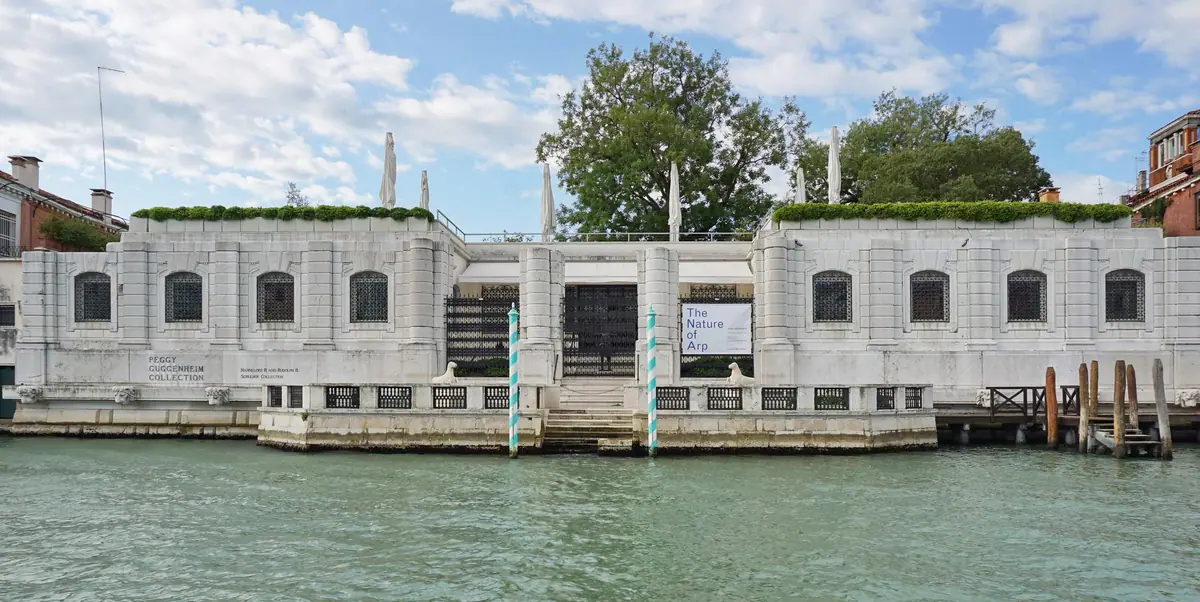
Peggy Guggenheim, the American collector, lived with her modern art in a palace on Venice's Grand Canal, Palazzo Venier dei Leoni, and the Peggy Guggenheim Collection shows it in the same rooms. Picasso, Pollock, Magritte, Max Ernst, Brancusi and Kandinsky are in the house, Marino Marini's sculpture The Angel of the City stands on the terrace over the canal, and sculptures fill the garden where her ashes lie. Our Fast Track ticket covers entry, with lower prices for over-65s, students and 10- to 17-year-olds.
Before you go
- Time inside1–2 h
- ClosedTuesday
TipBags and backpacks go into free lockers at the ticket office, and you can take photos without flash, but tripods and selfie sticks are not allowed.


Tickets for the Peggy Guggenheim Collection: Fast Track entry, any day but Tuesday
The ticket we sell for the Peggy Guggenheim Collection is a Fast Track entry, at €20 for adults. Visitors aged 65 and over pay €16.50, and the reduced €11.50 is for 10- to 17-year-olds and students under 26. Children under 10 go in free.
You don’t have to book, since the museum sells tickets at the door, but its online entry times can sell out, so it’s safer to arrive with a ticket. Once bought, ours can’t be refunded.
Audio guides aren’t part of it. The museum hires them out at the entrance for €7, in Italian, English, French, German or Spanish, and they cover the Schulhof collection, a later bequest housed in the old outbuilding, as well as Peggy’s own. If you’d rather listen to a person, there are free short talks in the rooms every day, and a tour of the collection in English on Saturdays and Sundays at 15:00.

The Peggy Guggenheim isn’t on any Venice pass. It’s a private museum, run by the Solomon R. Guggenheim Foundation, so the City Pass and the Museum Pass of the city’s museums don’t reach it, and it has no free day for everyone.
Inside the Peggy Guggenheim Collection: the palace, the garden and the terrace
From the ticket office you come out into the Nasher sculpture garden. The Schulhof wing, in the palace’s old outbuilding, leads you to the palace itself, the house Peggy lived in, and from its entrance hall you can walk out onto the terrace over the Grand Canal, where Marino Marini’s sculpture The Angel of the City (1948) stands.
The palace rooms hold the collection Peggy built. When we last checked, in October 2026, Pablo Picasso was on the walls with The Poet (1911), The Studio (1928) and On the Beach (1937), and Jackson Pollock with Alchemy (1947), Circumcision (1946) and Croaking Movement (1946). Max Ernst had 11 works up, among them The Kiss (1927) and Attirement of the Bride (1940).
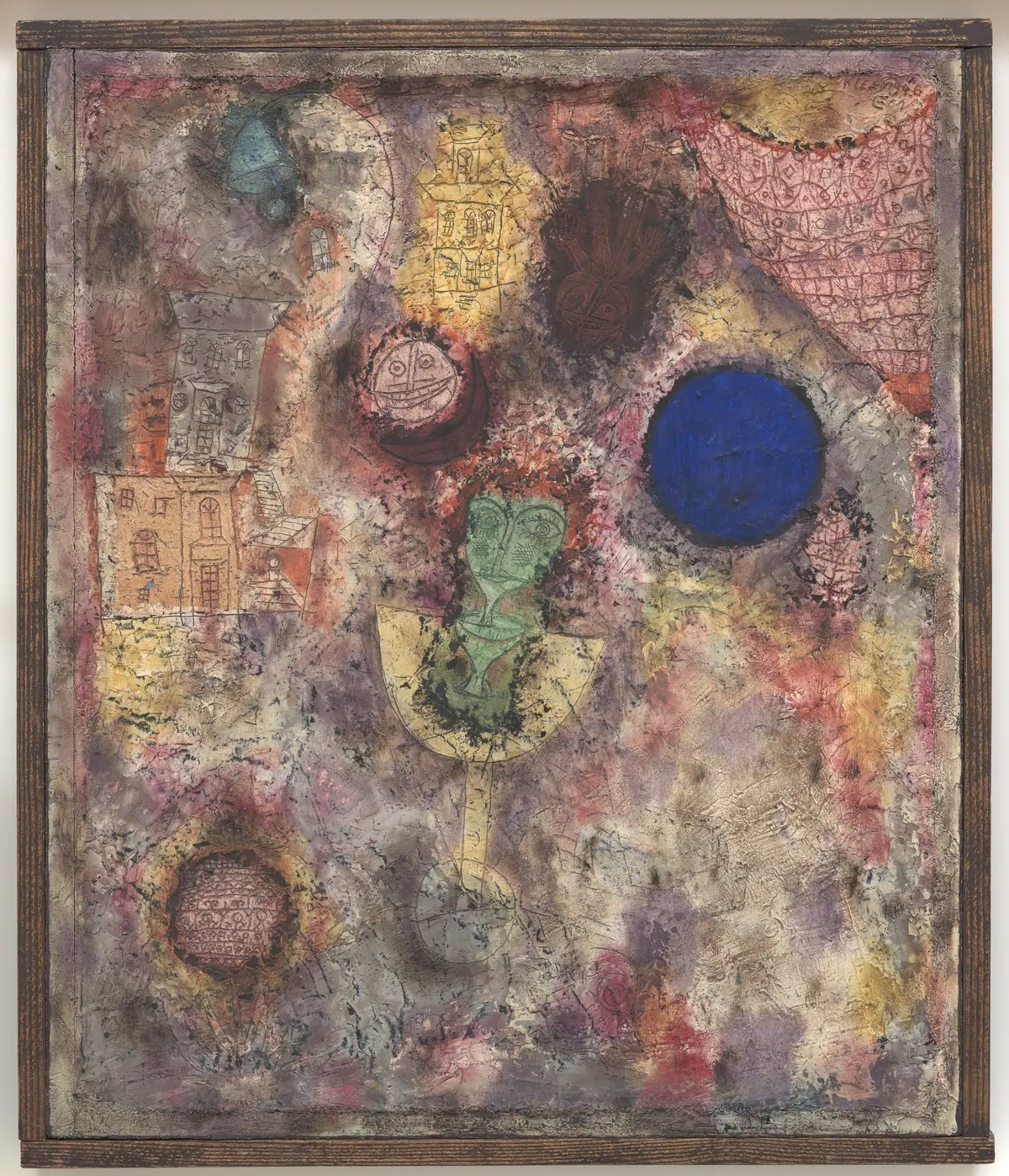
Also on view were René Magritte’s Empire of Light (1953–54) and Voice of Space (1931), and Wassily Kandinsky’s Landscape with Red Spots, No. 2 (1913), White Cross (1922) and Upward (1929). Constantin Brancusi’s Maiastra (about 1912) and Bird in Space (1932–40) were there too, with Silver Bedhead (1943), the headboard Alexander Calder made for Peggy’s own bed, and single works by Giorgio de Chirico, The Red Tower (1913), Joan Miró, Dutch Interior II (1928), and Paul Klee, Magic Garden (1926).
Some famous names aren’t hanging right now. Salvador Dalí’s Birth of Liquid Desires, Marcel Duchamp’s Box in a Valise and the Boccioni works were marked “not on view”, and of the 11 Pollocks in the collection, three are on the walls. If one painting is your reason for coming, check the museum’s online collection before you go.
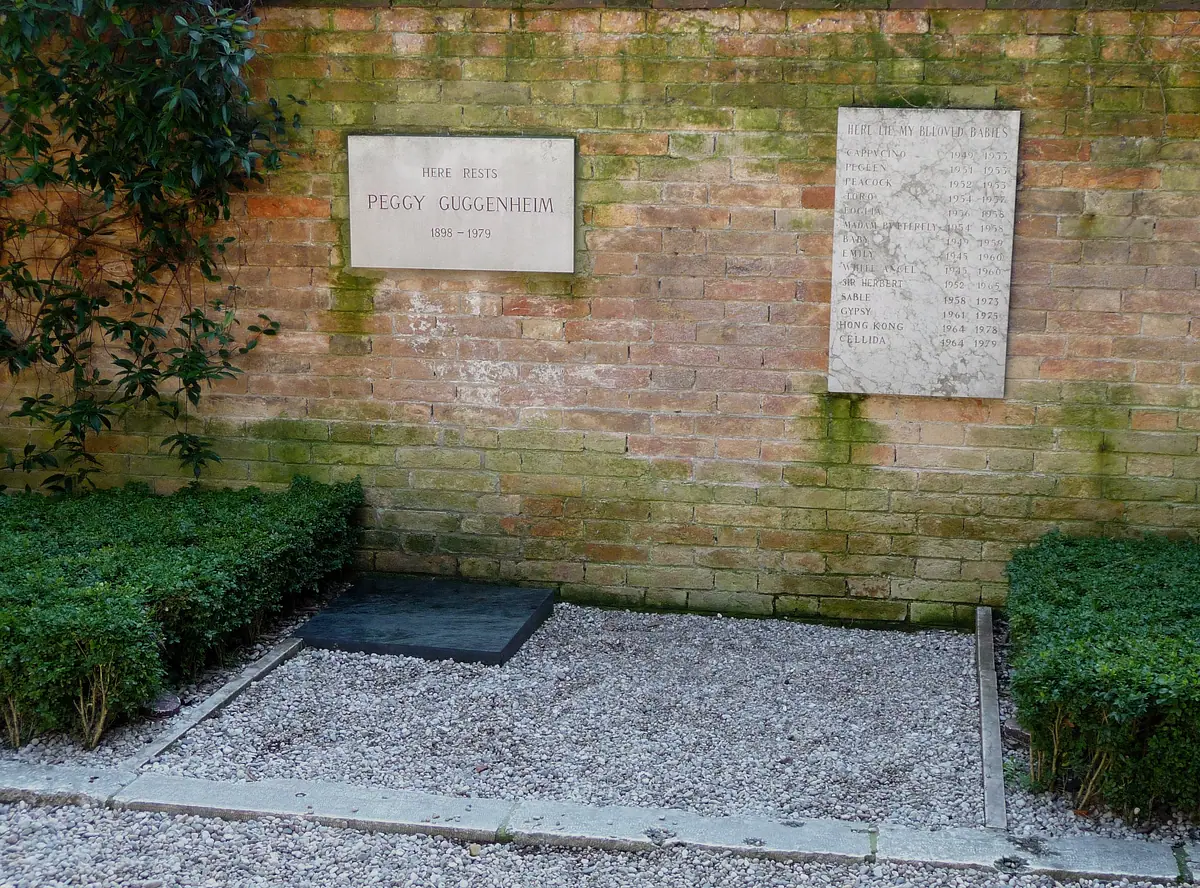
The Schulhof wing holds a collection left to the museum after 2012, with Rothko, Fontana, Burri, de Kooning and Twombly. Out in the garden are sculptures by Henry Moore, Giacometti, Anish Kapoor and Isamu Noguchi, and a neon by Mario Merz. In one corner lie Peggy’s ashes, next to the graves of her dogs.
Temporary exhibitions go in a pavilion on the far side of the garden. There’s none on until 14 November, when Fucina degli Angeli opens, a show about Peggy Guggenheim and 20th-century art glass that runs until 29 March 2027.
When the Peggy Guggenheim Collection is open, and its house rules
The museum keeps the same hours all year, with Tuesday as its one day off.
Opening hours
- Wednesday to Monday
- 10:00–18:00, last entry 17:00
- Tuesday
- Closed
- Also closed
- 25 December
The ticket office shuts at 17:00 too, and the rooms start closing at 17:50. Bags and backpacks go into free lockers at the ticket office. Visitors in 2025 found a queue of about 20 minutes at opening time, and a crush to collect bags when the museum closes.
Lifting platforms reach the garden, the palace and the museum’s bistro. In the temporary exhibitions they stop short of the last two rooms, and they don’t reach the inner shop. The Schulhof wing has step-free access. Wheelchairs are lent free, and the museum runs free tactile tours called Double Meaning.
House rules that catch people out
- Food
- Not allowed anywhere, the garden included
- Dress
- No entry shirtless, in swimwear or barefoot
- Sketching
- Pencils are fine, pens aren't
- Pushchairs and animals
- Pushchairs come in; animals don't, except assistance animals
Peggy Guggenheim and her unfinished palace on the Grand Canal
Peggy Guggenheim was a New Yorker whose father went down with the Titanic. She became a collector in Europe, opening a gallery in London, Guggenheim Jeune, in 1938, and setting out in Paris in 1939 and 1940 to buy “a picture a day”. Back in New York, her gallery Art of This Century opened in October 1942 and gave Jackson Pollock his first solo show the next year.
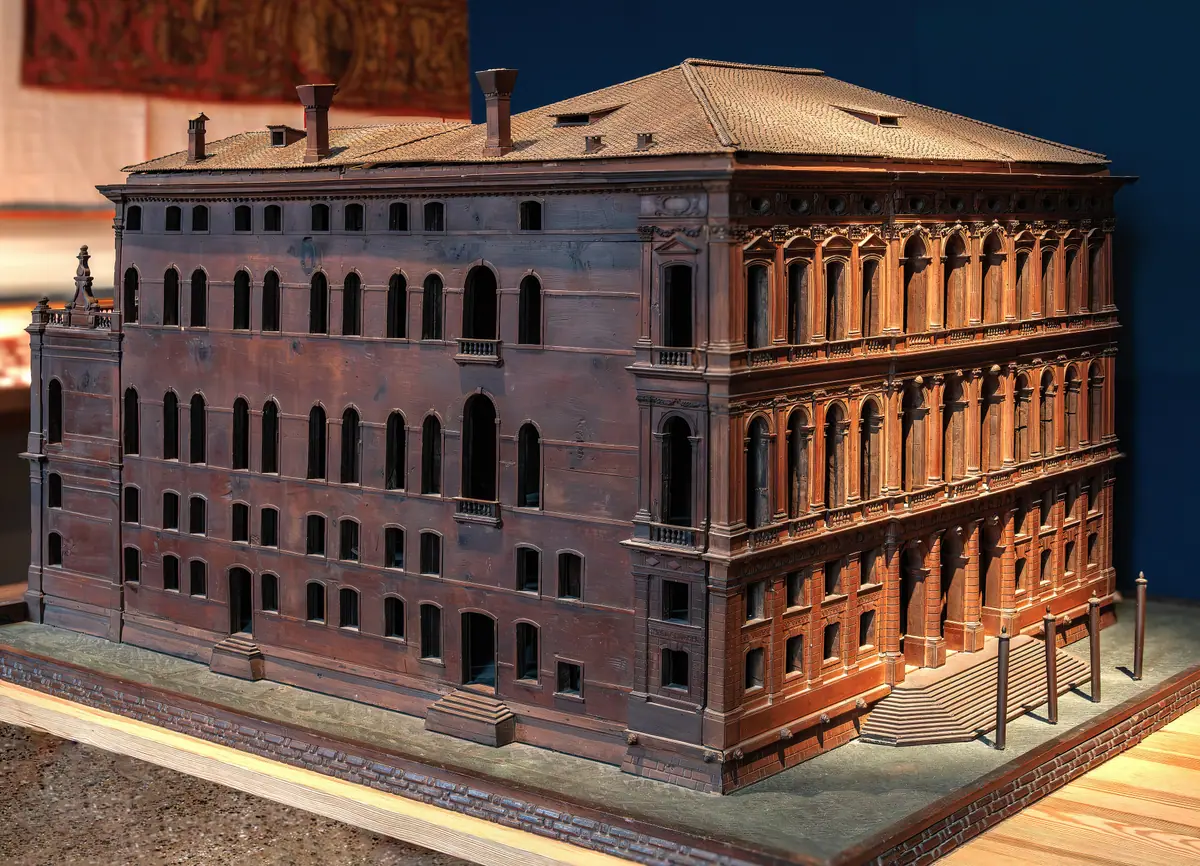
Her collection came to Venice for the 1948 Biennale, shown in the Greek pavilion, and in July 1949 she bought Palazzo Venier dei Leoni. It had been begun to designs by Lorenzo Boschetti in 1749, but only the first of its five planned floors was ever built, so it’s known as the unfinished palace. The “leoni” in the name probably comes from the lion heads in Istrian stone along the canal front.
From 1951 Peggy opened her house to visitors for free, and in 1962 Venice made her an honorary citizen. She died in 1979, and her home opened as a museum the following year.
Getting to the Peggy Guggenheim Collection in Dorsoduro
The museum is in Dorsoduro, between the Accademia bridge and the Salute church, so from the San Marco side you cross the Grand Canal on foot by the Accademia bridge. By vaporetto, line 1 stops at Accademia and at Salute, and the Zattere stop, on the other side of Dorsoduro, works too. The palace front you see from the canal isn’t a way in: the entrance is on land, at Dorsoduro 701.
Tickets
Popular tickets around Venice
The ones other visitors book most.


People also ask
Frequently asked questions
What day is the Peggy Guggenheim Collection closed?
Tuesday. It opens every other day from 10:00 to 18:00, with the last entry at 17:00, and it also closes on 25 December.
Do I need to book the Peggy Guggenheim Collection in advance?
Booking isn't compulsory, but entry times can sell out, so it's safer to arrive with a ticket. Ours is a Fast Track entry at €20 for adults.
Is the Peggy Guggenheim Collection included in the Venice City Pass?
No. It's a private museum, run by the Solomon R. Guggenheim Foundation, and neither the Venezia Unica City Pass nor the Museum Pass of the city's museums includes it.
Can you take photos in the Peggy Guggenheim Collection?
Yes, for personal use and without flash. Tripods and selfie sticks aren't allowed.
Is Dalí on display at the Peggy Guggenheim Collection?
Not when we last checked, in October 2026. Salvador Dalí's Birth of Liquid Desires, Marcel Duchamp's Box in a Valise and the works by Umberto Boccioni were all listed as not on view in the museum's online collection.
How much do children pay at the Peggy Guggenheim Collection?
Children under 10 go in free. From 10 to 17 they pay the reduced price, €11.50 on our ticket, which students under 26 pay too.