
Venice
Teatro La Fenice
Its name means the phoenix, and twice it has risen from its own ashes.
Verdi's Rigoletto and La traviata had their first nights at Teatro La Fenice, Venice's opera house, which burned in 1836 and in 1996 and was rebuilt both times. By day you can walk in with an audio guide on your phone: the foyer, the auditorium, the royal box, the Sale Apollinee and an exhibition on Maria Callas's years in Venice. Our ticket skips the line at the entrance, and there's a guided tour in English too.
Before you go
- Time inside45 min
- OpenEvery day
- Best timeMornings
TipVisiting hours change from day to day around rehearsals and performances, and on some days the theatre closes to visitors at 13:00, so plan to go in the morning.


Teatro La Fenice tour tickets: an audio guide or a guide in English
You don’t have to book a time to walk round La Fenice. Our ticket, at €14, skips the line at the entrance and comes with an audio guide you download to your own phone, so you go through the foyer, the auditorium, the royal box and the Sale Apollinee at your own pace.
Over-65s pay €10.50, there’s also a reduced ticket at €9.20, and a family of two adults and a child pays €27, with a version for two children as well. Children up to 6 go in free. The ticket can’t be refunded.
If you’d rather someone explained it all, our guided tour in English, at €25, takes about an hour. You meet 15 minutes before the start, and you can cancel up to 24 hours ahead. The theatre’s own guided visits are only for groups that book together, and it doesn’t put groups together on the spot, so you can’t tag along with one on the day.


None of the Venice passes we sell includes the Fenice, so the visit is bought separately.
Teatro La Fenice visiting hours change from day to day
La Fenice is a working opera house, and visits fit around rehearsals and performances. It opens to visitors every day, normally from 9:30 to 18:00, but the theatre publishes the real hours one month at a time and warns they can change at the last minute. In October 2026, six days closed at 15:00 or earlier, four of them at 13:00.
The cuts all fall in the afternoon, which is why the morning is the time to go. Opera days can shorten the visit further, so check the hours the theatre publishes for the month before you set out.
You can take photos on the visit, for your own use, whenever no rehearsal is going on. Wedding and Carnival-costume photo shoots aren’t allowed, and nor are animals, apart from assistance dogs.
The Teatro La Fenice visit: SOCIETAS, the auditorium and the Callas rooms
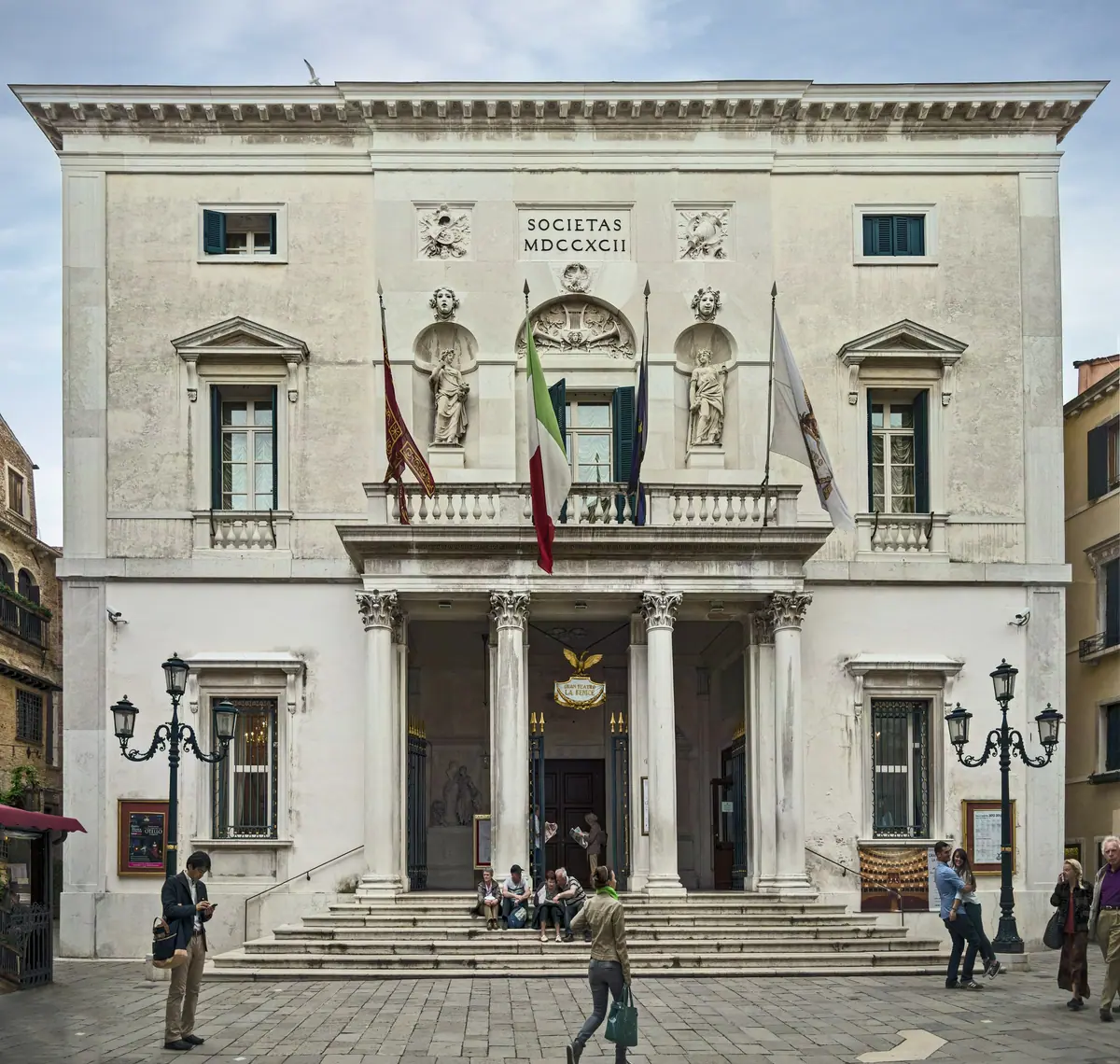
You go in from Campo San Fantin, under the word SOCIETAS on the facade. When the theatre opened in 1792, its critics turned the word into an acronym, “Sine Ordine Cum Irregularitate Erexit Theatrum Antonius Selva”: Giannantonio Selva, the architect who won the competition to design it, built a theatre without order and full of irregularities.
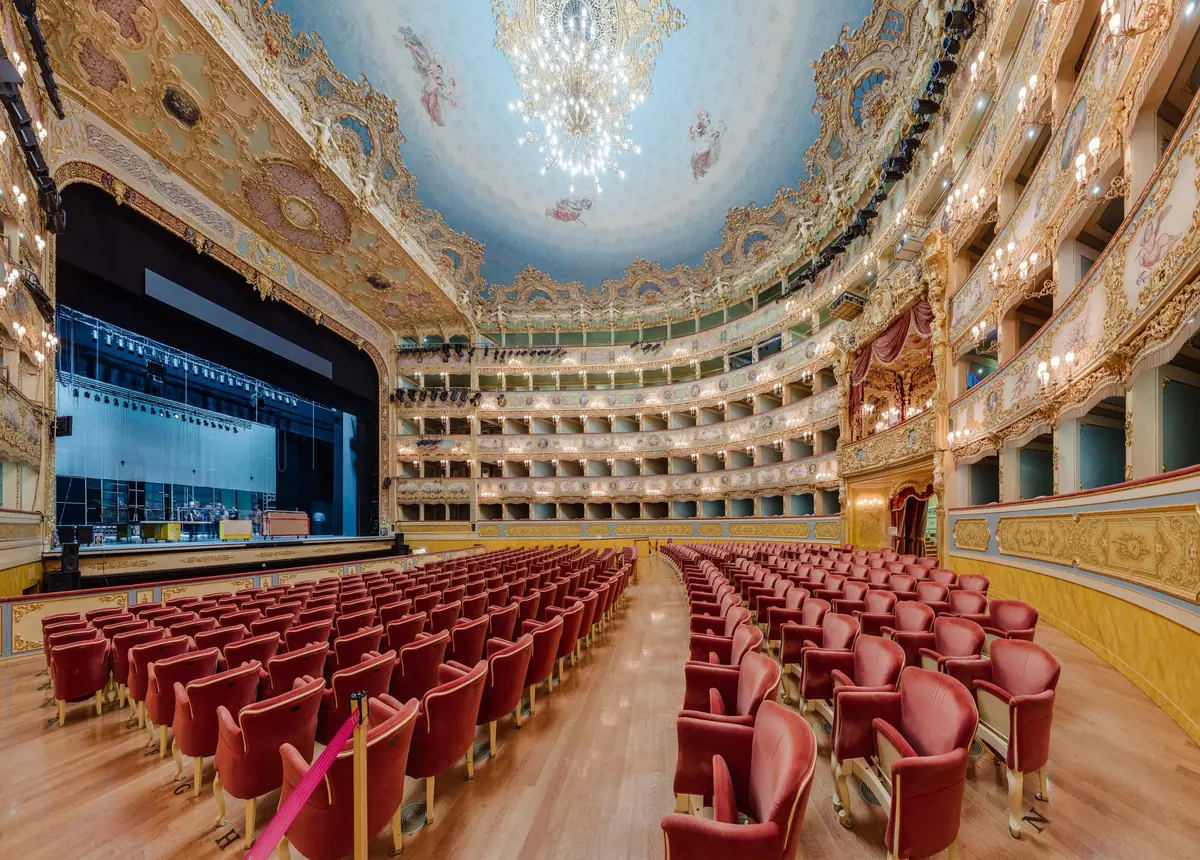
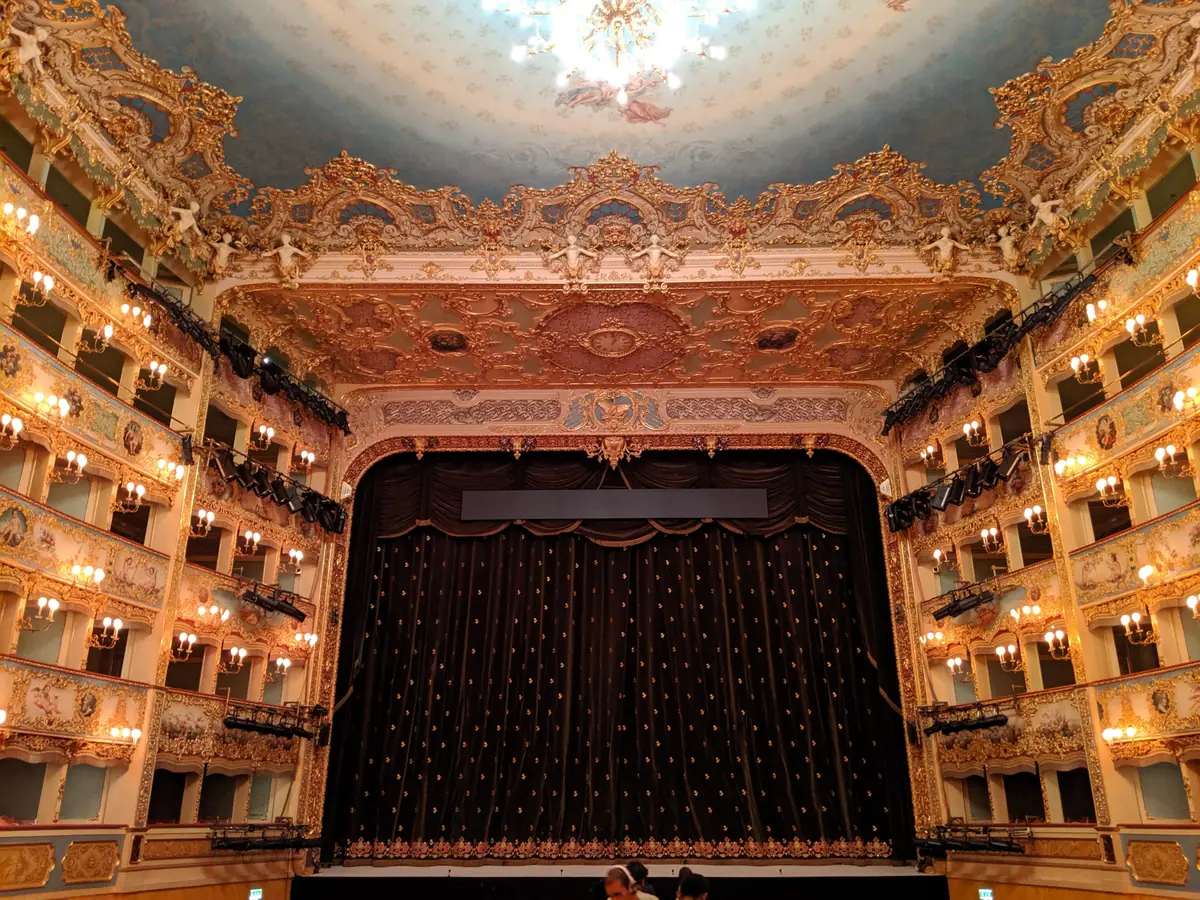
Inside, after the foyer, comes the auditorium itself, and then the royal box, which began as the imperial box Selva built for Napoleon in 1808.
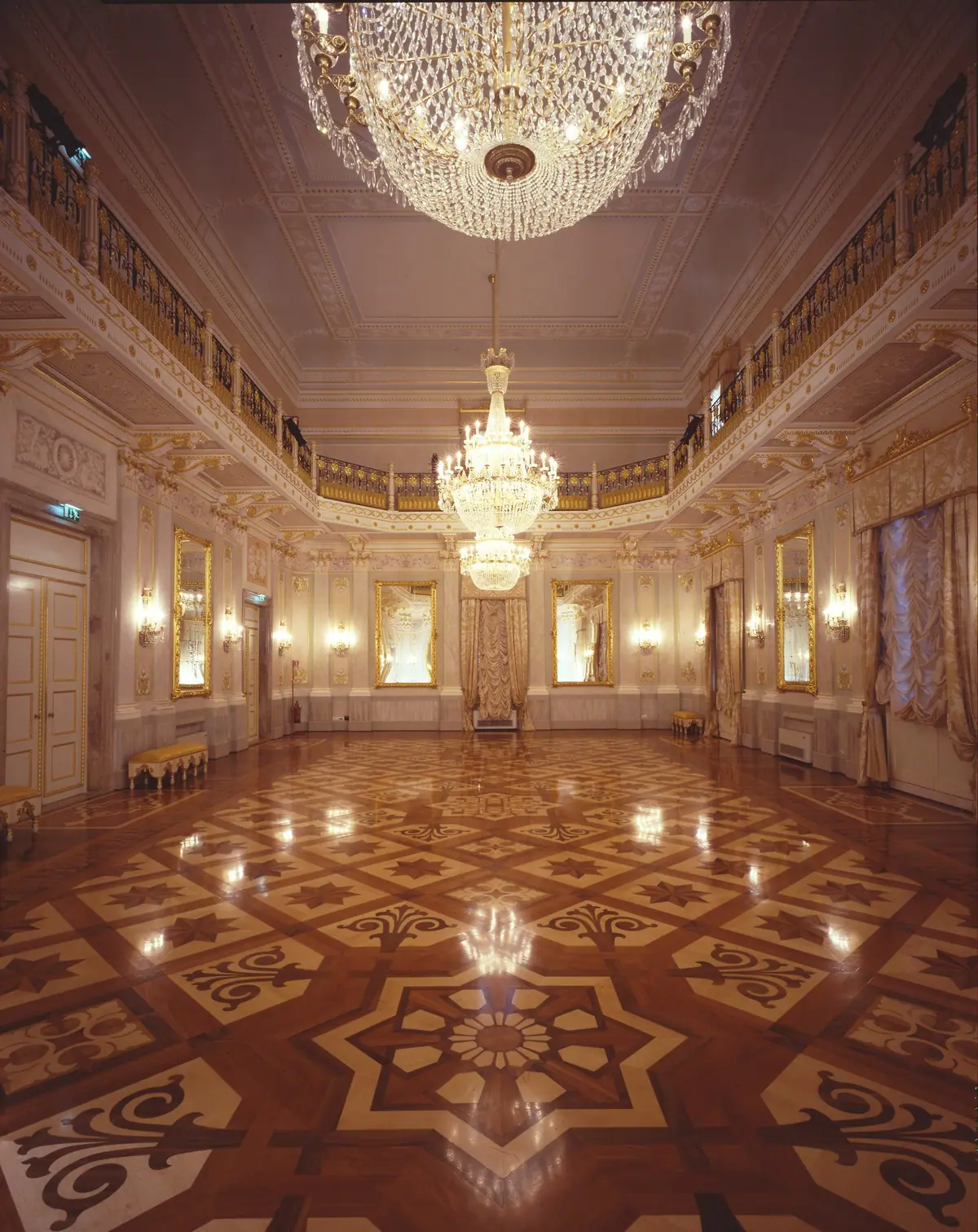
The Sale Apollinee are the theatre’s reception rooms. A lift goes up to them, and their café is open Tuesday to Sunday from 10:00 to 16:00. The visit also takes in a permanent exhibition on the soprano Maria Callas and her Venetian years. The route can change when the stage or the rooms are needed, so not every visit sees every space.
Teatro La Fenice’s two fires, in 1836 and 1996
When it opened, the theatre had 174 boxes, all the same size. On 13 December 1836 a newly installed Austrian stove set it alight, and it burned for three days and three nights. The foyer and the Sale Apollinee survived, and the brothers Tommaso and Giambattista Meduna rebuilt the hall, which reopened on 26 December 1837.
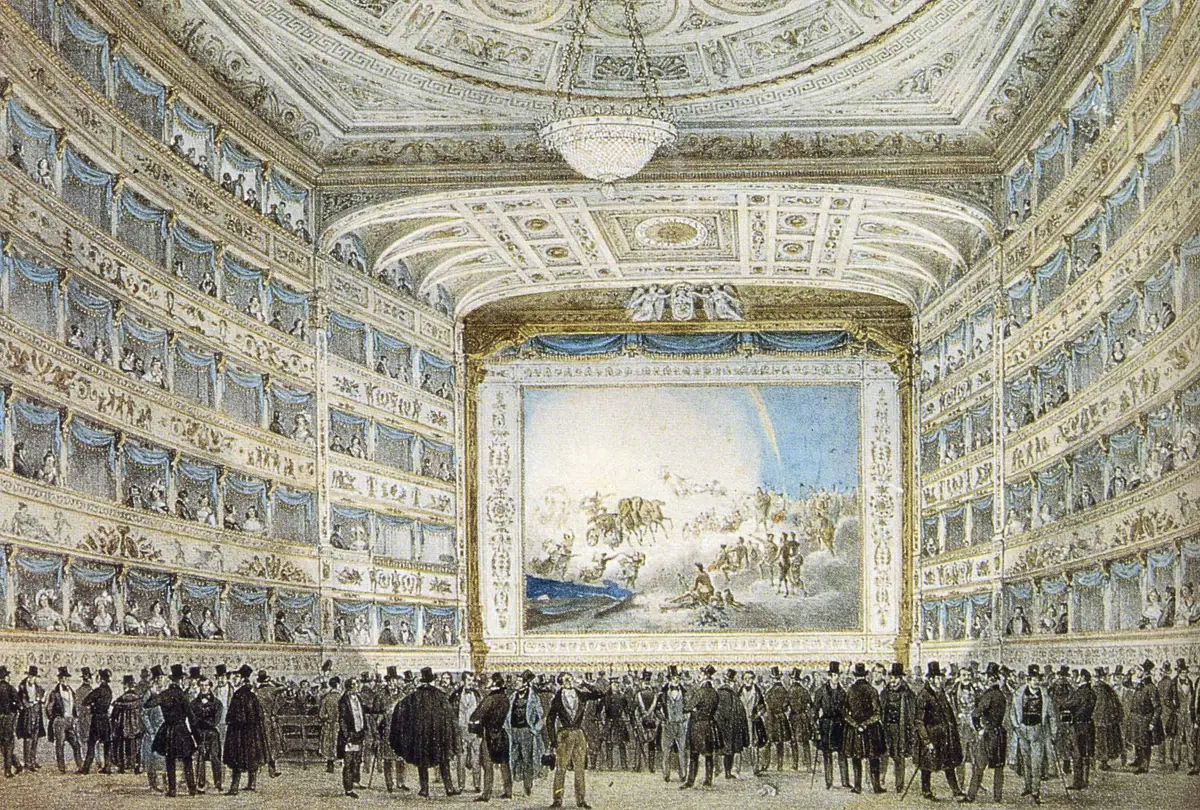
Giambattista Meduna redecorated it again in 1854, and that was the auditorium lost on 29 January 1996. The theatre was closed for works and the canals around it had no water, so firefighters pumped water from the Grand Canal, and only the facade and parts of the walls were left. That fire was set on purpose, by two electricians from the firm doing the works who wanted to avoid a fine for running late. Italy’s highest court confirmed seven years for Enrico Carella and six for Massimiliano Marchetti.
Venice rebuilt it “com’era e dov’era”, as it was and where it was, the motto first used for St Mark’s Campanile after it collapsed in 1902. The new theatre was designed by the architect Aldo Rossi, who died in 1997 and never saw it finished. It was handed over in December 2003, Riccardo Muti conducted the opening week, and opera came back in November 2004 with La traviata.
First nights at La Fenice
- Rigoletto, Verdi
- 11 March 1851
- La traviata, Verdi
- 6 March 1853
- Other composers who premiered here
- Rossini, Bellini, Donizetti, Stravinsky, Prokofiev, Britten, Nono and Maderna
Seeing an opera at Teatro La Fenice in the 2026–27 season
The season opens with Fedora on 13 November 2026 and runs until October 2027, with Madama Butterfly, Jenůfa, Carmen, Il barbiere di Siviglia, Norma and Adriana Lecouvreur on the Fenice’s own stage. A few productions, Hänsel und Gretel, Nozze istriane and Partenope, are at the Teatro Malibran, a different theatre in the city, so check which house your seat is in.
Opera at La Fenice, 2026–27
- Curtain times
- Saturdays and Sundays at 15:30, other days at 19:00
- Seats for the regular operas
- From €20 for listening-only places in the upper gallery, €25–30 for gallery seats with a partial view, €190–230 in the stalls
- Fedora, the opening production
- Up to €380
- Where to buy
- The theatre's box office, 10:00–17:00 every day, or its website, which adds 10%; last-minute seats in the hour before
- Refunds
- None
- Children
- Under-4s aren't admitted
- Surtitles
- In English at every opera
Shorts, sleeveless tops and flip-flops are never allowed in the hall. On ordinary nights the theatre’s two sources disagree: its website accepts a shirt and jeans, while the season’s price list asks men for a jacket and tie, so a jacket is the safe bet. Premieres call for a dark suit, and black tie is recommended on the opening night. Photos aren’t allowed during performances.
Walking to Teatro La Fenice from St Mark’s Square, and the high tide
La Fenice stands on Campo San Fantin, about 300 metres west of Piazza San Marco, so from the square you walk. On the water, vaporetto line 1 stops at Rialto, Sant’Angelo, Santa Maria del Giglio and San Marco (Vallaresso), all within reach on foot.
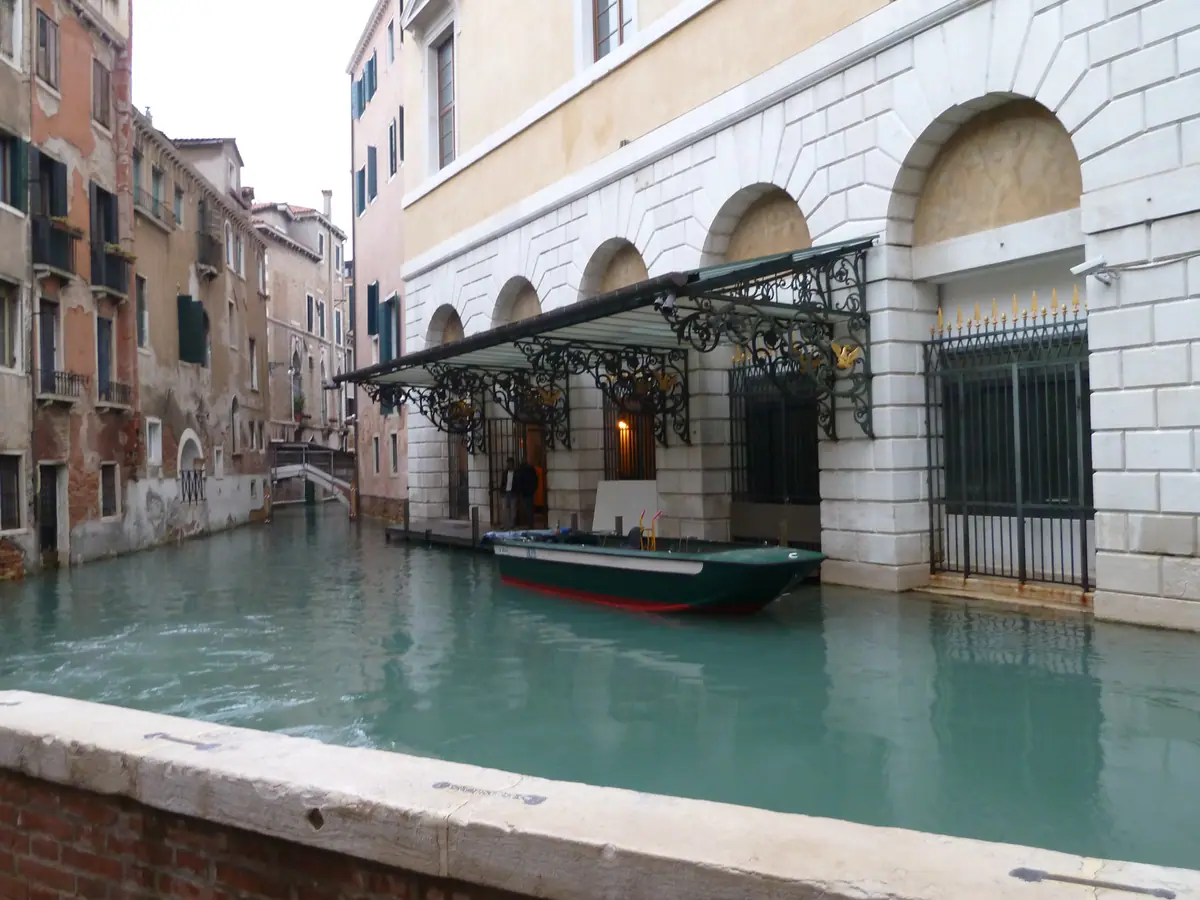
Straight from Marco Polo airport, the Alilaguna boats run on the orange line to Rialto or the blue line to San Marco (Vallaresso).
The theatre stands in one of the lowest parts of the city. When the tide reaches 100 cm you’ll want rubber boots to get there, and at 140 cm performances are cancelled.
Tickets
Popular tickets around Venice
The ones other visitors book most.


People also ask
Frequently asked questions
Can you visit Teatro La Fenice without seeing an opera?
Yes. The theatre opens to visitors every day, between rehearsals and performances, and the visit with an audio guide takes about 45 minutes: the foyer, the auditorium, the royal box, the Sale Apollinee and the Maria Callas exhibition.
Do I need to book a visit to La Fenice?
No, the visit with an audio guide needs no booking. The hours change from day to day around rehearsals and shows, though, and on some days the theatre closes to visitors at 13:00, so the morning is the safe time to go.
How much are opera tickets at La Fenice?
For the 2026–27 season, seats for the regular operas run from €20 for listening-only places in the upper gallery to €230 in the best rows of the stalls. For Fedora, the opening production in November 2026, they go up to €380.
What is the dress code at La Fenice?
Shorts, sleeveless tops and flip-flops are never allowed at performances. On ordinary nights the theatre's website accepts a shirt and jeans, while its 2026–27 price list asks men for a jacket and tie, so a jacket is the safe bet. Premieres call for a dark suit, and black tie is recommended on the season's opening night.
Can you take photos inside La Fenice?
On the daytime visit, yes, for your own non-commercial use, as long as no rehearsal is going on. During performances photography isn't allowed.
Why is it called La Fenice?
Fenice means phoenix, the bird that rises from its ashes. The theatre has done it twice, after the fires of 1836 and 1996.