Venice
Venice access fee
From 26 March 2027, day-trippers pay to walk into Venice on 72 set days; stay the night and the fee isn't yours to pay.
Venice's access fee, the charge on day-trippers visiting the old city, isn't being collected now: the 2026 season ended on 26 July. It returns on 26 March 2027 for 72 days up to 15 August, all but nine of them Fridays to Sundays, and the price and rules for 2027 will be announced by 31 December 2026. In 2026 it cost €5 paid at least four days ahead or €10 after that, and anyone staying the night in Venice didn't pay.
Venice access fee now: nothing to pay until March 2027
If you’re visiting Venice between now and late March 2027, there’s no access fee. The 2026 season ended on 26 July, and since the next day the city’s own fee website has said you can visit without paying or asking for an exemption.
The fee is a charge on day-trippers to the old city, on set days and during the day only, from 8:30 to 16:00 in 2026. It’s the day visitor’s counterpart to the tourist tax that hotel guests pay each night, and that’s why anyone staying the night in Venice doesn’t pay it.
Venice access fee 2027 dates
The 72 days for 2027 are already on the city’s fee website, even though the price isn’t. All but nine of them are Fridays, Saturdays and Sundays, from the end of March to mid-August.
The 72 fee days of 2027
- March
- 26, 27, 28, 29
- April
- 2 to 4, 9 to 11, 16 to 18, 23 to 30
- May
- 1, 2, 7 to 9, 14 to 16, 21 to 23, 28 to 31
- June
- 1 to 6, 11 to 13, 18 to 20, 25 to 27
- July
- 2 to 4, 9 to 11, 16 to 18, 23 to 25, 30, 31
- August
- 1, 6 to 8, 13 to 15
The longer runs fall on Italian holidays. The season opens on the Easter weekend, with Easter Sunday on 28 March and Easter Monday on the 29th. From 23 April to 2 May every day is a fee day, around Liberation Day on 25 April and Labour Day on 1 May, and the same goes for 28 May to 6 June, around Republic Day on 2 June.
The calendar for 2027 shows the hours as 8:30 to 16:30, half an hour longer than in 2026. Those hours, the price and the exemptions all come with the 2027 rules, due by 31 December 2026, so look at the city’s fee website again in January before you settle on one of these dates.
What the access fee cost in 2026, and what could change in 2027
In 2026 the fee ran from 3 April to 26 July. It cost €5 per person if you paid by the fourth day before your visit, and €10 in the last three days or on the day itself. For a Sunday, that meant €5 up to and including Wednesday and €10 from Thursday.
You paid per day, with no multi-day ticket, and a day’s payment let you leave and come back in as often as you liked.
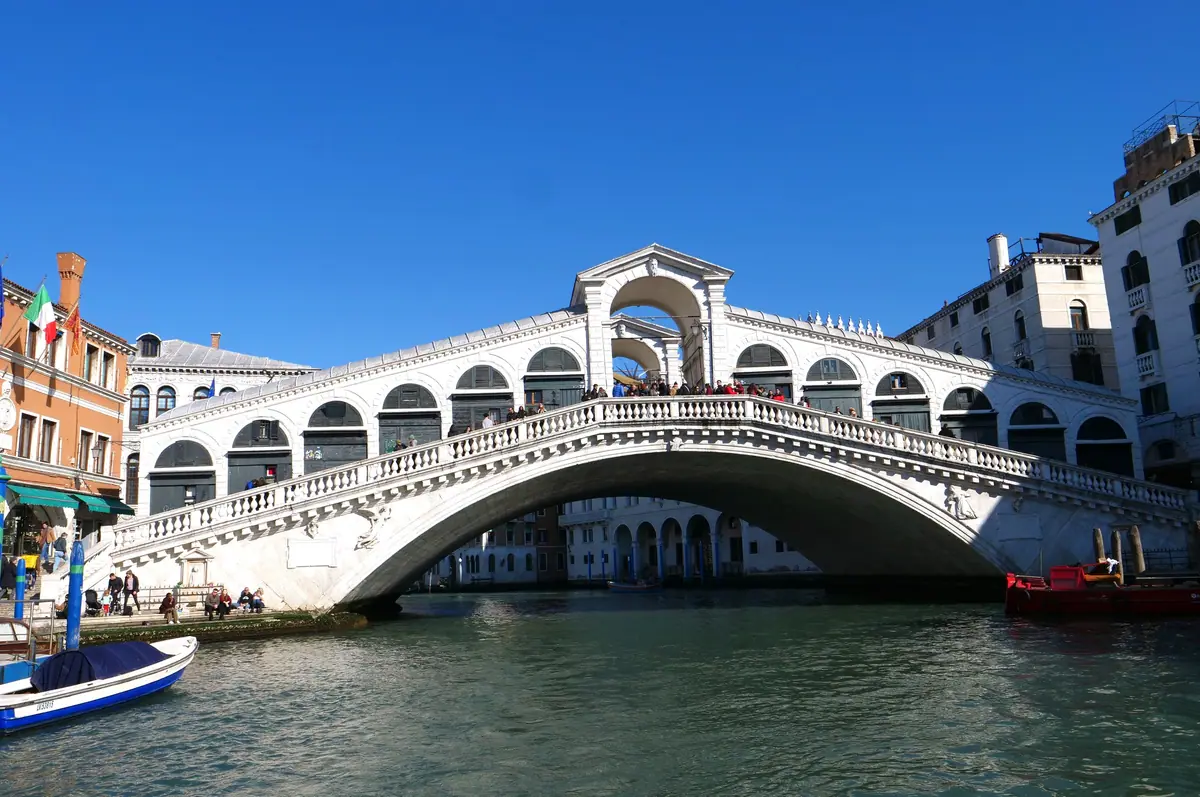
The fee has grown every year. It ran on 29 days in 2024, nearly all weekends and with no fines. In 2025 it ran on 54, when Fridays joined, and in 2026 on 60, with tighter checks.
More than 650,000 day visitors paid in 2026, and the takings passed €5 million, according to the German press agency DPA. There’s no daily cap and the price doesn’t rise with the crowds, which is why critics quoted by the Italian daily Il Post say the fee raises money without limiting numbers.
2027 could look different. Simone Venturini, Venice’s new mayor, has proposed €30 to €50 on certain days, which would need the agreement of the Italian government. It’s a proposal, not a decision, and until the city publishes the rules, the 2026 figures are the only real ones.
Where the fee applies, and where you pass through free
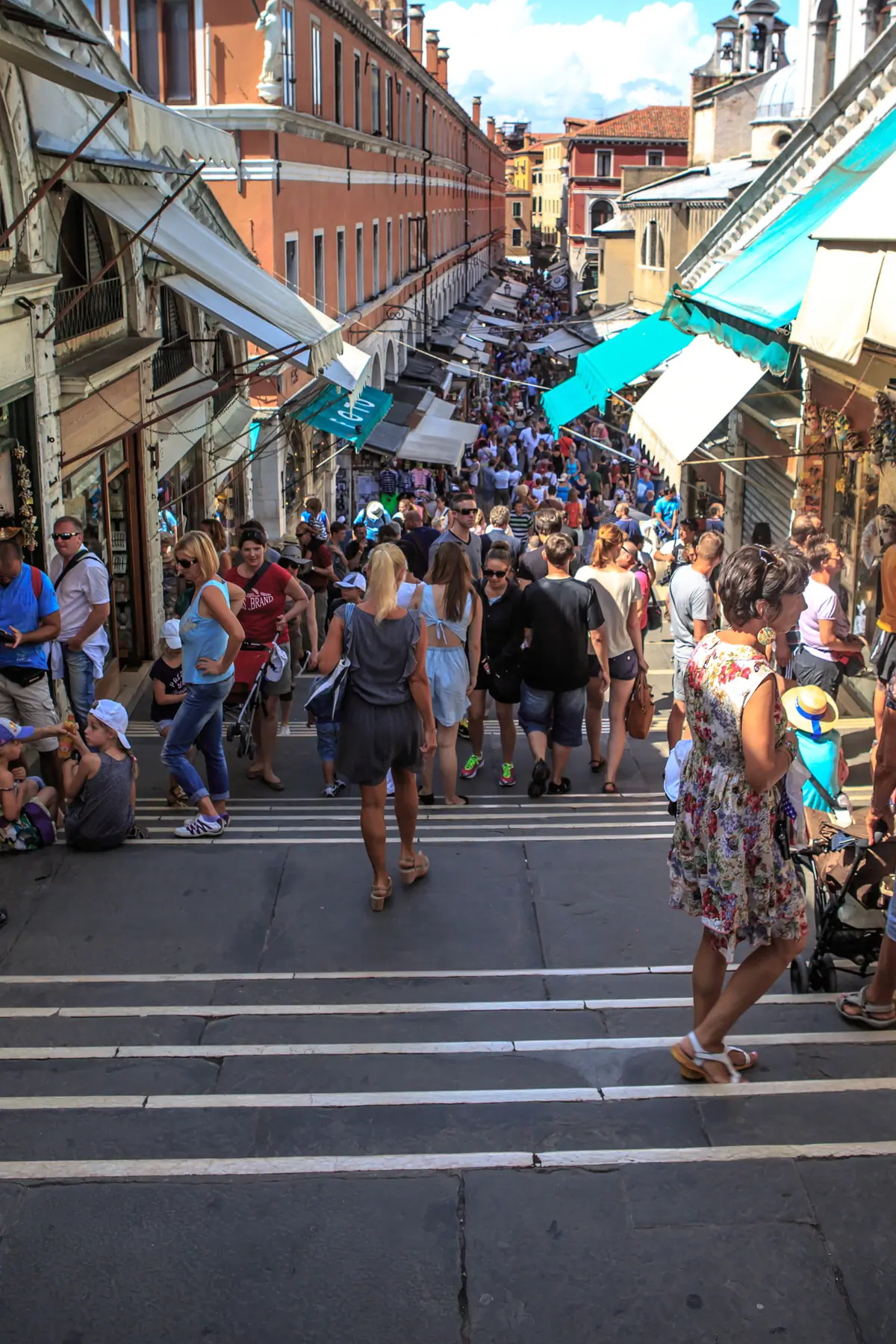
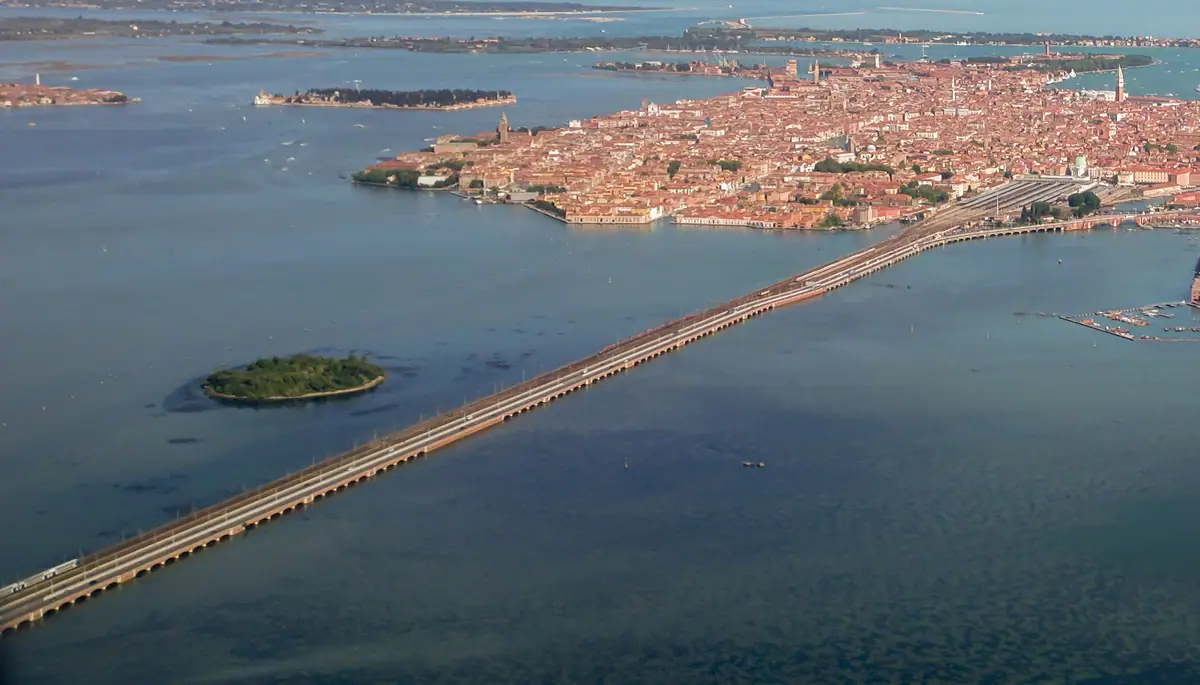
The fee covers the old city, including San Michele, San Giorgio Maggiore and the Giudecca. The arrival points around its edge are outside it: the bridge from the mainland, the Ponte della Libertà, Piazzale Roma, Santa Lucia railway station, Tronchetto, the cruise terminal at the Stazione Marittima, San Basilio and the Cornoldi area by the big-ship quays on the Riva degli Schiavoni. So is the whole mainland, Mestre and Marghera included.
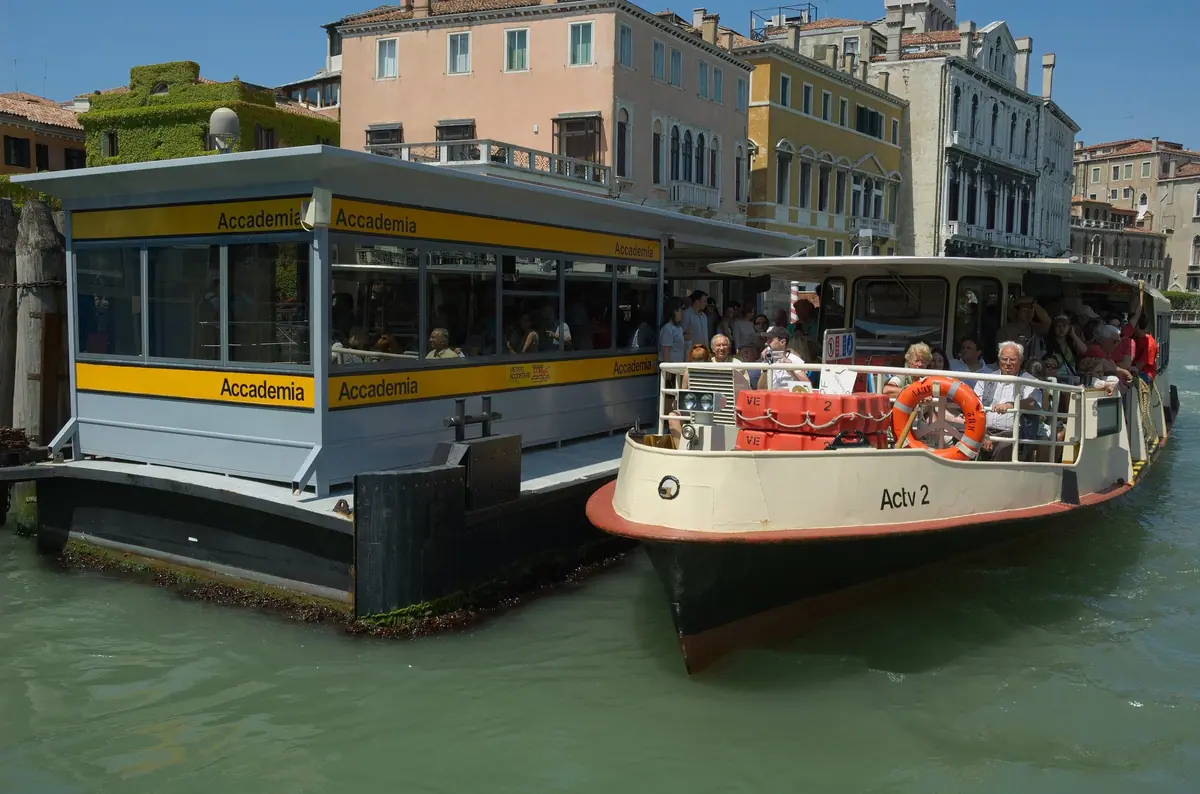
Changing boats is free as well. If you only step onto an ACTV pontoon to change from one vaporetto to another, without going into the city, you don’t owe the fee.
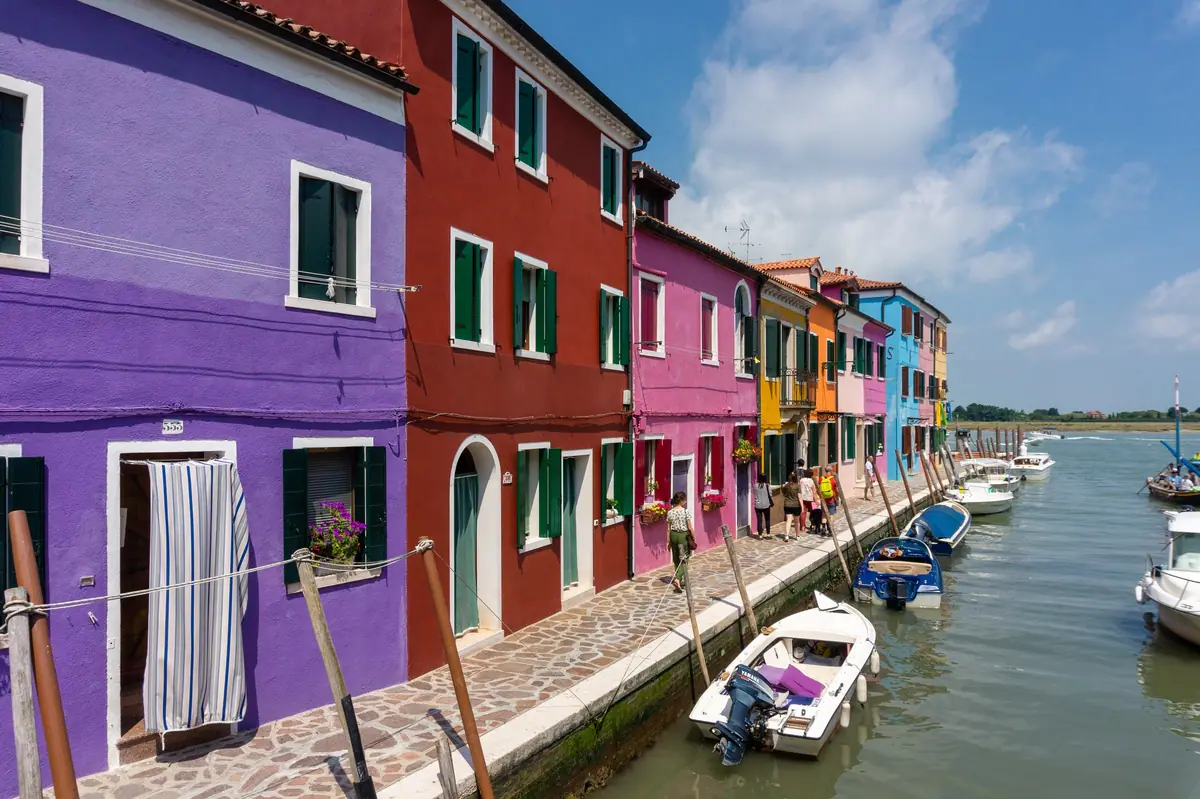
Visitors to the lagoon islands didn’t pay in 2026. Murano, Burano, Torcello, the Lido, Pellestrina and the smaller islands were left out, so you could take a vaporetto from the station or Piazzale Roma out to Murano or Burano without owing anything, as long as you didn’t walk into the old city. But that exclusion was decided for 2026 alone, and the fee’s regulation covers the islands as well as the old city, so they may be in for 2027.
The hours mattered too. In 2026, arriving before 8:30 on a fee day didn’t get you out of it, because you needed proof of payment for the whole 8:30 to 16:00 window. From 16:00 until 8:30 the next morning the fee didn’t apply and you didn’t need to register. The 2027 calendar shows the window ending at 16:30.
Who doesn’t pay the Venice access fee
If you sleep in Venice, you don’t pay. That covers accommodation anywhere in the municipality, the old city, the Lido, Mestre and Marghera included, because you already pay the tourist tax. In 2026 you still needed an exemption voucher with a QR code for the days of your stay, or a signed self-declaration with an ID document. Many hotels send the QR code, and if yours doesn’t, you request it by naming where you’re staying.
Sleeping outside the municipality, in Treviso or Padua say, makes you a day-tripper under these rules, so you pay on fee days.
Who was exempt in 2026
- No registration needed
- Under-14s; residents of Venice and people born there; residents of the Veneto region; holders of the EU Disability Card and a companion; students at the city's schools and universities
- Exempt with a QR voucher or self-declaration
- Overnight guests in the municipality; people working in the city; relatives of residents; friends invited by a resident; property owners and tenants; patients and their companions
- Still paid
- Wedding guests not invited by a resident; coach passengers, even after paying the coach entry charge; holders of the Venezia Unica card, which gives no exemption
Friends of a resident had their own procedure. The resident generated the QR code with an Italian digital ID, and the guest swapped it for a paper voucher at a VELA desk, at Piazzale Roma, Santa Lucia station or the Cornoldi pier, on the day or in the 15 days before.
How payment worked in 2026
The 2026 rules are the guide until the 2027 ones are published. You paid online, through WhatsApp or, in the last three days, in person, and came away with a named QR code.
Paying the access fee in 2026
- 1Choose your date on the city's fee website, cda.veneziaunica.it, with the number of people paying, the number of children under 14, each visitor's name, an email and a phone number.
- 2Pay online or through the city's WhatsApp service, at €5 or €10. In the last three days you could also pay €10 at PuntoLIS tobacconists anywhere in Italy, or at the desks and machines at Piazzale Roma and the station square.
- 3Keep the QR code on your phone. It carries your name, works only on the date you chose, and is what you show the inspectors.
You could cancel up to the day before, for the whole booking or one QR code at a time, with your booking code, and the money went back the way you paid. After that, a refund needed proof that you hadn’t gone in, and tickets from the machines couldn’t be cancelled ahead.
Checks and fines
In 2026 inspectors in vests or with ID cards stood at the main access points into the city. Not showing proof of payment or exemption, or showing a QR code for another date, cost a fine of €25 to €150, plus the unpaid fee, and a false self-declaration can lead to criminal charges.
A day in Venice on a fee day
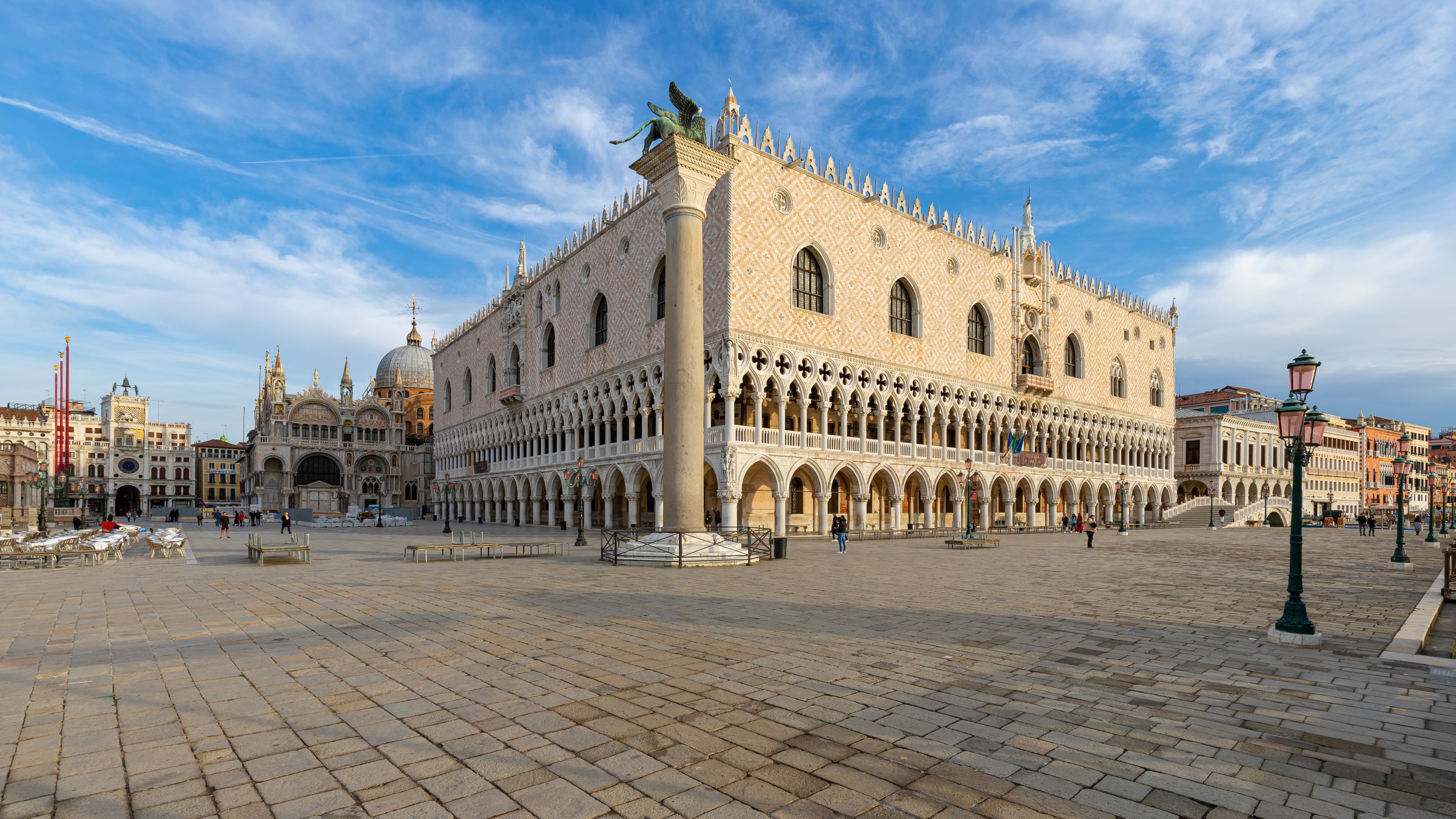
The fee only lets you walk the streets. The Doge’s Palace, the museums and St Mark’s Basilica have their own tickets, and so does the Venice vaporetto, the water bus you’ll want between St Mark’s and the station. Our page on Venice Pass and Venice’s museum passes has the passes that bundle the big sights, and things to do in Venice helps fill the day.
If you come with a guided tour, a separate city rule caps groups at 25 people in the old city and on Murano, Burano and Torcello, with earpieces and no loudspeakers.
City cards
Venice city cards and passes
Pick the one that fits your trip. Prices are per adult, and you choose your dates on the next page.


See what you’d save, if anything
Which Venice pass pays off for your trip?
Pick how many days you’ve got and the sights you want to see. The calculator adds up the tickets and rides, sets them against the card and tells you right away whether it pays off, and by how much, at today’s prices. No email, no sign-up.
Step 1 of 3
How long, and who’s going?
People also ask
Frequently asked questions
Do I have to pay to enter Venice?
Not at the moment. The access fee for day-trippers ended its 2026 season on 26 July, and since 27 July you can visit Venice without paying or asking for an exemption. It returns on 26 March 2027, on 72 set days up to 15 August. In 2026 it applied from 8:30 to 16:00, and the 2027 calendar shows 8:30 to 16:30.
What are the Venice access fee dates for 2027?
72 days: 26 to 29 March; 2 to 4, 9 to 11, 16 to 18 and 23 to 30 April; 1, 2, 7 to 9, 14 to 16, 21 to 23 and 28 to 31 May; 1 to 6, 11 to 13, 18 to 20 and 25 to 27 June; 2 to 4, 9 to 11, 16 to 18, 23 to 25, 30 and 31 July; and 1, 6 to 8 and 13 to 15 August.
How much is the Venice access fee?
In 2026 it was €5 per person per day if paid up to the fourth day before your visit, and €10 in the last three days or on the day. The price for 2027 hasn't been set: the city will announce it, with the exemptions and rules, by 31 December 2026.
Do hotel guests pay the Venice access fee?
No. Anyone staying at accommodation in the municipality of Venice, including Mestre and the Lido, already pays the tourist tax and is exempt. In 2026 they still needed an exemption voucher with a QR code, which many hotels send, or a signed self-declaration.
Does the Venice access fee apply to Murano and Burano?
Not in 2026. Murano, Burano, Torcello, the Lido and the other lagoon islands were left out, but only for 2026: the fee's regulation covers them, so check the 2027 rules when they're published by the end of December 2026.
What is the fine for not paying the Venice access fee?
In 2026 it was €25 to €150 for not showing proof of payment or exemption, or for using a QR code for another date, plus the unpaid fee. Inspectors in vests stood at the main access points.
Read more