Rome · Colosseum
When was the Colosseum built?
Nero kept a private lake on this spot, and Vespasian drained it to give Rome an arena.
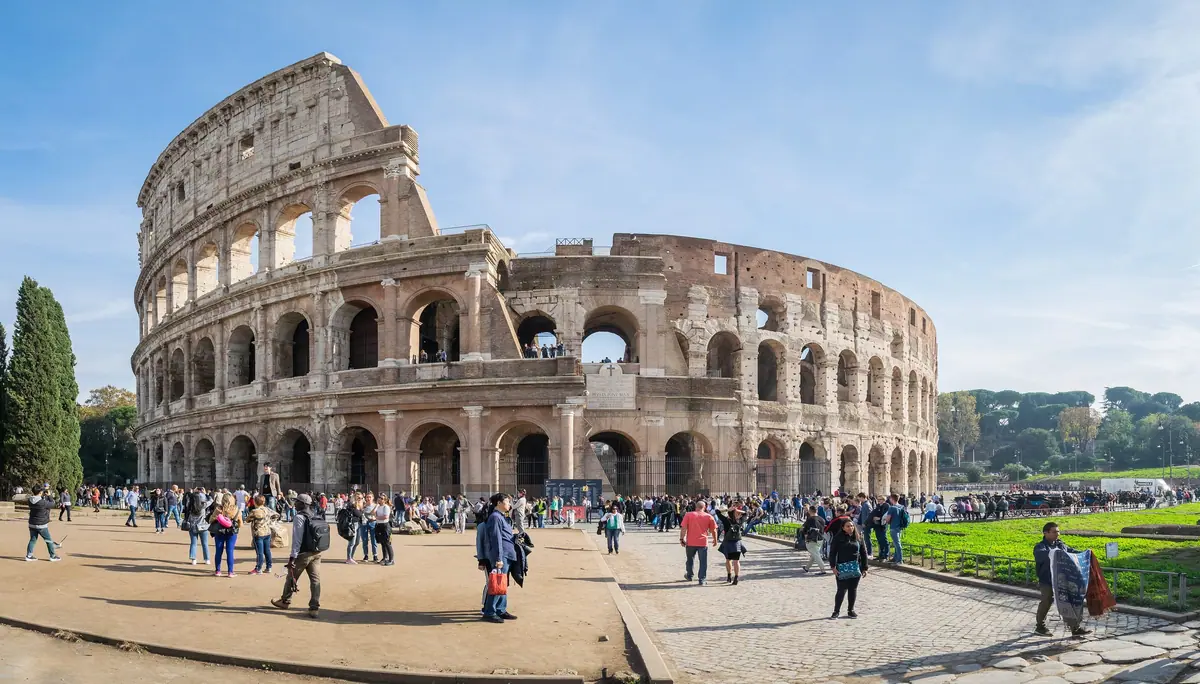
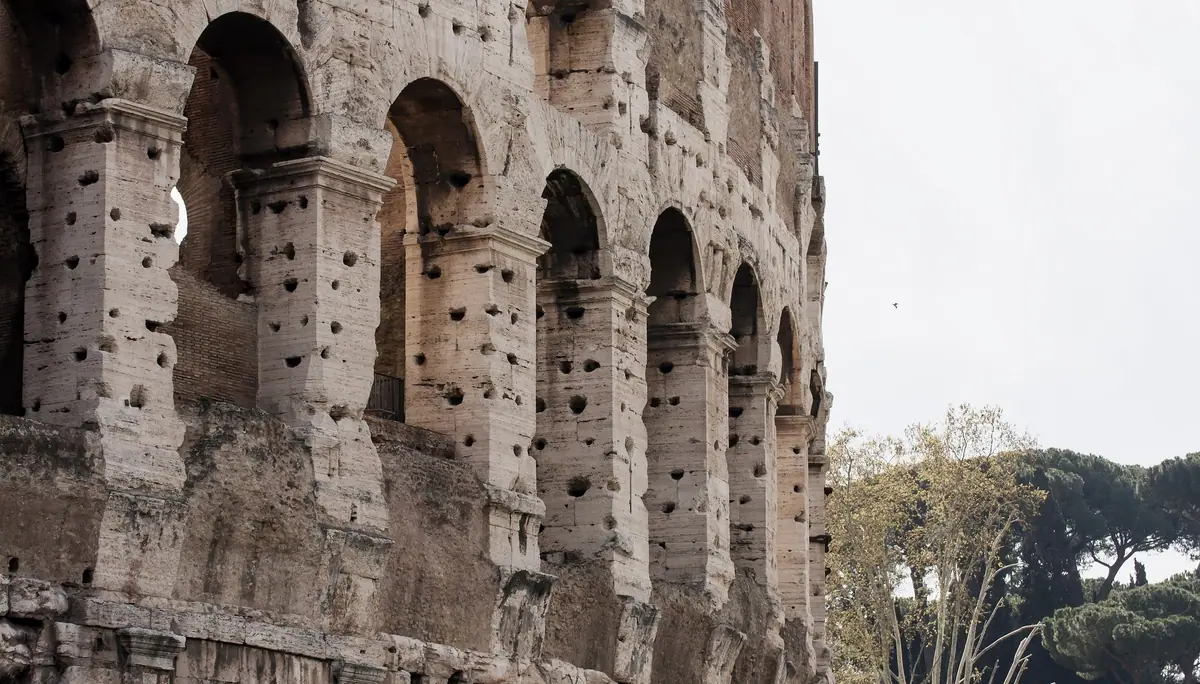
The Colosseum was built between about AD 70 and 80: the emperor Vespasian began it around 70 to 72, and his son Titus opened it in 80 with 100 days of games. Vespasian's younger son Domitian kept working on it after that, adding the tunnels under the arena and a gallery at the top. Modern estimates put the crowd at about 50,000. The holes in its stone and the missing outer wall on the south side came later, in the centuries after the games ended.
When was the Colosseum built? Between AD 70 and 80
The Colosseum went up in about ten years, and “built in AD 80” is really the opening date: the building wasn’t finished even then. Some sources put the start at 73 to 75 and the opening games in 81, so you’ll see slightly different dates.
The Colosseum's building dates
- AD 64
- After the Great Fire, Nero builds his palace with a lake on this site
- About AD 70 to 72
- Vespasian, emperor since AD 69, begins the amphitheatre
- AD 79
- Vespasian dies, with the building up to its third level
- AD 80
- Titus opens it with 100 days of games
- From AD 81
- Domitian adds the tunnels under the arena and the top gallery
Why Vespasian built the Colosseum on Nero’s lake
Those dates start with a fire. After the Great Fire of Rome in AD 64, the emperor Nero took over much of the burned valley for his Golden House, a palace with an artificial lake in front and a colossal statue of himself by the entrance. Vespasian drained the lake and put a public arena where the emperor’s private pool had been, handing the land back to the people of Rome.
The money came from war. In AD 70 Roman troops besieged Jerusalem and looted its Temple, and a reconstructed inscription says Vespasian built the amphitheatre with his own general’s share of the spoils. Unlike many amphitheatres, which stood on the edge of town, this one went right into the middle of the city.
Nero’s statue outlived him. The later emperor Hadrian moved it next to the amphitheatre, and that colossus gave the building its name. The Romans just called it the amphitheatre, and “Flavian Amphitheatre”, after Vespasian’s family, is a modern name with no proof it was ever used in antiquity.
How the Romans built the Colosseum in travertine and iron
The building stands on its own, rather than leaning against a hillside, and it’s made of stone and concrete over barrel and cross vaults. The frame and the outer wall are travertine, a pale limestone, the inner walls are tufa, a softer volcanic stone, and the vaults of the arcades are concrete.
The Colosseum in numbers
- Outside
- 189 × 156 m, and 48 m high
- Perimeter
- 545 m
- Travertine
- Over 100,000 cubic metres, laid without mortar
- Iron clamps
- 300 tonnes, holding the blocks together
- Entrances
- 80 at ground level
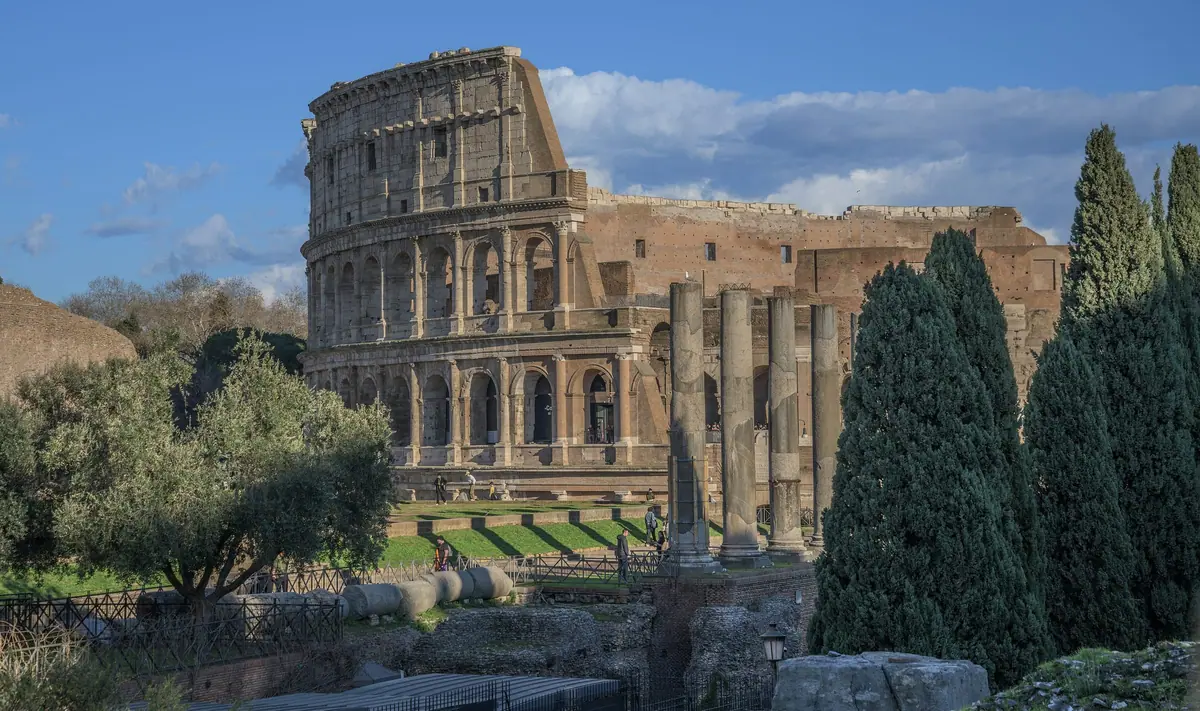
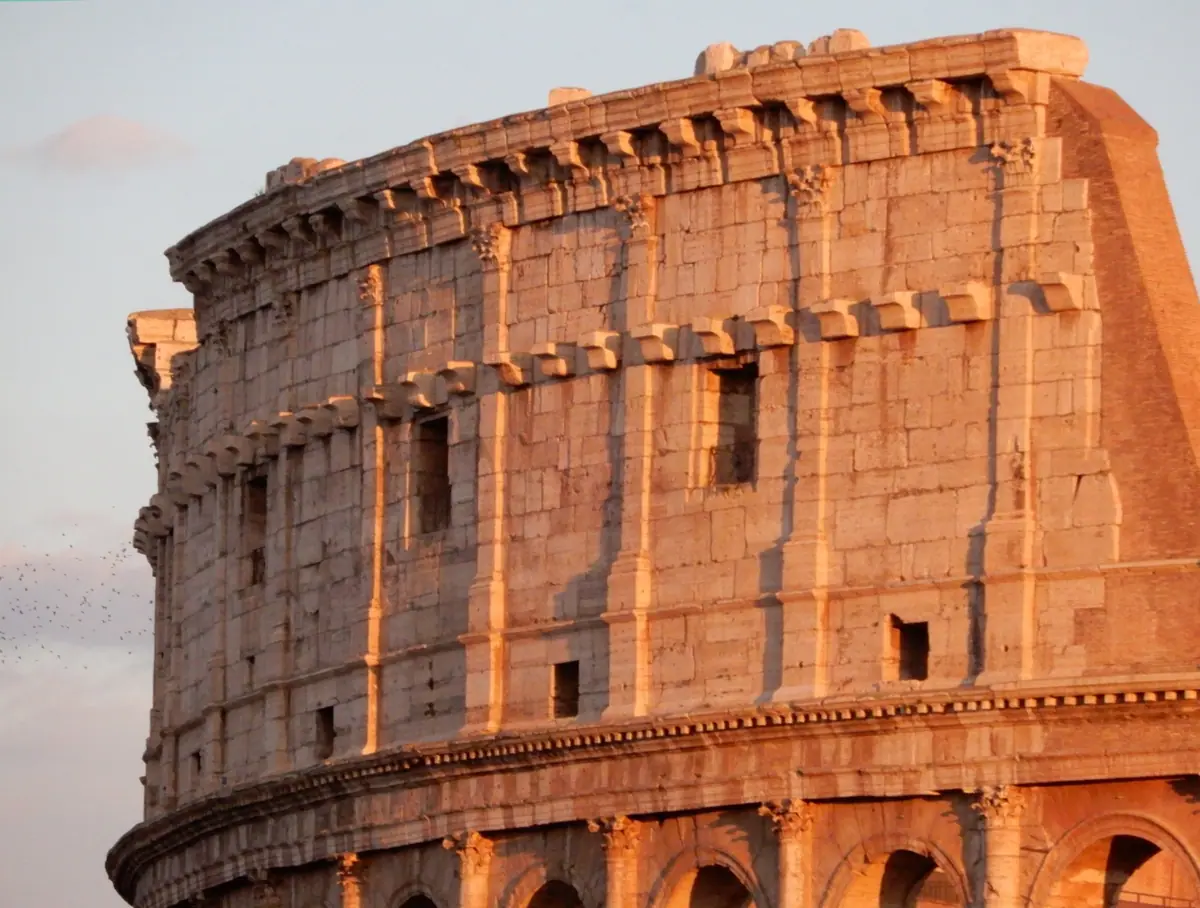
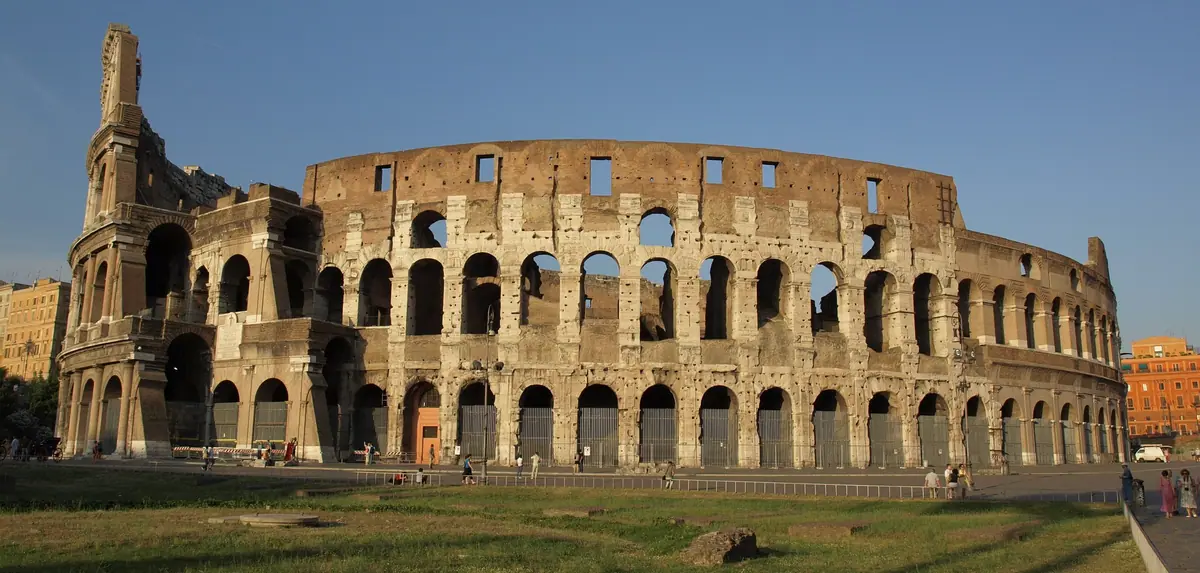
Those iron clamps explain the holes you see all over the stone today: in the Middle Ages people pulled the metal out, and the sockets stayed. On the north side, where the original outer wall still stands, you can follow the façade up its three levels of arches, with Doric columns at the bottom, then Ionic, then Corinthian, and an attic with flat Corinthian pilasters on top. Renaissance architects used that sequence when they set down the rules for the classical orders.
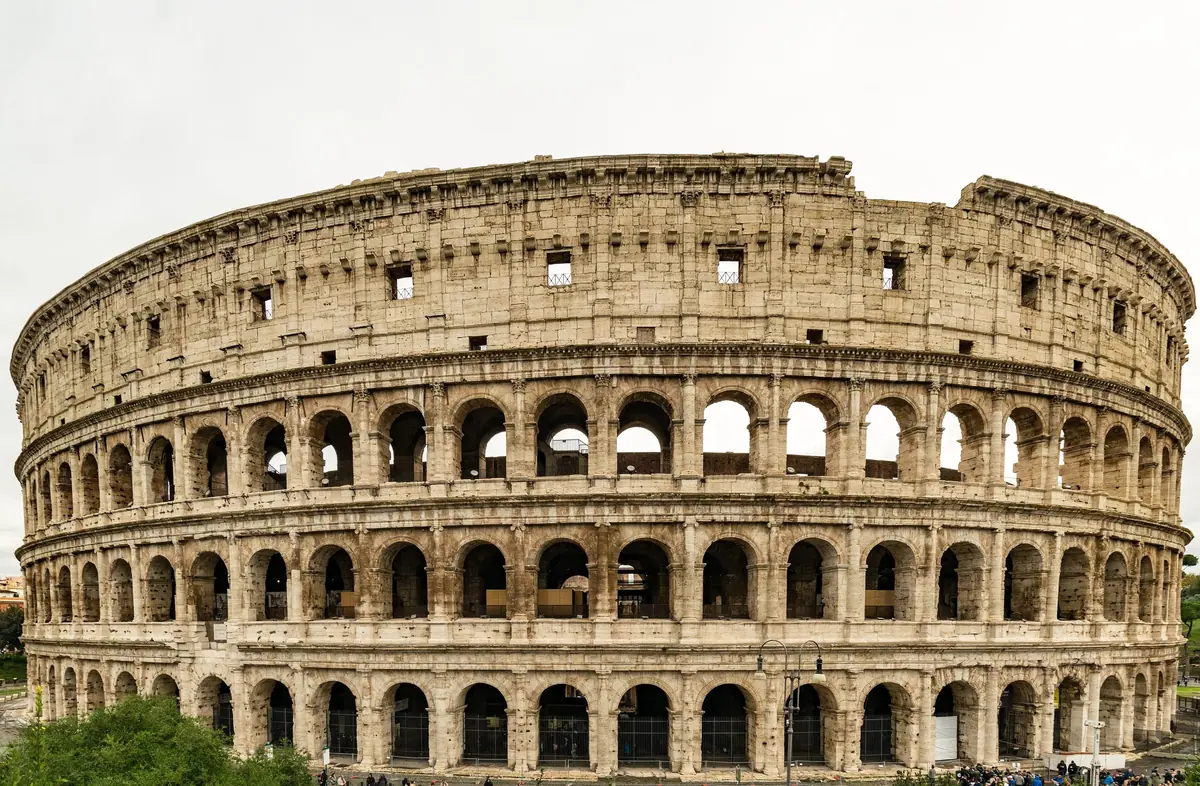
As for who did the heavy work, it’s often assumed that slaves and prisoners of war worked alongside teams of professional builders, engineers and artists. Nobody has proved the split, so take any figure you read online with care.
Getting 50,000 Romans in and out of the Colosseum
Modern estimates put the crowd at about 50,000. A Roman calendar from AD 354 claims 87,000, well above what modern estimates allow. Where you sat depended on who you were.
The emperor and the Vestal Virgins, the priestesses of the goddess Vesta, had boxes at the north and south ends, and senators sat on the podium by the arena, on chairs of their own. Above them came the knights, Rome’s second rank, in the first tier, then ordinary citizens in the second. Women, slaves and the poor went right to the top, to the wooden gallery added by Domitian.
Getting that many people seated took a system. Of the 80 entrances, 76 were for the public, and every entrance, staircase and row had a number; your ticket was a numbered piece of pottery that told you your sector and row. Entrances 23 to 54 still survive. The passages that led from them to the seats, the vomitoria, take their name from the Latin for a rapid discharge, because they could empty the stands in a few minutes.
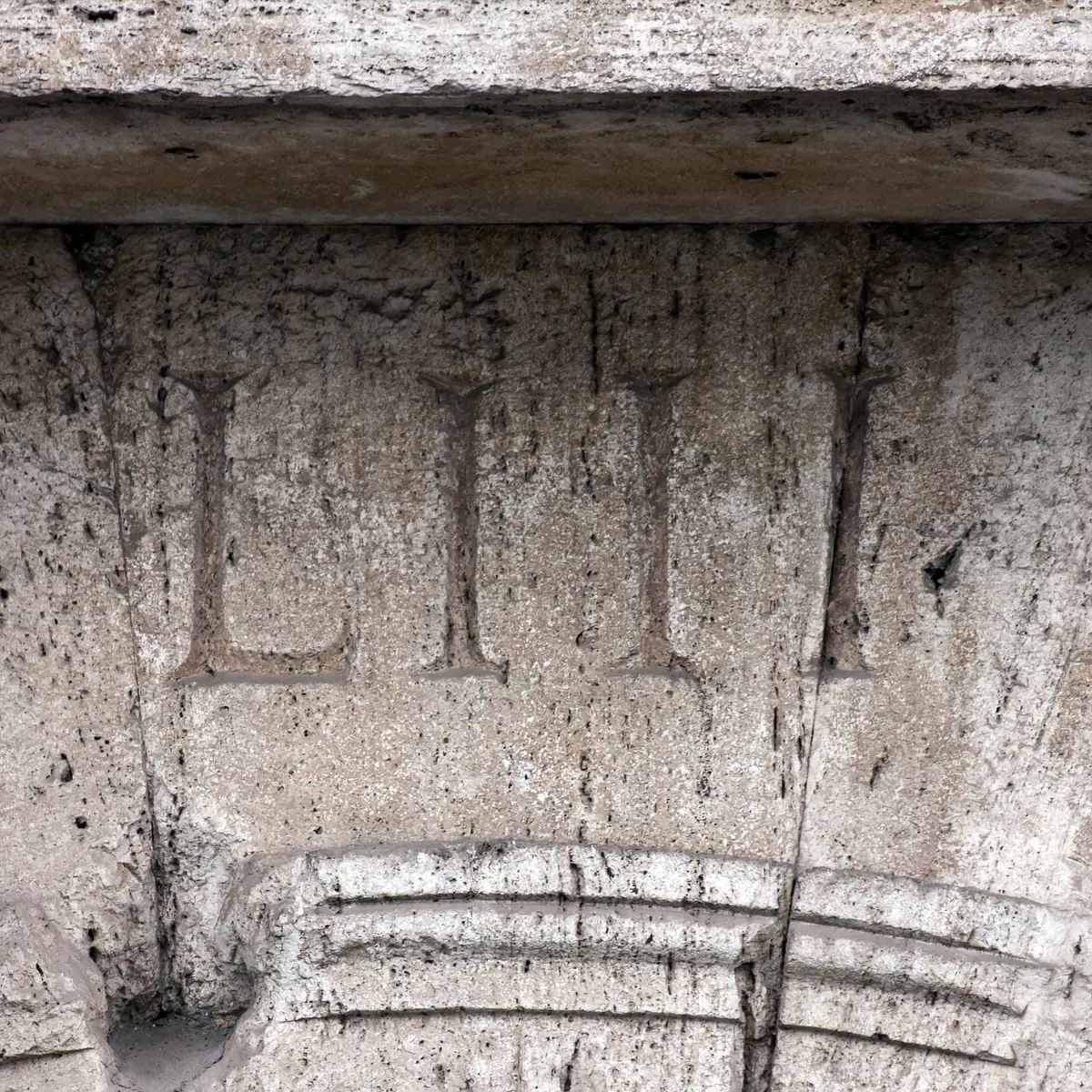
For shade there was the velarium, a retractable awning of rope and canvas fixed to 240 brackets in the attic, which shaded about two thirds of the arena. Sailors from Misenum, the fleet base on the Bay of Naples, worked the ropes.
Gladiators, animal hunts and naval battles in the Colosseum
The fights themselves were never put on by the state. Gladiator shows were given by private individuals, with a religious side to them, and paying for one was a way for a family to show its power.
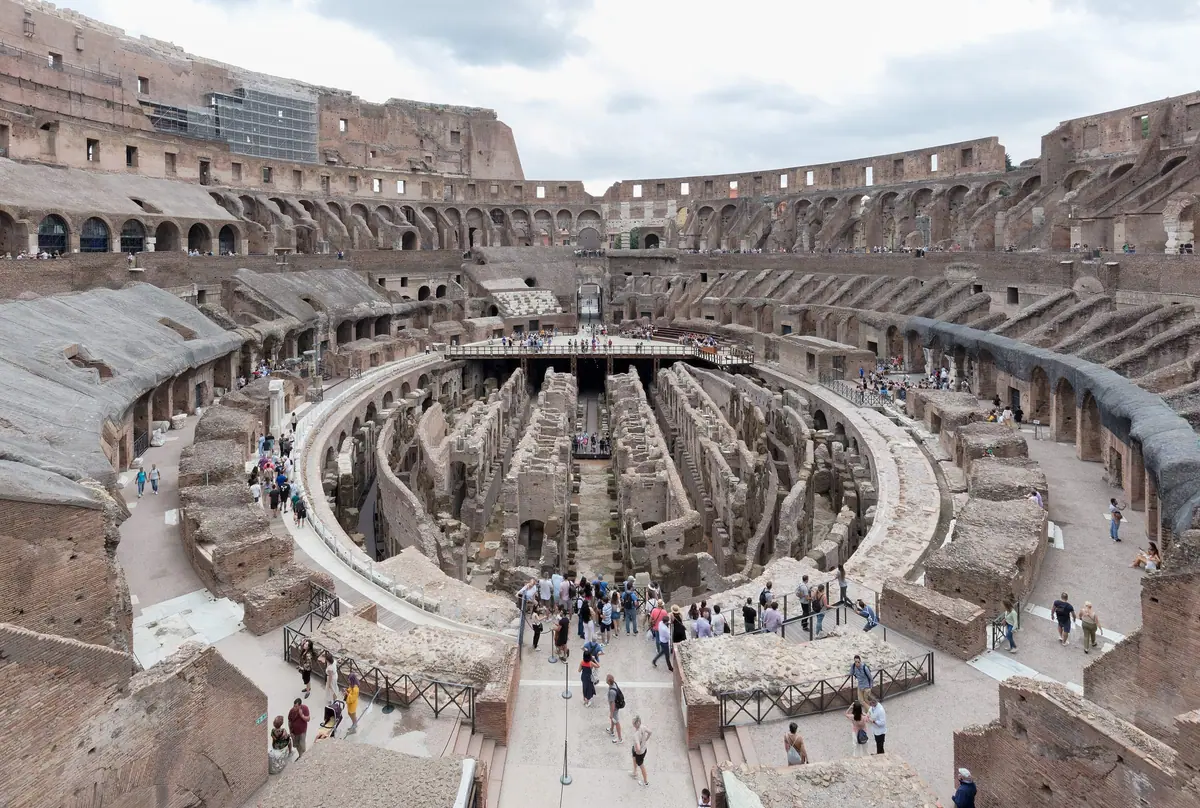
The animal hunts brought rhinos, hippos, elephants, giraffes, lions, panthers, bears, tigers, crocodiles and ostriches from Africa and the Middle East, set among scenery of real trees and moving buildings. The Roman historian Cassius Dio counted more than 9,000 animals killed at the opening games, and the emperor Trajan is said to have celebrated his wars in Dacia, today’s Romania, with 11,000 animals and 10,000 gladiators over 123 days in AD 107. Condemned prisoners were thrown to the beasts at lunchtime, sometimes in scenes staged as Greek myths.
Ancient writers also describe the arena being flooded at the opening games, for swimming horses and bulls and a mock sea battle. There’s no physical evidence of it, though, and historians still argue over how the floor could have been made watertight and where the ships would have fitted.
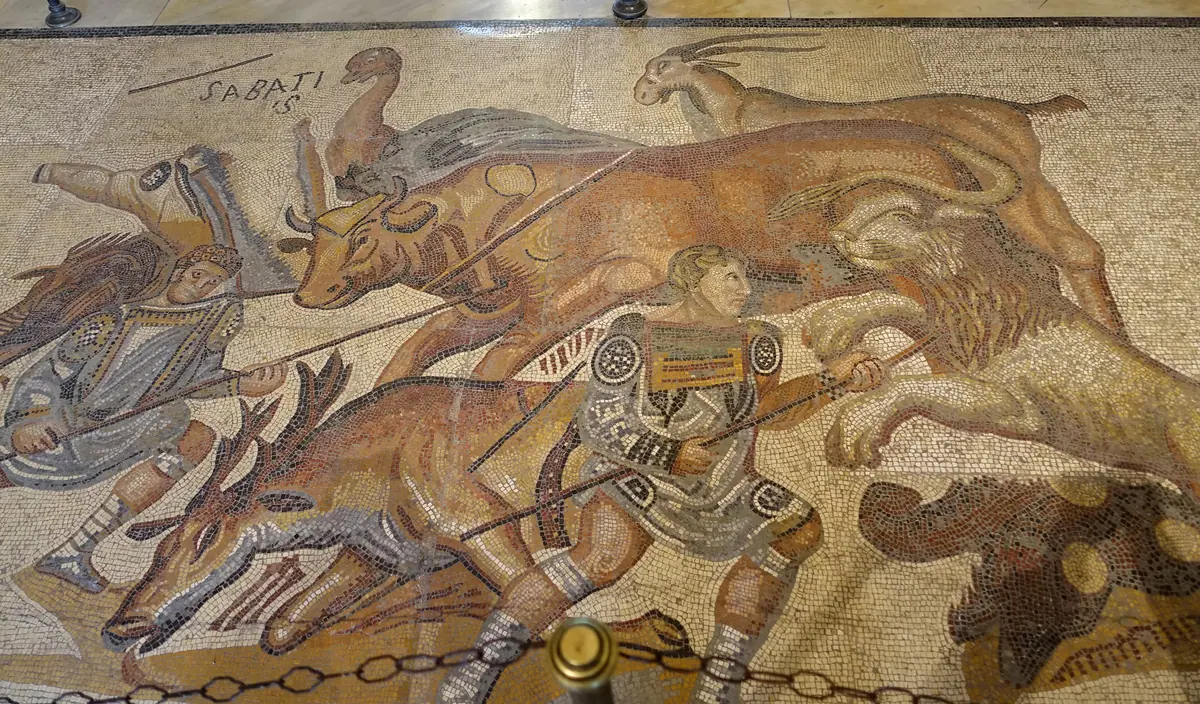
The same caution goes for Christian martyrs. The tradition puts them in the Colosseum, but there’s no historical proof, and some place the killings at the Circus Maximus instead. The link stuck all the same: on Good Friday the Pope’s Way of the Cross still starts from here.
The Colosseum arena and the tunnels beneath it
The arena floor was wooden, covered in sand, and the Latin for sand, harena, gave us the word arena. Under it Domitian built a whole backstage for the games, and the walls you look down on today are what’s left of it.
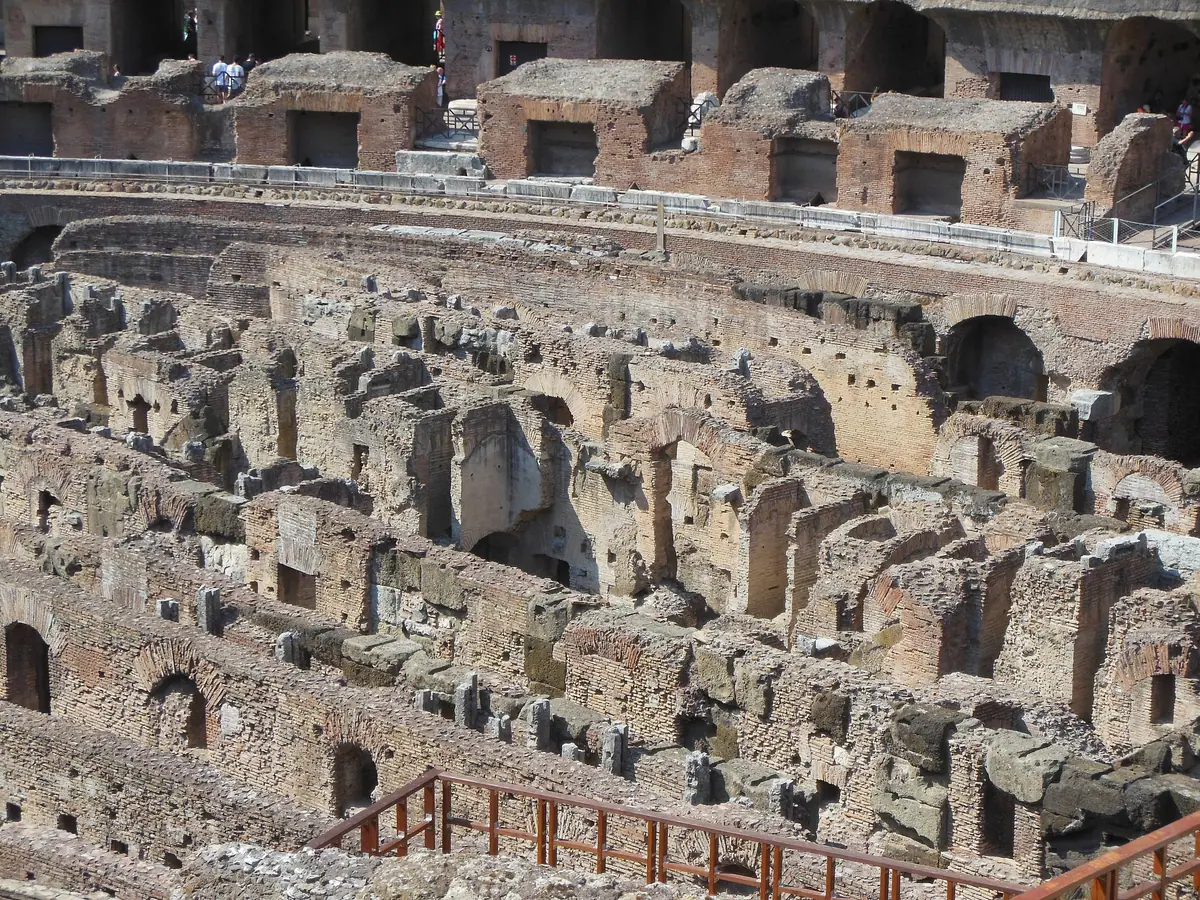
Beneath the wooden floor were two levels of tunnels and animal cages, and 80 vertical shafts sent animals and scenery up into the games, with larger platforms big enough to lift elephants. The walls you see from above show at least 12 building phases, and tunnels ran on beyond them to the Ludus Magnus, the gladiator school next door.
With the standard ticket you look straight down into those tunnels from the first level. Ours costs €25 with an audio guide, the Forum and the Palatine. To stand on the arena floor where the shows took place, you need an arena ticket, such as the arena entry with an audio guide for €52, or a guided arena tour for €85. The tunnels themselves need a ticket of their own.


Entry is free on the first Sunday of every month, with tickets from the ticket office on the day. The arena, the tunnels and the upper levels stay closed on those days, so if the floor is what you’re after, go on a paid day. The rest of the rules live on our page of Colosseum tickets.
From fortress to quarry: the Colosseum after the games
The decline started with damage. In AD 217 lightning set fire to the wooden upper levels inside, and the repairs took until about 240. Gladiator fights were banned in the 5th century, and the last animal hunts on record took place in 523.
Then the building found other uses. By the 6th century there was a chapel inside, the arena had become a cemetery and the arcades held houses and workshops, still let out in the 12th century. Around 1200 the Frangipane, a Roman noble family, turned it into their fortress.
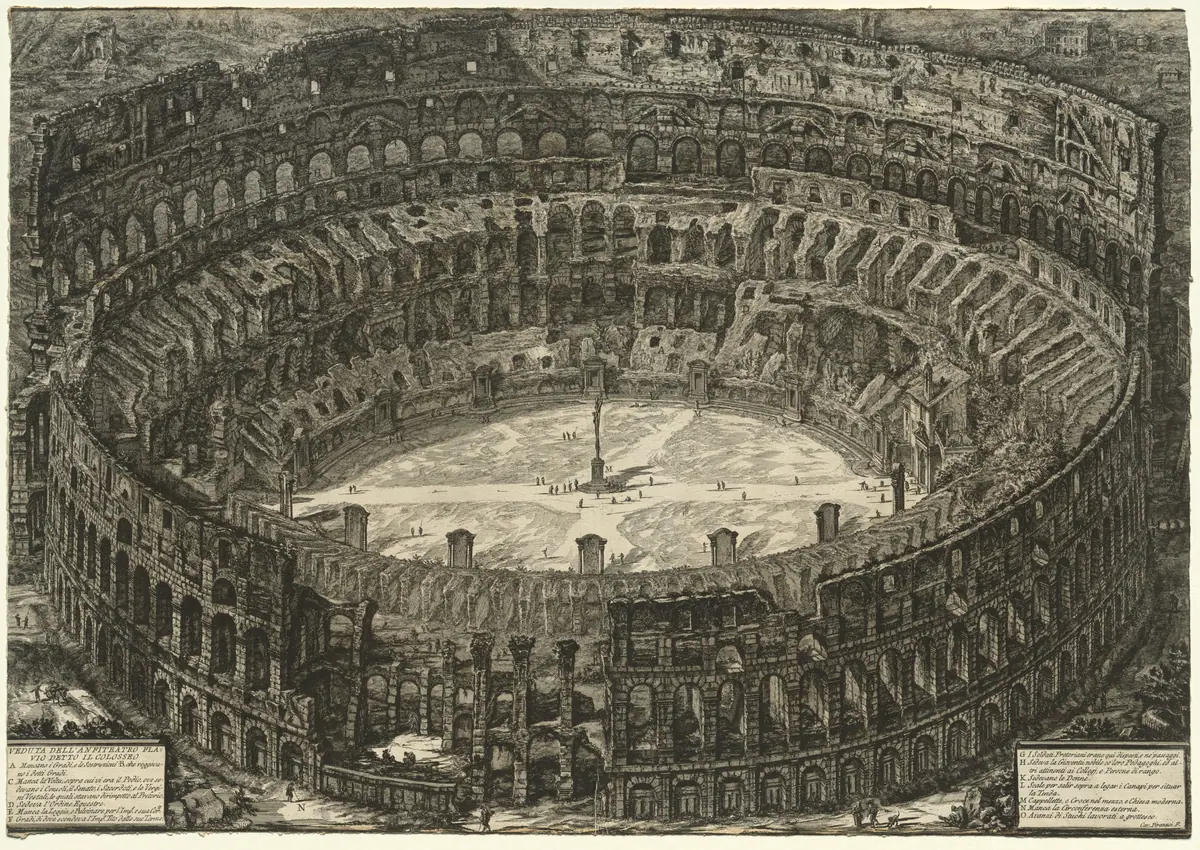
The big loss came in 1349, when an earthquake brought down the outer wall on the south side, which stands on softer river soil. That’s why, from the south, you see the inner wall rather than the façade. The fallen stone was carted off to Rome’s palaces, churches and hospitals, and some of it went into St Peter’s Basilica.
Restoring the Colosseum, from 1749 to the upper levels
The quarrying stopped in 1749, when Pope Benedict XIV banned it and consecrated the building to Christ’s Passion. Triangular brick wedges went up in 1807 and 1827 to hold the outer wall, and the tunnels were dug out in stages until they were fully exposed under Mussolini in the 1930s.
The work you benefit from today is recent. A major restoration ran from 1993 to 2000, the tunnels opened to visitors in the summer of 2010, and between 2013 and 2016 the façade had its first complete cleaning ever, paid for by the Italian fashion house Tod’s. Since 2017 the two top levels have been open for guided visits.
If you’re seeing more of Rome than the Colosseum, it can be one of the entries included in the Roma Pass, together with the Forum and the Palatine. Our page on Roma Pass and Rome’s other city passes shows which other cards include it.

Colosseum facts: a prophecy, a wool factory and 684 plants
You may have heard that “while the Colosseum stands, Rome stands”. The medieval saying, once credited to the English monk Bede, was about Nero’s colossus and not the building, and it’s been mistranslated many times, the poet Lord Byron among those who got it wrong.
Some of the plans for the building never happened. Pope Sixtus V, who reigned from 1585 to 1590, wanted to turn it into a wool factory to give work to Rome’s prostitutes, and in 1671 Cardinal Altieri allowed bullfights inside until public protest killed the idea.
The ruin has also been a garden. Since the first catalogue in 1643, botanists have recorded 684 plant species growing on its walls, with 418 at the peak in 1855 and 242 in the latest count, some of them once found nowhere else in Europe.
City cards
Colosseum with a city card
Pick the one that fits your trip. Prices are per adult, and you choose your dates on the next page.


See what you’d save, if anything
Which Rome card pays off for your trip?
Pick how many days you’ve got and the sights you want to see. The calculator adds up the tickets and rides, sets them against the card and tells you right away whether it pays off, and by how much, at today’s prices. No email, no sign-up.
Step 1 of 3
How long, and who’s going?
People also ask
Frequently asked questions
When was the Colosseum built?
Work began between AD 70 and 72 under the emperor Vespasian, and his son Titus opened the Colosseum in AD 80 with 100 days of games. From 81 his brother Domitian added the tunnels under the arena and a gallery at the top. Some sources put the start at 73 to 75 and the opening games in 81, so you'll see slightly different dates.
Who built the Colosseum?
Three emperors of the same family: Vespasian began it, his son Titus opened it and his younger son Domitian added the tunnels and the top gallery. The work itself is often assumed to have been done by slaves and prisoners of war alongside professional builders, engineers and artists. A reconstructed inscription says Vespasian paid for it with his share of the spoils from Jerusalem.
How many people did the Colosseum hold?
Modern estimates put it at about 50,000 spectators. A Roman document from AD 354 gives 87,000, and estimates for different periods range up to 80,000, so treat any single figure as approximate.
Why is it called the Colosseum?
The name comes from a colossal statue of Nero that stood beside it, which the emperor Hadrian had moved next to the amphitheatre. The Romans themselves simply called it the amphitheatre.
Which day is the Colosseum free?
On the first Sunday of every month. Free tickets can't be booked: you get them at the ticket office on the day. The arena, the tunnels and the upper levels are closed on free days.
Were Christians killed in the Colosseum?
That's a tradition, not a proven fact. There's no historical evidence of Christian martyrdoms there, and some historians place them at the Circus Maximus instead. Pope Benedict XIV consecrated the Colosseum to Christ's Passion in 1749, which helped the tradition stick.
Read more