
Rome · Roma Pass
Colosseum
Book your slot, then look down into the arena like a Roman.
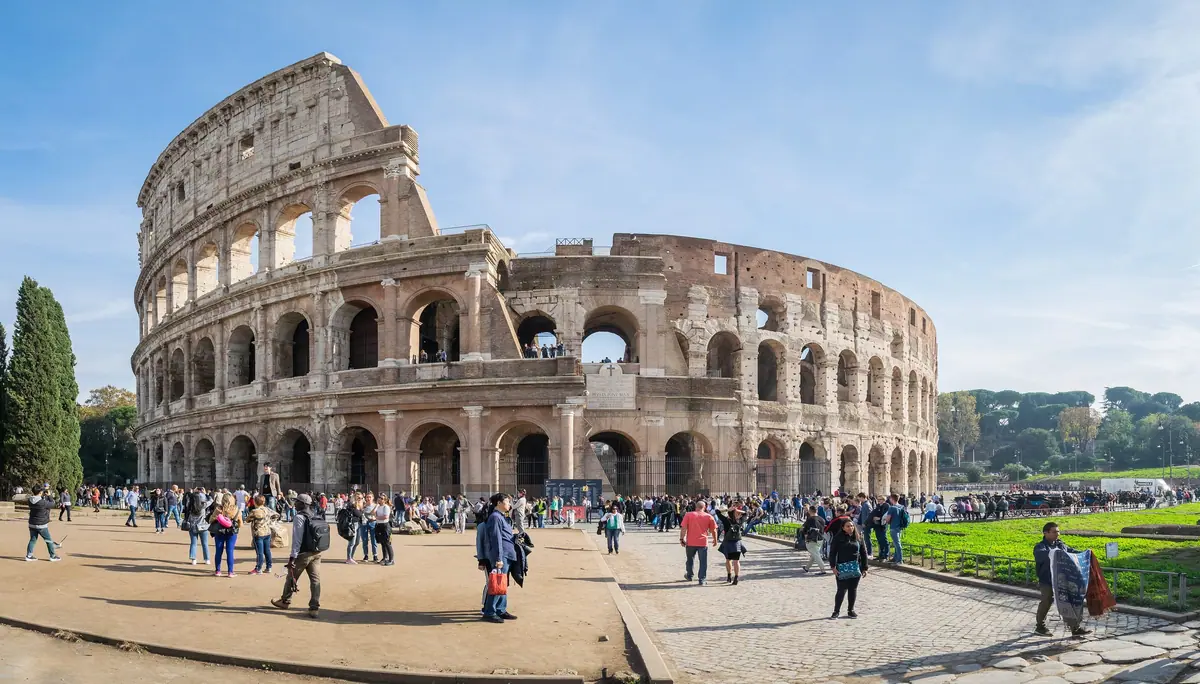
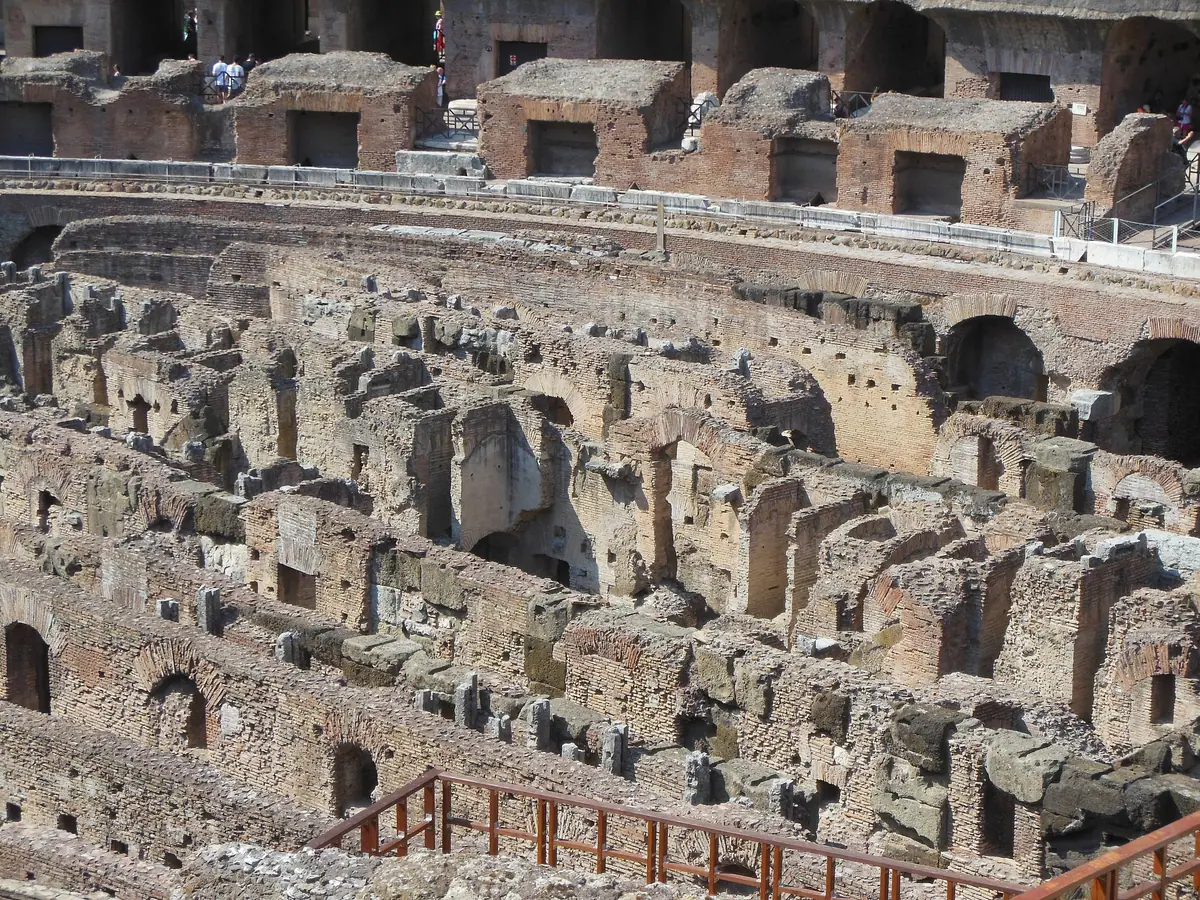
Rome's Colosseum, the largest amphitheatre in the world, held about 50,000 spectators for gladiator fights and animal hunts. From its first level you look straight down into the arena and the tunnels beneath it, where lifts and trapdoors once raised animals and scenery into the games. One ticket covers the Colosseum, the Roman Forum and the Palatine Hill, and the Roma Pass counts all three as a single included entry.
Before you go
- Time inside60–75 min
- OpenEvery day
- EntryTimed slot
- Best timeMornings
TipYour time slot gets you past the ticket desk, not the security check. Everyone goes through the scanner, so be at the entrance a quarter of an hour early.


Colosseum tickets and what each one includes
Every Colosseum ticket has a time slot and the visitor’s name on it, and at the entrance you show it with an original ID. The standard ticket covers three sites: the Colosseum’s first two levels, plus the Roman Forum and the Palatine Hill next door. The one we sell adds a digital audio guide: €25 for the Colosseum, Forum and Palatine.
What the standard ticket doesn’t do is take you down onto the arena floor. For that you need a ticket with the arena, and the one we sell is a guided tour for €85, which also covers the Forum and the Palatine. Heavy rain can close the arena.
Standard time slots open 30 days ahead. One visitor who booked two weeks before an October visit only just found a time, so book as soon as your dates are fixed.


Is the Colosseum included in the Roma Pass?
Yes, for the standard visit: the Colosseum, the Forum and the Palatine use up one of the Roma Pass’s included entries, of which the 48-hour card has one and the 72-hour card two. No city card covers the arena or the tunnels.
The card doesn’t reserve your time. You book the Roma Pass ticket yourself on the Colosseum’s own ticket site, ticketing.colosseo.it, up to a month ahead, and at the entrance you show the card with your booking. The Roma Pass recommends booking at least 10 days ahead, or 20 in high season.
For the Colosseum alone, the ticket costs less than the card. Whether the card pays off depends on what else you’ll see: give the Roma Pass calculator your list and it does the sums. The Roma Pass page also covers Rome’s other passes and which of them include the Colosseum.

Colosseum opening hours and the rules at the entrance
The Colosseum has no weekly closing day and opens at 8:30, with the Forum and Palatine opening at 9:00. The last entry for the standard ticket is an hour before closing, which from late October to February means 15:30.
Opening hours
- 25 October 2026 to 28 February 2027
- 8:30–16:30
- March, to the last Saturday
- 8:30–17:30
- Last Sunday of March to 30 September
- 8:30–19:15
- October, to the last Saturday
- 8:30–18:30
- Good Friday
- Closes early (in 2026, at 13:00)
- Closed
- 25 December and 1 January
On the day, with a standard 10:00 slot
- 19:45 to 10:15: get to the entrance in this window. Any later and the standard ticket only gets you into the Forum and Palatine.
- 2At the gate: show the ticket on your phone with an original ID. The name has to match, so check the spelling when you book.
- 3Security: a metal detector and bag scanner. Bags up to 30 × 40 × 15 cm, no cloakroom, and no glass bottles, selfie sticks or trekking poles.
- 4Inside: with the standard ticket, 75 minutes from when you scan in. Both levels take about an hour.
Tickets can’t be refunded or moved to another time. The rules ask for closed, sensible shoes, and there’s nowhere to eat inside, but two drinking fountains stand between the first and second levels.
What you see inside the Colosseum
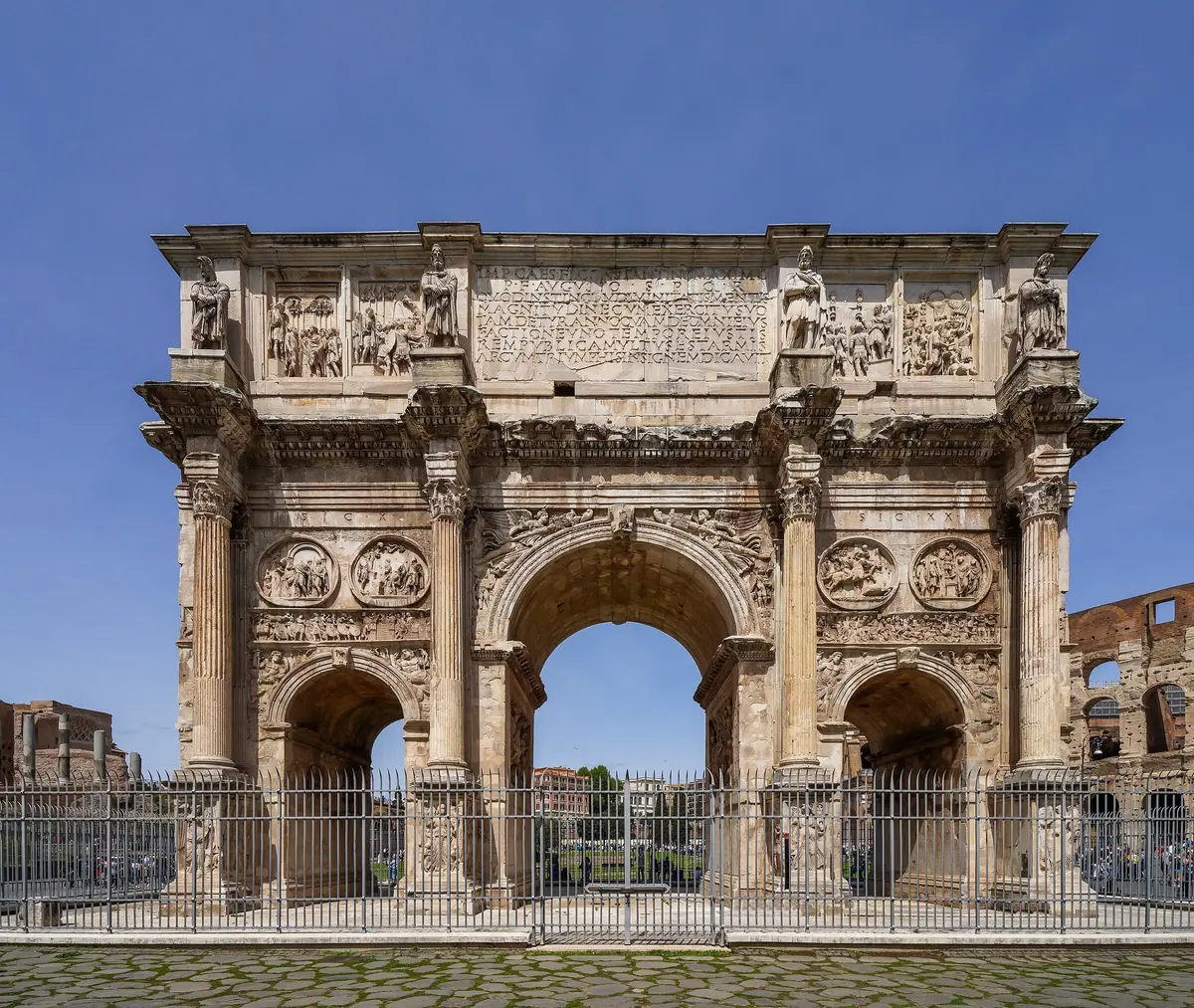
The entrance is near the Arch of Constantine, the triumphal arch of the first Christian emperor. Past the scanner you come out onto the first level, and from its corridors you look down over the arena and the bare walls of the tunnels below it.
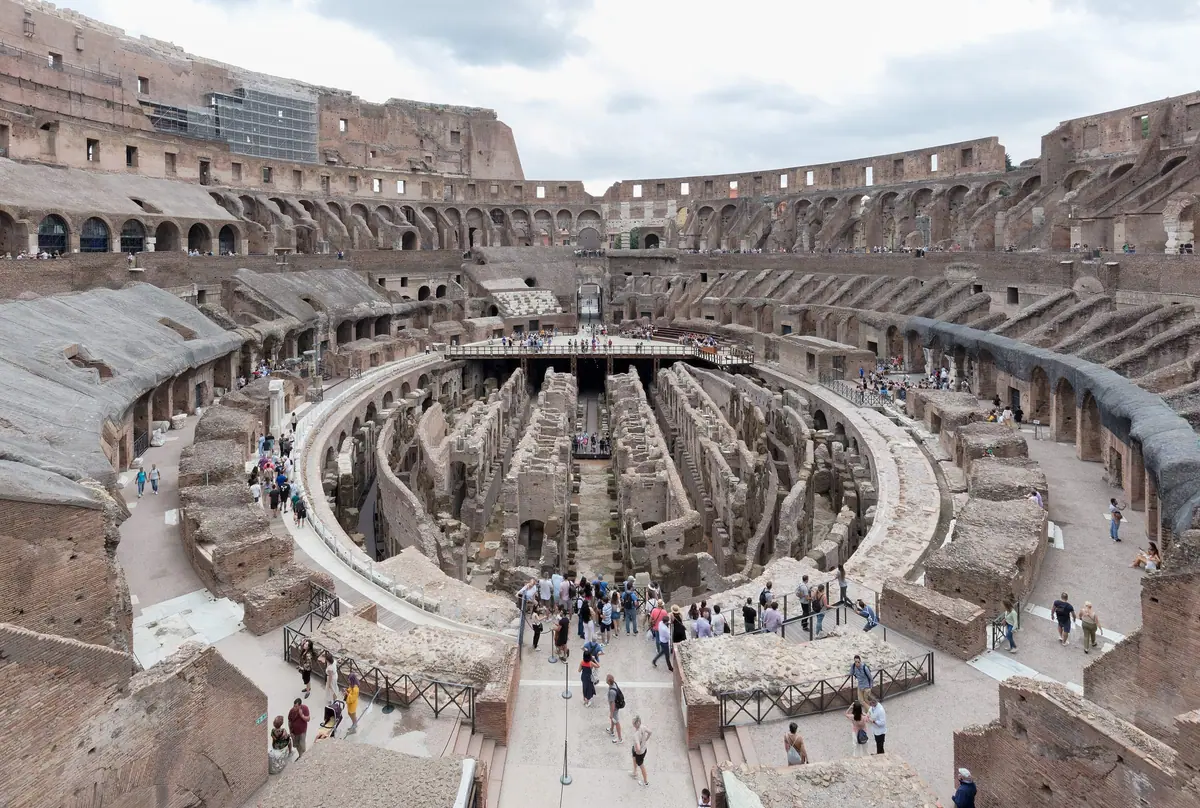
Stairs take you up to the second level, with a lift for visitors with reduced mobility. Up there are the Colosseum’s museum, its temporary exhibitions and terraces that look out over the arch.
With an arena ticket you walk onto the floor itself, a rebuilt section on the east side. The tunnels and the top levels, with a panoramic lift to the third level and steep stairs on to the attic, need tickets of their own.
Most of the first level and all of the second can be visited in a wheelchair, and there’s an accessible toilet on the first level by the turnstiles.
The Roman Forum and Palatine Hill on the same ticket
The rest of your ticket covers the Roman Forum and the Palatine Hill, right next to the Colosseum. The Forum was the city’s main square, lined with temples and the Senate house, and the Palatine Hill above it is where the emperors built their palaces.
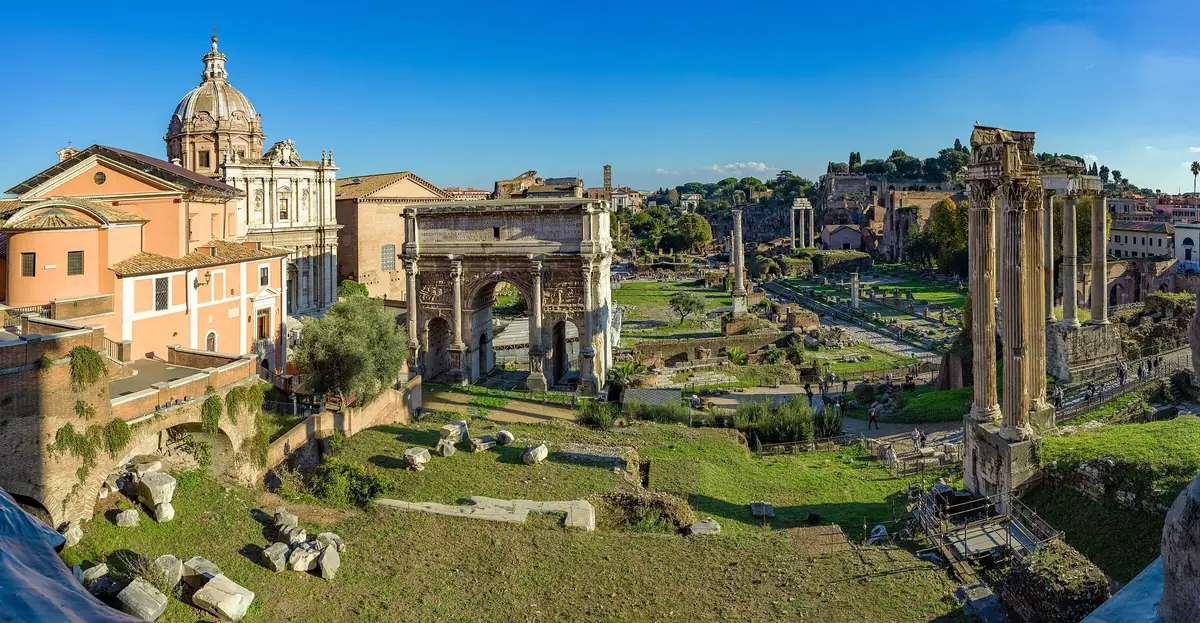
You can go in once, at any time in the 24 hours before or after your Colosseum slot, so you can do them the day before if that suits you. The nearest gate to the Colosseum is at the Arch of Titus, the busiest, and the arch is under restoration, so check it’s open. There are other gates on Via dei Fori Imperiali and Via di San Gregorio. The arch itself honours Titus, the emperor who opened the Colosseum.
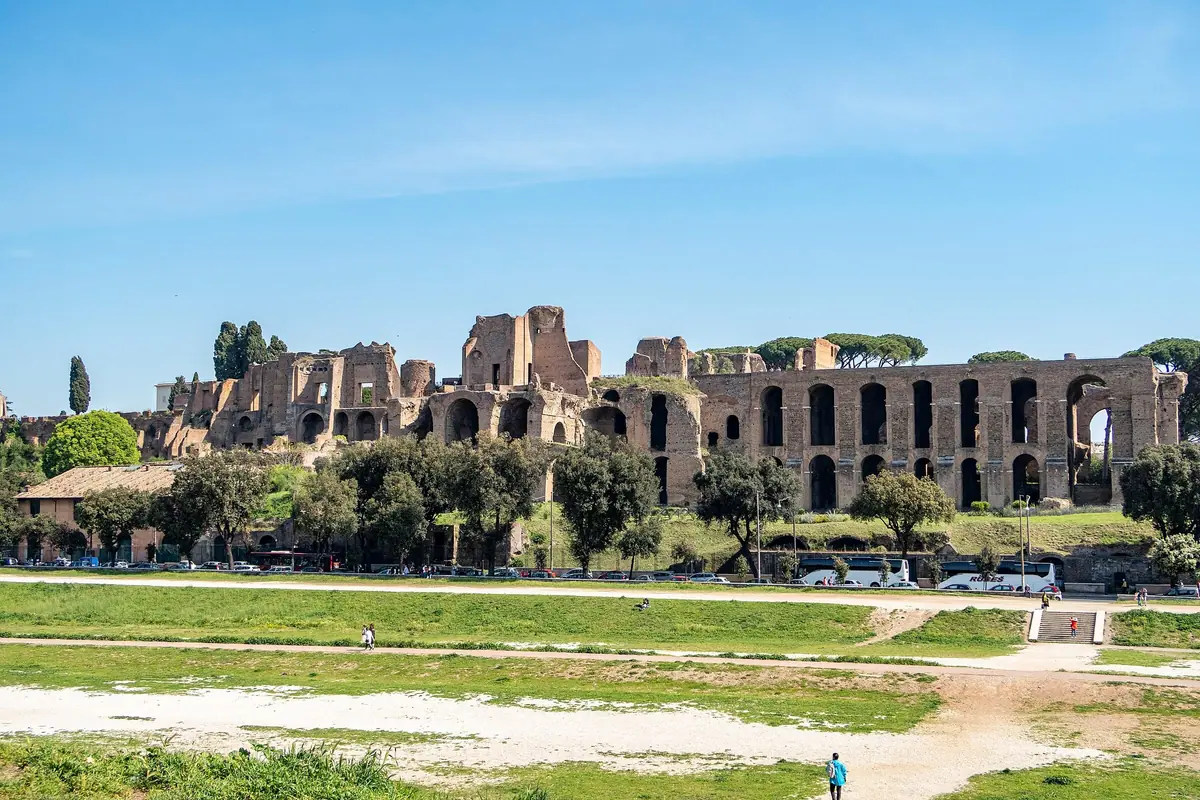
The Forum takes up to an hour and a half, and the Palatine adds more time if you climb it, so with the Colosseum you’re looking at about half a day. In winter the Forum’s last entry is at 15:30, like the Colosseum’s, so an early slot leaves you daylight for both.
A short history of the Colosseum
The Colosseum stands on the site of an artificial lake in the grounds of the Golden House, Nero’s palace. Emperor Vespasian drained the lake and began the building between AD 70 and 72; his son Titus opened it in AD 80 with 100 days of games, and Vespasian’s younger son Domitian added the top level in 82.
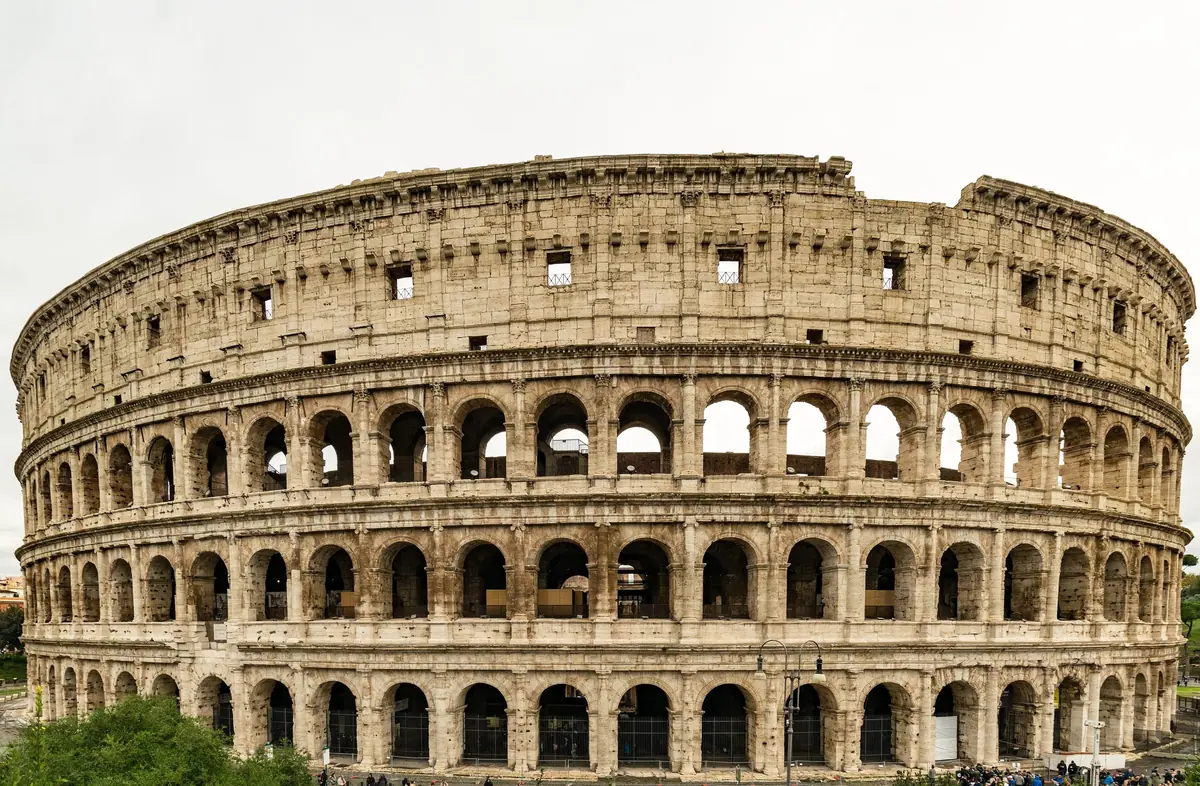
Gladiator fights were abolished in 438, and the animal hunts went on for about another century. The name came later, from a colossal statue of Nero that stood nearby.
After the games ended, the building became a fortress for Rome’s noble families and then a quarry, and some of its stone went into St Peter’s Basilica. It has been a UNESCO World Heritage Site, as part of Rome’s historic centre, since 1980.
Getting to the Colosseum
To arrive in time for your slot, take the metro: line B stops at Colosseo, and line C has had its own Colosseo/Fori Imperiali station since December 2025, connected to line B. Buses 51, 75, 81, 85, 87 and 118 stop nearby too, and all of these are covered by the Roma Pass.
MyColosseum, the official app, is free and has an audio guide in Italian and English; the one with the ticket we sell covers more languages. Outside the entrance, skip the people offering tours and tickets: one visitor warned of fake guides charging inflated prices.
City cards
Colosseum with a city card
Pick the one that fits your trip. Prices are per adult, and you choose your dates on the next page.


Tickets
Popular tickets around Rome
The ones other visitors book most.


People also ask
Frequently asked questions
Do I need to print my Colosseum ticket?
No, the ticket on your phone is enough. Bring the original ID of each person named on it, because that's what the staff check it against.
Can I buy Colosseum tickets on the day?
Yes, at the ticket office in Piazza del Colosseo, the only place that has sold the standard ticket on the day since May 2026. It comes with a time slot like any other, and there's no telling how many are left, so booking ahead is the safer way.
Can children visit the Colosseum for free?
Under-18s go in free, but each still needs a named ticket for a time slot. On the ticket we sell, under-18s have their own option at checkout. Children under 12 must be with an adult who has a valid ticket.
When is the Colosseum free for everyone?
On the first Sunday of every month and on a few national days, such as 25 April and 2 June. Those tickets can't be booked: you queue for them at the ticket office on the day. They cover the standard visit; the arena, the tunnels and the upper levels are closed on those days.
