
Rome · Roma Pass
Circus Maximus
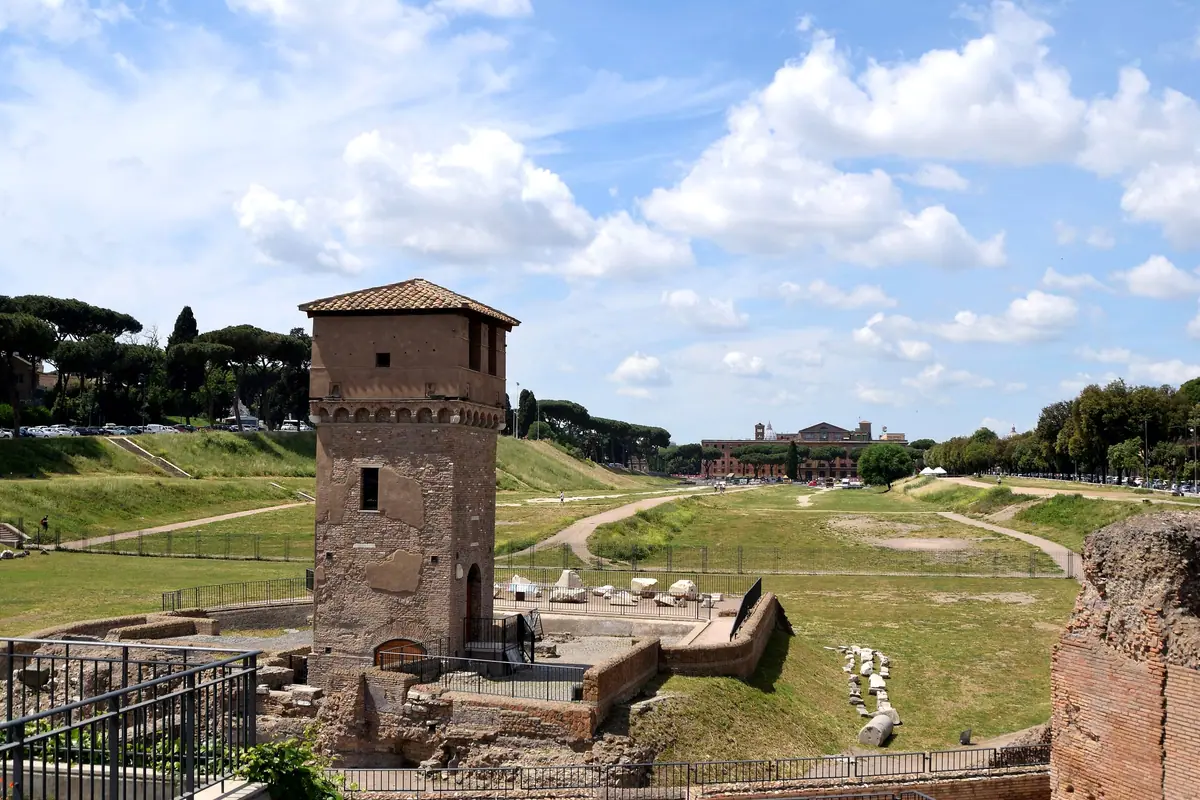
Chariots raced on this grass until 549, and you can still walk the length of the track.
The Circus Maximus was ancient Rome's chariot-racing track and the largest building for shows in the ancient world, about 600 metres long between the Palatine and Aventine hills, with room for more than 150,000 spectators by modern estimates. The stands are gone, but the long grassy valley keeps the shape of the track and is free to walk. A ticket takes you into the excavated curve at the south-east end, with its galleries and the medieval Torre della Moletta, and the Circo Maximo Experience shows you the Circus as it was through augmented and virtual reality visors. The Roma Pass covers both.
Before you go
- Time inside30–45 min
- ClosedMondays (paid area and Experience)
TipThe valley is free and always open. Only the paid area and the Circo Maximo Experience close on Mondays, and the Experience needs an original ID or passport, left as a deposit for the visor.


Is the Circus Maximus free? The valley, the ruins and the Experience
The valley is. The long grassy stretch between the Palatine and the Aventine is open all the time and needs no ticket, though it can be fenced off when a concert or an event takes it over.
Two things at the Circus have a price, and they’re separate tickets. The archaeological area is the excavated curve at the south-east end, with the Torre della Moletta, and it closes on Mondays. The Circo Maximo Experience is a visit with augmented and virtual reality visors, and the area’s ticket doesn’t include it. Both are run by the Sovrintendenza Capitolina, Rome’s city heritage office, which sells them online, by phone on 060608 and at the ticket office on Viale Aventino.
Free and paid at the Circus Maximus
- The valley
- Free, with no ticket. The grassy track between the Palatine and the Aventine, open all the time
- Archaeological area
- €7, reduced €4. The curve with its galleries, shops and the Torre della Moletta. Closed on Mondays; numbers are capped, so buying ahead is strongly advised
- Circo Maximo Experience
- €12, reduced €10, under-6s free. About 40 minutes with augmented and virtual reality visors, in groups that start every 15 minutes; booking recommended
On the Experience, the reduced price is for visitors up to 26, teachers, groups and Roma Pass holders, among others, and anyone booking a reduced ticket online brings proof. A family ticket for two adults and their children under 18 costs €22, but only by phone on 060608 or at a city tourist Infopoint.
Neither of those tickets is on sale here. What we have is a guided tour of the Baths of Caracalla that takes in the Circus Maximus, at €89 for adults, for an hour and a half in groups of up to 10. It includes the entry ticket to the Baths, the ruins of an ancient Roman bath complex, and a guide for both sites, with headphones, in English, German, French, Italian or Spanish. Its listing has no Circus Maximus ticket, so don’t count on it taking you into the paid area.

The tour costs €74 for children aged 7 to 17, and under-7s go free. You meet the guide at Viale Aventino 3, at the Circo Massimo metro exit opposite the FAO building, by a yellow TOURIKS sign, about 10 minutes before the start, and you can cancel for free up to 24 hours ahead.
What you see at the Circus Maximus today
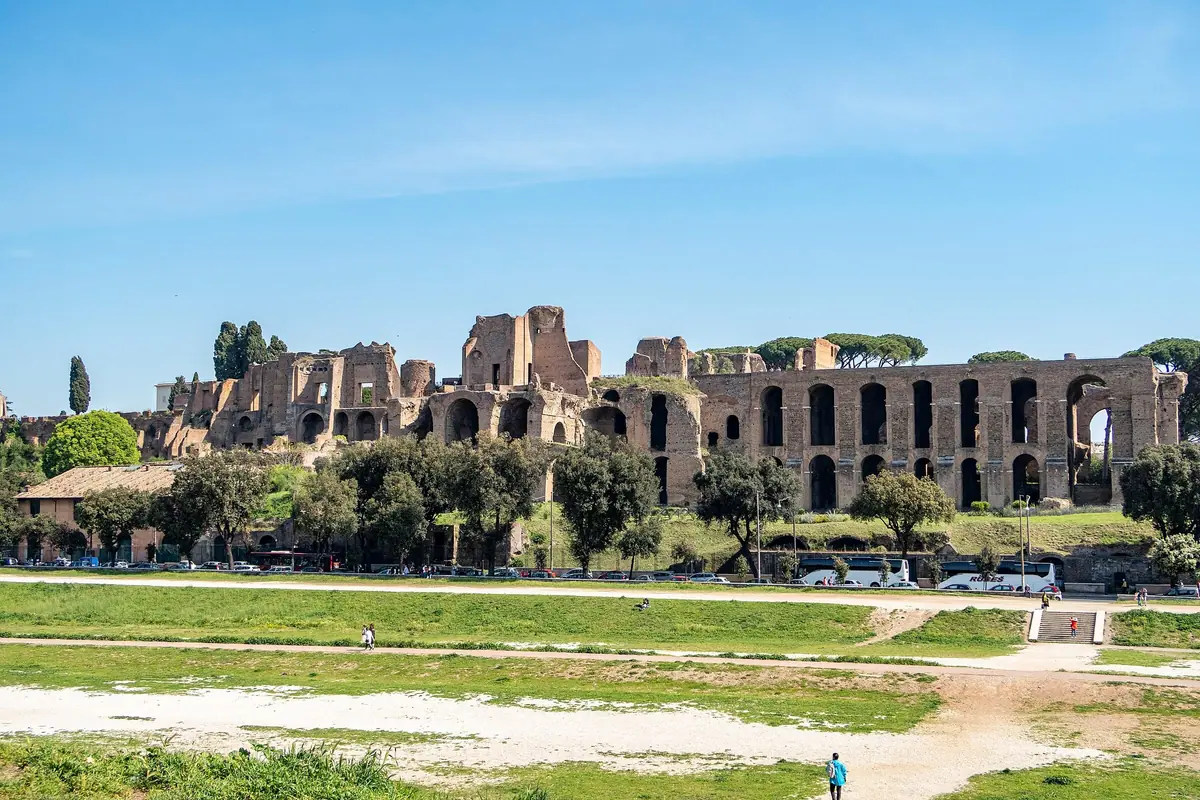
In the valley you walk on the outline of the track, about 600 metres by 140, with the Palatine’s palaces on one side and the Aventine on the other. The stone seating is gone. Today the space holds Rome’s big crowds instead: Travis Scott played here to about 60,000 people in August 2023, and the Giro d’Italia, the Italian cycling race, finished here on 31 May 2026.
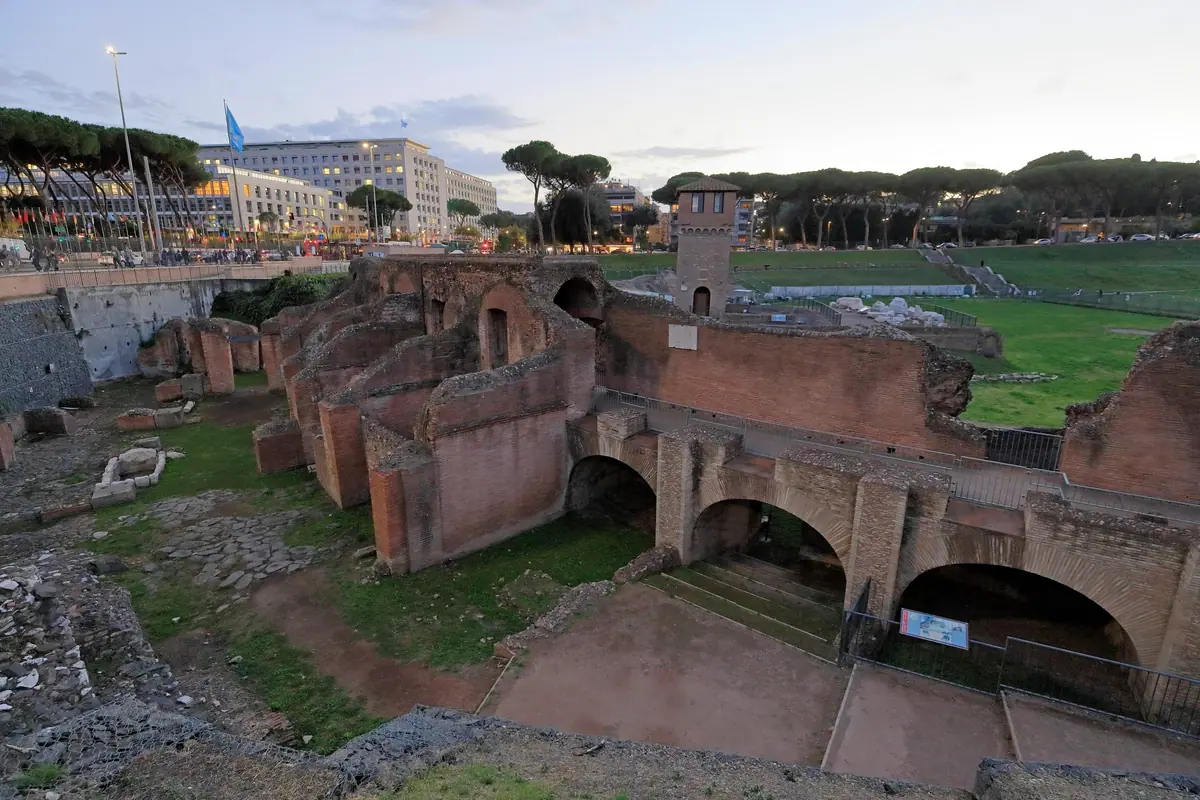
At the south-east end, the archaeological area brings you down among what’s left of the curve. You walk along the galleries that led up to the cavea, the tiers of seats, over the ancient paving and past the rooms that were shops, taverns and offices. Above them stands the Torre della Moletta, a tower the Frangipane family built in the 12th century and named after a mill. It has been restored, and a staircase inside climbs to a viewpoint over the excavations. The area is only partly accessible.
The Circo Maximo Experience puts back what you can’t see. Through the visors you follow eight stages, from the valley’s origins and the Circus under Caesar and Trajan to the seating, the Arch of Titus that stood here, the shops, the medieval and modern Circus and, at the end, a day at the races. It takes about 40 minutes, in Italian, English, French, German, Spanish, Russian, Chinese or Japanese, with Italian and English subtitles for deaf visitors, and it’s accessible to visitors with reduced mobility.
Your Circo Maximo Experience visit
- 1Book ahead: recommended, online or on 060608, though the ticket office also sells it on the spot, after you fill in a form with your details.
- 2Arrive 15 minutes early: groups start every 15 minutes, and if you're late there's no refund and no new time.
- 3Bring an original ID or passport: you leave it as a deposit for the visor. Under-14s need an authorisation signed by an adult.
- 4If it's cancelled: for bad weather or a technical fault, you can ask for a refund by email within 15 days. That's the only case with a refund.
The Circus Maximus with the Roma Pass: two sites, two ways in
On the Roma Pass, the archaeological area and the Circo Maximo Experience count as two separate sites, so you can use the card at both. Either one can be an included entry (the 48-hour card has one, the 72-hour card two), and you tell the staff at each site whether to use it. Wherever you don’t, the card gets you the reduced price: €4 in the area and €10 for the Experience. That’s why an included entry is better spent on the Experience, where it saves you €10, than in the area, where it saves €4.


The 72-hour Omnia Card works the same way, because its Roma Pass is the one that gets you in. The other cards on our Roma Pass and Rome’s other city passes page don’t help here: the 24-hour Omnia, the Rome Tourist Card, the Vatican City Pass and the Turbopass leave the Circus Maximus out, and Go City lists only a bike hire that comes with the Experience.
Booking with the card is free and strongly recommended, on 060608. One more thing to plan around: on the first Sunday of the month the area is free for everyone, so keep an included entry for another day, unless you’re using it on the Experience, which is paid that day too.
Circus Maximus opening hours this winter
The paid area went onto its winter hours on Sunday 25 October, closing at 16:00 until late March. The Experience keeps similar daytime hours until the end of the year. In summer it moved to the late afternoon and evening, and the city hasn’t published its 2027 timetable.
Opening hours
- The valley
- Open all the time; it can be fenced off for events
- Archaeological area, 25 October 2026 to 27 March 2027
- Tuesday to Sunday, 9:30–16:00, last entry 15:00
- Archaeological area, last Sunday of March to last Saturday of October
- Tuesday to Sunday, 9:30–19:00, last entry 18:00
- Circo Maximo Experience, to 31 December 2026
- Tuesday to Sunday, 10:00–16:00, last entry 14:50
- 24 and 31 December
- Experience 10:00–14:00, last entry 12:35
- Closed
- Mondays, 1 May and 25 December (area and Experience)
- First Sunday of the month
- Area free for everyone; the Experience is paid
The free first Sundays have run on the area’s normal hours, until 16:00 in winter.
The view of the Circus Maximus from the Palatine Hill
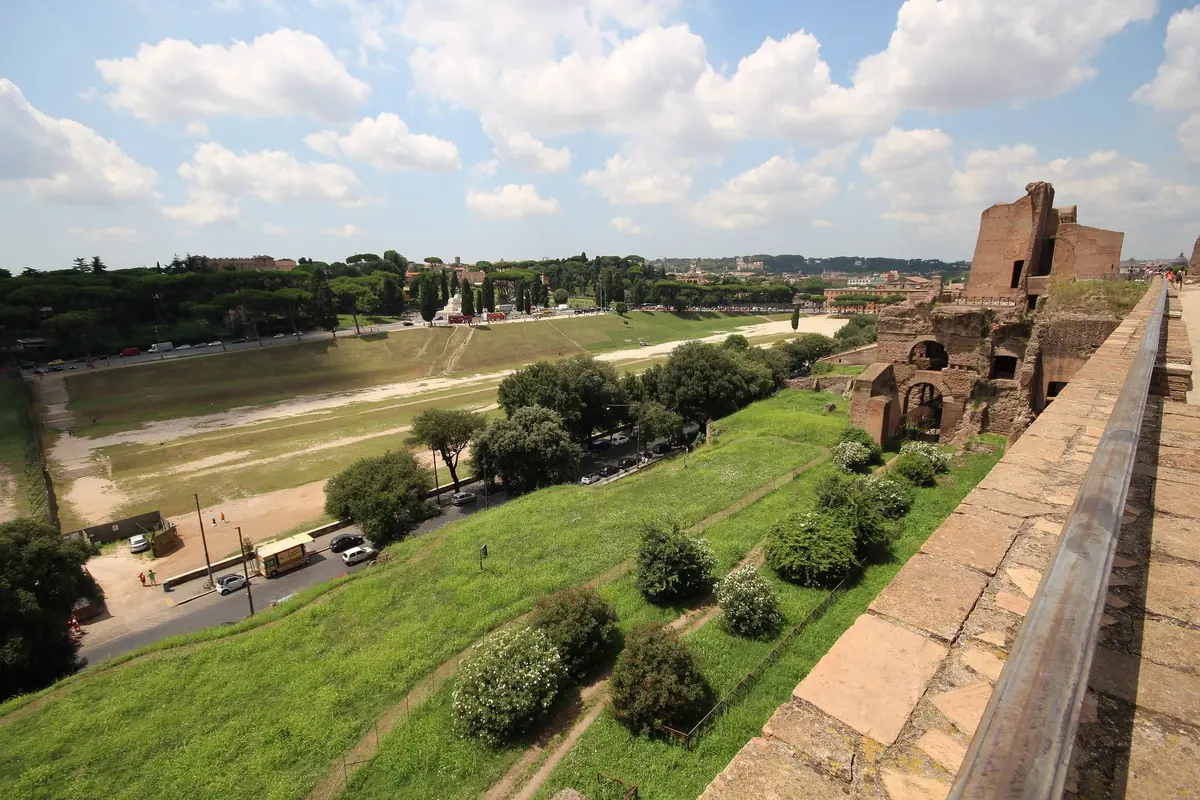
For the whole valley at once, go up rather than in. The Palatine Hill rises along one side of the Circus, and the Domus Augustana, the private palace of the emperors, had its rooms over the valley, so from the palace’s upper level you look straight out over the track.
That view comes with the Colosseum ticket, which also covers the Roman Forum and the Palatine: €25 for all three sites, with an audio guide app. Our Roman Forum and Palatine Hill page explains how to plan the hill around your Colosseum time.
So the choice at the Circus comes down to what you’re after. The Palatine gives you the view, the archaeological area puts you among the galleries and under the tower, and the Experience shows you the Circus full of people.

How the Circus Maximus went from racetrack to gasworks and back
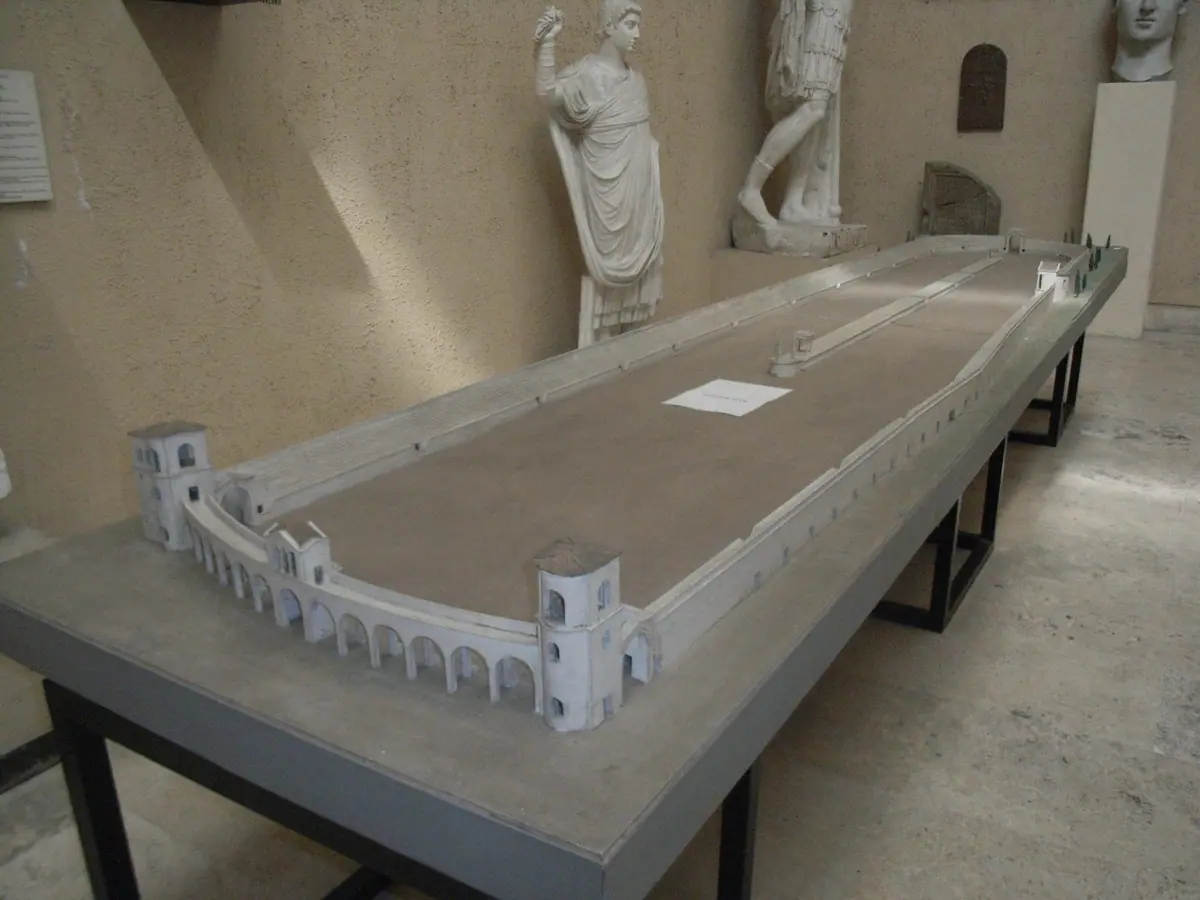
Races were held in this valley from the time of Rome’s kings, and the legend of the abduction of the Sabine women is set here. Julius Caesar gave the Circus its first masonry stadium. Fire struck it in AD 36 and again in 64, when the great fire of Nero’s reign broke out in the shops along the Circus, and both times it was rebuilt as it was.
What you see today is mostly Trajan’s Circus. The emperor rebuilt almost all of it in stone, and a coin from AD 103 records the work. Its Arch of Titus, put up by the Senate in 81, is a different arch from the one in the Forum, and it’s one of the stages of the Experience.
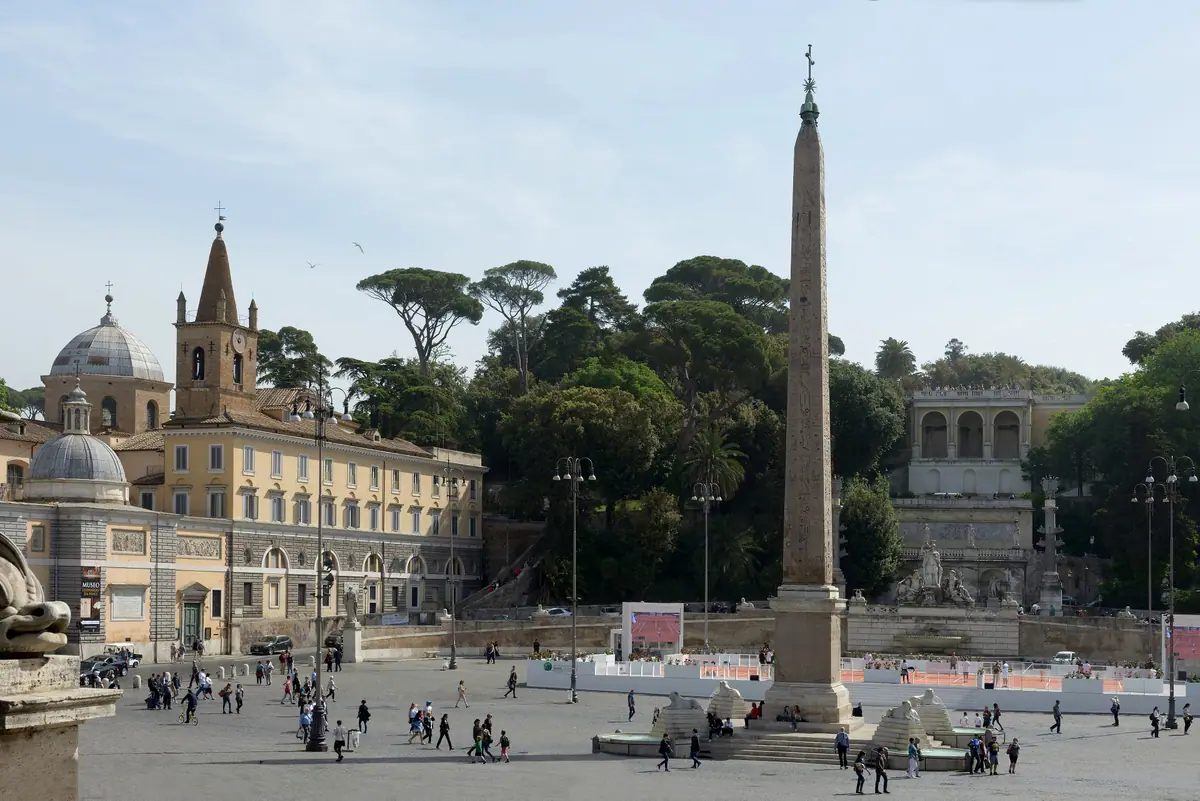
Two of the Circus’s obelisks still stand in Rome. Augustus’s was moved to Piazza del Popolo by Pope Sixtus V in 1587, and the one from the reign of the emperor Constantius II, dated 357, stands at St John Lateran. The last race was run in 549, and the valley then turned into vegetable gardens; a gasworks stood on the track from 1852 to 1910, and the excavations of the 1930s brought the curve back to light.
Circo Massimo metro station and the Circus Maximus entrance
Metro line B has a stop named after it, Circo Massimo, and its exit comes out on Viale Aventino, the street with the entrance to the paid area and the Experience. By bus, the stop to get off at is Aventino (Circo Massimo).
Tickets
Popular tickets around Rome
The ones other visitors book most.


People also ask
Frequently asked questions
Is the Circus Maximus free?
The valley is: the long grassy track is open all the time, with no ticket. The excavated curve at the south-east end, with the Torre della Moletta, costs €7, or €4 reduced, and closes on Mondays. The Circo Maximo Experience, with augmented and virtual reality visors, is a separate ticket at €12.
What is left of the Circus Maximus today?
None of the stands. The track survives as a grassy valley about 600 metres long, and in the paid area at the south-east end you see galleries that led up to the seating, ancient paving, rooms that were shops, taverns and offices, and a medieval tower with a viewpoint, the Torre della Moletta.
Is the Circus Maximus included in the Roma Pass?
Yes, as two separate sites: the archaeological area and the Circo Maximo Experience. Either can be one of the card's included entries (one on the 48-hour card, up to two on the 72-hour), and you choose at each site whether to use one; otherwise the card gets you the reduced price. Using an included entry saves you €10 on the Experience and €4 in the area. Booking is recommended and free, on 060608.
Where can you see the Circus Maximus from above?
From the Palatine Hill, which is on the Colosseum ticket. The private rooms of the Domus Augustana, the emperors' palace, stood over the valley, and you look down on it from the palace's upper level. Inside the paid area, the Torre della Moletta has a viewpoint over the excavations.
Is the Circus Maximus free on the first Sunday of the month?
The archaeological area is free for everyone on the first Sunday, but the Circo Maximo Experience is still paid. The next one is Sunday 6 December 2026.
Is it worth paying to go into the Circus Maximus?
It's a question of what you want from it. For the view down the whole valley, go up the Palatine on your Colosseum ticket. To see what has disappeared, the stands, the arches and a day at the races, take the Experience. The archaeological area is for the ruins up close: the galleries, the old shops and the tower.
