
Venice · Venice Museum Pass
Palazzo Mocenigo
Eighteenth-century dress, Venetian glass and six rooms on perfume, on the main floor of a Santa Croce palace.
Palazzo Mocenigo in Venice is the city's museum of textiles, costume and perfume, in the palace that was home to one branch of the Mocenigo, a family of doges. Its 20 rooms are set out as a noble Venetian house of the 1600s and 1700s.
Before you go
- Time inside60 min
- ClosedMonday
TipThe rooms are on the piano nobile and the only way up is a staircase, so call +39 041 721798 first if you use a wheelchair.


Palazzo Mocenigo tickets, and the combo with Ca’ Rezzonico and Goldoni’s house
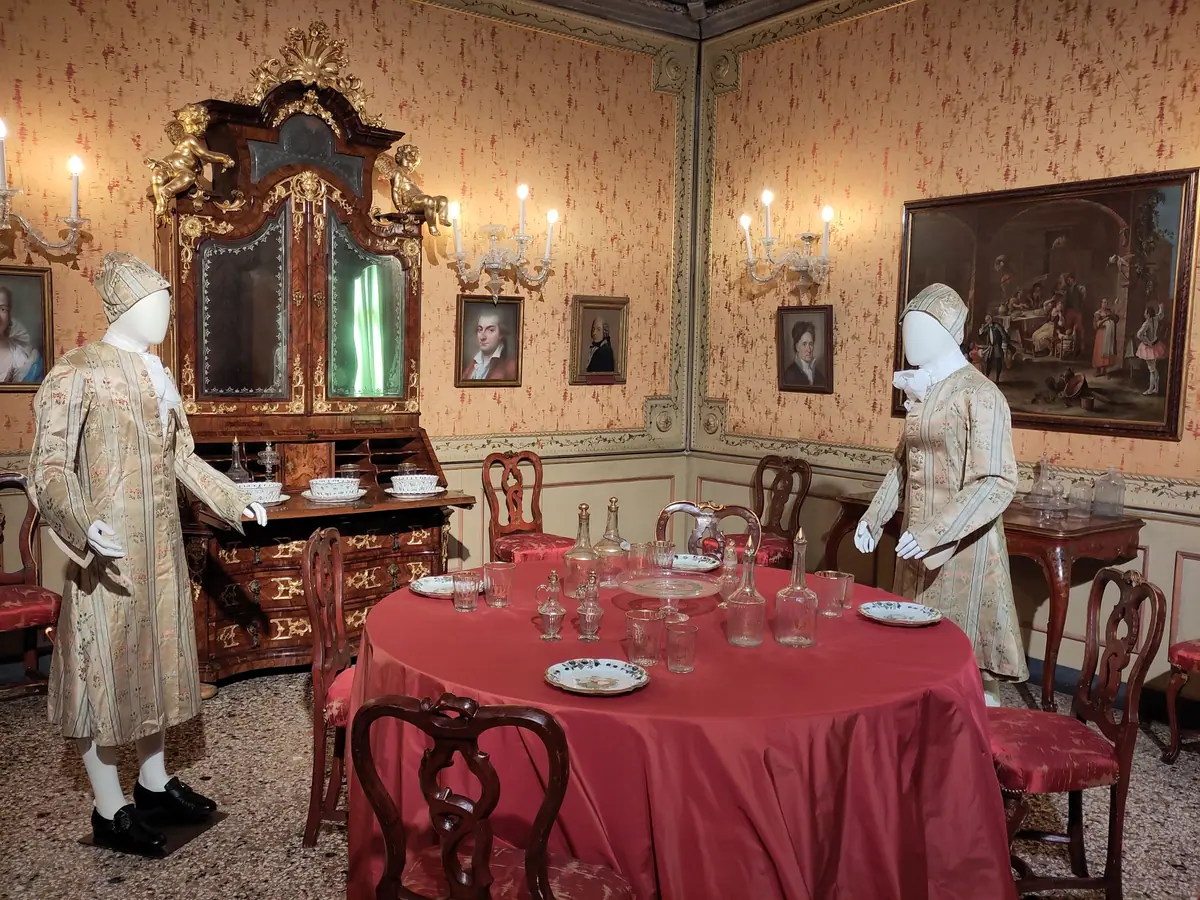
Palazzo Mocenigo still has the ceilings frescoed in 1787 for the wedding of a nephew of Alvise IV, the last of the family’s seven doges. Under them stand mannequins in 18th-century coats and gowns from the museum’s own collection, and the perfume rooms are on the same floor.
A ticket costs €15, or €9 for children from 6 to 14, students up to 25 and over-65s, and under-6s go in free. You can come any day but Monday without booking. The single ticket can’t be refunded, so if you use a wheelchair, call the museum on +39 041 721798 before you buy: the rooms are up a staircase and the toilets aren’t adapted. A visit takes about an hour, and the audio guide on the civic museums’ MUVE app comes with admission.
Mocenigo is one of three museums the city groups as the Venetian Settecento, the 1700s. The other two are Ca’ Rezzonico, the palace on the Grand Canal given over to 18th-century Venice, and Carlo Goldoni’s house, where the playwright was born. The three together cost €20, one entry each. That’s less than our single tickets for Mocenigo and Ca’ Rezzonico together, and unlike them the combo can be cancelled for free up to 24 hours ahead.


The rooms of Palazzo Mocenigo: costume, glass and perfume
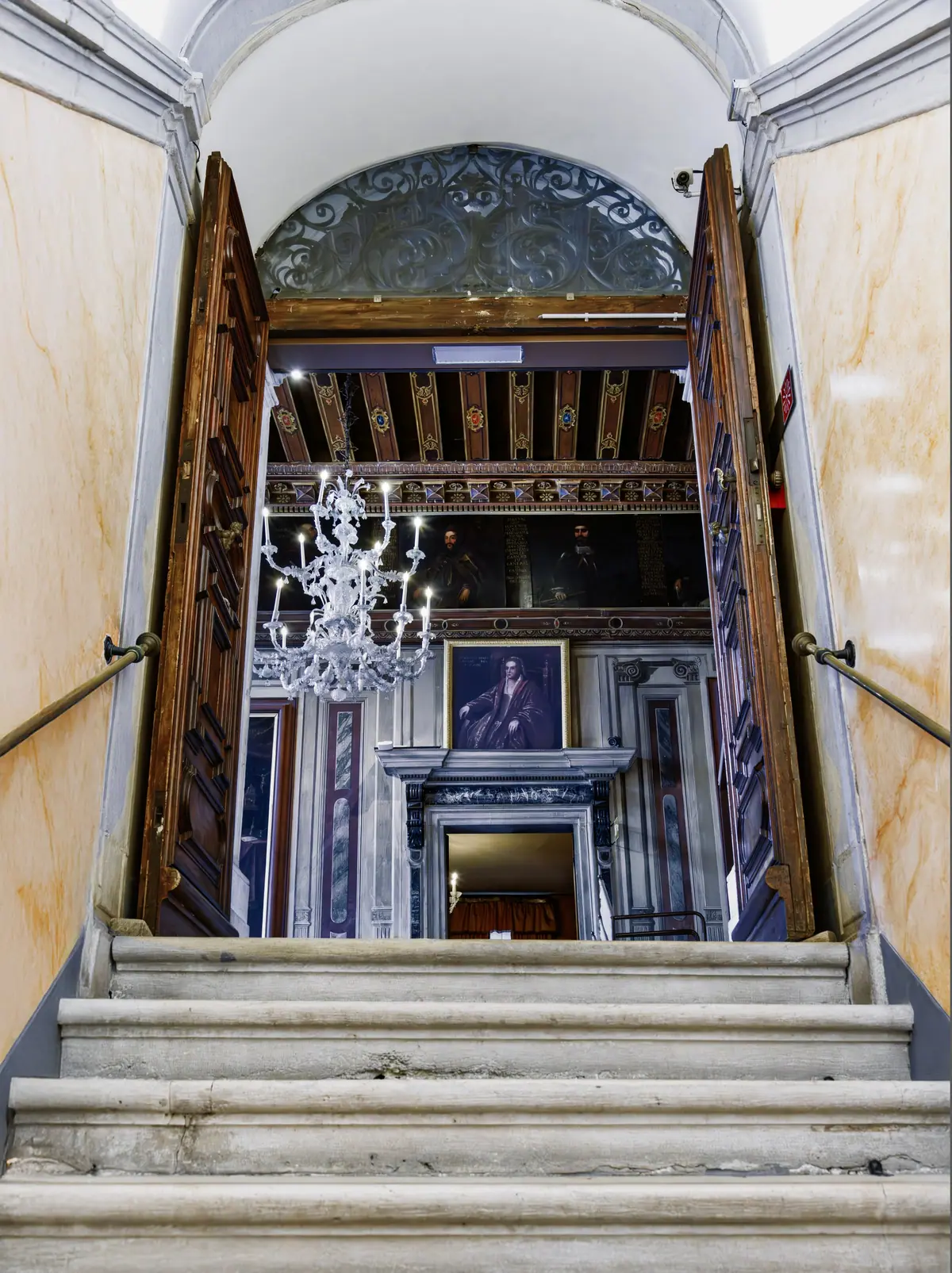
The permanent rooms are all on one floor, the piano nobile, the grand first floor where a Venetian family received its guests. You reach it by the stone staircase in the photo, and at the top the doors open on the portego, the long central hall used for parties, hung with portraits of the rulers the Mocenigo were sent to as ambassadors.
From there the route runs through 20 rooms, laid out in 2013 by the stage designer Pier Luigi Pizzi. On the walls, paintings show the family at its grandest: Alvise IV’s embassy to Rome, the battle of Sapienza against the Barbary pirates, and the family’s embassies to London and Constantinople.
In the dining room the table is set with Venetian glass from the 16th to the 18th century, under chandeliers attributed to the workshop of Giuseppe Briati. Some of the 18th-century coats and gowns, with their embroidery and lace, are off display for maintenance at the moment; you can see the store where they’re kept on a booked “Backstage” visit.
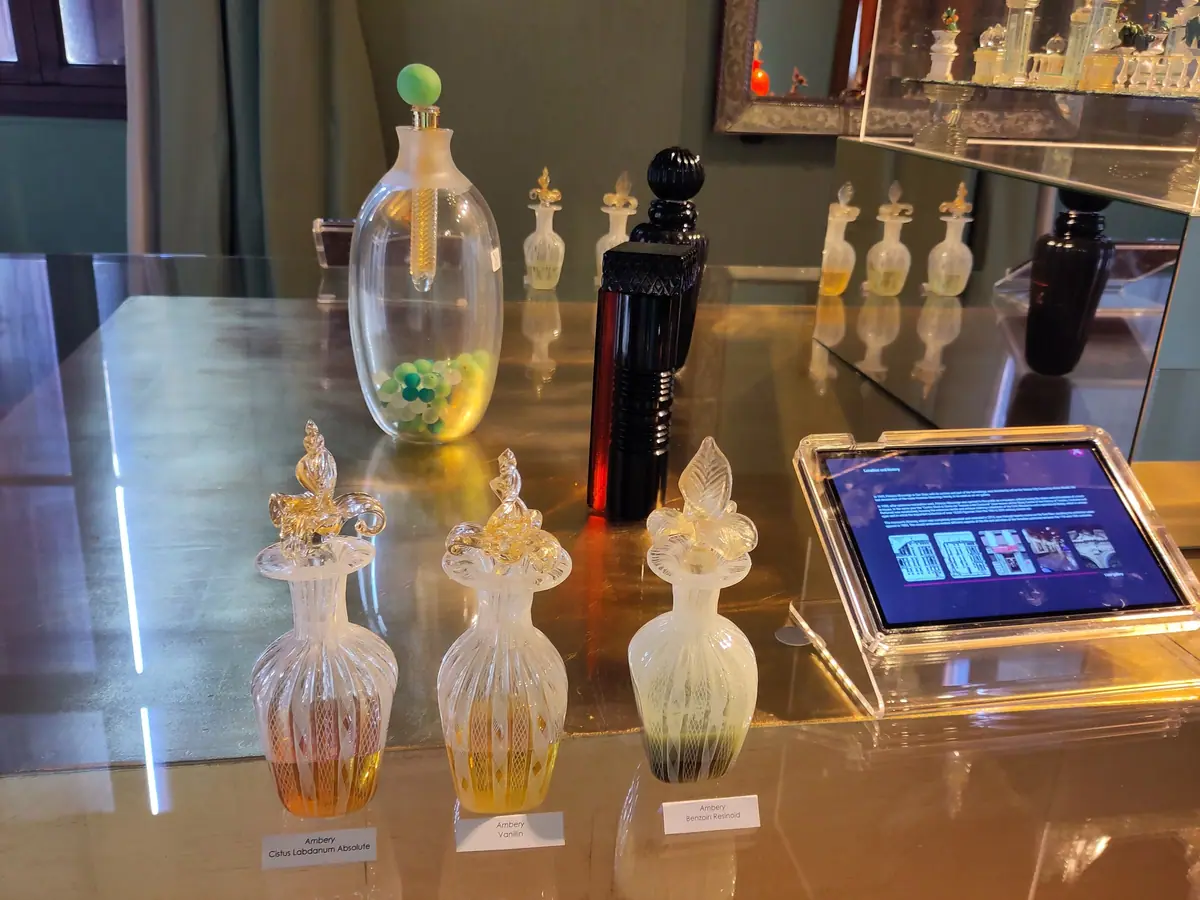
The six perfume rooms come next, with bottles, screens and sensory displays. Downstairs, the Perfume Laboratory keeps more than 200 essences for the perfume-making courses held there.
Until 8 November the piano nobile also has The Tarbouche, by Mouna Rebeiz, a painter born in Beirut in 1957: female nudes wearing the red fez, the tarbouche of the title. It’s included in the ticket.
Palazzo Mocenigo hours, and the November works
Mocenigo closes on Mondays, and the ticket desk stops selling an hour before closing time.
Opening hours
- 1 November to 31 March
- 10:00–17:00, last entry 16:00
- 1 April to 31 October
- 10:00–18:00, last entry 17:00
- Mondays
- Closed
- 9 to 11 November 2026
- The exhibition is taken down in the portego and eight rooms of the piano nobile
- 16 November to the end of 2026
- The portraits of Clement X and Leopold I are restored in the portego; the route stays the same
The museum hasn’t said whether the rooms used for the dismantling stay open on those three days, so if you’re coming between 9 and 11 November, expect part of the floor to be busy.
Large bags and trolleys aren’t allowed in. There’s a cloakroom, and staff may search backpacks.
Palazzo Mocenigo: museum pass, City Pass or the Settecento combo
Two passes include Mocenigo. The Museum Pass also takes in the Doge’s Palace, Ca’ Rezzonico and Goldoni’s house; the City Pass includes Mocenigo only in its All Venice version.

For the three Settecento houses and nothing else, the combo costs less than the pass. Once the Doge’s Palace joins the plan, it’s worth pricing the pass, and Venice Pass and Venice’s museum passes goes through every option.
The Mocenigo of San Stae: seven doges and a palace left to the city
The Mocenigo gave Venice seven doges, the elected heads of the Republic, between 1414 and 1778. The family had more than one branch, and this palace became the home of the San Stae Mocenigo when Nicolò Mocenigo (1512–1588), brother of Doge Alvise I, left it to his sons. Alvise II, another doge of the family, paid for the facade of San Stae, the church a short walk from the palace.
Alvise Nicolò, the last of the family, left the palace to the city in 1945, but the handover waited until his widow, Costanza Faà di Bruno, died in 1974. It opened in 1985 as a study centre for the history of textiles and costume, with clothes gathered from other Venetian collections, among them the Correr, the civic museum on St Mark’s Square.
Where Palazzo Mocenigo is: Santa Croce, by San Stae
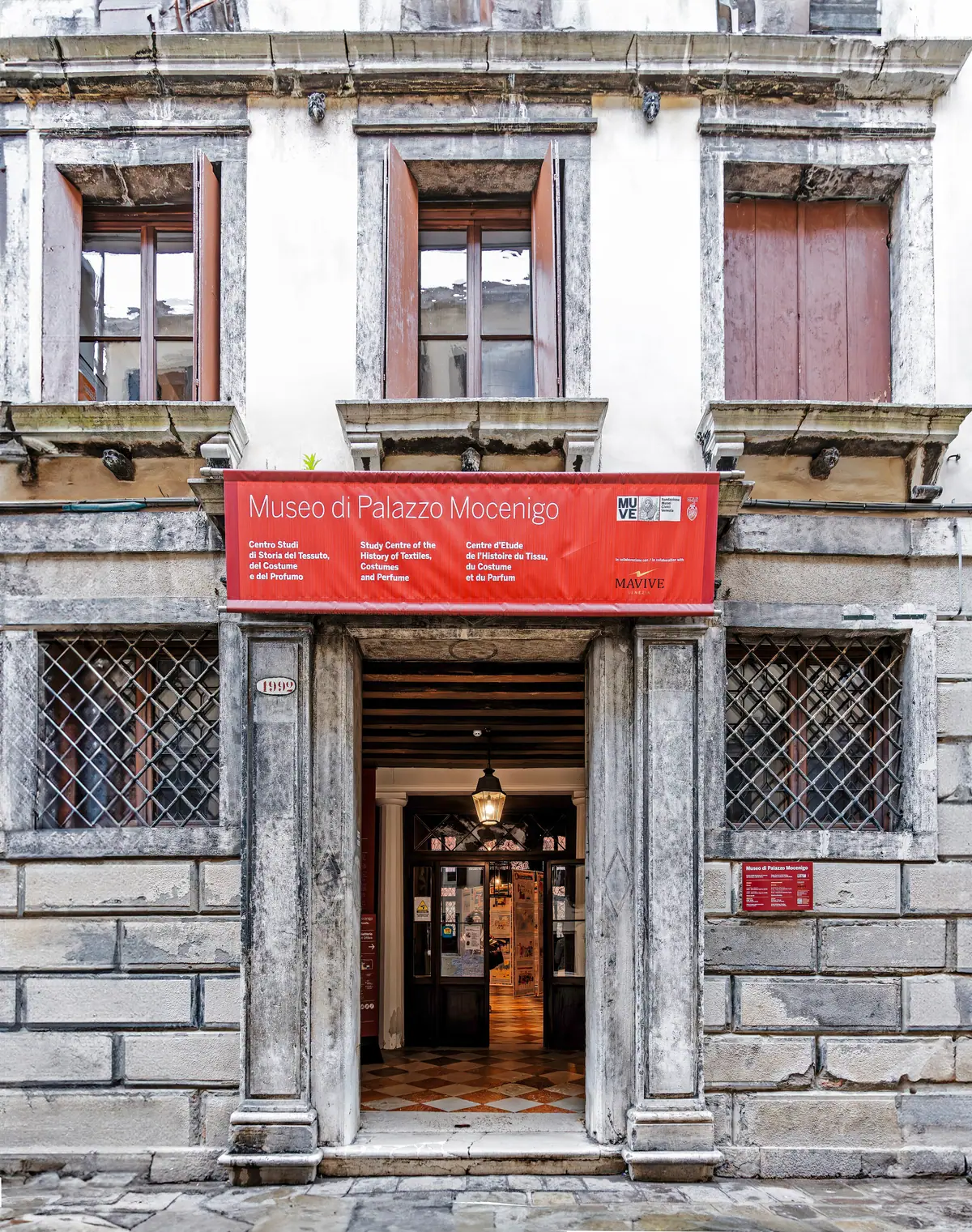
Get off the line 1 vaporetto at San Stae. The entrance is at Santa Croce 1992, on the Salizada di San Stae, about 120 metres from San Stae church, the one whose facade Alvise II paid for. Ca’ Pesaro is about 140 metres away and the Natural History Museum about 180, so either makes a second visit on foot, without getting back on a boat.
City cards
Palazzo Mocenigo with a city card
Pick the one that fits your trip. Prices are per adult, and you choose your dates on the next page.

Tickets
Popular tickets around Venice
The ones other visitors book most.


People also ask
Frequently asked questions
What is Palazzo Mocenigo?
It's the museum of the history of textiles, costume and perfume, in the palace of the San Stae branch of the Mocenigo family in Santa Croce. The last descendant left it to the city in 1945, and it opened to the public in 1985.
When is Palazzo Mocenigo closed?
On Mondays. From 1 November to 31 March it opens from 10:00 to 17:00, with last entry at 16:00; from 1 April to 31 October it stays open until 18:00, with last entry at 17:00.
Is Palazzo Mocenigo wheelchair accessible?
No. The rooms are on the piano nobile, reached only by a staircase, and the toilets aren't adapted for wheelchairs. The museum asks you to call +39 041 721798 before your visit.
Which passes include Palazzo Mocenigo?
The Venice Museum Pass, and the Venezia Unica City Pass in its All Venice version. It's also part of the Settecento combo with Ca' Rezzonico and Carlo Goldoni's house.
Is this the palace where Giordano Bruno was denounced?
No. The philosopher Giordano Bruno stayed in 1591 and 1592 with the Mocenigo of San Samuele, in another of the family's palaces, on the Grand Canal, and it was the owner of that house who denounced him. The museum is the palace of the San Stae branch.
