
Venice · Venice Museum Pass
Carlo Goldoni's House
The playwright was born here in 1707, and a puppet theatre from his century stands in the last room.
Carlo Goldoni's house in Venice, Casa Goldoni, is now a small museum of his life and comedies. It's a short visit, half an hour to 45 minutes, and with the Frari church about 170 metres away it fits into a morning in San Polo.
Before you go
- Time inside30–45 min
- ClosedWednesday
TipIt closes on Wednesdays and the last entry is at 15:30, earlier than at the other civic museums.


Carlo Goldoni house tickets, with nothing to book
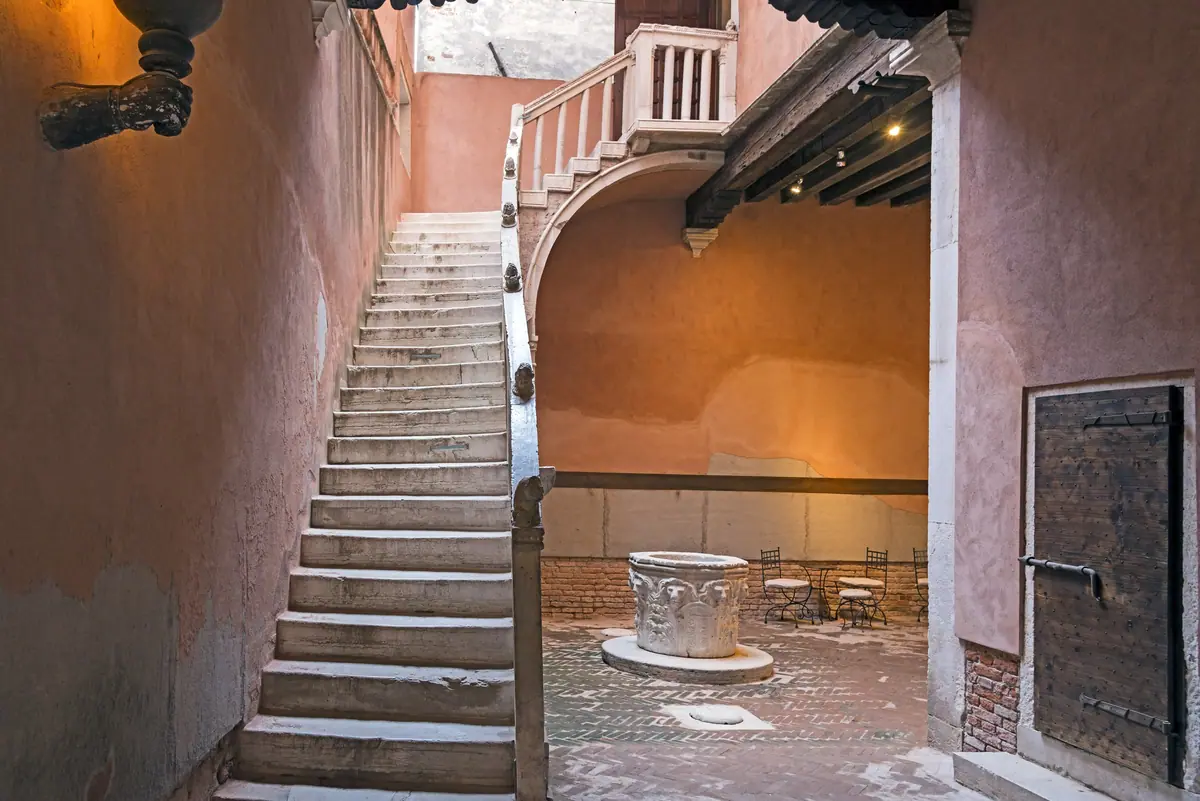
Carlo Goldoni’s house, a Gothic palace in San Polo, is where the Venetian who wrote The Servant of Two Masters was born in 1707 and lived until he was twelve, and it has been a museum since 1953. An open staircase climbs the courtyard wall to the first floor, where scenes from his comedies are set up and the puppet theatre of the Grimani ai Servi, the most famous in 18th-century Venice, stands with its original marionettes.
Adults from 25 to 64 pay €7. Young people from 6 to 24 pay €4, over-65s €4, and under-6s go in free. The ticket covers the house and its courtyard, without a guided tour. There’s no time slot to book, and the ticket is non-refundable.
Ca’ Rezzonico, the museum of 18th-century Venice, is about 325 metres away on the same side of the Grand Canal, and the Settecento combo (the name means the 1700s) takes in both houses and Palazzo Mocenigo, the museum of costume and perfume in Santa Croce. The combo is €20 for a visit to each: buy this house and Mocenigo separately and you’d already pay more. It’s also the one to choose if your dates might move, since you can cancel it free of charge until 24 hours before your visit.


Carlo Goldoni’s house, from the courtyard to the marionettes
The courtyard is worth a look before you go up. The floor is terracotta, the entrance hall opens to the water gate, and the staircase climbs open to the sky, with a handrail of Istrian stone carrying a small lion and a pine cone. The well-head bears a hedgehog, the emblem of the Rizzi family, who owned the house. Under the portico, a 1729 map of Venice by Lodovico Ughi is mounted as a board game, marking the houses Goldoni lived in and the city’s theatres.
At the top of the stairs, a first hall is hung with enlarged engravings from the Zatta edition of his plays, printed between 1788 and 1795 and grouped by theme: masks, women, merchants and ordinary Venetians. A small video room plays the documentary A Venetian between World and Theatre.
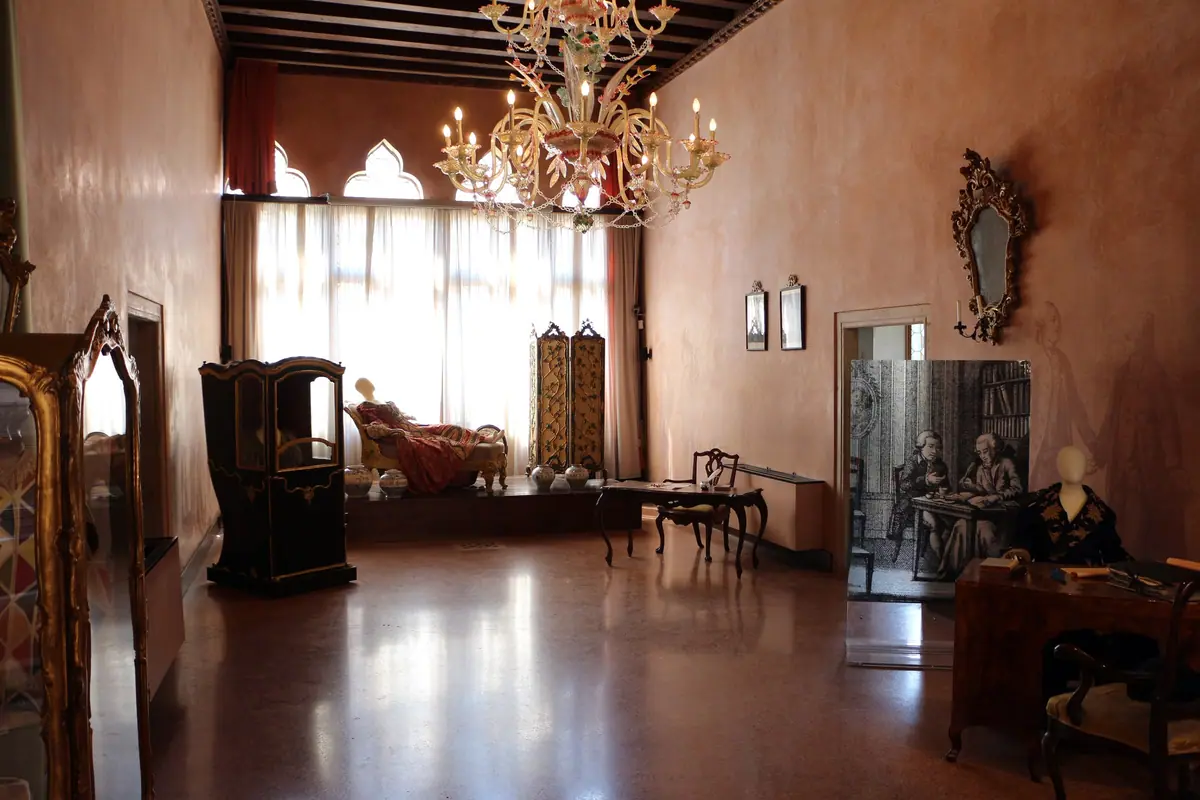
Next is the portego, the main room of a Venetian house and the first of three. It has an 18th-century sedan chair and two scenes set with period furniture, from La finta ammalata (The Pretend Invalid, 1751) and La figlia obbediente (The Obedient Daughter, 1752). Look for the two engraved portraits of Goldoni from 1754, one in a cap and one in a wig.
Next door, in the dining room, an 18th-century table is laid for the lunch scene of I chiassetti del carneval, a comedy in Venetian dialect first staged at the Teatro San Luca, today the Teatro Goldoni, on 5 January 1765. Around it hang paintings in the manner of Pietro Longhi, a Venetian painter of Goldoni’s time, from a series on pastimes in the country villas.
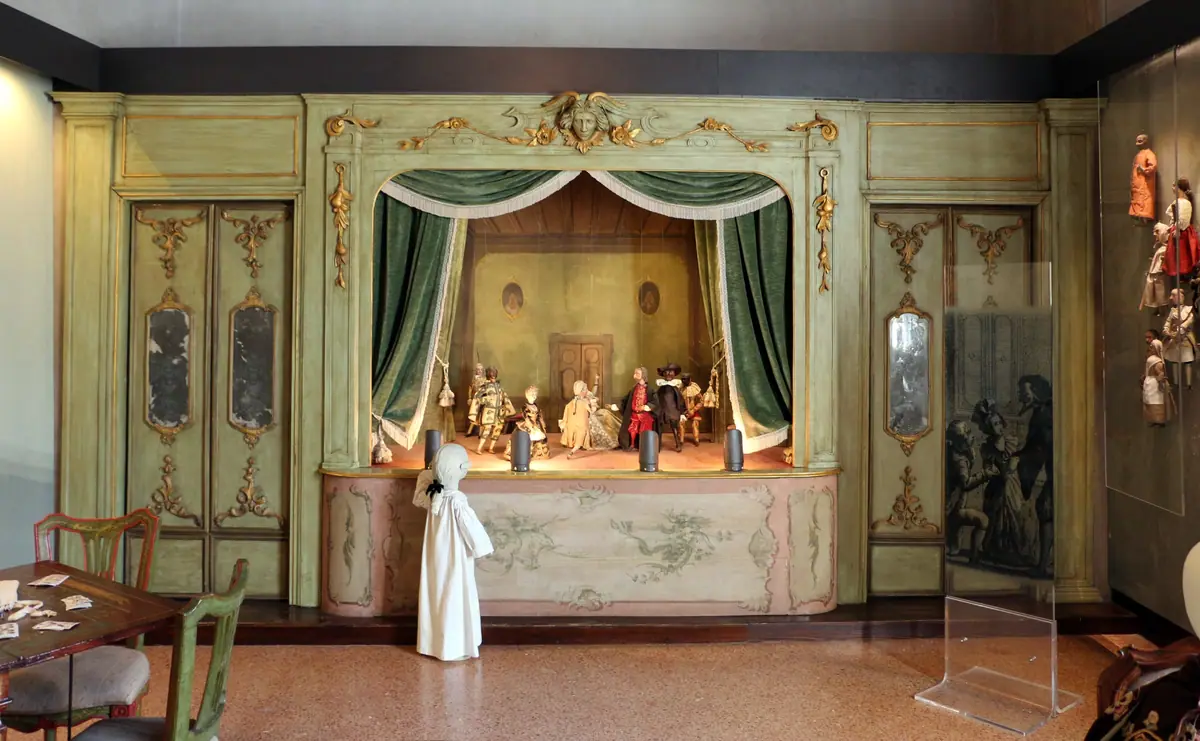
The last room holds the theatre itself, with the largest surviving set of its puppets. Goldoni knew the Grimani who owned it: he dedicated a comedy to Antonio Grimani and introduced the painter Longhi to the family. The theatre came to the city in a bequest of 1896 and has stood here since 2001, among scenes from The Servant of Two Masters (1745–46), Il giocatore (The Gambler) and La conversazione (The Conversation).
Ca’ Centani, the house Goldoni was born in
Venetians call it Ca’ Centani, after the Centani, the family that rented it from the Rizzi. It’s a 15th-century Gothic palace, and its curved front follows the canal. Goldoni’s grandfather, Carlo Alessandro, came from Modena and settled here at the end of the 17th century, and Carlo was born in the house on 25 February.
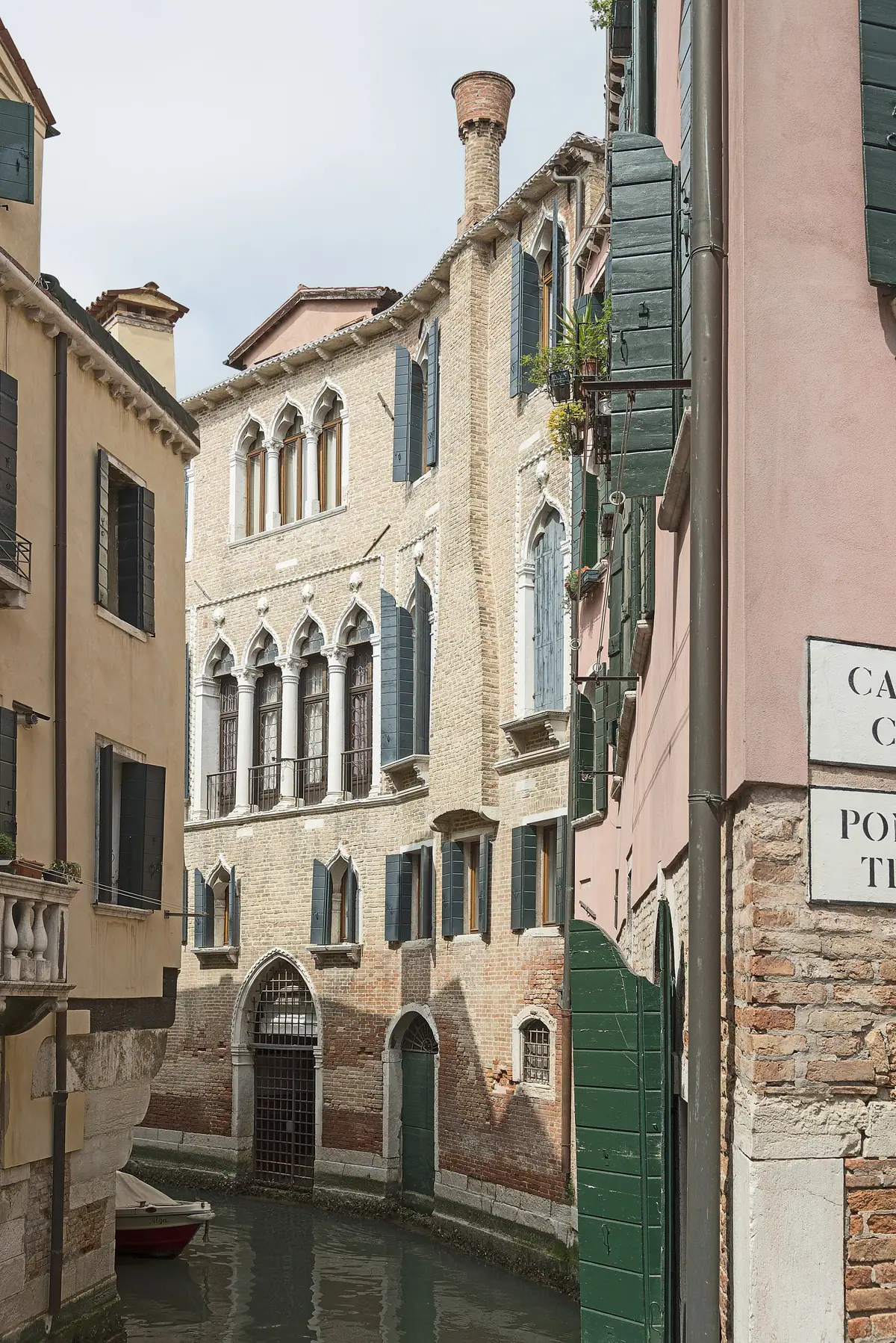
He remembered it in his memoirs, which he wrote in French: “I was born in Venice, in the year 1707, in a large and beautiful house, between the Nomboli bridge and the Donna Onesta bridge, at the corner of the Ca’ Centanni street.” In 1914 three Venetians bought it to make a museum of Goldoni and the theatre. The war stopped them, the house was left to the city in 1931, and the museum followed. The third floor now keeps a theatre library of more than 30,000 works, used by researchers.
Is Casa Goldoni worth a pass?
Goldoni’s house comes with both passes for the civic museums. A visit here is short, so it’s the easy extra on a day around San Polo rather than one of the entries a pass is bought for.

Venice Pass and Venice’s museum passes compares the two in full.
Casa Goldoni hours: a short day, closed on Wednesdays
The house closes at 16:00 all year, so come in the morning or early afternoon. It’s open on Mondays and Tuesdays, the days when the civic museums of Santa Croce and the Fortuny take their turn to close.
Opening hours
- Every day except Wednesday
- 10:00–16:00, last entry 15:30
- Holiday closures
- Not published by the museum
There are no temporary exhibitions in 2026, so what you see is the house itself. The museum’s site has a visitor leaflet in Italian, English and French to download before you go, and at the house there’s a cloakroom, a bookshop and a lift.
From San Tomà to Casa Goldoni and the Frari
The vaporetto stop is San Tomà, on line 1 or 2. The house is at San Polo 2794, on Rio Terà dei Nomboli. The Frari church is about 170 metres away and the Scuola Grande di San Rocco about 235, so the three fit into one walk on the same side of the Grand Canal.
City cards
Carlo Goldoni's House with a city card
Pick the one that fits your trip. Prices are per adult, and you choose your dates on the next page.

Tickets
Popular tickets around Venice
The ones other visitors book most.


People also ask
Frequently asked questions
When is Carlo Goldoni's house open?
Every day except Wednesday, from 10:00 to 16:00 all year, with last entry at 15:30.
How long does a visit to Casa Goldoni take?
About half an hour to 45 minutes. It's a small museum: the courtyard on the ground floor, then a hall and three rooms on the first floor.
Is the puppet theatre at Casa Goldoni the one Goldoni played with as a child?
No, though you'll read that online. The theatre on display belonged to the Grimani ai Servi, the most famous Venetian puppet theatre of the 18th century; it came to the city in 1896 and has been in the house since 2001.
Is Casa Goldoni in the Venice Museum Pass?
It is, and in the All Venice version of the Venezia Unica City Pass. We also sell it in the Settecento combo with Ca' Rezzonico and Palazzo Mocenigo.
Can I visit Casa Goldoni in a wheelchair?
Yes, the house has a lift and is fully accessible, with a few changes of level between the old rooms.
