
Turin · Torino+Piemonte Card
Basilica of Superga
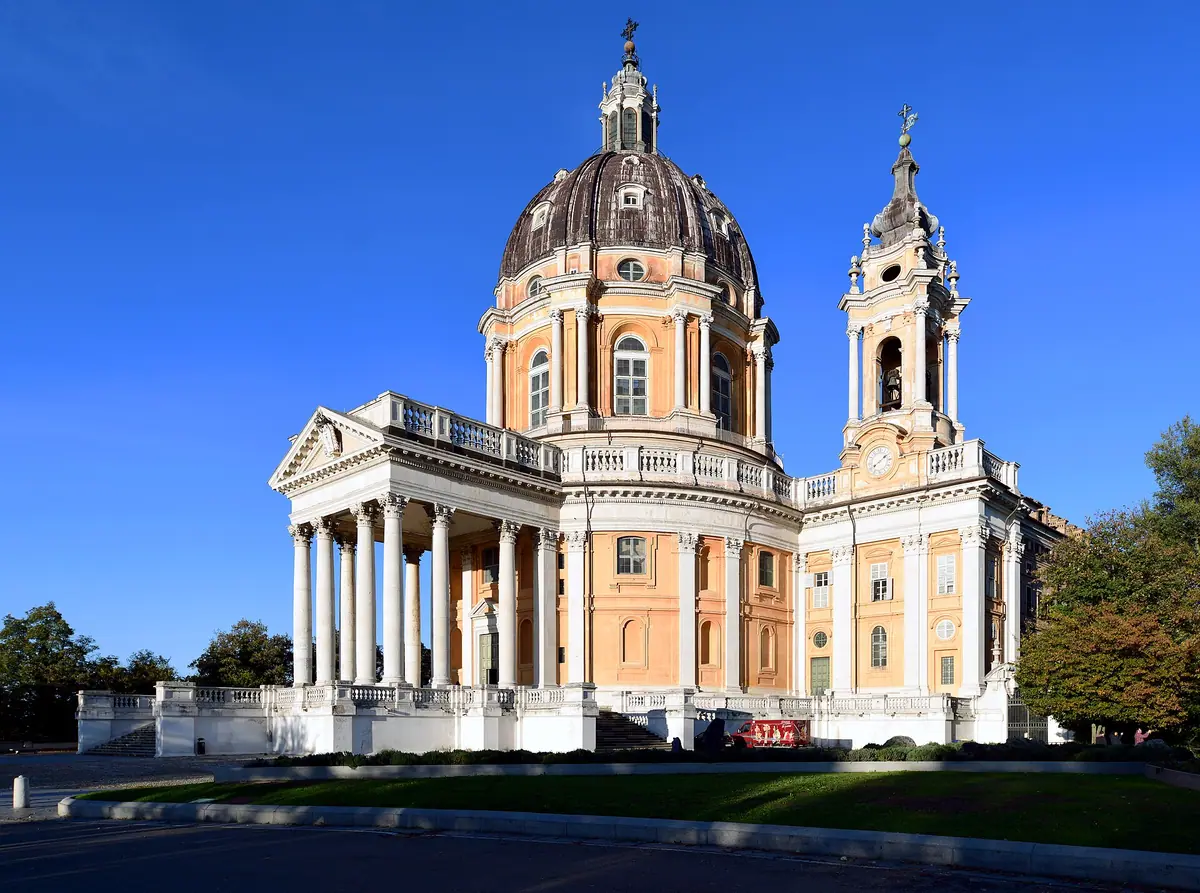
Duke Victor Amadeus II watched the siege of Turin from this hilltop in 1706, and the basilica is the church he promised the Virgin if he won.
The Basilica of Superga looks down on Turin from its hilltop, with the tombs of the House of Savoy beneath it and a dome you can climb to a balcony over the city and the Alps. Entry to the church is free, and the royal tombs, the royal apartment and the dome are included in the Torino+Piemonte Card and the Turin Royal Pass. A rack railway climbs up to it from Sassi.
Superga on the Torino+Piemonte Card and the Turin Royal Pass
With the Torino+Piemonte Card or the Turin Royal Pass, the three paid visits at Superga, the royal tombs, the royal apartment and the climb up the dome, are all included. You show the card at the ticket office, with nothing to book ahead.


Basilica of Superga tickets: what’s free and what you pay
Entry to the basilica itself is free, and so is the Chapel of the Madonna delle Grazie, known as the Chapel of the Vow. Without a card, the tombs, the apartment and the dome each have a ticket of their own.
What's free and what you pay at Superga
- Basilica and Chapel of the Vow
- Free
- Royal tombs
- €6, reduced €5
- Royal apartment
- €6, reduced €5
- Dome
- €4, reduced €3
- Reduced price
- Ages 6 to 25, over-65s, teachers and groups of 20 or more
- Under-6s
- Free
The tombs and the apartment can only be seen on a guided visit in Italian, card or no card, which lasts 45 minutes, and the apartment has just two visits a day, each with only a few places. If the apartment is the one you’re after, ask at the ticket office for the times as soon as you arrive and plan the rest of the day around them. Visits in English, French, German or Spanish are for groups only, arranged ahead at extra cost.
The dome depends on the weather: it closes in bad weather or strong wind and whenever it’s above 32 °C, and children under 6 can’t go up. Dogs aren’t allowed in the basilica or the museum.
Inside the Basilica of Superga: Juvarra’s dome and the Savoy tombs
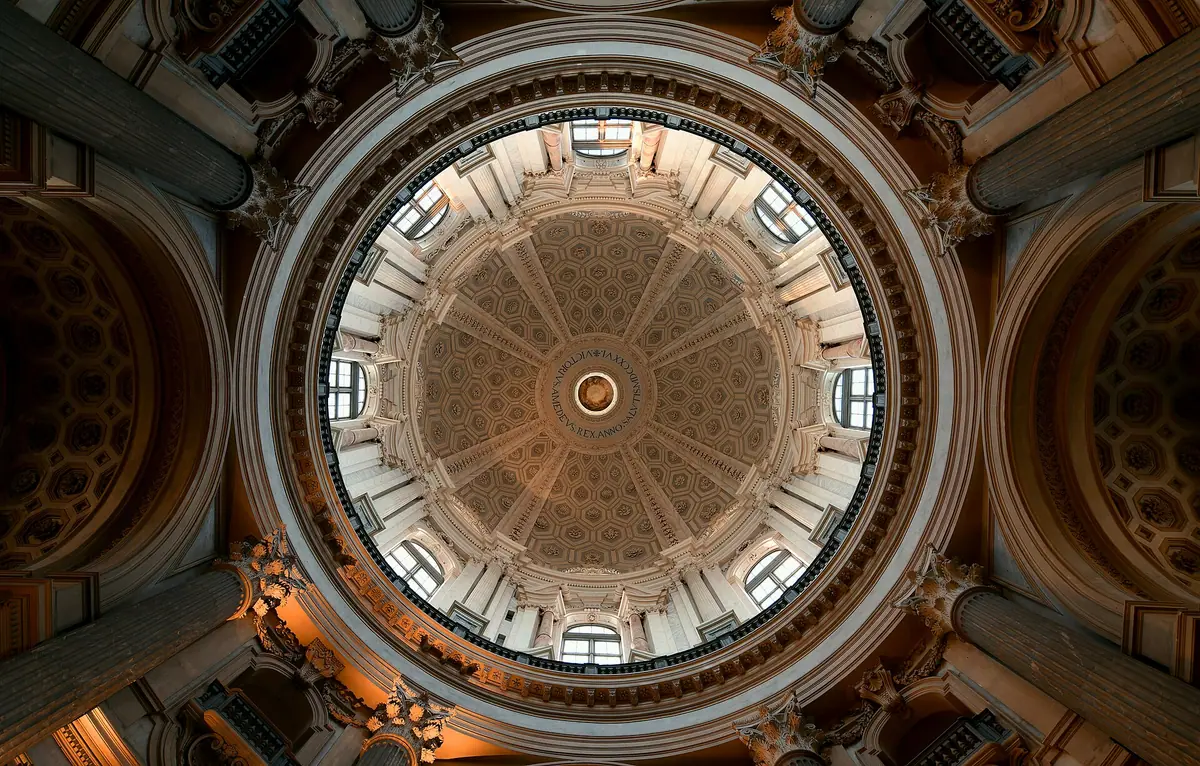
Filippo Juvarra, the Savoy court architect, finished the dome in 1726, with nods to St Peter’s in Rome, and gave the front a pediment like the Pantheon’s. The climb takes you out onto a balcony that looks over Turin to the Alps.
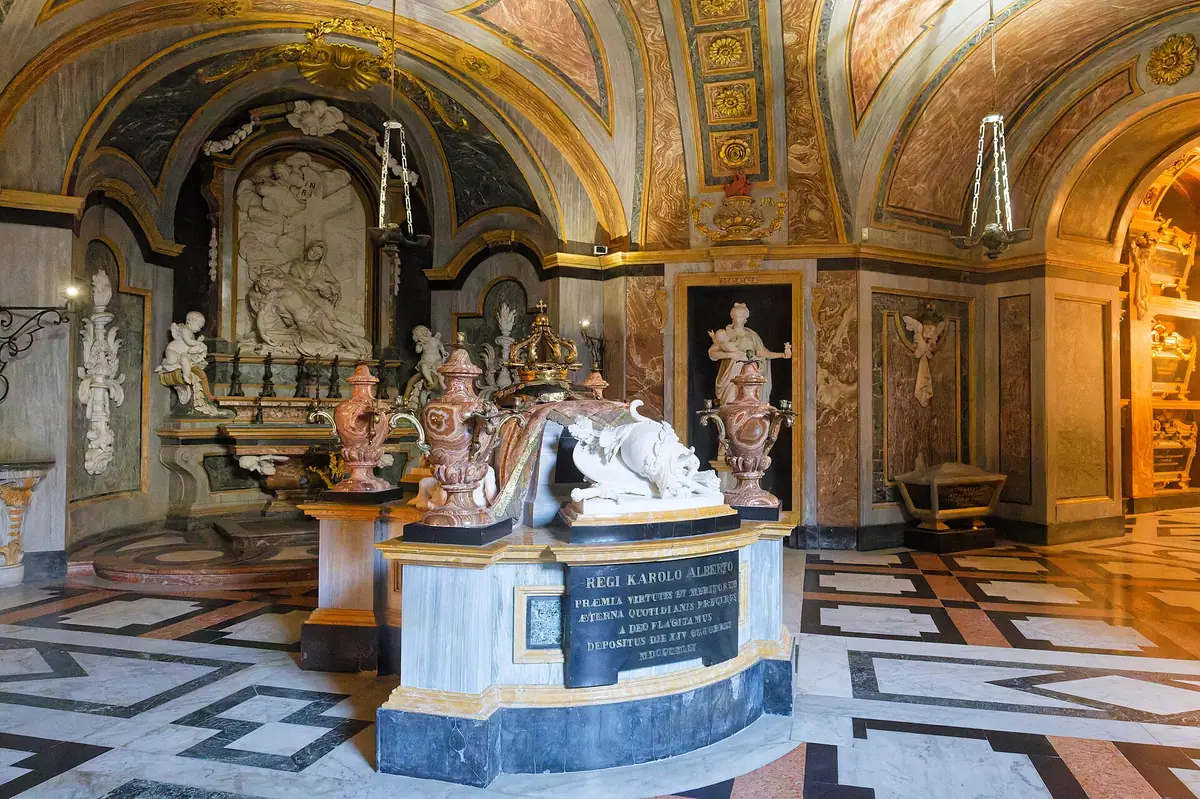
Beneath the church lie the tombs of the House of Savoy, among them that of King Carlo Alberto, which you see on the guided visit.
At the back of the basilica is the wall where, in 1949, the plane carrying the Grande Torino, the city’s Torino football team, crashed.
Up to Superga on the rack railway from Sassi
The way up from the city is the rack railway from Sassi, which climbs 3.1 km from 225 to 650 metres. It runs with a locomotive and up to two carriages, 210 passengers in all. GTT, Turin’s transport company, calls it the only line of its kind in Italy; it opened in 1884 as a cable line on the Agudio system and became a rack railway in 1934.
From the centre to the basilica
- 1To Sassi: line 15 from Piazza Castello, or 61 or 68 from Porta Nuova or Piazza Vittorio Veneto. From Porta Susa, take the 13 to Piazza Castello first.
- 2Up the hill: the rack railway from Sassi to Superga. On Wednesdays it doesn't run and bus 79/ goes up instead; GTT, on the number below, can tell you where it leaves from.
On weekdays a single costs €4 and a return €6, at weekends and on holidays €6 and €9, and with the Torino+Piemonte Card a return is €4 on any day. One child under 6 travels free with each paying adult.
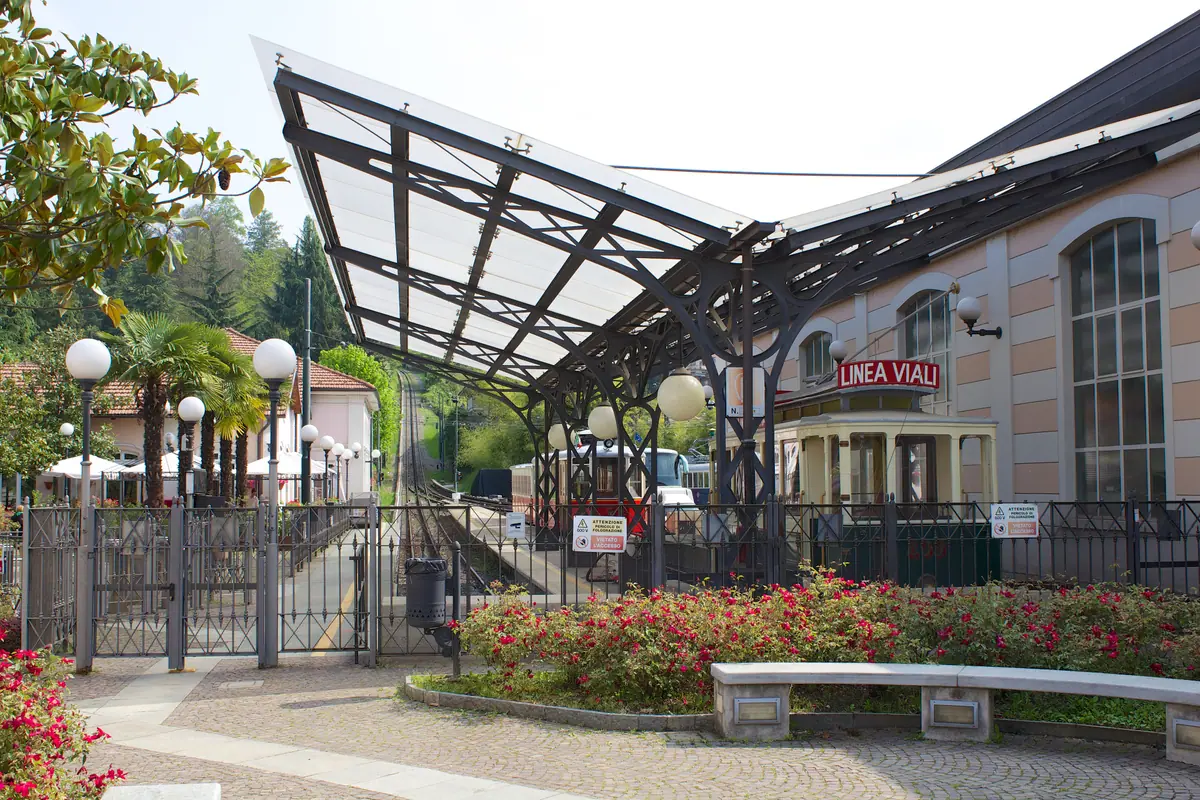
In summer, on weekdays, the trains went up every hour from 10:00 to 18:00 and down from 10:30 to 18:30; for the winter timetable, call GTT on 011 8997505 before you go. GTT can also arrange the trip for a wheelchair user travelling with two companions.
On Sundays and holidays there’s also the Superga Express, an experimental bus that since May 2026 has run from Piazza Vittorio Veneto by way of Ricasoli and Sassi to the top, about every 40 minutes from 9:30 to 20:20; on those days the 79/ doesn’t run. You can walk up as well, on the paths over the hill.
Superga’s winter hours, from 2 November to the end of February
From 2 November 2026 to 28 February 2027 the basilica, the tombs, the apartment and the dome close from 13:30 to 14:30 on weekdays and stay open straight through at weekends.
Winter hours, 2 November 2026 to 28 February 2027
- Monday to Friday
- 10:00–13:30 and 14:30–17:00
- Saturday, Sunday and holidays
- 10:00–18:00
- Ticket office
- Weekdays 10:00–17:00, weekends 10:00–18:00
- Last guided visit
- 45 minutes before closing
- Mass
- Sundays and holidays 11:00; Saturdays and the eve of holidays 17:00
The vow of 1706 and the church Juvarra built on the hill
On 2 September 1706, with Turin besieged by French and Spanish troops, Duke Victor Amadeus II and his cousin Prince Eugene of Savoy, who led the Austrian army coming to relieve the city, climbed this hill to look down on the city, and the duke vowed to build a church to the Virgin if he won. The battle of 7 September gave him his victory.
Filippo Juvarra built the basilica between 1717 and 1731, and it was consecrated on 1 November 1731.
City cards
Basilica of Superga with a city card
Pick the one that fits your trip. Prices are per adult, and you choose your dates on the next page.


Tickets
Popular tickets around Turin
The ones other visitors book most.


People also ask
Frequently asked questions
Is the Basilica of Superga free?
Entry to the church and to the Chapel of the Vow is free. The royal tombs and the royal apartment cost €6 each and the dome €4, and the Torino+Piemonte Card and the Turin Royal Pass include all three.
Does the Superga rack railway run on Wednesdays?
No. On Wednesdays bus 79/ runs instead of the rack railway.
Which saints are buried in Turin?
Not at Superga, where the tombs are those of the House of Savoy. The Basilica of Mary Help of Christians holds the tombs of St John Bosco, St Mary Domenica Mazzarello and St Dominic Savio.
What are the top churches to not miss in Turin?
The Duomo, Turin's cathedral, with its Chapel of the Holy Shroud; the Basilica of Superga on its hill; Mary Help of Christians, built in 1865 to 1868; and the Gran Madre di Dio.
What is the name of the cathedral in Turin, Italy?
The Duomo di Torino, the Cathedral of St John the Baptist, built in 1491 to 1498 by Meo del Caprino, with a bell tower from 1470.
