
Turin · Torino+Piemonte Card
Centro Storico Fiat
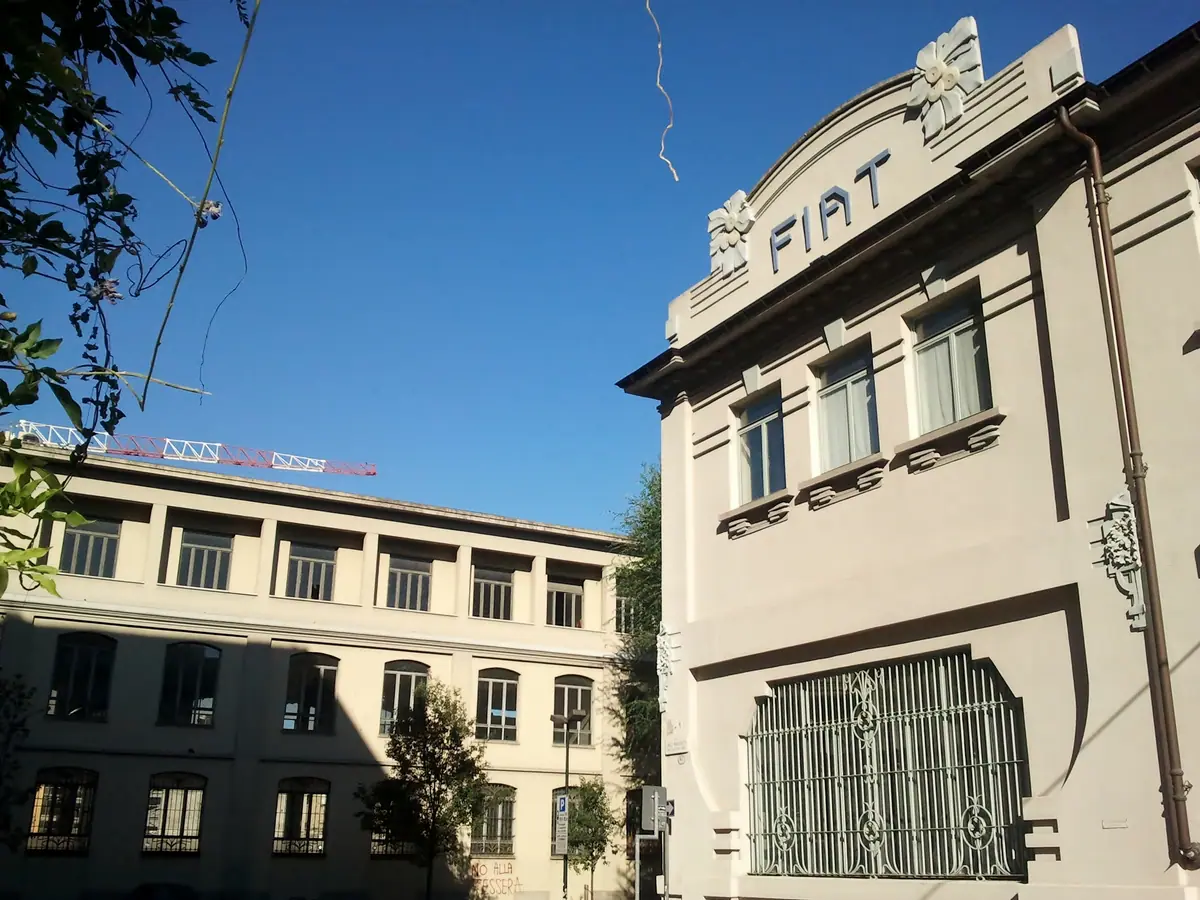
Fiat opened this Art Nouveau building in 1907 as a finishing shop, a garage, a showroom and a gym.
Turin's Centro Storico Fiat keeps Fiat's historic cars and archive, and its star is the 3½ HP of 1899, the first car of the Fabbrica Italiana Automobili Torino. The collection around it runs to a record car of the 1920s, tractors, railcars and military planes, and the Torino+Piemonte Card includes the entry.
Centro Storico Fiat tickets, and entry on the Torino+Piemonte Card
Tickets for the Centro Storico Fiat come from MAUTO, the national car museum that runs it, on the museum’s ticket site, ticket.museoauto.com, where you choose a date. A full ticket is €10, 6- to 17-year-olds pay €5, visitors from 18 to 25 and over 65 pay €7, and under-6s go in free. The ticket covers any temporary exhibition that’s on.
With the Torino+Piemonte Card the entry is included: on the same site you pick your date and the ticket for card holders. The card also includes MAUTO itself, 20 minutes away on the metro, so a single card covers both museums MAUTO runs. The Turin Royal Pass doesn’t list either of them.

Torino+Piemonte Card
24 hours: €29.90 · 48 hours: €39.90 · 72 hours: €45.90 · 120 hours: €52.90
from €29.90
Buy Torino+Piemonte Card→Where the Centro Storico Fiat is: not the Lingotto, and not MAUTO
It’s easy to head for the wrong building. The Centro Storico Fiat is the old workshop at Via Chiabrera 20, near Corso Dante and the Po. The Lingotto, the former Fiat factory, is a different place, and so are the free Casa Fiat on its roof, next to the Pinacoteca Agnelli, and MAUTO, which you reach from the Lingotto metro stop.
The nearest metro stop is Dante, on line 1 from Porta Nuova and Porta Susa, and from there it’s about nine minutes on foot along Corso Dante towards Ponte Isabella and into Via Chiabrera. Buses 18, 42 and 67 stop close by, at Foscolo, Giuria and Dante, and from MAUTO you can take the metro from Lingotto to Dante, about 20 minutes, or walk through the park in about 25.
The City Sightseeing hop-on hop-off bus stops here too, at stop 5 on its red line and stop 3 on the blue, and you can book it below.

The 3½ HP, the Mefistofele and the 8V at the Centro Storico Fiat
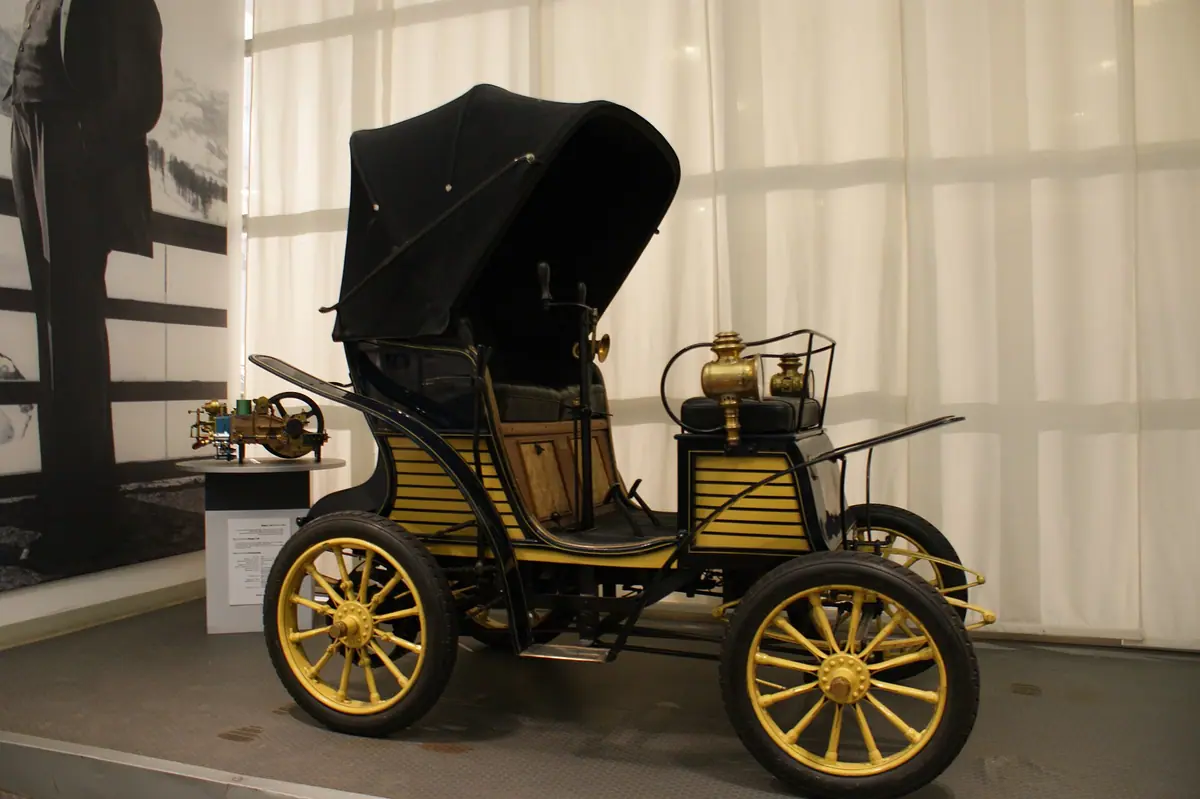
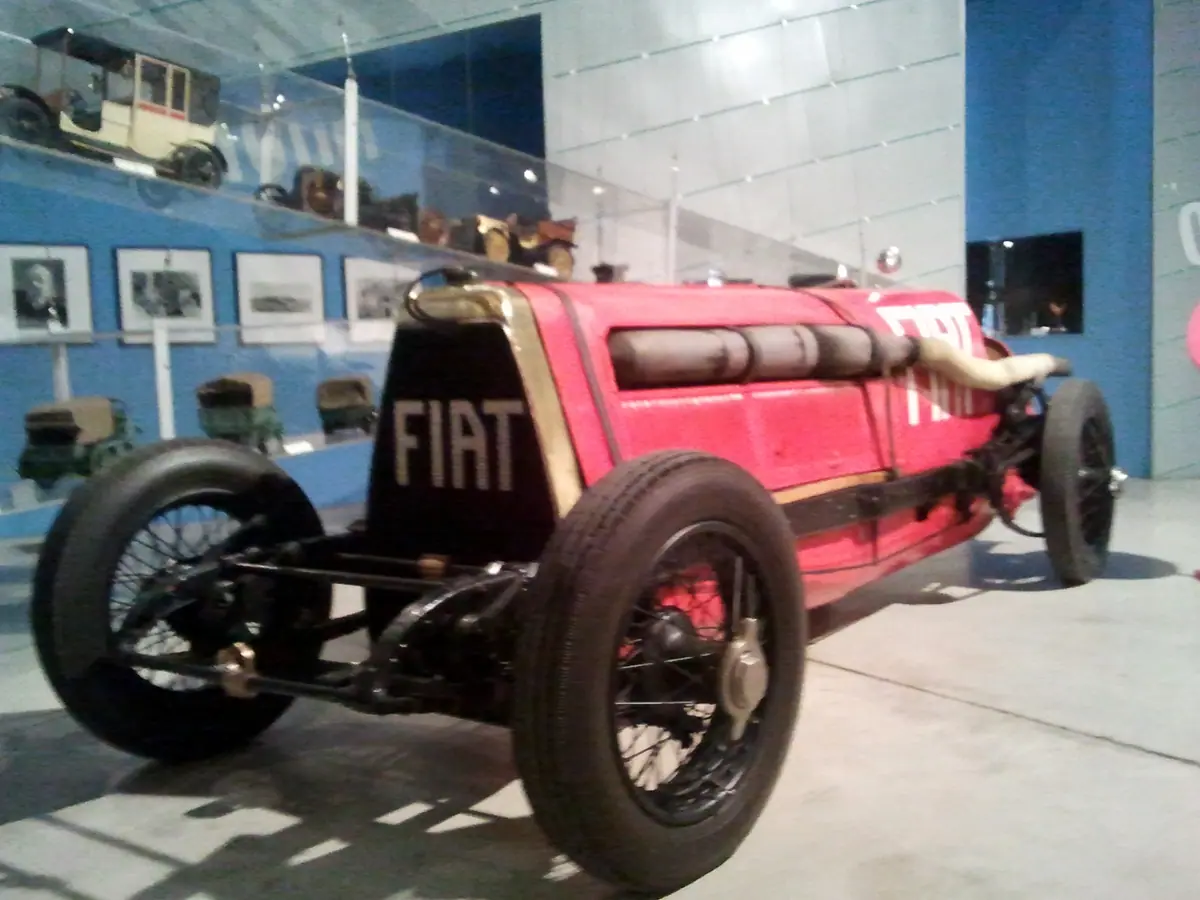
The 3½ HP in the photo is where the story starts: in 1899 it was the first car of the Fabbrica Italiana Automobili Torino, the name behind the letters FIAT. The cars on show with it come from the decades that followed: the Eldridge Mefistofele of 1923, built for speed records, the Fiat 525 SS of 1929 and the 8V of 1952, whose fibreglass body was designed by Luigi Rapi.
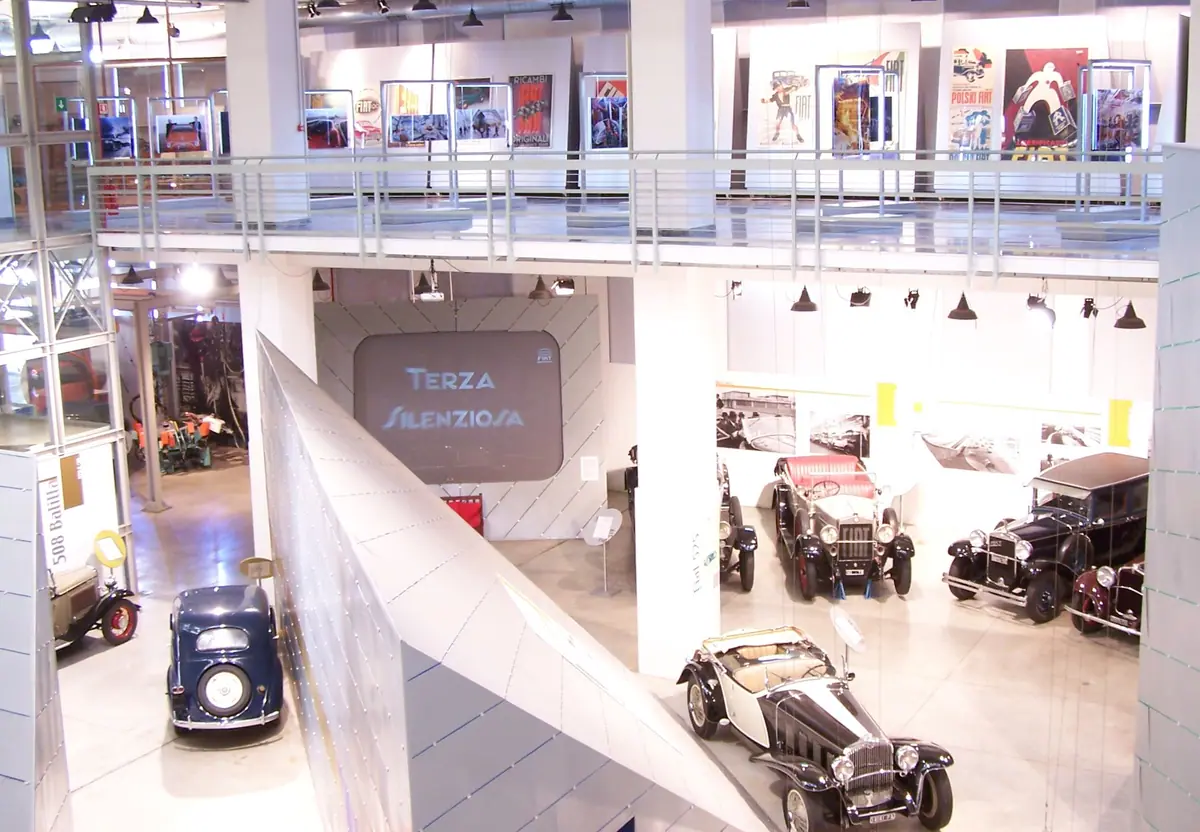
They stand on metal display structures by the architects Roberto Gabetti and Aimaro Isola, and the cars are only part of the collection. There are also tractors, household appliances, Littorina railcars and military planes, with posters, newspapers and models alongside. Researchers can also use the Documentation Centre in the same building, with its library, newspaper collection and archive.
The Centro Storico Fiat building: a 1907 workshop, Fiat’s archive and the Togliatti deal
Alfredo Premoli designed the building in Turin’s Art Nouveau style, and it went up between 1904 and 1906 as the first extension of Fiat’s works on Corso Dante. It took on the job it still has in 1961: on 30 May, as Italy marked 100 years since its unification, Fiat’s Vittorio Valletta decided to gather and put in order the material that documents what Fiat had made, and the building was renovated for the purpose.
Five years later, on 4 May 1966, Valletta signed in its central hall the agreement with the Soviet Union that led to the car factory at Togliatti.
Centro Storico Fiat opening hours and access
The museum is open from Tuesday to Sunday, 10:00 to 19:00, and closed on Mondays, and the ticket office stops an hour before closing. There’s no separate winter timetable, and the museum hasn’t yet said what it does at Christmas and on New Year’s Day. The route has no architectural barriers, a wheelchair is free to borrow at the ticket office, and there’s a baby-changing table.
Tickets
Popular tickets around Turin
The ones other visitors book most.


People also ask
Frequently asked questions
Is the Centro Storico Fiat the same as the Lingotto?
No. The Centro Storico Fiat is the old workshop at Via Chiabrera 20, near the Dante metro stop. The Lingotto is the factory Fiat built in 1916 to 1923 to a design by Giacomo Matté-Trucco; the decision to close it came in 1982, and Renzo Piano's conversion was finished in 1989. The Casa Fiat on its roof is a separate, free visit.
How much does the Centro Storico Fiat cost?
A full ticket is €10, 6- to 17-year-olds pay €5, visitors from 18 to 25 and over 65 pay €7, and under-6s go in free. With the Torino+Piemonte Card the entry is included.
Is the Centro Storico Fiat included in the Torino+Piemonte Card?
Yes. On the museum's ticket site, ticket.museoauto.com, you choose your date and the ticket for card holders. The card also includes MAUTO.
Is the Centro Storico Fiat open on Mondays?
No. It opens from Tuesday to Sunday, 10:00 to 19:00, and the ticket office closes an hour earlier.
