
Rome · Roma Pass
Celio Archaeological Park and Forma Urbis Museum
Rome as an emperor had it carved in marble, laid out on the floor under your feet.
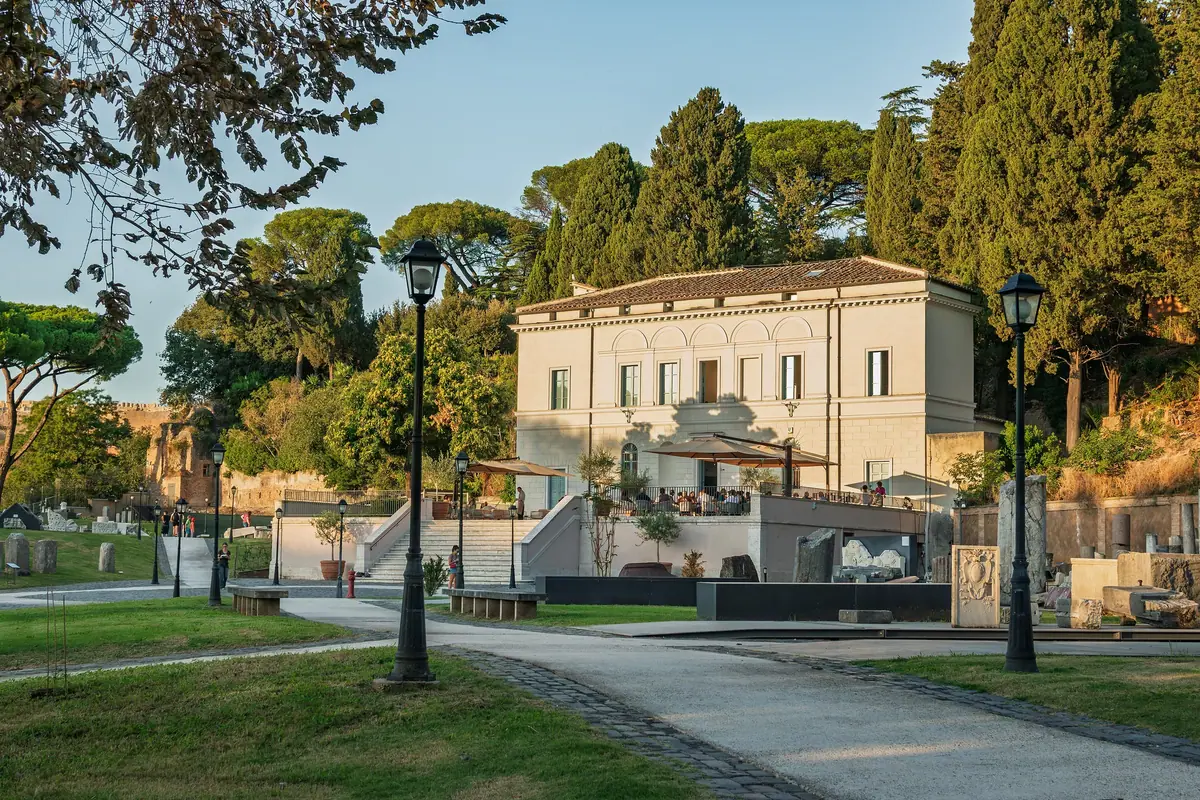
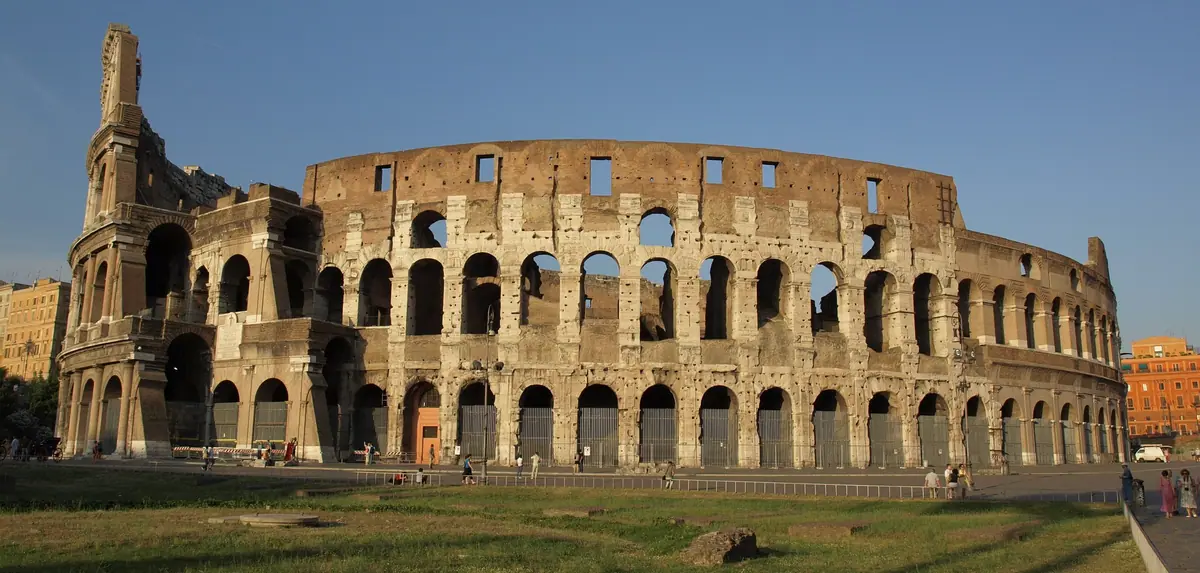
Rome's Celio Archaeological Park is a free public garden facing the Colosseum, and inside it the Forma Urbis Museum shows what survives of the marble map of the city carved under Emperor Septimius Severus. The fragments lie on the floor over a 1748 plan of Rome, so you look down and find the ancient city inside the modern one. The park costs nothing, the museum has a ticket of its own, and the Roma Pass can count it as an included entry.
Celio Archaeological Park and Forma Urbis Museum tickets: €11 for the museum, nothing for the park
The Celio park is free for everyone, with no ticket, and it opens every day. The only thing you pay for is the Forma Urbis Museum, in a former gymnasium inside the park: €11 full price and €6.50 reduced for anyone who doesn’t live in Rome. We don’t sell tickets for it, so you buy straight from the museum.
What's free and what you pay
- Celio Archaeological Park
- Free for everyone, no ticket
- Forma Urbis Museum
- €11, or €6.50 reduced, for non-residents
- Buying ahead
- €1 extra, online or by phone on 060608
- First Sunday of the month
- Museum free for everyone, next on 6 December 2026
- Residents of Rome
- Museum free, with proof of residence
You can buy at the museum’s ticket office on the day, or ahead through Rome’s city museum ticketing online or on 060608, a call centre open every day from 9:00 to 19:00. Visiting on your own, you don’t seem to need a booking. Groups of 5 to 25 people with a guide do have to book, by phone, and they get an hour in the museum.
The prices changed in February 2026, when Rome made its city museums free for residents and kept them paid for tourists. That’s why pages from 2024 give €6.50 as the full price: it was the residents’ rate. The MIC Card those pages mention is now for people who live or study in Rome, so it won’t help a visitor.
Across Rome’s city museums, the reduced price goes to non-residents aged 6 to 25 and to teachers with permanent contracts in state and city schools. The Forma Urbis page doesn’t list its own rules, so bring proof of your age or job if you’re hoping for the €6.50.
The Forma Urbis Museum on the Roma Pass and the Omnia Card
The museum is on the Roma Pass: it can be one of the card’s included entries, and once those are used the card gets you in at a reduced price. The 72-hour Omnia Card works the same way, through the Roma Pass inside it. The park, being free, needs no card.


We haven’t found it on the other Rome passes. Our advice is to think before you spend an included entry here: at €11 the museum is one of Rome’s cheaper tickets, while the Colosseum and Castel Sant’Angelo cost more, so the entry is worth more there. Our page on Roma Pass and Rome’s other city passes runs those sums for your own list, and the Omnia Card page covers the 72-hour card. And on 6 December, keep the card in your pocket, because the museum is free for everyone.
Forma Urbis Museum and Celio park opening hours this winter
The park opens every day, but the museum closes on Mondays. Winter hours started on 25 October 2026, and the museum’s last entry is now 15:00, so a morning or an early afternoon visit is the safe bet.
Opening hours
- Forma Urbis Museum, winter
- Tuesday to Sunday, 10:00–16:00, last entry 15:00
- Forma Urbis Museum, summer
- Tuesday to Sunday, 10:00–19:00, last entry 18:00
- Celio park
- Every day, 7:00–17:30 in winter, 7:00–20:00 in summer
- Casina del Salvi café
- 9:00–16:30 in winter, 9:00–19:00 in summer
- Closed
- Museum on Mondays, 25 December and 1 May; park on 25 December and 1 May
Summer hours come back when Italy moves its clocks forward in March 2027. In the meantime, the park stays open more than two hours after the museum’s last entry, so you can see the museum first and then walk the garden.
Inside the Forma Urbis Museum: ancient Rome’s marble map on the floor
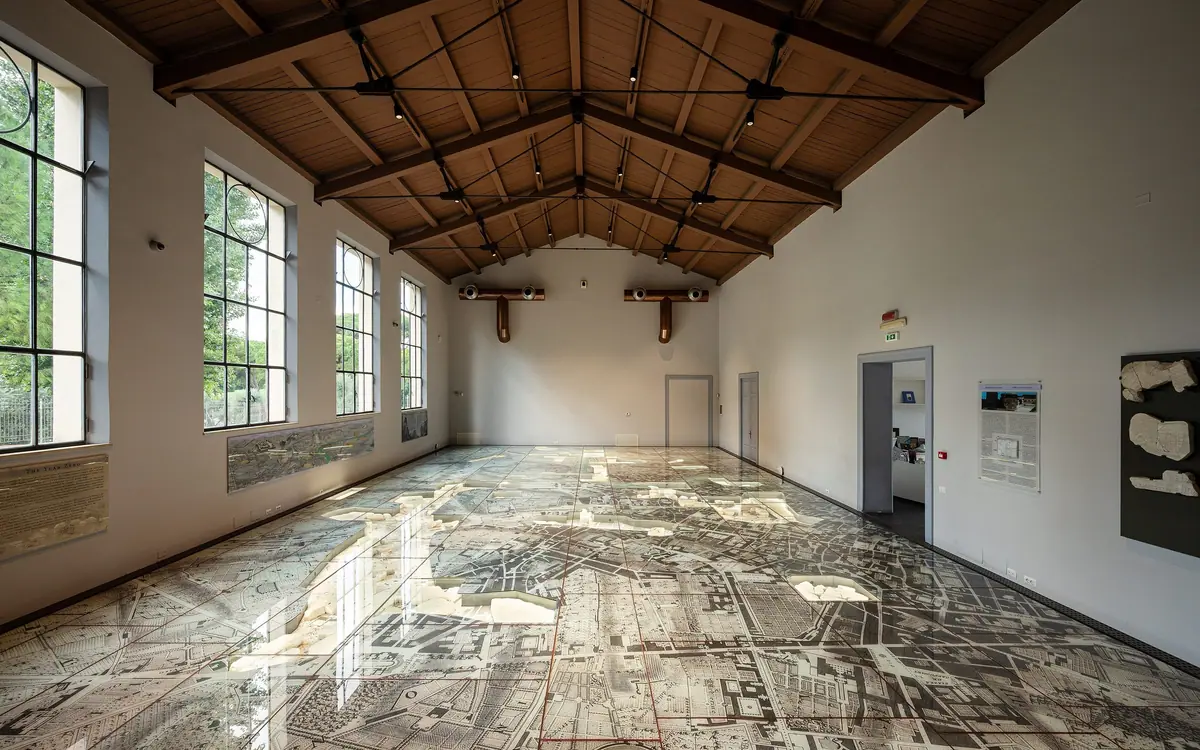
The Forma Urbis Romae was a map of the whole city carved into 150 marble slabs between AD 203 and 211, under Septimius Severus, the emperor who ruled Rome at the turn of the 3rd century. It covered about 18 by 13 metres of wall in a hall of the Templum Pacis, the Temple of Peace, a hall later absorbed into the church of Santi Cosma e Damiano. At an average scale of about 1:240, it showed streets, buildings and even their rooms.
In the museum you look at it from above, the way it was drawn. The fragments lie on the floor of the rooms, set over the great plan of Rome that the mapmaker Nolli drew in 1748, so a piece of marble sits where its building stood. About a tenth of the map survives, and only around 200 fragments have been identified and placed on the city as it is today.
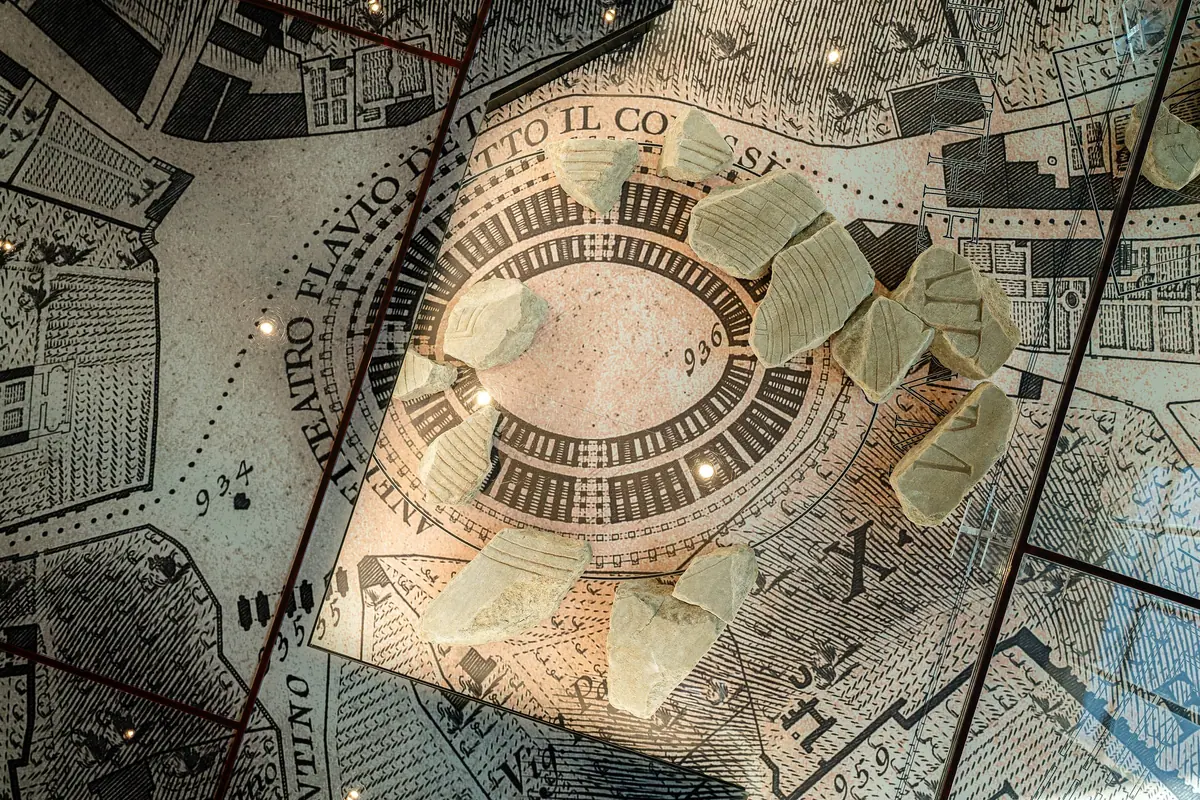
Look for the Colosseum among them, then walk out of the museum and see the real one across the road. Around the map, the rooms also show architectural and decorative pieces from the Antiquarium Comunale, the city’s old collection of antiquities. The building that holds them was a gymnasium, the Palestra della Gioventù Italiana del Littorio.
As for why anyone carved a map this size on a temple wall, the Sovrintendenza, which runs the museum, thinks it was probably more about showing off the emperor’s power than about finding your way.
Why the Forma Urbis was out of sight for almost a century
Pieces of the map started turning up in 1562, and from 1742 they belonged to the Capitoline Museums’ collection. The last time the originals were shown together was from 1903 to 1924, in the garden of the Palazzo dei Conservatori on the Capitoline Hill, and some fragments were kept at the Antiquarium on the Celio until 1939.
After that they went into storage, and they only came back on show when this museum opened on 12 January 2024. So what you see on the floor here is the map’s first proper display in almost a hundred years.
What else is in the Celio Archaeological Park
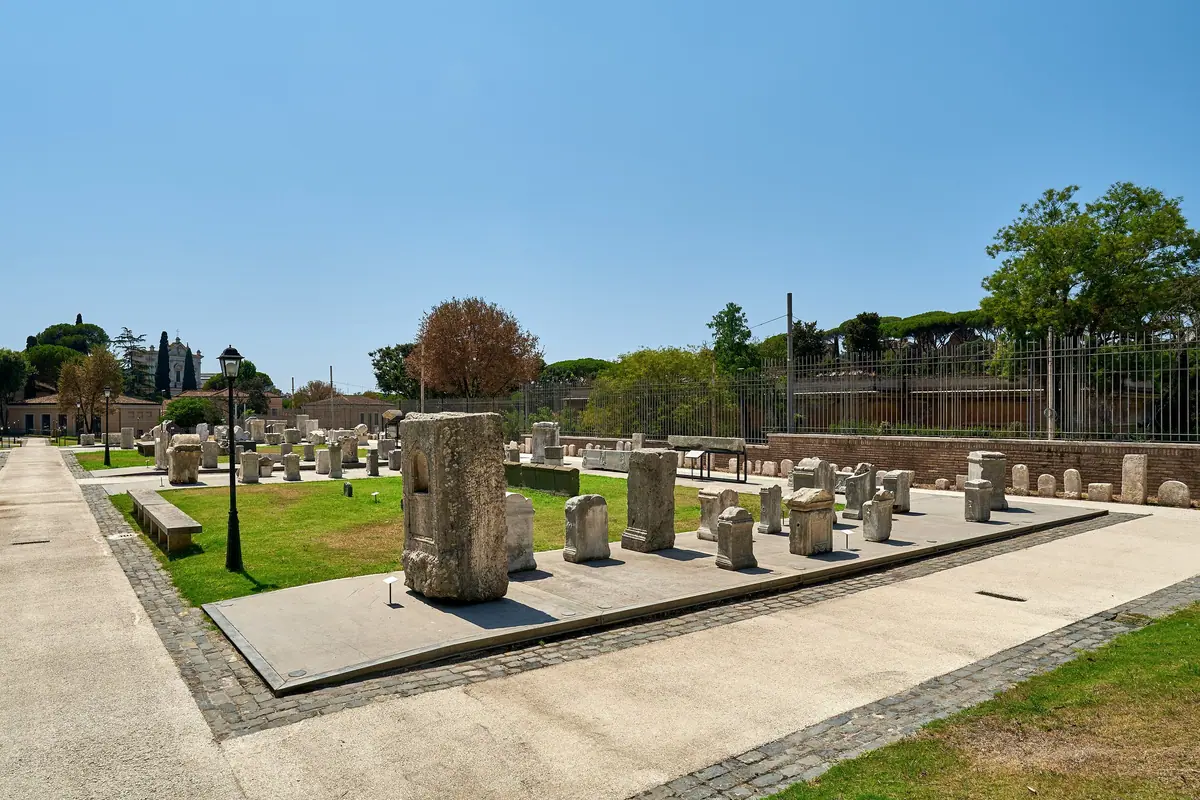
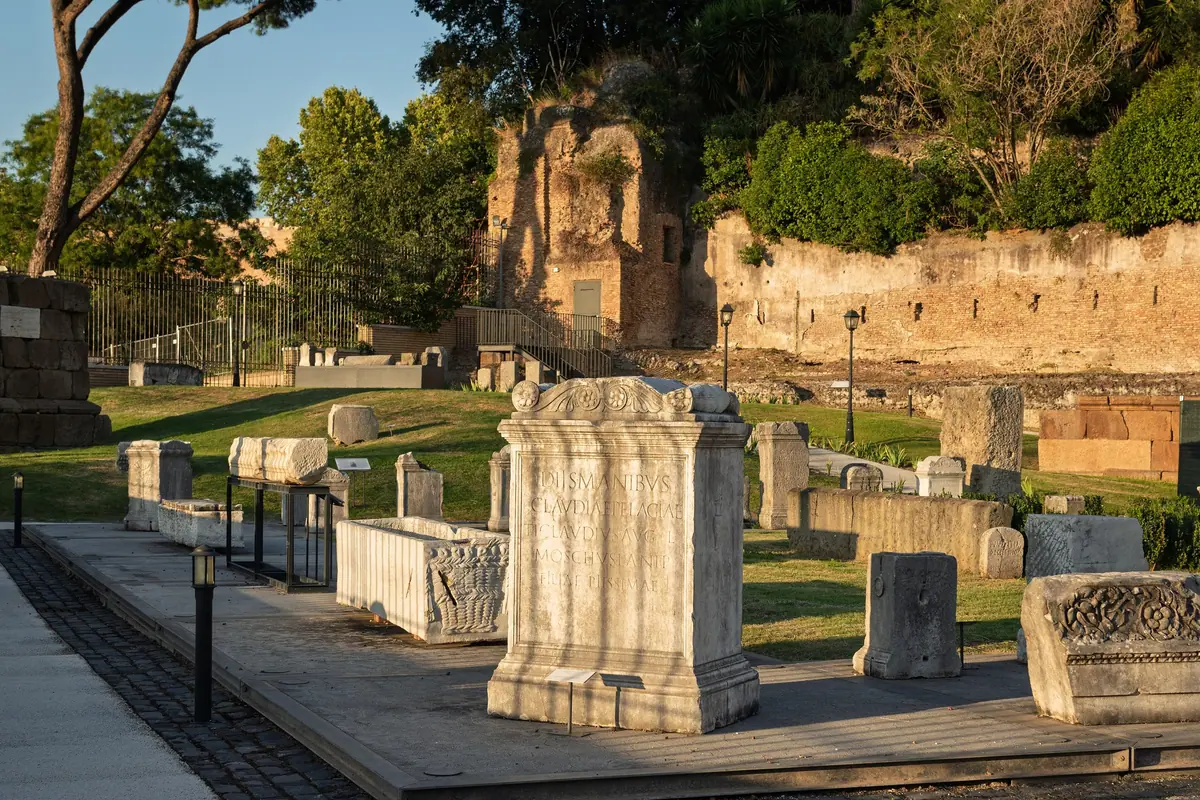
Nothing else in the park needs a ticket, the museum’s own garden included. It groups its stones by theme: tombs such as that of Sulpicius Galba, religion, public buildings, the boundary stones of the Tiber and the aqueducts, and ancient pieces reused in later buildings. Walking round it, you see what Rome dug up in the late 1800s, sorted the way a museum would sort it.
The Casina del Salvi has a café on the ground floor, and upstairs a study room with 38 seats and wifi, which you enter with a numbered badge. Pope Gregory XVI had the park laid out as a public promenade in 1835, with the café designed by Gaspare Salvi, and in 1847 Pope Pius IX handed it to the city of Rome.
Getting to the Celio park and the Forma Urbis Museum from the Colosseum
The park faces the Colosseum, so you get there the way you’d get to the Colosseum: take metro line B to Colosseo and walk across. It also makes an easy stop before or after a Colosseum slot, and right beside the park stand the remains of the Temple of the Deified Claudius, built for the emperor.
There are three entrances, at Viale del Parco del Celio 20 and 22 and at Clivo di Scauro 4. Once inside, the museum is accessible to visitors with reduced mobility and has an accessible toilet, and the Casina del Salvi has been adapted to remove its barriers.
Tickets
Popular tickets around Rome
The ones other visitors book most.


People also ask
Frequently asked questions
Is the Celio Archaeological Park free?
Yes. The park is free for everyone and needs no ticket, and it opens every day except 25 December and 1 May. Only the Forma Urbis Museum inside it is paid.
How much is the Forma Urbis Museum ticket?
€11 full price and €6.50 reduced for anyone who doesn't live in Rome, plus €1 if you buy ahead online or by phone on 060608. Residents of Rome and its metropolitan area go in free with proof of residence. Pages from 2024 that give €6.50 as the full price are quoting the old residents' rate.
Is the Forma Urbis Museum included in the Roma Pass?
Yes. The Roma Pass and the 72-hour Omnia Card can count it as an included entry, and the park needs no card at all. Since the museum is one of Rome's cheaper tickets, we'd keep the card's included entries for dearer sites.
Is the Forma Urbis Museum open on Mondays?
No. The museum closes on Mondays, as well as on 25 December and 1 May. The park around it stays open on Mondays.
When is the Forma Urbis Museum free for everyone?
On the first Sunday of every month, as long as there's room inside. The next one is 6 December 2026.
