
Rome · Roma Pass
Castel Sant'Angelo
Hadrian's tomb ended up with a bronze angel on top and a corridor to the Vatican.
Castel Sant'Angelo in Rome started as Emperor Hadrian's tomb, then became the popes' fortress and home, and later a prison. Inside, you climb from the spiral ramp of the Roman tomb, through the papal apartments, to a terrace with St Peter's and the Pantheon in view. The ticket comes with an audio guide app, Roma Pass holders have a line of their own, and from Friday to Sunday you can add a guided walk along the Passetto di Borgo, the popes' corridor to the Vatican.
Before you go
- Time inside1.5–2 h
- ClosedMondays, except the first of the month
TipWith the Roma Pass you don't book: you show the card at the cardholders' own line.


Castel Sant’Angelo tickets, the free days and the €5 Mondays
You don’t have to book a Castel Sant’Angelo ticket, but the castle recommends it on any day, and especially at weekends and on public holidays. The ticket we sell costs €22 and covers entry, the permanent collections and the temporary exhibitions, plus an audio guide app in English, Chinese, French, German, Italian or Spanish that you open from a link in your voucher.
You pick a time as you book and get the nearest one available, which can be up to 45 minutes off the one you chose. The ticket can’t be refunded or moved to another day, and it doesn’t promise skip-the-line entry. For that, the Roma Pass has a line of its own at the castle, and the two-hour guided tour comes with skip-the-line entry, a live guide and a headset to hear them.


Under-18s go in free, so on our ticket their €4 pays for the audio guide app. EU citizens aged 18 to 25 pay €6 on our ticket, again with the app.
On the first Sunday of the month entry is free for everyone. Those Sundays are walk-up only: the free tickets are given out at the castle itself, and if it gets crowded the route can change.
Mondays are the castle’s closing day, except the first Monday of the month, when it opens in the afternoon with a €5 ticket sold only at the ticket office. That visit is shorter, through the ramp of Hadrian’s tomb, the papal apartments and the terrace, and the Mondays are a trial that runs until December 2026.
Free and €5 days left in 2026
- Sunday 6 December
- Free for everyone
- Monday 7 December
- €5, 14:00–20:00, shorter route
Until 31 December 2026, the castle’s own ticket also gets you into two house museums in the city, once each, on the day of your visit or the two days after. They’re the Casa Museo Boncompagni Ludovisi, on Via Boncompagni, and the house museum of Hendrik Christian Andersen, on Via P. S. Mancini.
Roma Pass at Castel Sant’Angelo: no booking and a line of its own
Castel Sant’Angelo is one of the Roma Pass’s included entries, and getting in with the card is simple: cardholders have a line of their own, and there’s nothing to book. You turn up with the card, use that line, and the temporary exhibitions come with it.
Once your included entries are used, the reduced ticket is sold at a separate till, by cash or card. Anyone with you who has no card, such as under-18s or EU citizens aged 18 to 25, books their own ticket on CoopCulture, the castle’s ticketing site.
-
Roma Pass
An included entry (one on the 48-hour card, two on the 72-hour), then a reduced ticket. No booking: there's a line for cardholders
from €44.90
Buy pass→ -
Omnia Card 72h
Through the Roma Pass inside it, for adults, with no booking
from €149
Buy pass→ -
Rome Tourist Card
One choice in the first group, instead of the Vatican Museums
from €89
Buy pass→ -
Vatican City Pass
One of the picks for the third ticket, instead of Santa Maria Maggiore
from €64
Buy pass→ -
Go City Rome Explorer Pass
One of your choices, with skip-the-line entry and an audio guide; tickets from the Touristation desk on Piazza d'Aracoeli on your first day
from €89
Buy pass→ -
Turbopass Rome City Pass
Included, with the ticket collected at a pick-up point nearby; booking a time is recommended from April to October
from €144.90
Buy pass→


The Rome Tourist Card, the Vatican City Pass, the Omnia Card and the Turbopass each have a page with every choice in them, and our comparison, Roma Pass and Rome’s other city passes, covers all six passes, Go City included.
If you go with the Roma Pass, keep its included entries off 6 December, when the castle is free for everyone anyway.
The Passetto di Borgo: Castel Sant’Angelo’s corridor to the Vatican
The Passetto di Borgo is the corridor built in the 13th century under Pope Nicholas III to link the Vatican to the castle, and none of those passes covers it. Popes used it to reach safety: Alexander VI took refuge in the castle in 1494, and Clement VII fled along it in 1527, during the Sack of Rome by the troops of Emperor Charles V.
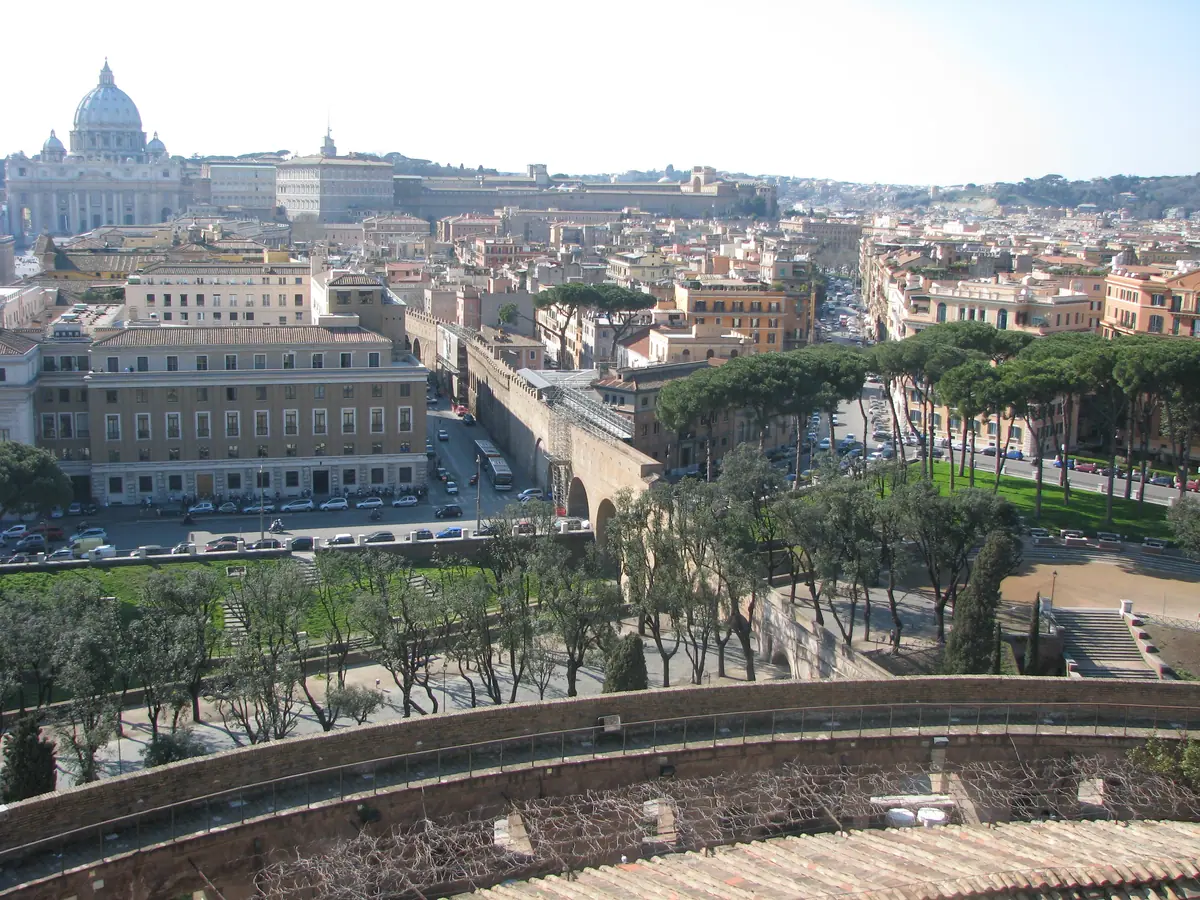
The corridor has two levels, an open walkway on top with views and a covered passage beneath it, the “secret corridor”. It reopened in December 2024 after years of closure, and you can only walk it with a guide, or on a 30-minute escorted walk where the escort gives no commentary. The standard castle ticket doesn’t include it.
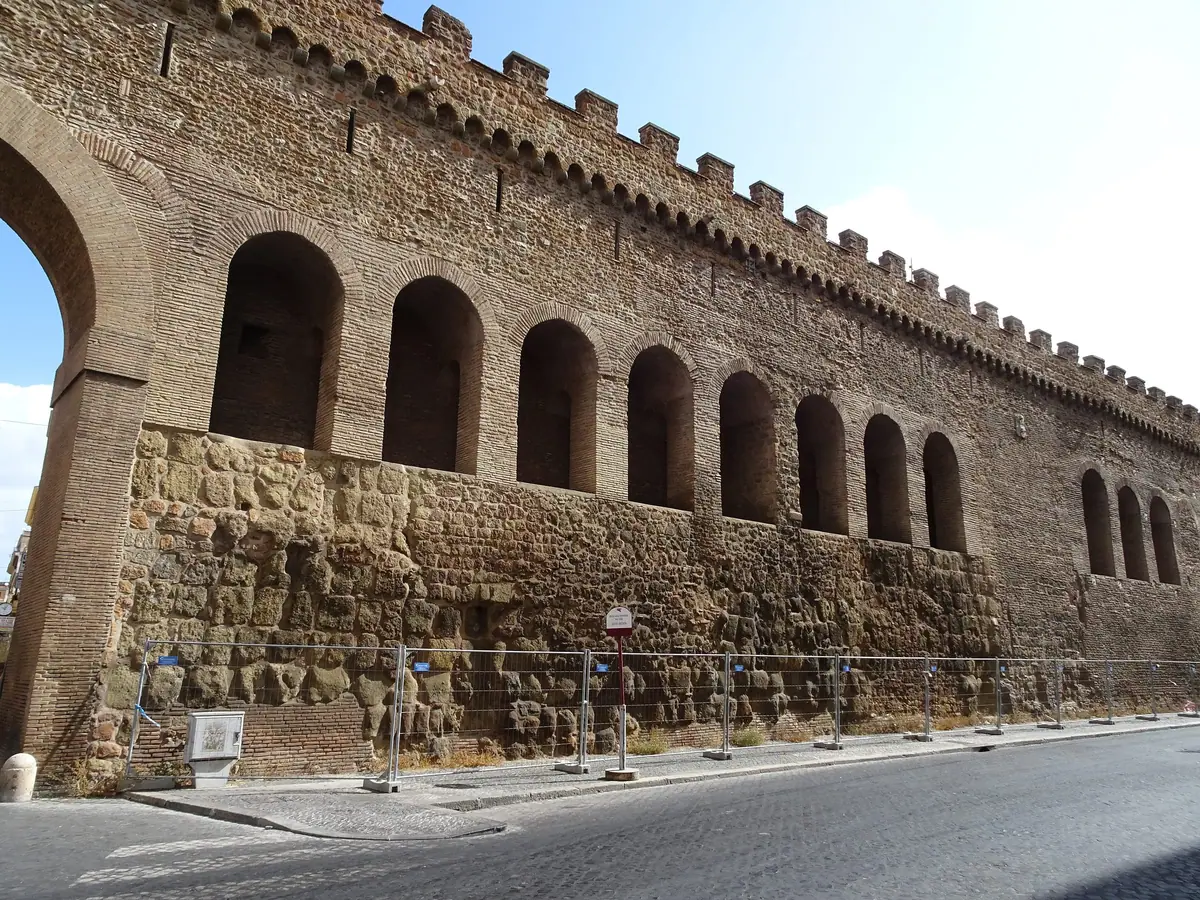
The day visits, which come with the castle, run on Fridays, Saturdays and Sundays from 9:00 to 13:00, except on the first Sunday of the month. On Saturday evenings, from 19:00 to 23:00, the night visits go through the bastions, the Hall of the Urns and the spiral ramp, while the museum rooms stay closed.
The step-free visits are on the second and fourth Sunday of the month, at 10:45 and 12:15, and leave the castle out. Whichever one you book, be there 15 minutes before your time.
We sell two Passetto tickets. The guided tour, at €59, is the one with a guide: a headset to hear them on the Passetto, then entry to the castle to see on your own. The other, at €49, covers the castle and the Passetto with no guided tour listed.


The corridor runs for 450 metres and is between 75 and 215 cm wide, and the castle doesn’t recommend it if you suffer from claustrophobia. The step-free visits use its two lifts and take up to 20 people, with room for five wheelchairs; they’re booked on the Musei Italiani site or app, and they don’t go into the castle.
Castel Sant’Angelo’s hours and what to bring to the entrance
The castle keeps the same hours all year, with no summer timetable, and the ticket office closes at 18:30 with the last entry.
Opening hours
- Tuesday to Sunday
- 9:00–19:30, last entry 18:30
- First Monday of the month
- 14:00–20:00, last entry 19:00
- Other Mondays
- Closed
- Also closed
- 25 December and 1 January
The castle’s tickets are in the visitor’s name, and staff check them against an original ID at the entrance, so bring yours. If the details don’t match, you aren’t let in.
While building works go on, the ticket offices are in temporary structures outside and the ground floor has some detours. There’s no cloakroom and animals aren’t allowed. For wheelchair users, the castle says only part of the outdoor areas can be visited, and that there are step-free visits to the Passetto.
What you see as you climb Castel Sant’Angelo
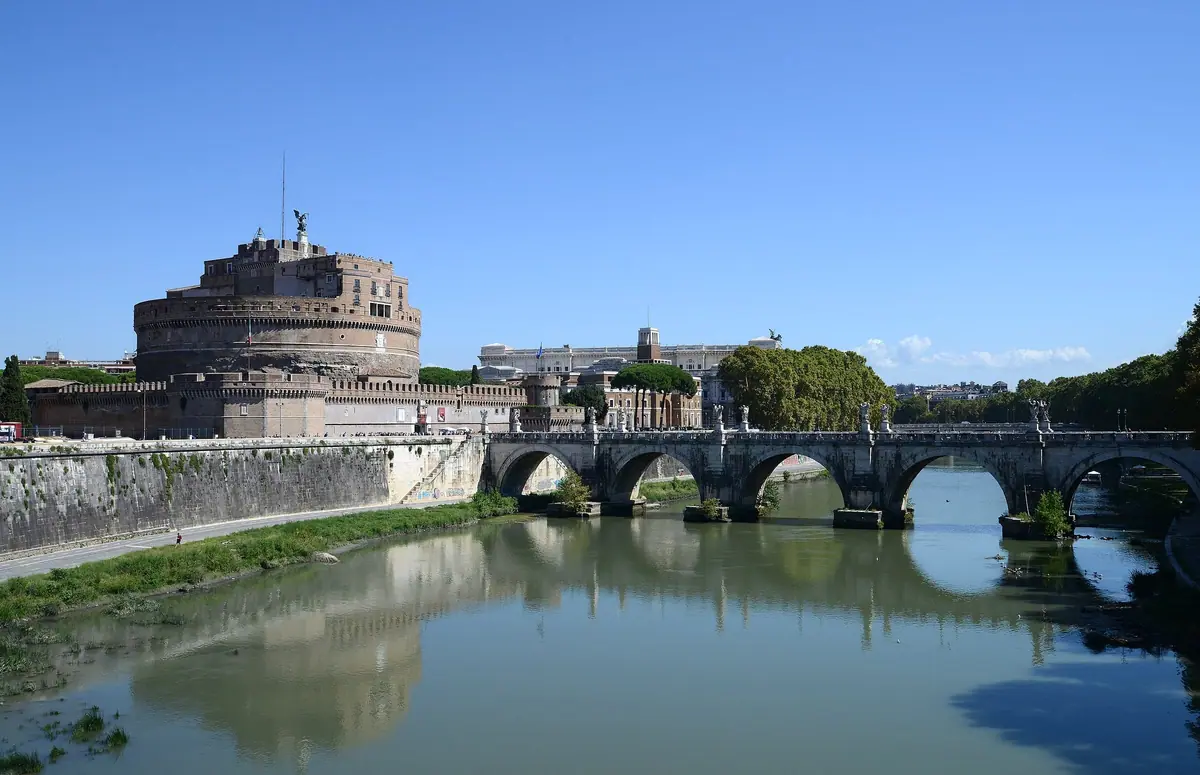
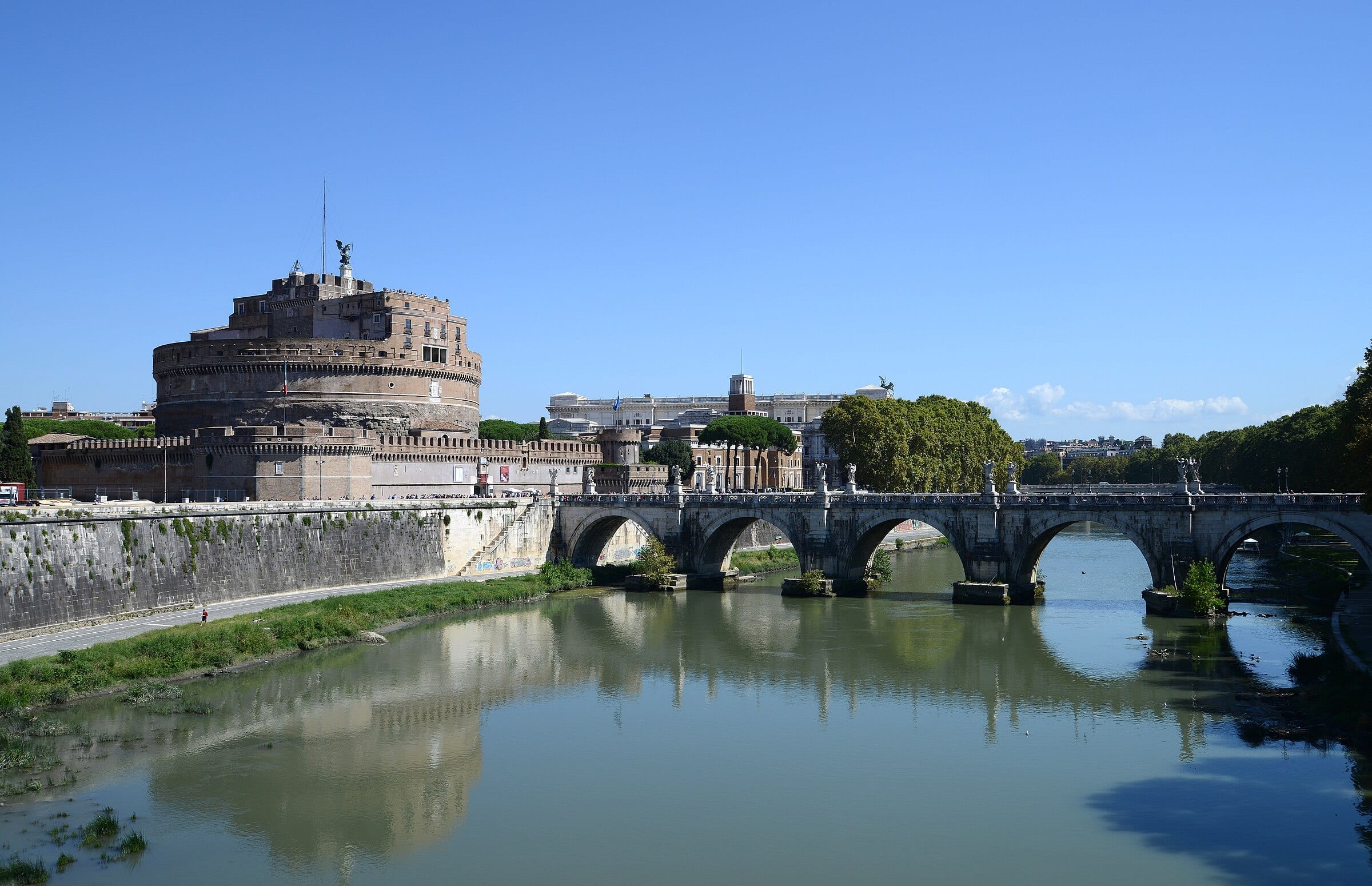
From the river you see the round bulk of Hadrian’s tomb, with the castle’s walls and bastions built around it and the bronze angel on top. The Ponte Sant’Angelo crosses the Tiber to it. Hadrian built the bridge too, in 134, and its ten Baroque angels were designed by Bernini.
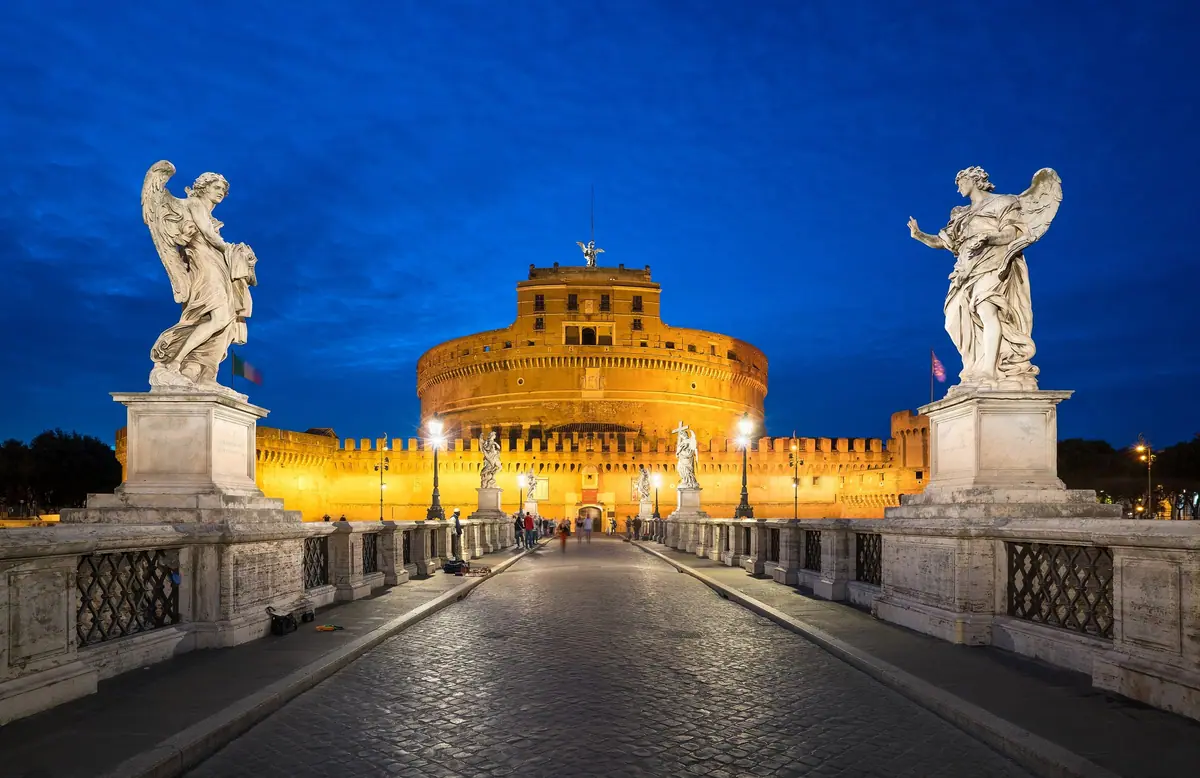
Inside, the visit climbs through three layers: the Roman tomb, the fortress and the papal apartments. In the tomb you follow its spiral ramp and pass through the Sala delle Urne, the Hall of the Urns. Higher up, the Cortile dell’Angelo keeps the marble angel of 1536, which stood on the top before the bronze one.
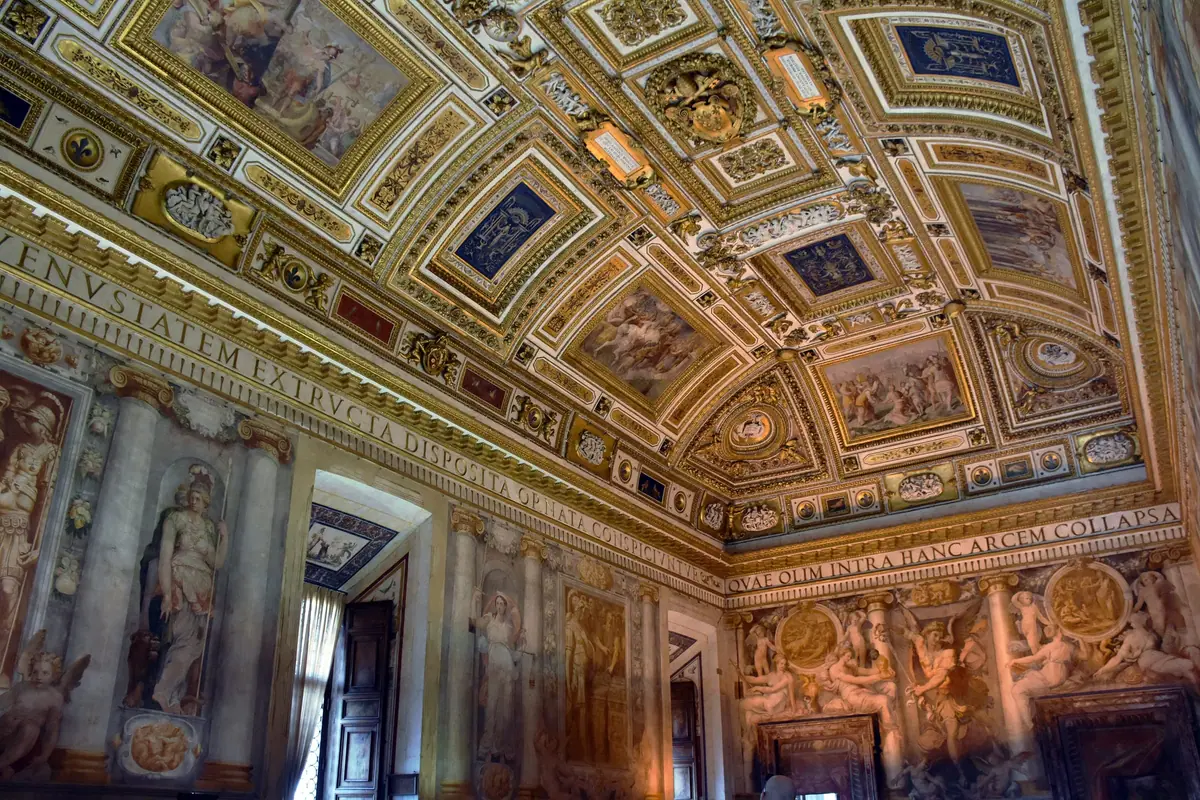
The papal apartments were at their grandest under Pope Paul III, between 1534 and 1549. The room to look for is the Sala Paolina, covered in frescoes.
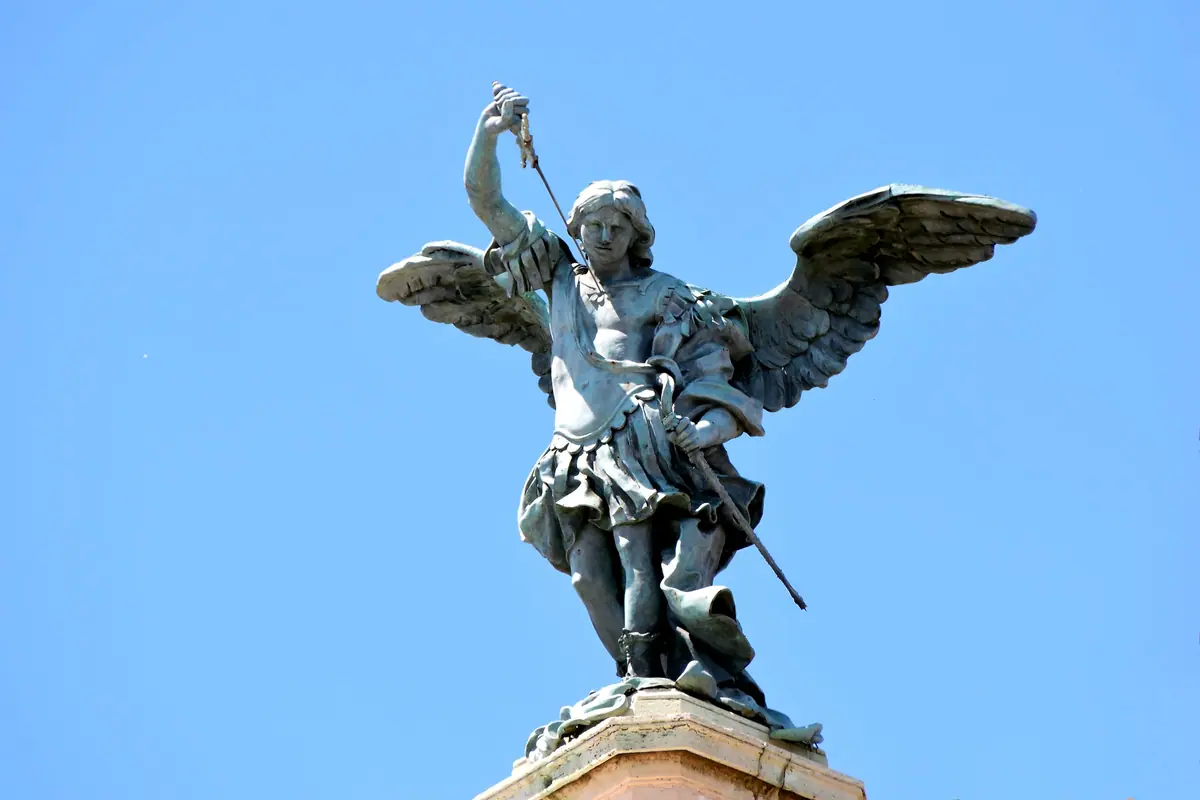
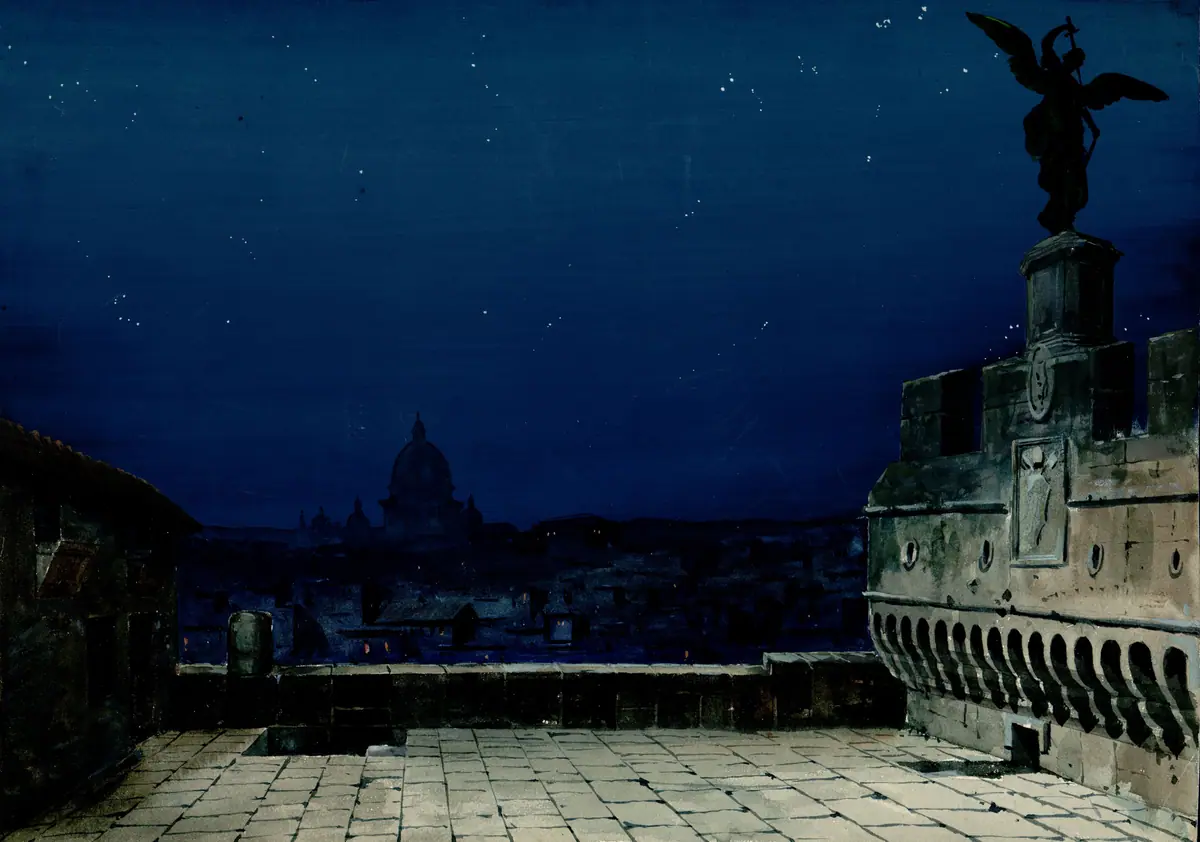
At the top is the terrace, at the feet of the bronze angel, with a view over the Villa Borghese gardens, the Pantheon, the Capitoline Hill and St Peter’s. From late October to February the sun sets before the last entry at 18:30, so go in by mid-afternoon if you want that view in daylight.
Castel Sant’Angelo’s story, from Hadrian to Tosca
Emperor Hadrian had the tomb built for himself and his family between 135 and 139, and emperors were buried here up to Caracalla, in 217. In the 5th century it was turned into a fortress and made part of the city walls.
The name comes from a legend. In 590 Pope Gregory the Great saw the archangel Michael sheathing his sword, a sign that the plague was over, and the fortress took the angel’s name.
In 1367 its keys were handed to Pope Urban V to persuade him to come back to Rome from Avignon, and from then on the castle’s fate was tied to the papacy. From the 17th century it was mostly a political prison, and after 1870 the Italian state used it as a military prison and barracks. Military use ended in 1901, and it opened as a national museum in 1925.
Opera fans know it from Tosca, first staged at Rome’s Teatro Costanzi on 14 January 1900. The last act is set at the castle, and it ends with the heroine throwing herself from the walls.
Metro and buses to Castel Sant’Angelo
The castle stands by the Tiber at the end of the Ponte Sant’Angelo, a short walk from St Peter’s, so from the historic centre you reach it on foot across the bridge. From Termini station, metro line A takes you to Lepanto or Ottaviano, and from either it’s about a 15-minute walk.
Bus 40 runs from Termini to the Ponte Vittorio Emanuele stop, and the 64 also comes from Termini and Piazza Venezia. The 23, from Testaccio and Trastevere, and the 280, along the river, stop nearby too.
City cards
Castel Sant'Angelo with a city card
Pick the one that fits your trip. Prices are per adult, and you choose your dates on the next page.


Tickets
Popular tickets around Rome
The ones other visitors book most.


People also ask
Frequently asked questions
Do I need to book Castel Sant'Angelo tickets in advance?
Booking isn't compulsory for individual visitors, but the castle recommends it, especially at weekends and on public holidays. With the Roma Pass there's nothing to book: you go in through the cardholders' own line.
Is Castel Sant'Angelo open on Mondays?
Only on the first Monday of the month, from 14:00 to 20:00 with last entry at 19:00, on a shorter route and with a €5 ticket sold at the ticket office. The last date of this 2026 trial is 7 December. On every other Monday the castle is closed.
When is Castel Sant'Angelo free?
Entry is free for everyone on the first Sunday of every month, the next being 6 December 2026. Those tickets can't be booked online: you collect them at the castle on the day. Under-18s go in free on any day.
Is the terrace included in the Castel Sant'Angelo ticket?
Yes. The terrace under the bronze angel is part of the visit, with no ticket or time slot of its own, and it's open on the €5 Mondays too. From late October to February the sun sets before the last entry at 18:30, so go in by mid-afternoon if you want the view in daylight.
How long does a visit to Castel Sant'Angelo take?
Give it an hour and a half to two hours if you want the terrace and the exhibitions without rushing. A guided visit of the Passetto di Borgo adds about an hour.
