
Rome · Roma Pass
Capitoline Museums
The bronze emperor moved indoors, and a copy keeps his place on Michelangelo's square.
The Capitoline Museums fill two palaces on the square Michelangelo designed at the top of Rome's Capitoline Hill, and they keep two famous bronzes: the she-wolf and the original statue of the emperor Marcus Aurelius on horseback. An underground gallery joins the palaces and leads to the Tabularium, ancient Rome's state archive, whose arches look straight down on the Roman Forum. The ticket we sell covers the museums and the current exhibition, entry is free for everyone on the first Sunday of the month, and the Roma Pass can count it as an included entry.
Before you go
- Time inside2–3 h
- OpenEvery day
TipOn Wednesdays, entry is half price in the last two hours before closing if you don't live in Rome: go in after 17:30, before the 18:30 last entry.


Capitoline Museums tickets: what the standard ticket covers and what’s extra
You don’t have to book the Capitoline Museums: the ticket office on the square sells tickets for the same day. What a ticket bought ahead saves you is the queue in front of it. The ticket we sell, at €32, is the museum’s standard one, on your phone and with no time slot. It costs what the museum charges online, where a €1 advance-sale fee is added, and you can cancel or change it up to 5 hours before, which the museum’s own pre-sold tickets don’t allow.
That standard ticket includes Angeli, an exhibition on the ground floor of the Palazzo dei Conservatori, and while it runs, until 10 January 2027, the price is €1.50 higher than for the museum alone. The other show this autumn isn’t on it. Diego Rivera, the Mexican painter, has an exhibition at Villa Caffarelli until 13 December, with a separate ticket from the museum.
What each ticket covers this autumn
- Museums and Angeli
- The standard ticket, €32 with us, until 10 January 2027
- Diego Rivera, at Villa Caffarelli
- €15, a separate ticket from the museum, until 13 December 2026
- Museums, Angeli and Rivera
- €23.50, a combined ticket from the museum
- Audio guide or video guide
- €4 or €6 at the museum, in five languages
The other ticket we sell, Skip the Line with a multimedia video, at €32, adds a video on ancient Rome, help at the Touristation office on Piazza d’Aracoeli and a Rome audio guide app. It comes with a time slot, asks you to be there 15 minutes early, and can be cancelled up to 24 hours before. Since any ticket bought ahead already skips the ticket office queue, the extra money goes on the video and the app, and neither ticket includes the museum’s own audio guide.

Children under 6 go in free, with a free ticket from the ticket office. Visitors aged 6 to 25 who don’t live in Rome pay a reduced price, and so do teachers, but bring proof of your age or job: without it, you pay the difference at the door.
Capitoline Museums opening hours, free Sundays and half-price Wednesdays
The Capitoline Museums open every day, Mondays included, with the same hours all week, and close only twice a year.
Opening hours
- Every day
- 9:30–19:30, last entry 18:30
- 24 and 31 December
- 9:30–14:00
- Closed
- 1 May and 25 December
- First Sunday of the month
- Free for everyone
- Wednesdays, last two hours
- Half price if you don't live in Rome
The free first Sunday is for everyone, tourists included, as long as there’s room inside, whatever some ticket sites say. The next ones are 6 December 2026 and 3 January 2027. In October the free entry covered the exhibitions too, all but Rivera’s, which you still pay for.
On Wednesdays, entry costs half price in the last two hours before closing for anyone who doesn’t live in Rome. Go in after 17:30 and you have until the 18:30 last entry to get through the door, with the rooms open until 19:30.
Roma Pass at the Capitoline Museums: an included entry or the reduced ticket
The Roma Pass gets you in one of two ways: as one of its included entries, one on the 48-hour card and two on the 72-hour card, or at the reduced ticket once those are used. You decide which at the museum, and both cover the exhibitions inside the museums, though not Rivera’s at Villa Caffarelli, where the card gets you the reduced price.
-
Roma Pass
An included entry or the reduced ticket. Booking a time is free, by phone on 060608 or online after registering
from €44.90
Buy pass→ -
Omnia Card 72h
An included entry through its Roma Pass, for adults, booked the same way
from €149
Buy pass→ -
Go City Rome Explorer Pass
One of your choices, with fast-track entry and the multimedia video, booked at the Touristation desk on your first day
from €89
Buy pass→


The Rome Tourist Card, the Vatican City Pass and the Turbopass don’t include the Capitoline Museums.
Booking a time costs nothing, and the Roma Pass strongly recommends it. Before you spend an included entry here, though, look at your list: the Colosseum and Castel Sant’Angelo have dearer tickets, so an included entry is worth more there, and here the reduced ticket can be the better use of the card. Our Roma Pass and Rome’s other city passes page runs those sums for your own list.
The 72-hour Omnia Card works the same way, through the Roma Pass inside it. On the Go City Explorer Pass the museums take one of your choices, and you book them in person at the Touristation desk, Piazza d’Aracoeli 16, on your first day in Rome, which gets you a set time, fast-track entry and the same video as on our Skip the Line ticket.
Up to the Capitoline Museums through Michelangelo’s Piazza del Campidoglio
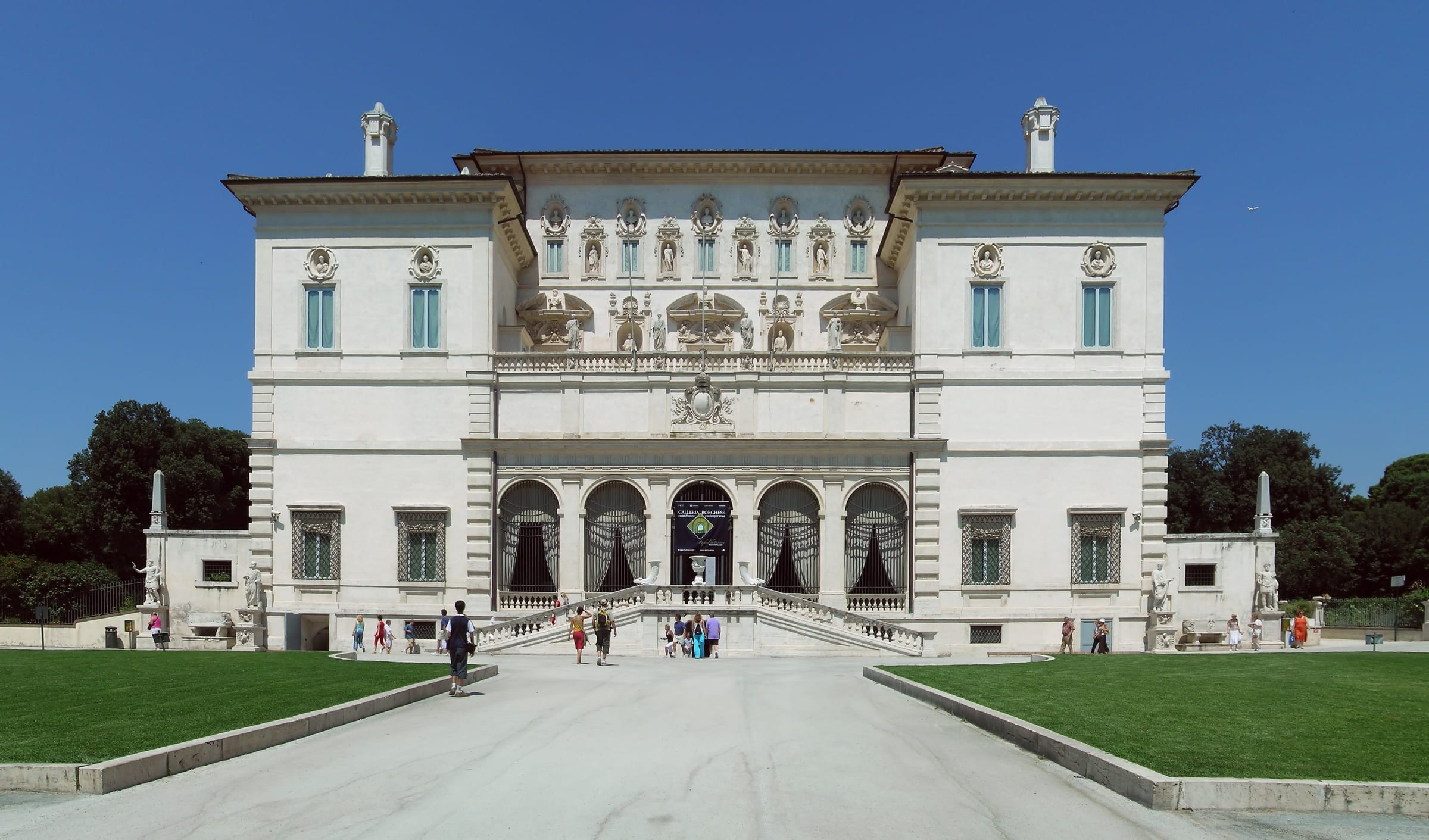
The Capitoline Hill has no metro station. The nearest is Colosseo, on line B, 10 to 15 minutes away on foot, and buses stop at the bottom of the hill, around Piazza Venezia and Ara Coeli. From there you walk up the Cordonata, the broad stepped ramp, to the Piazza del Campidoglio, where the museums’ entrance is, at number 1.
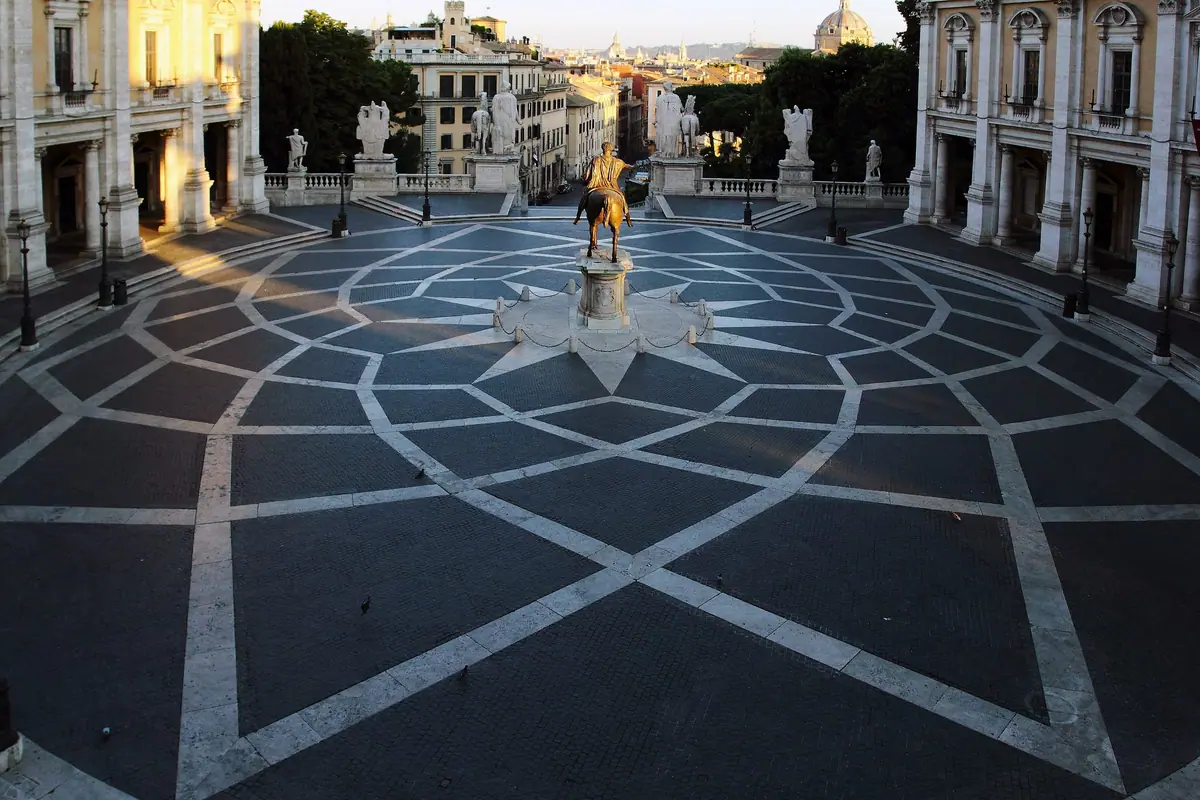
The square at the top is free to walk into. Michelangelo drew up its plan in 1536 for Pope Paul III, but the star pattern in the paving that you see in every photo came much later: it was laid in 1940, by Antonio Muñoz, copied from an engraving of 1567.
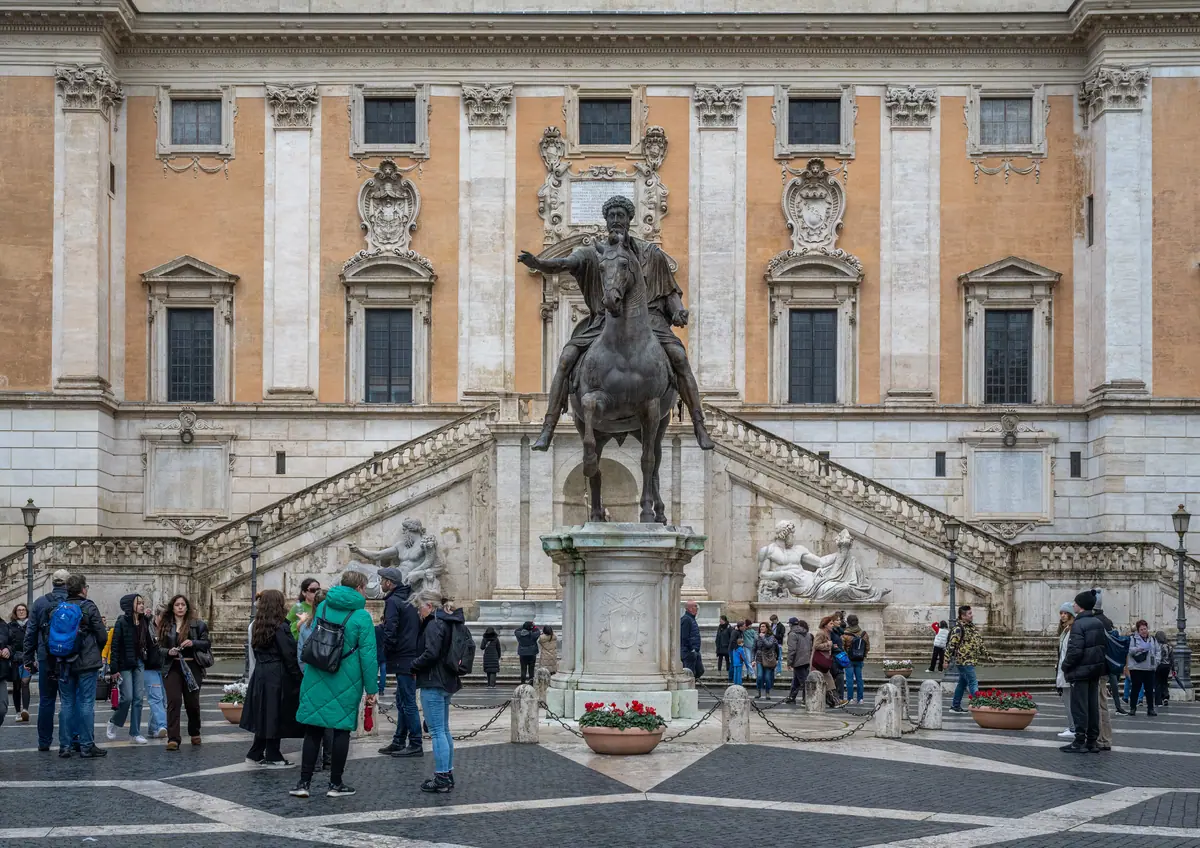
In the middle stands the emperor Marcus Aurelius on horseback, on a pedestal designed by Michelangelo. The bronze out here is a copy, and the original is inside the museum, so you see both on the same visit.
Before you go in, walk round behind the Palazzo Senatorio, the palace built on top of the ancient Tabularium, for a free view over the Roman Forum. The museum gives you the same view from inside, from the Tabularium’s own arches.
At the entrance, Piazza del Campidoglio 1
- 1Getting in: the entrance has a mobile ramp and a stair lift, with lifts inside.
- 2Bags: the cloakroom is free. Large backpacks, umbrellas, food and drink stay there or outside.
- 3Children and dogs: pushchairs can come in, and dogs only if they're small and in a carrier.
- 4Photos: fine for your own use, except in the temporary exhibitions. No tripods or selfie sticks.
The she-wolf and Marcus Aurelius in the Palazzo dei Conservatori
The museums began with a gift. In 1471 Pope Sixtus IV gave a group of ancient bronzes to the people of Rome, and in 1734 Pope Clement XII opened the collection to the public. The Palazzo dei Conservatori, one of the two museum palaces on the square, holds its two famous bronzes.
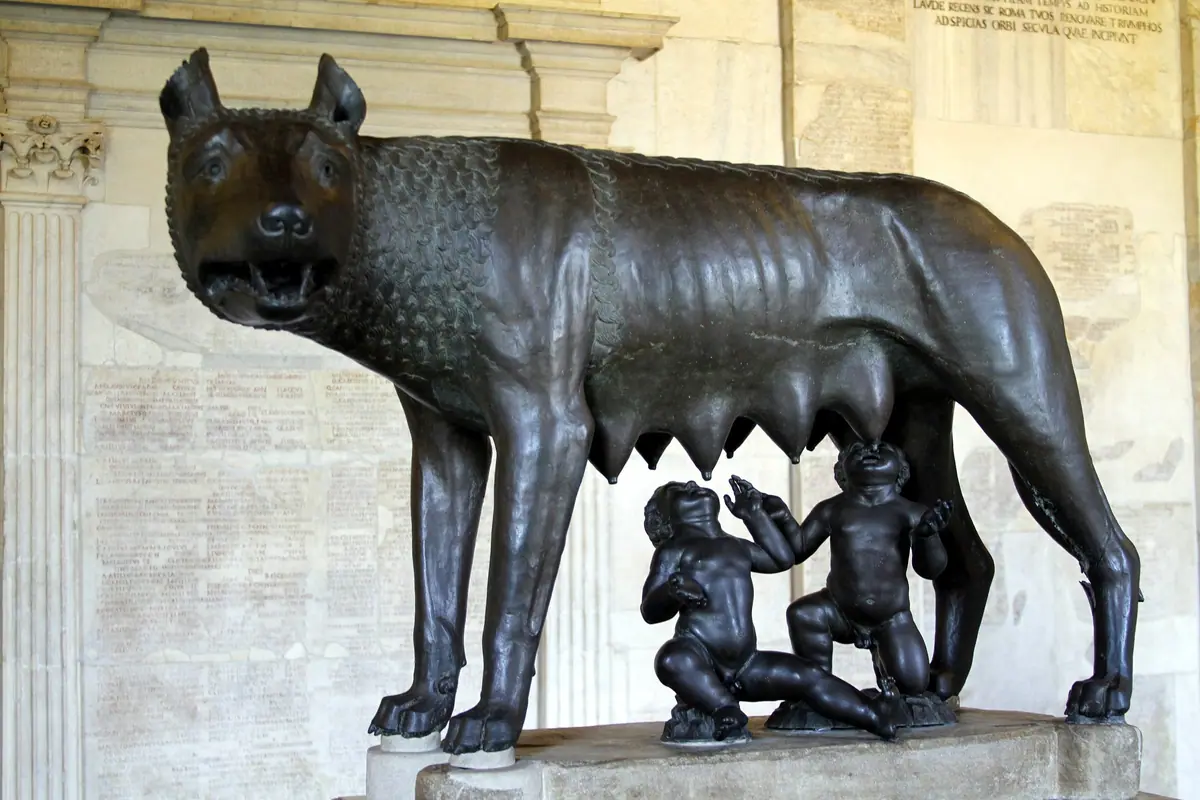
The first is the she-wolf, in the Sala della Lupa, suckling Romulus and Remus, the twins of Rome’s founding legend. The museum dates the wolf to the 5th century BC, while radiocarbon and thermoluminescence tests by the University of Salento in 2012 put it in the 11th or 12th century AD. The twins are later still: they were added at the end of the 15th century and have been attributed, as a hypothesis, to Pollaiolo.
The original Marcus Aurelius stands in the Exedra, a hall opened in December 2005. The statue is gilded bronze, cast between AD 176 and 180, and it has been on the Capitoline since 1538, when Pope Paul III had it brought up from the Lateran.
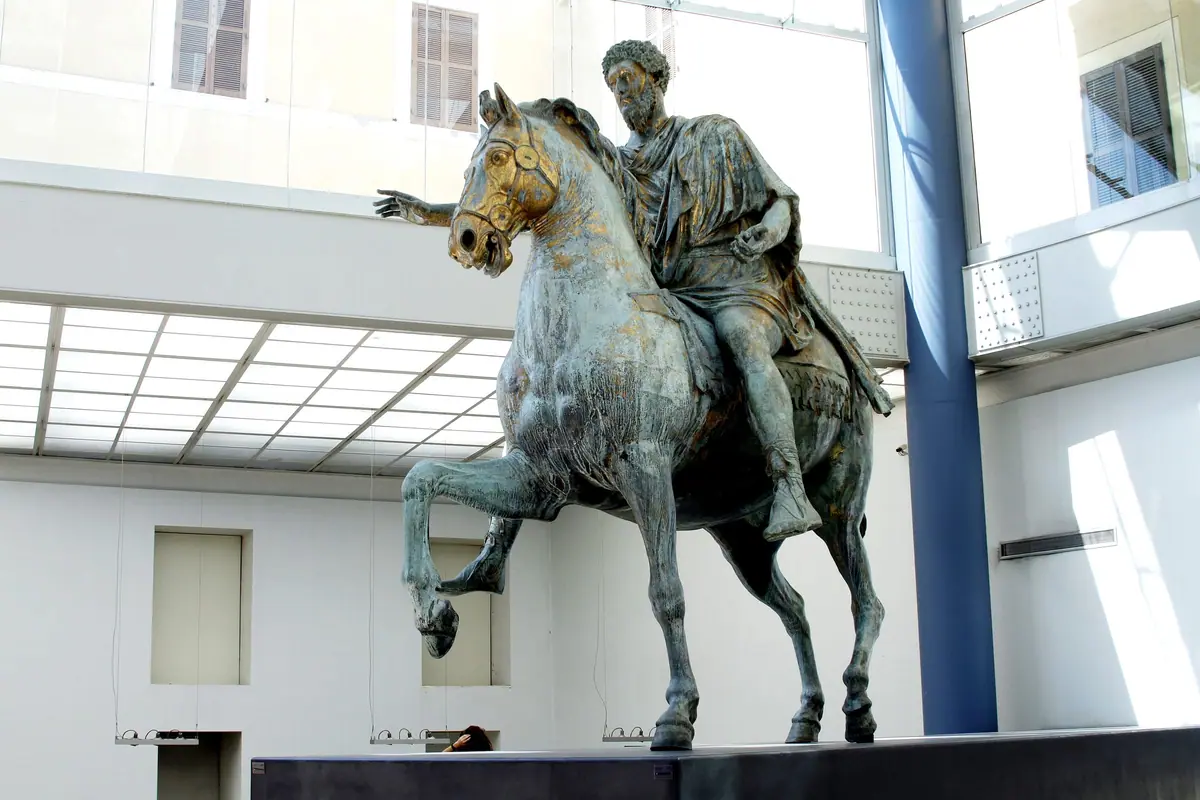
Around them, look for the Spinario and the Capitoline Brutus, the Hall of the Horatii and Curiatii, the fragments of the Colossus of Constantine and the remains of the Temple of Jupiter Capitolinus, which stood on this hill. The Pinacoteca, the picture gallery, has paintings by Caravaggio, Guercino, Guido Reni and Pietro da Cortona.
The Capitoline Museums’ Tabularium, over the Roman Forum, and the Palazzo Nuovo
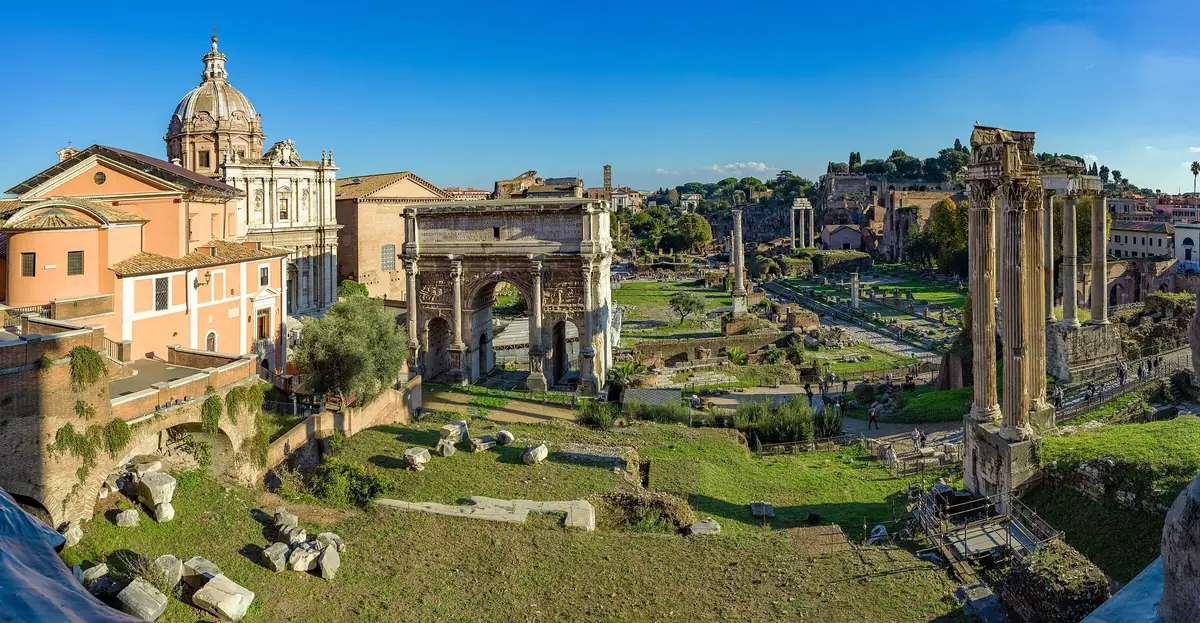
To reach the second palace you go underground. The Galleria Lapidaria, a gallery beneath the square, links the two buildings and takes you into the Tabularium, whose arches look straight out over the Roman Forum, with the Colosseum and the Palatine Hill in the distance.
You’re standing inside ancient Rome’s state archive. The consul Quintus Lutatius Catulus finished it in 78 BC, after a fire in 83 BC. In the Middle Ages it became a fortress and then the base of the Palazzo Senatorio, and it was used to store salt from the 14th to the 17th century and as a prison until the middle of the 19th.
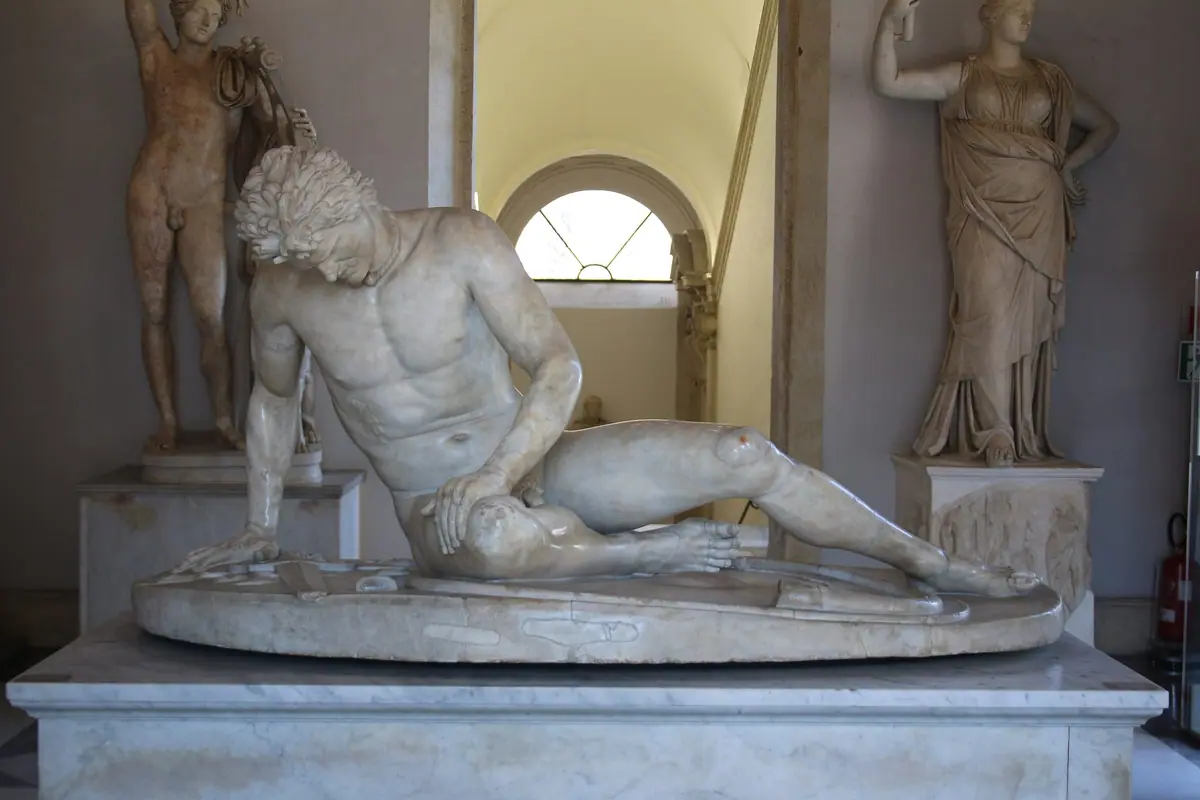
On the far side, the Palazzo Nuovo, built from 1654, is the palace of ancient marbles. The Dying Gaul is a Roman copy of a Greek original from the 3rd century BC, and the Capitoline Venus is here too, along with rows of busts of philosophers and emperors.
In a wheelchair, plan for the Palazzo Nuovo to be out of reach: it has had no wheelchair access since 9 June 2026, even though the listing for our ticket calls the museums wheelchair accessible. The rest of the visit has tactile aids for blind visitors and videos in Italian Sign Language.
City cards
Capitoline Museums with a city card
Pick the one that fits your trip. Prices are per adult, and you choose your dates on the next page.

Tickets
Popular tickets around Rome
The ones other visitors book most.


People also ask
Frequently asked questions
Are the Capitoline Museums open on Mondays?
Yes. They open every day from 9:30 to 19:30, with last entry at 18:30, and close only on 1 May and 25 December. On 24 and 31 December they close at 14:00.
Are the Capitoline Museums free on the first Sunday of the month?
Yes, for everyone, visitors from abroad included, as long as there's room inside. The next free Sundays are 6 December 2026 and 3 January 2027. In October the free entry covered the exhibitions too, except the Diego Rivera show at Villa Caffarelli.
Is the Diego Rivera exhibition included in the Capitoline Museums ticket?
No. It runs at Villa Caffarelli until 13 December 2026 with a ticket of its own, €15, or €23.50 on a combined ticket with the museums and the Angeli exhibition. No city pass includes it, though the Roma Pass gets you the reduced price.
Are the Capitoline Museums included in the Roma Pass?
Yes, as one of the card's included entries or at the reduced ticket, and you choose which at the museum. Booking a time is free and strongly recommended. The Colosseum and Castel Sant'Angelo have dearer tickets, so an included entry is worth more there, and the reduced ticket can be the better use of the card here.
Can you see the Roman Forum from the Capitoline Museums?
Yes. The arches of the Tabularium, which you reach through the underground gallery between the two palaces, look out over the Forum, with the Colosseum and the Palatine Hill behind it. For a free view, walk round behind the Palazzo Senatorio on the square.
