
Rome · Free entry
St John Lateran and the Lateran Palace
Every new pope comes here to take the chair of the Bishop of Rome.
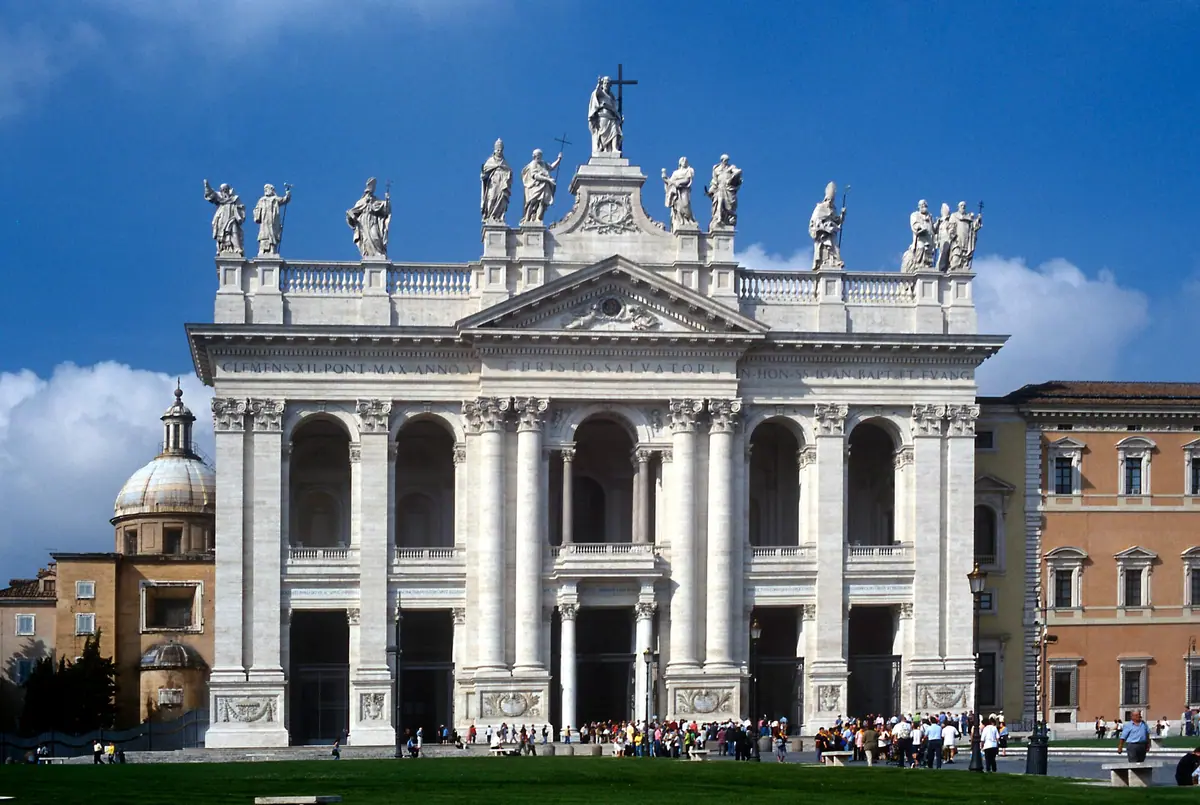
Rome's cathedral is St John Lateran, not St Peter's: the Pope is the city's bishop, and his chair stands in the apse of this basilica, built on land the emperor Constantine gave the popes in the 4th century. Entry to the basilica is free. Tickets buy you the 13th-century cloister, with its mosaic-inlaid columns, and the Lateran Palace next door, whose papal rooms opened to visitors in December 2021. The 24-hour and 72-hour Omnia Cards include the basilica and cloister with an audio guide, and the Omnia Smart includes the palace.
Before you go
- Time inside1–2 h
- ClosedPalace and cloister on Sundays
TipIf you've booked the palace's 15:00 guided tour, see the cloister first: the tour takes an hour, and the Omnia gives the cloister's closing time as 16:30.


What’s free at St John Lateran, and the tickets for the cloister and palace
Entry to the basilica of St John Lateran is free every day, and there’s nothing to book: you walk in from the square. What you pay for are the visits around it, and each has its own ticket desk. The cloister opens off the basilica’s left aisle, the Lateran Palace stands next door, and the Sancta Sanctorum, the popes’ former private chapel, shares its site with the Holy Stairs, which are free to climb.
Free, paid and booked
- Basilica
- Free, no booking
- Cloister
- €4 at its desk, or with the audio tour we sell
- Lateran Palace
- Booked day and time, with an audio guide or a guide
- Sancta Sanctorum
- €3.50, sold only on the spot
- Holy Stairs
- Free
So in the basilica itself, what a ticket buys is the cloister and an audio guide to explain both. The audio tour we sell costs €7, or less for children aged 6 to 17, and covers the basilica and the cloister with an audio guide on the Vatican&Rome app. It isn’t a guided tour, and if you’d rather skip the commentary, the cloister’s desk sells entry alone.
The Lateran Palace is the paid visit you have to book: you pick a day and a time, and your entry at that time is guaranteed. The palace ticket with an audio guide costs €15, and you go round at your own pace in about an hour. The guided tour, at €18, runs only at 15:00, in English and Italian, for groups of up to 15, with earphones, and also lasts about an hour.
Neither palace ticket gets you into the basilica’s cloister or the Sancta Sanctorum, and none of the three tickets can be refunded. Children from 6 to 17 pay less on both palace tickets. EU students aged 18 to 25 get a reduced price with the audio guide, but pay the adult price on the guided tour.


Sundays and opening hours at St John Lateran
Pick your day with care: the basilica is open every day, but the palace and the cloister both close on Sundays. The palace also closes on religious holidays, and the cloister on public holidays.
Opening hours
- Basilica
- 7:00–18:30, every day
- Cloister
- 9:00–17:00, Monday to Saturday; closed on public holidays
- Lateran Palace
- 9:00–17:00, Monday to Saturday, booked visits only; closed on religious holidays
- Palace guided tour
- 15:00, Monday to Saturday
- Holy Stairs
- 6:00–13:30 and 15:00–18:30, from 7:00 on Sundays and holidays; closes at 18:00 from November to March
- Sancta Sanctorum
- 9:00–13:30 and 15:00–17:15, Monday to Saturday; only 15:00–17:15 on Sundays and holidays
- Monday 9 November
- Feast of the basilica's dedication: expect services, and check before you go
With the 15:00 guided tour booked, see the cloister before it, as the Omnia, the diocese’s own visitor card, advises. The tour ends around 16:00, and the Omnia gives the cloister’s closing time as 16:30, which leaves very little time after it.
Which Omnia Card covers which part of St John Lateran
Three versions of the Omnia Card include the Lateran, and each covers a different part of it. The Roma Pass gets you less: a discount at the palace, and that’s all.
-
Omnia Card 24h
The basilica and the cloister with an audio guide, the same visit as our audio tour. The cloister is closed on Sundays and public holidays.
from €70
Buy pass→ -
Omnia Card 72h
The same basilica and cloister visit with an audio guide. Neither this card nor the 24-hour one includes the palace.
from €149
Buy pass→ -
Roma Pass
A reduced ticket for the Lateran Palace, and nothing for the cloister.
from €44.90
Buy pass→


The third Omnia, the Omnia Smart, is the only card that includes the palace: you choose your palace time when you buy the card, and the audio guide comes in six languages, but the cloister isn’t on it. No pass covers the Sancta Sanctorum or the palace’s guided tour.
The cards cost far more than the Lateran tickets: the 24-hour Omnia is €70, and it’s built around the Vatican Museums and a day on the hop-on hop-off bus. The Omnia Card page goes through all three versions, and Roma Pass and Rome’s other city passes puts them side by side with the rest. If you’re buying a card for the Vatican anyway, the 24-hour one is the cheaper of the two that include the cloister.
Inside the Lateran Palace, the popes’ home
The popes lived on this spot for about a thousand years, in an earlier palace, until the papacy moved to Avignon, in France, in 1309. The building you visit is the one Pope Sixtus V had rebuilt by the architect Fontana between 1585 and 1590, and he lived in it for about a year. Its main floor had been closed since 2011, and it opened to visitors on 13 December 2021, at Pope Francis’s request.
The visit covers ten rooms and some 3,000 square metres on that floor. In the Hall of the Popes, also called the Hall of the Conciliation, the Lateran Pacts between Italy and the Holy See were signed on 11 February 1929. Under the treaty signed that day, the Lateran still belongs to the Holy See, although it stands on Italian soil.
From there you go on to the Hall of the Emperors and the Hall of Constantine, named for the first Christian emperor. Last comes the private apartment, four plain rooms: a dining room, a bedroom, a library and a chapel.
Visiting the palace
- 1Before: the voucher comes by email. Keep it on your phone.
- 2Where: the palace entrance is to the right of the basilica's main facade, on Piazza di San Giovanni in Laterano. Be there 5 to 15 minutes before your time.
- 3Getting up: a grand staircase leads to the main floor, and there are lifts for visitors with serious mobility difficulties. A wheelchair can be reserved free by email.
- 4Photos: allowed, without flash.
Inside St John Lateran, the cathedral of Rome
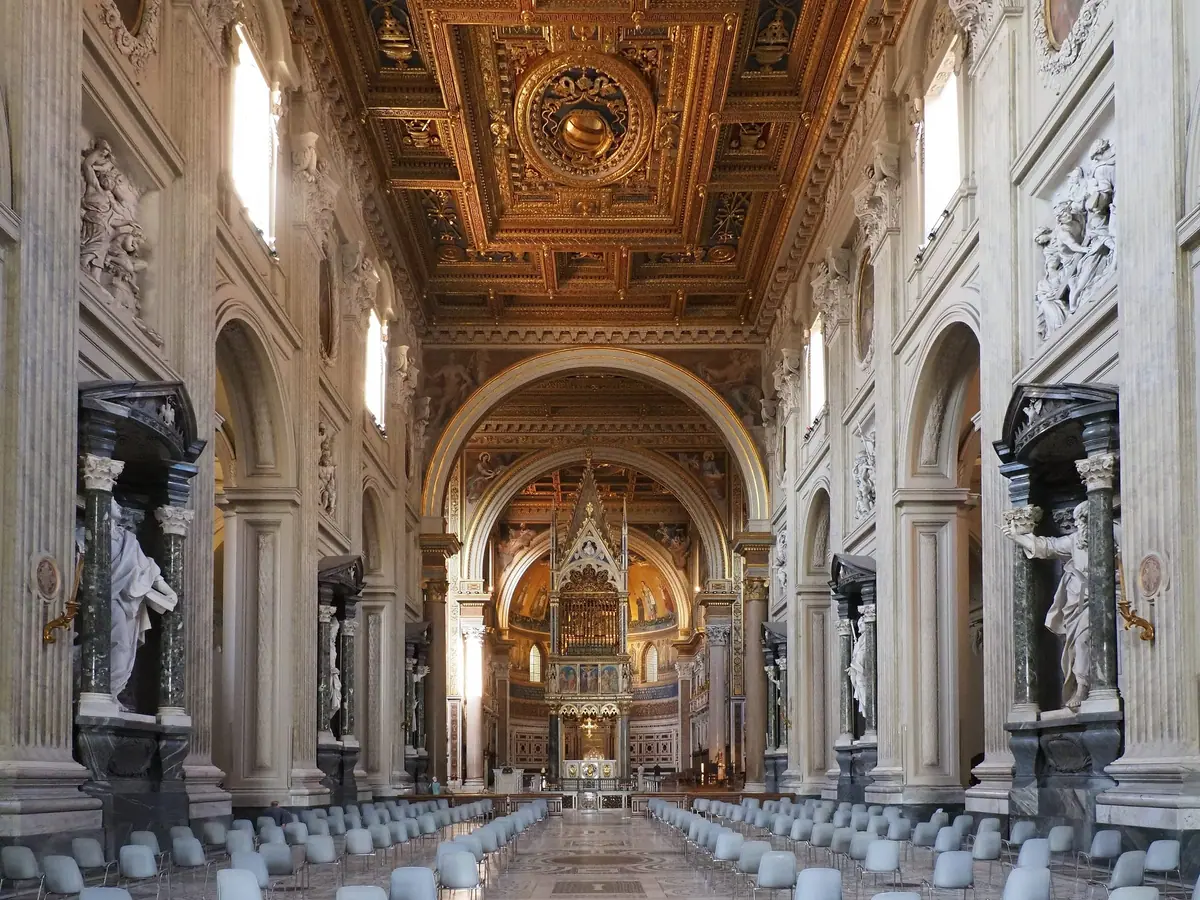
Next door, the basilica holds the reason St John Lateran, and not St Peter’s, is Rome’s cathedral: the Pope’s chair. The Pope is the bishop of Rome, and his cathedra, the bishop’s chair, stands here in the apse. Every newly elected pope has to come and take possession of it, and Leo XIV did so on 25 May 2025.
The facade says it in Latin: “Omnium urbis et orbis ecclesiarum mater et caput”, mother and head of all the churches of the city and the world. The church goes back to the emperor Constantine, who after his victory at the Milvian Bridge in 312 gave the Pope this land, where the barracks of his rival Maxentius’s guard had stood. It was consecrated in the 4th century, and the nave and facade you see now come from later rebuildings.
Borromini rebuilt the nave for Pope Innocent X, for the Jubilee of 1650. The statues of the Twelve Apostles along it are from the 18th century, like Galilei’s facade, built for Pope Clement XII in the first half of that century. The papal altar is older, under a ciborium, a canopy on columns, from 1368.
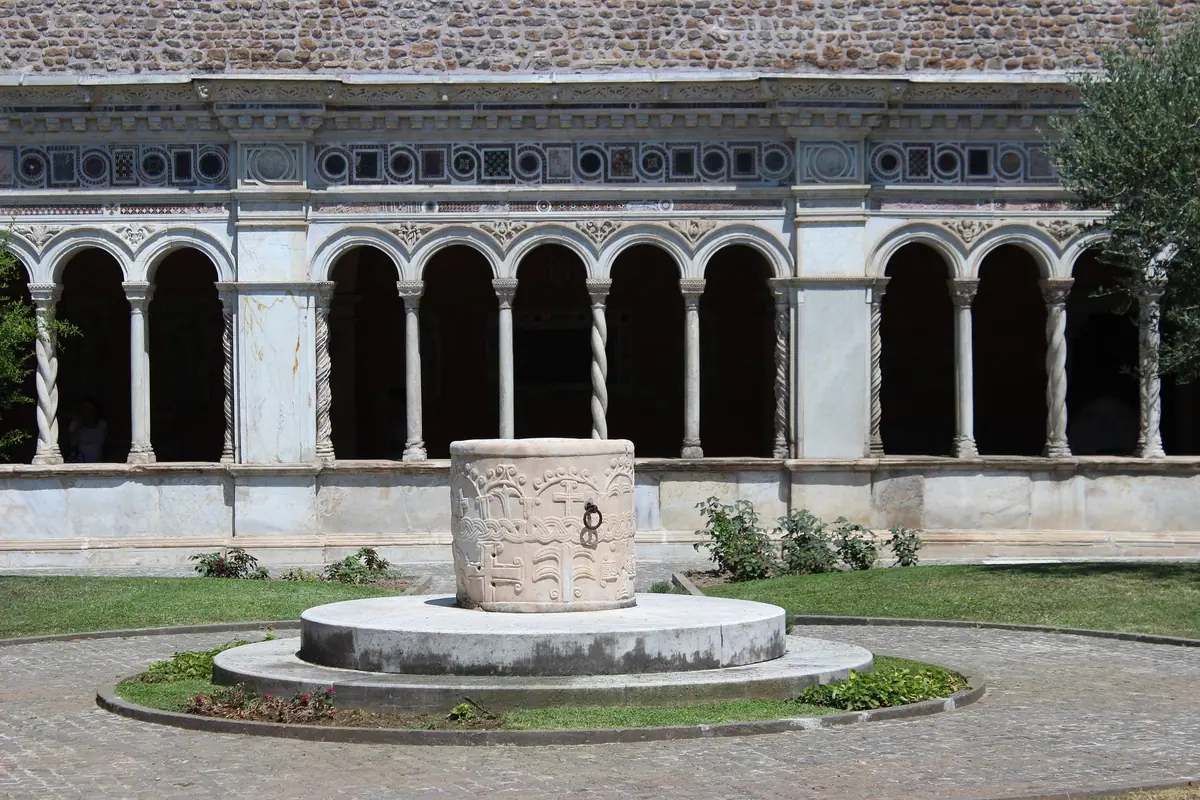
From the left aisle you walk into the cloister, begun in 1222 under Pope Honorius III by the Vassalletto family of marble workers. Its columns are twisted and inlaid with mosaic, and it’s the part of the basilica your ticket pays for.
The Holy Door is closed again. It only opens in a Jubilee year, and this one was opened on 29 December 2024 and closed on 27 December 2025; St John Lateran’s was the first Holy Door opened for a Jubilee, in 1423. If you’re coming with a wheelchair, two ramps lead up from the square, three platforms take you through the portico, past the Holy Door, and one more inside goes up to the transept.
The Holy Stairs and the Sancta Sanctorum
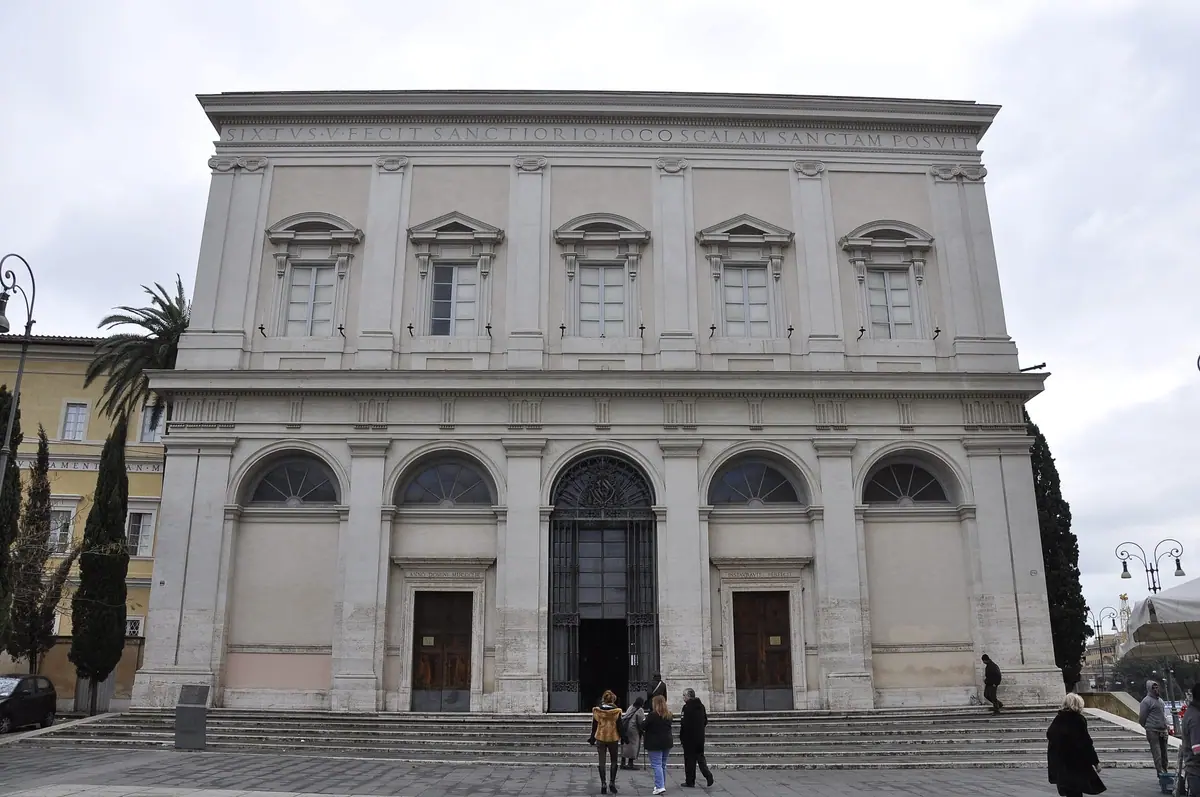
The Holy Stairs are 28 marble steps, covered in wood, that you may only climb on your knees and in silence. If you’d rather walk up, there are stairs at the sides. Climbing them is free.
The Sancta Sanctorum was the popes’ private chapel. It keeps an image of Christ called acheiropoieta, “not made by human hands”, and frescoes painted between 1277 and 1280. Entry is €3.50, or €3 for ages 6 to 18, university students, the over-65s and groups, and tickets are sold only there.
At the Holy Stairs and the Sancta Sanctorum
- 1Dress: shoulders and knees covered. The basilica publishes no dress code of its own, but guides give it the same rule, so if you dress for the stairs you're set for the whole visit.
- 2Photos: none, and no filming or video calls either.
- 3Access: the Holy Stairs aren't accessible to wheelchairs.
St John Lateran by metro: line A to San Giovanni
The metro is the simple way: line A stops at San Giovanni, about five minutes on foot from the palace.
City buses 81 and 117 come this way too, and if you have the Omnia, its hop-on hop-off Open Bus stops here at stop 10. From the Colosseum it’s about 1.2 km as the crow flies.
Tickets
Popular tickets around Rome
The ones other visitors book most.


People also ask
Frequently asked questions
Is St John Lateran free to visit?
Yes, the basilica is free every day and you don't need to book. You pay for the visits around it, each at its own desk: the cloister, the Lateran Palace and the Sancta Sanctorum chapel. The Holy Stairs are free.
Can you visit the Lateran Palace?
Yes, since 13 December 2021, and only with a booking for a set day and time. It's open Monday to Saturday from 9:00 to 17:00 and closed on Sundays and religious holidays. You go round with an audio guide, or on the guided tour, which runs only at 15:00, in English and Italian.
Why is St John Lateran the cathedral of Rome, and not St Peter's?
Because the Pope is the bishop of Rome, and this is the church where his bishop's chair, the cathedra, stands. Every newly elected pope has to take possession of it here; Leo XIV did so on 25 May 2025.
Is the Holy Door at St John Lateran open?
No. It only opens in a Jubilee year: it was opened on 29 December 2024 and closed again on 27 December 2025.
Do you have to climb the Holy Stairs on your knees?
On the Holy Stairs themselves, yes: the 28 steps are climbed only on your knees and in silence. If you'd rather walk up, there are stairs at the sides. Climbing is free, with shoulders and knees covered.
