
Naples · Campania Artecard
Paestum
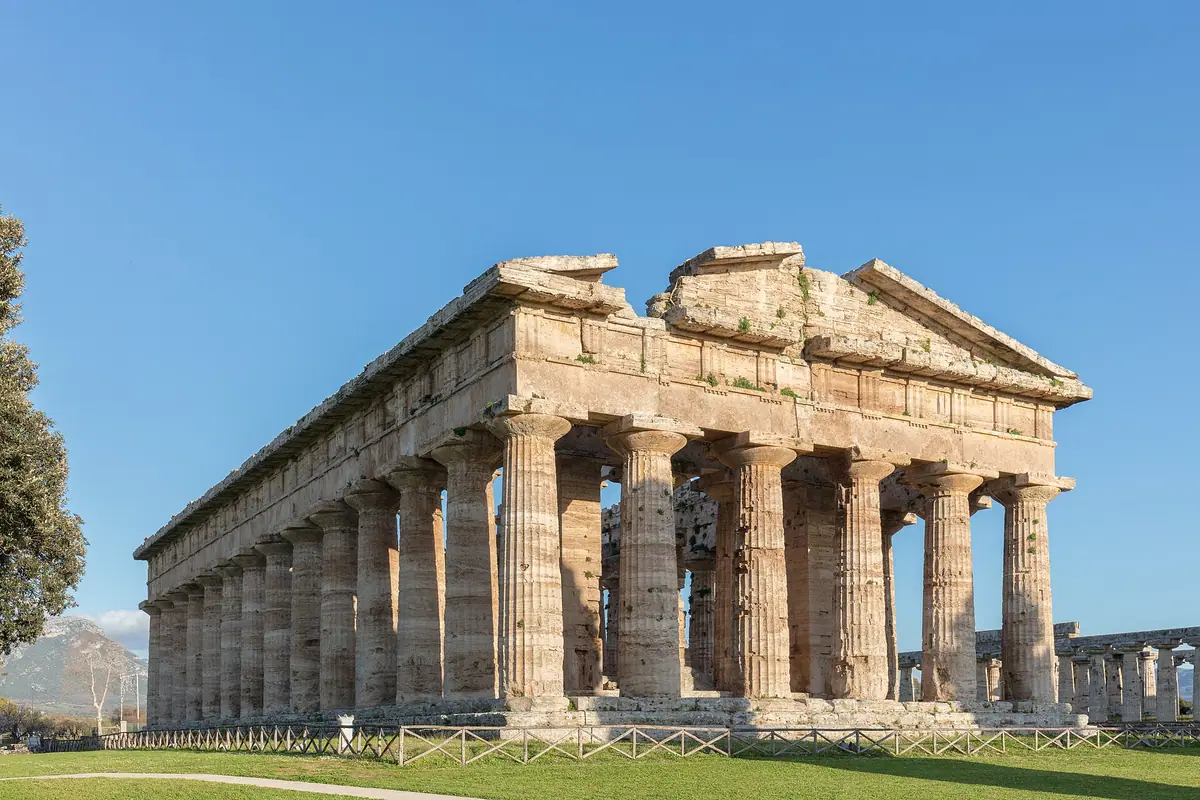
The oldest of Paestum's three Doric temples had already stood for about a century when the youngest was built.
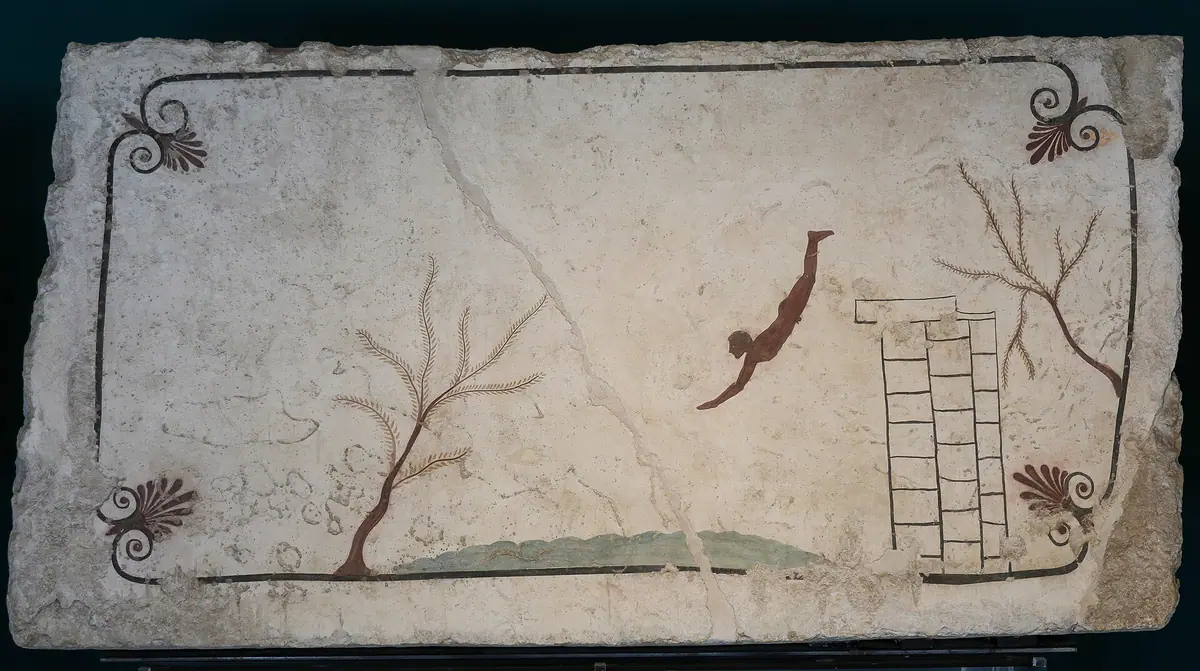
Paestum, an hour and a half south of Naples by train, has three Greek temples built between about 550 and 450 BC, among the best-preserved Doric temples anywhere in the Greek world, standing inside the walls of a city founded as a Greek colony. By the entrance, the museum keeps the painted Tomb of the Diver, and its new route now takes in the necropolises and painted tombs as well. Our guided tour covers the temples and the museum with an archaeologist.
Before you go
- Time inside2–3 h
- OpenEvery day
TipFrom 14 November the last full visit of the archaeological area is at 15:00, so see the temples first and the museum afterwards, which stays open until 19:00.


Paestum tickets: an archaeologist’s tour, or entry with the train
You don’t have to book Paestum, and the park runs no tours of its own: the guides come from outside, licensed by the Campania region. The tour we sell is two hours on foot with an archaeologist, and it costs €39.50, with skip-the-line entry to the park and to the National Archaeological Museum of Paestum included. You pick an English or an Italian tour when you book, and you can cancel up to 24 hours before it starts.
To go round on your own instead, entry with the return train from Naples costs €44. That one can be cancelled up to 30 days ahead, and it has a reduced option for EU citizens aged 18 to 24.
Under-18s go in free at the park; on both of our tickets they still have their own option at checkout, since what you’re booking includes the guide or the train.


The park opens to everyone for free on the first Sunday of the month, with nothing to book.
Two Naples cards that include Paestum
On the Campania Artecard, the park and the museum are included in the 365 Lite and the 365 Gold, or you can make Paestum one of the five sites on the 7-day card. The 365 Lite is the version we’d look at: for €31 it lasts a year from your first entry and covers the region’s big state sites, Pompeii and Herculaneum among them, so the temples become one stop of several.
The Naples Museum Card lists Paestum too, along with Pompeii, Herculaneum and Caserta, for seven days from first use. Neither card includes a guide, and only adults need a card; the rest of the comparison is on Naples Pass and Naples city passes.


Paestum opening hours, and the gate that shuts early this winter
The park opens every day from 8:30 to 19:30, with the last entry to the archaeological area at 18:30 and to the museum at 19:00. Until late March, though, the Porta Cerere, the gate that lets ticket holders in and everyone out, closes in the afternoon, and once it has shut the only part of the ancient city you can visit is the southern sanctuary. To see the whole site, be in by the time of the last full visit, 15:30 for now and 15:00 from 14 November.
Porta Cerere this winter
- 25 October to 13 November
- Closes 16:30; last full visit 15:30
- 14 November to 1 January
- Closes 16:00; last full visit 15:00
- 2 to 22 January
- Closes 16:30; last full visit 15:30
- 23 January to 12 February
- Closes 17:00; last full visit 16:00
- 13 February to 12 March
- Closes 17:30; last full visit 16:30
- 13 to 28 March
- Closes 18:30; last full visit 17:00
So in winter, see the temples first and leave the museum for last: it takes visitors until 19:00, long after the gate has closed.
The ground is level, and the park asks for flat shoes. Inside you can’t eat, drink or smoke (e-cigarettes included), walk round in a swimsuit, play music through a speaker or carry a bulky backpack, and you keep to the marked paths. The museum is fully accessible, and a step-free route runs north to south through the site and into the oldest temple; the guided tour isn’t set up for wheelchairs, according to its listing.
The three Doric temples of Paestum
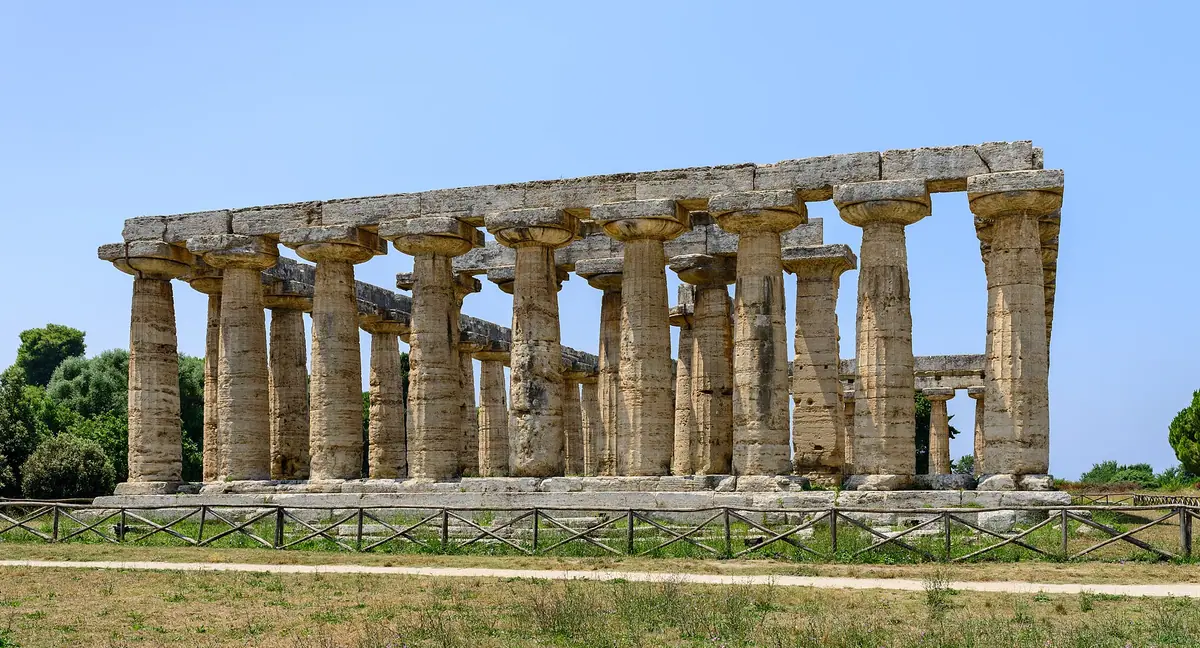
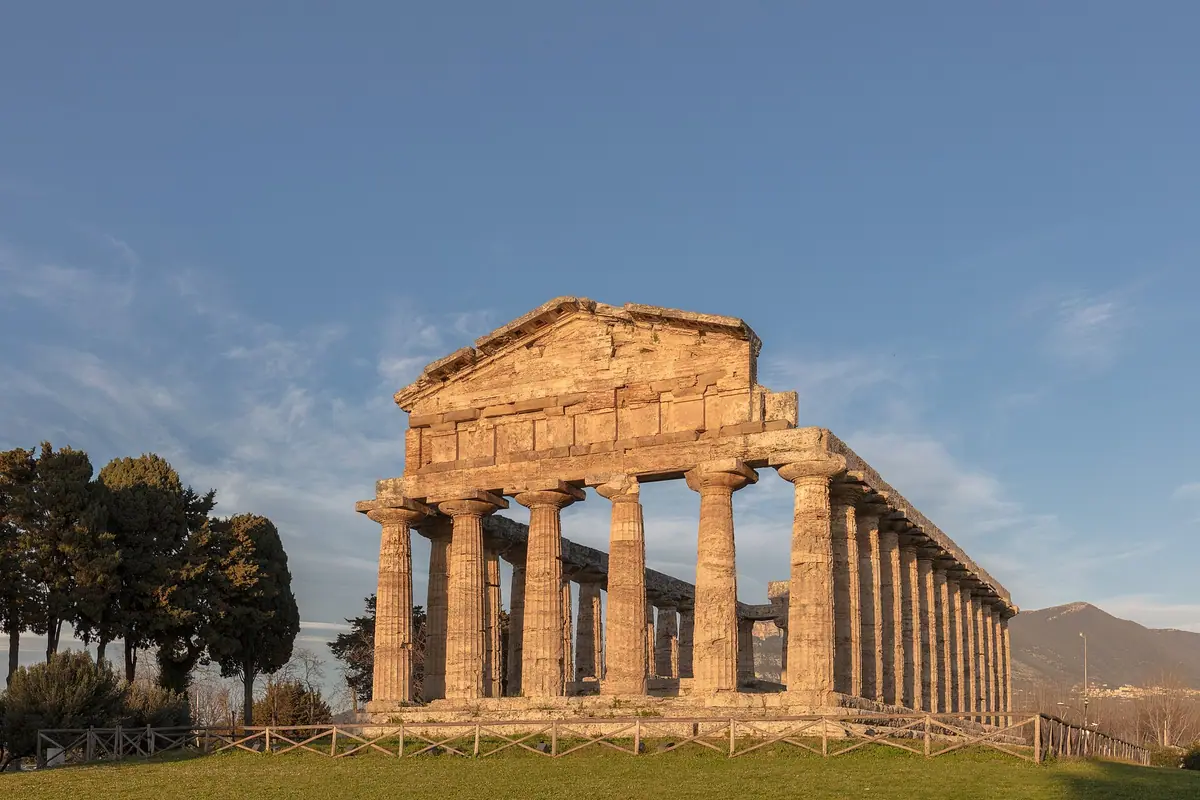
The temples go by two sets of names, and you’ll hear both. The oldest, from about 550 BC, was long called the Basilica and is also known as the first Temple of Hera; the Temple of Athena, from about 500 BC, used to be the Temple of Ceres. The youngest, the second Temple of Hera from about 450 BC, is the one older guides call the Temple of Neptune, and so does the listing for our tour.
Between them lies the rest of the city, ringed by its Roman walls and gates. In the middle stands the Heroon, a memorial tomb from about 520 BC; nearby is the Ekklesiasterion, a round assembly place from about 480 BC with room for some 500 people; and then come the Roman Forum, the amphitheatre, the Via Sacra and the houses. A large part of the Roman town has never been dug.
Paestum began as a Greek colony and later passed to the Lucanians, a people of southern Italy, and then to Rome. From the 17th to the 19th century it was a regular stop on the Grand Tour, the long journey through Italy that well-off Europeans made to see its antiquities.
The Tomb of the Diver and the Paestum museum
The museum, by the main entrance, holds the painted slabs of the Tomb of the Diver, the metopes from the Sele, carved panels from a temple frieze, and what was found inside the Heroon. Its new route now adds the necropolises, more painted tombs, the surrounding territory and the latest excavations.
Getting to Paestum by train from Naples or Salerno
Paestum has its own station on the regional line, and from there it’s a 10-minute walk through a gate in the walls to the main entrance and the museum. The station has no ticket office, so buy your return before you set out.
Getting to Paestum
- Regional train
- About 1h30 from Naples, 30 minutes from Salerno
- CSTP bus 34
- From Salerno, about an hour
- By car
- A3 motorway, exit Battipaglia or Eboli; park at the Parcheggio Voza, by the archaeological area
There are restaurants in the modern town around the museum, and mozzarella di bufala is made locally.
City cards
Paestum with a city card
Pick the one that fits your trip. Prices are per adult, and you choose your dates on the next page.


Tickets
Popular tickets around Naples
The ones other visitors book most.


People also ask
Frequently asked questions
What is Paestum, Italy known for?
For three Doric temples built between about 550 and 450 BC, among the best preserved in the Greek world, and for the Tomb of the Diver, a painted Greek tomb in the site's museum. Paestum has been a UNESCO World Heritage Site since 1998.
Which is the oldest temple at Paestum?
The one long known as the Basilica, also called the first Temple of Hera, from about 550 BC. The Temple of Athena, the old 'Temple of Ceres', followed around 500 BC, and the second Temple of Hera, once the 'Temple of Neptune', around 450 BC.
How long does it take to see Paestum?
There's no official figure. We'd allow an hour and a half to two hours for the temples and the rest of the ancient city, and half an hour to an hour for the museum. Our guided tour takes two hours.
Is Paestum open every day?
Yes, with no weekly closing day, from 8:30 to 19:30. Until 28 March 2027, though, the Porta Cerere gate shuts in the afternoon, and once it has shut only the southern sanctuary can be visited.
How do I get from Naples to Paestum?
By regional train to Paestum station, about an hour and a half from Naples, and then a 10-minute walk to the main entrance. The station doesn't sell tickets, so buy the return before you leave.
