
Naples · Campania Artecard
Herculaneum
The heat that buried the town turned its wood to charcoal, which is how beams, upper floors and a boat over nine metres long survived.
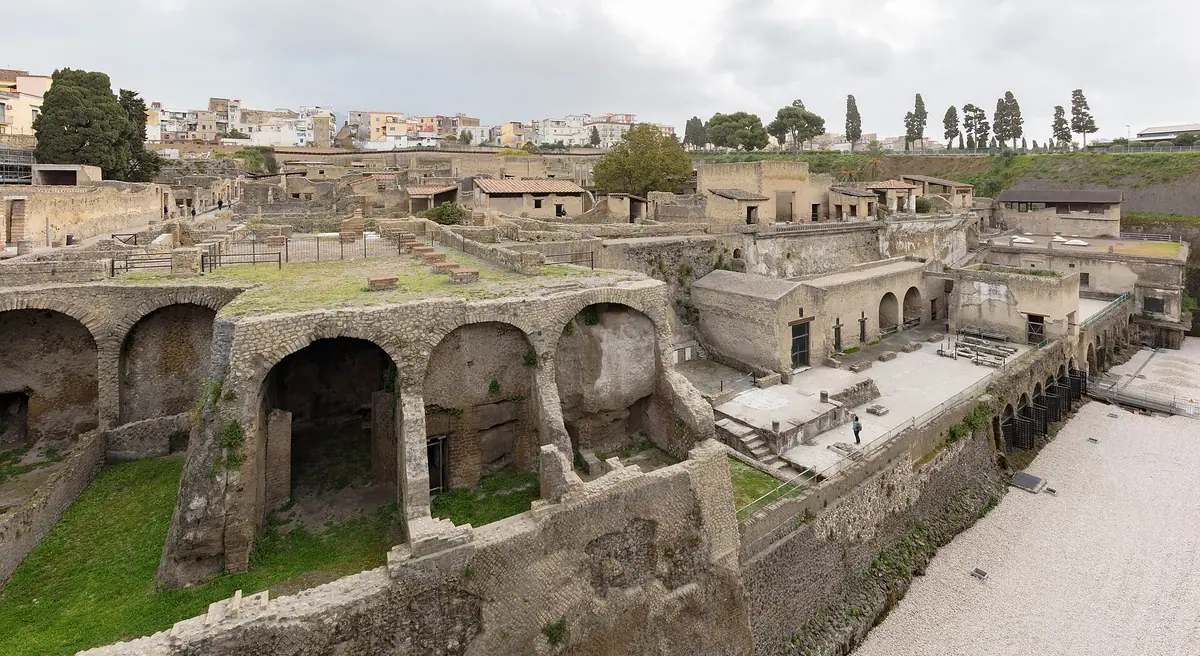
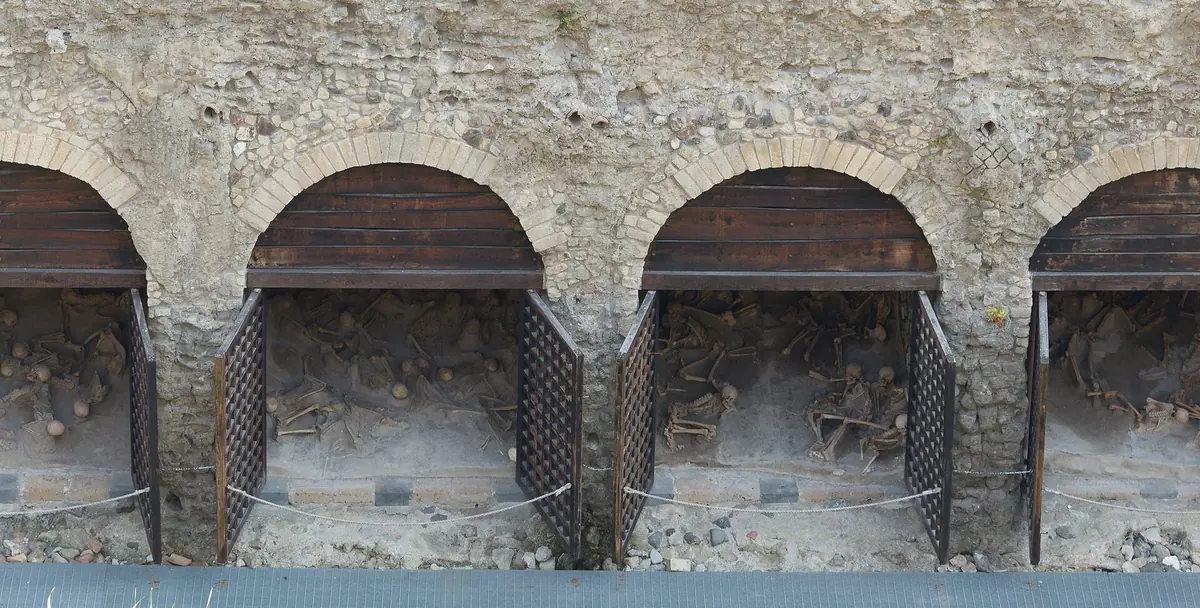
At Herculaneum, near Naples, Roman houses still have their upper floors, wooden beams and furniture, and down on the ancient beach you see the arches where about 300 skeletons were found in 1980. Vesuvius buried the town in AD 79, and about 4 of its estimated 20 hectares have been dug out; the rest lies under modern Ercolano. You don't need to book, and the ticket we sell comes with an audio guide app for your phone.
Before you go
- Time inside2–3 h
- OpenEvery day
TipIn winter the last entry is at 15:30 and everyone must be out by 16:40; bags over 30 x 30 x 15 cm go in the free cloakroom.


Herculaneum on the Campania Artecard
Both the Campania Artecard and the Naples Museum Card include Herculaneum, and both add Pompeii, the Archaeological Museum and Caserta. How they compare with the other cards is on Naples Pass and Naples city passes.


Herculaneum tickets with no booking, and an audio guide on your phone
Card or ticket, Herculaneum doesn’t ask you to book a time. You buy the ticket, show the QR code on your phone at the gate and go in. It’s good for one entry, so don’t plan on popping out for lunch.
Our Herculaneum ticket costs €19.50 and comes with an audio guide app you download to your phone. You can cancel it before your visit date. Under-18s go in free, and on the ticket we sell they have their own option at checkout, with the same audio guide app. Children under 12 must be with an adult.
For a guide in person, the entry with a guided tour costs €44.50 and includes fast entry. One of its options adds the return trip from Naples. It can’t be cancelled.
 Entry ticketHerculaneum: Entry Ticketfrom€19.50Buy→
 Guided tourHerculaneum: Entry Ticket + Guided Tourfrom€44.50Book tour→
 Guided tourPompeii & Herculaneum: Fast Track Ticket + Guided Tourfrom€99.75Book tour→
 Day tripHerculaneum & Mount Vesuvius: Skip The Line Ticket + Roundtrip from Naplesfrom€95Book tour→
Entry is free on the first Sunday of each month, the next being 6 December. Nothing can be booked online on those days, so you collect the free ticket at the ticket office.
Herculaneum opening hours and what’s open now
The park opens every day, public holidays included, and has kept its winter hours since 15 October. You leave through the gates on Corso Resina or Via dei Papiri Ercolanesi.
Opening hours
- 15 October to 15 March
- 8:30–17:00, last entry 15:30, out by 16:40
- 16 March to 14 October
- 8:30–19:30, last entry 18:00, out by 19:00
- Closed
- 25 December; 1 January 2027 not yet announced
Give it two to three hours, which covers the streets, the baths, the shore and the Antiquarium without rushing. Some parts of the site are on special terms at the moment, and the Villa of the Papyri is closed:
Open, closed and partly open
- Ancient theatre
- Accompanied visits in groups of 10, on Wednesdays and Saturdays until 9 November, at six times from 9:30 to 16:30, some in English
- Villa of the Papyri
- Closed for works, with no reopening date
- House of the Bicentenary
- Partly open since 8 August 2026: the atrium and the tablinum, the main reception room
- Bottega di Priapo
- Reopened in October 2026, with the block beside it
The theatre visit is the one to catch if your dates allow. It runs on Wednesdays and Saturdays until 9 November, so only Wednesday 4 and Saturday 7 November are left. It takes you more than 20 metres down, through the tunnels dug under the Bourbon kings in the 18th century, to the theatre itself, found in 1738. Ask about it at the ticket office when you arrive.
Before you go in
- 1Footwear: closed, comfortable shoes. The park advises against heels and flip-flops on the old paving.
- 2The cloakroom: backpacks and umbrellas bigger than 30 × 30 × 15 cm are left there, free of charge.
- 3Food and water: no eating outside the designated areas, so eat before you go in and bring water. No bikes, scooters or drones either.
- 4Step-free route: the Ercolano per tutti path is marked in blue on the map, and the staff at the entrance will point you to it.
What you see at Herculaneum, from the streets down to the old shore
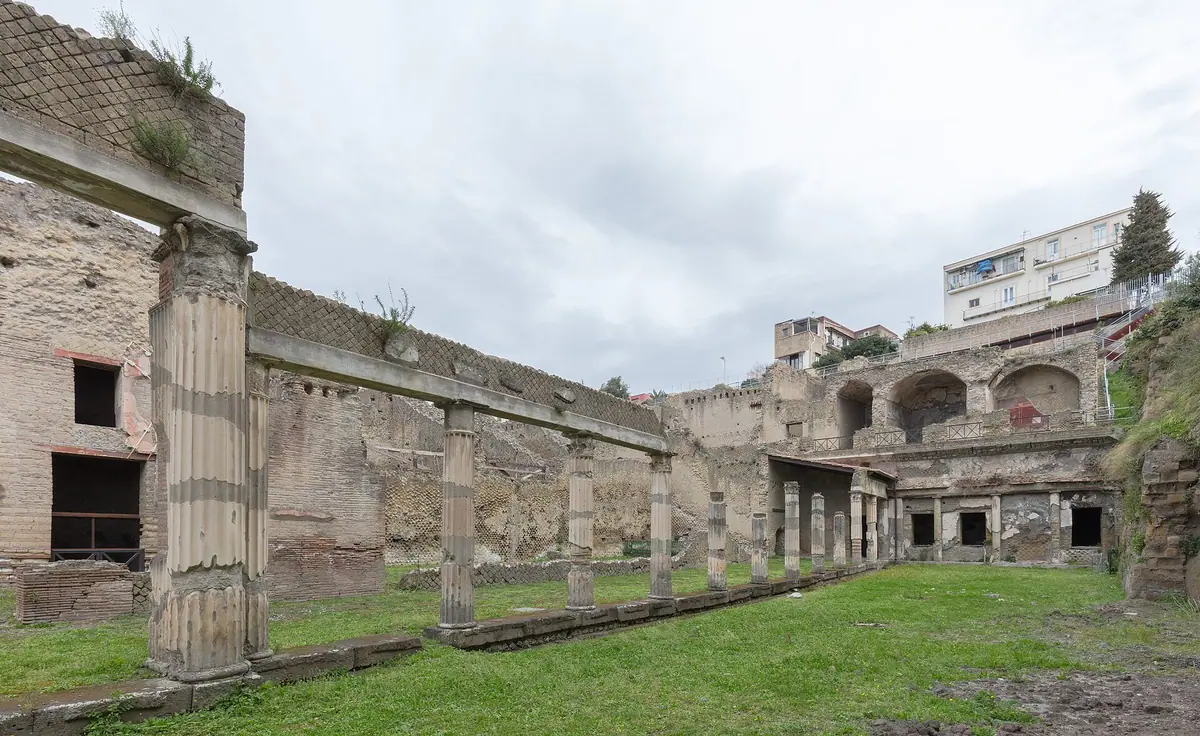
The streets run parallel to the old coastline, between blocks of houses, with modern Ercolano rising right above the excavation. Among the public buildings uncovered are the Palestra, the exercise ground, with its cross-shaped pool; the Central Baths, with separate sections for men and women; and the College of the Augustales, the body that ran the cult of the emperor.
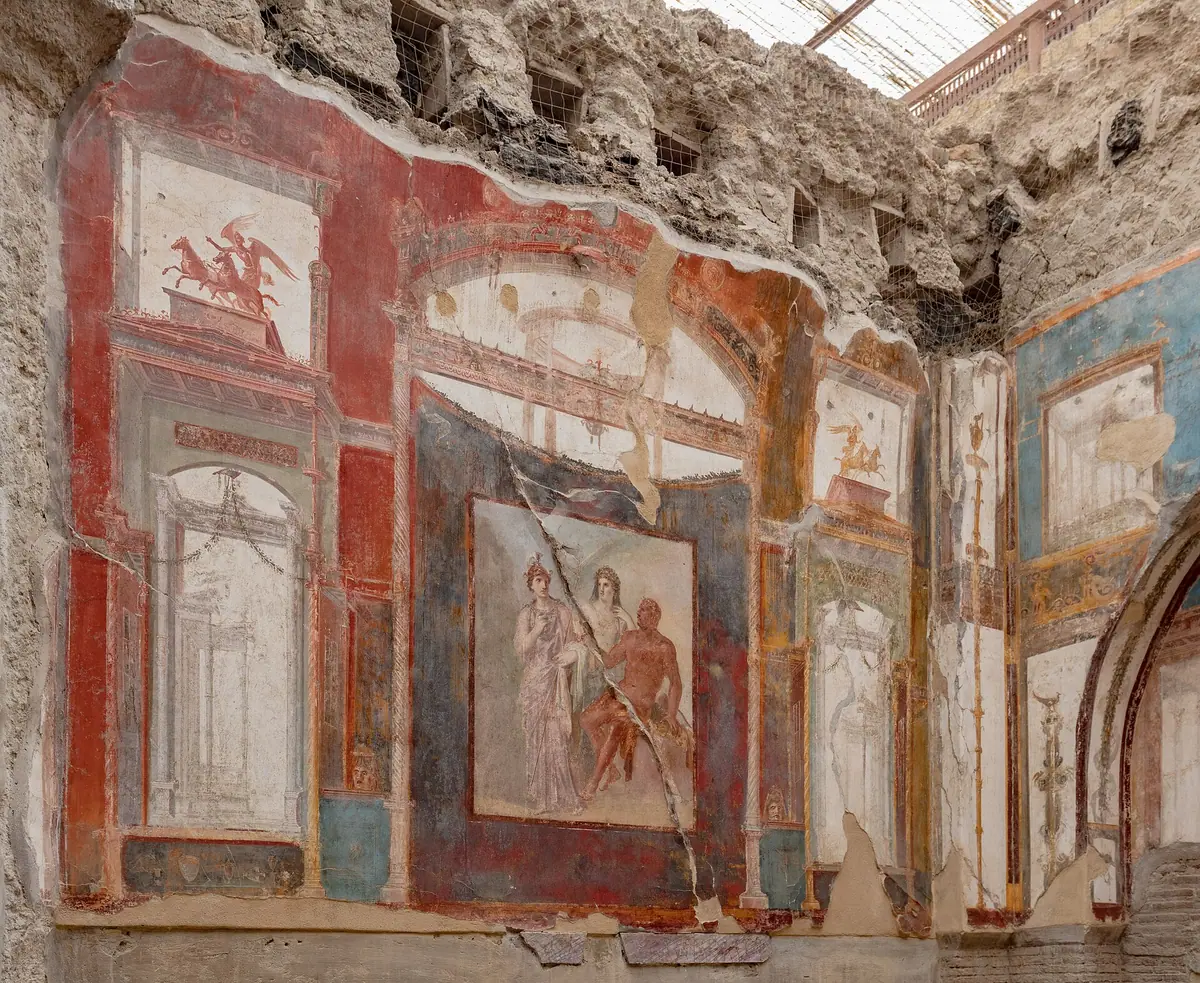
The Sanctuary of Venus stands by the terrace with the statue and altar of Marcus Nonius Balbus, a patron of the town. The Antiquarium shows a bronze Hydra of Lerna, sculptures from the garden of the House of the Stags and frescoes from the Villa of the Papyri.
Down on the ancient beach are the fornici, the vaulted chambers where about 300 skeletons were found in 1980. Nearby, in its own pavilion, is a carbonised boat more than nine metres long, probably a military launch.
Herculaneum or Pompeii, or both in one day
If you only have time for one, Herculaneum is the smaller and less tiring of the two, with houses that kept their upper floors. Pompeii has 44 hectares dug out, with the amphitheatre and the Villa of the Mysteries. They’re separate parks, each with its own ticket office, and there’s no joint ticket.
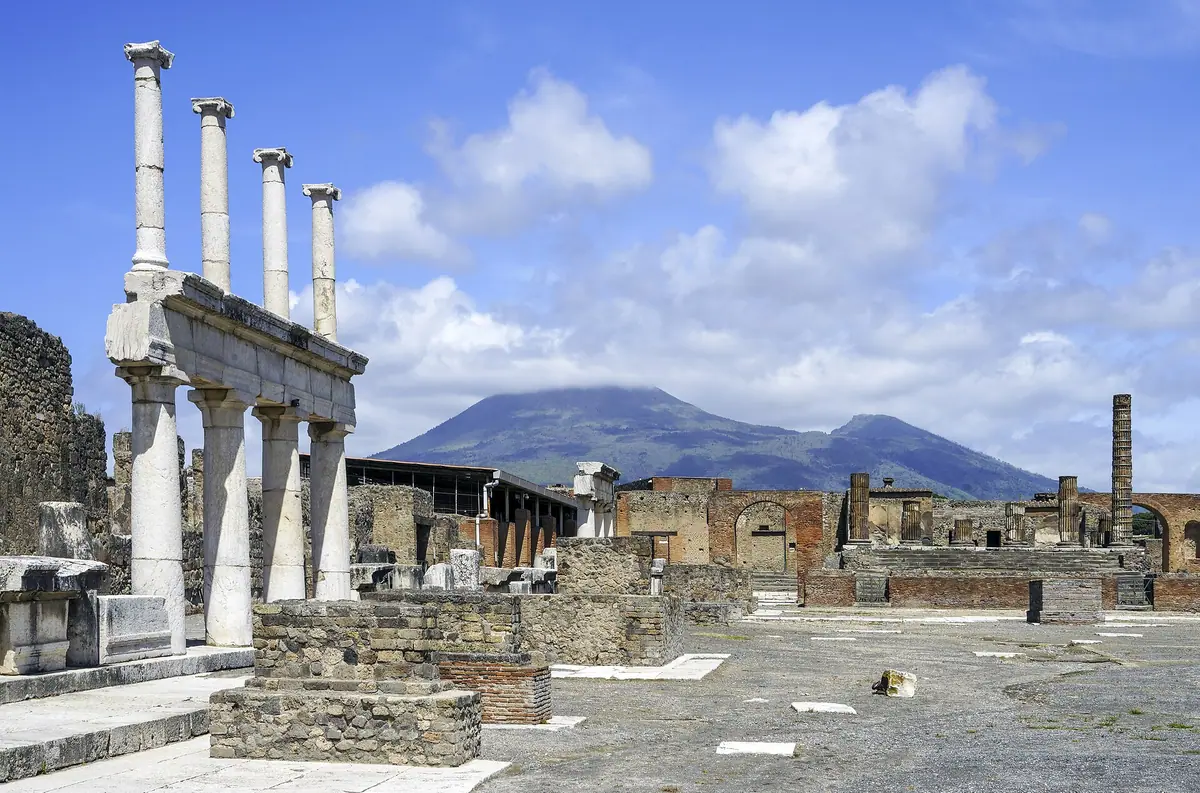
Both are on the same Circumvesuviana line, and Pompeii is 21 minutes further along. In winter, both let in their last visitors at 15:30, so for the pair start at Herculaneum when it opens at 8:30 and move on to Pompeii around midday. We also sell a guided tour of the two together, at €99.75.
How Herculaneum was found by a man digging a well
In 1738 a farmer, Ambrogio Nucerino, known as Enzechetta, was digging a well when he struck the theatre. It was the first monument found at any of the Vesuvian sites in the 18th century. Charles of Bourbon, then king of Naples, had the town explored through shafts and tunnels about 20 metres down, the same tunnels the theatre visit uses today.
Digging in the open air only began in 1927, under the archaeologist Amedeo Maiuri, who rebuilt parts of the town and presented it as an open-air museum, perhaps the first in Europe. The 1980s brought the ancient beach, the skeletons and the boat. The Villa of the Papyri, now closed, gave the town its other famous find: more than 1,800 papyrus scrolls, charred by the same heat.
The train to Herculaneum: the Circumvesuviana to Ercolano Scavi
Naples to Ercolano Scavi
- 1Board a Sorrento train at Napoli Garibaldi, by the central station. Since 17 October 2026 Ercolano Scavi is a stop for every one of them, and they run every 30 minutes.
- 2The ride: about 15 minutes, €2.60 one way.
- 3Get off at Ercolano Scavi. Ercolano has a second station, on Trenitalia's Naples to Salerno line, with no signs to the site.
- 4Walk 6 minutes to the entrance at Corso Resina 187.
Coming by car, there’s a municipal car park at Via dei Papiri Ercolanesi 19 and several private ones. From the airport, take the Alibus to the central station and the train from there.
Ercolano Scavi is also where the taxis and shuttles up Vesuvius start, and a day from Naples with Herculaneum and Vesuvius costs €95. In the town, the MAV is a private museum of virtual archaeology, separate from the park, with tickets from €11.
City cards
Herculaneum with a city card
Pick the one that fits your trip. Prices are per adult, and you choose your dates on the next page.


Tickets
Popular tickets around Naples
The ones other visitors book most.


People also ask
Frequently asked questions
Do I need to book tickets for Herculaneum?
No, booking isn't required, and you show the ticket on your phone at the gate. On the free days, the first Sunday of each month, the next being 6 December, nothing can be booked online: you collect the free ticket at the ticket office.
How is Herculaneum different from Pompeii?
Herculaneum went under flows of hot gas and rock, which turned its wood to charcoal and kept upper floors, beams and furniture, while Pompeii was buried mainly in ash and small volcanic stones. Herculaneum is also much smaller, with about 4 hectares excavated against Pompeii's 44, so it's a calmer visit of two to three hours. They are separate parks, with no joint ticket.
How long do you need at Herculaneum?
Two to three hours for the site and the Antiquarium. Add time for the ancient theatre if your visit falls on Wednesday 4 or Saturday 7 November 2026, the last two days of its visits. In winter the last entry is at 15:30 and everyone has to be out by 16:40.
Is Herculaneum open every day?
Yes, from Monday to Sunday, public holidays included, and it closes on 25 December. Opening on 1 January 2027 hasn't been announced.
How do I get from Naples to Herculaneum?
Take a Sorrento train on the Circumvesuviana from Napoli Garibaldi and get off at Ercolano Scavi, about 15 minutes on. A single costs €2.60, and from the station it's a 6-minute walk to the entrance at Corso Resina 187.
