
Naples
Mount Vesuvius
A silver lichen has grown over the lava of 1944 that you pass on the way up.
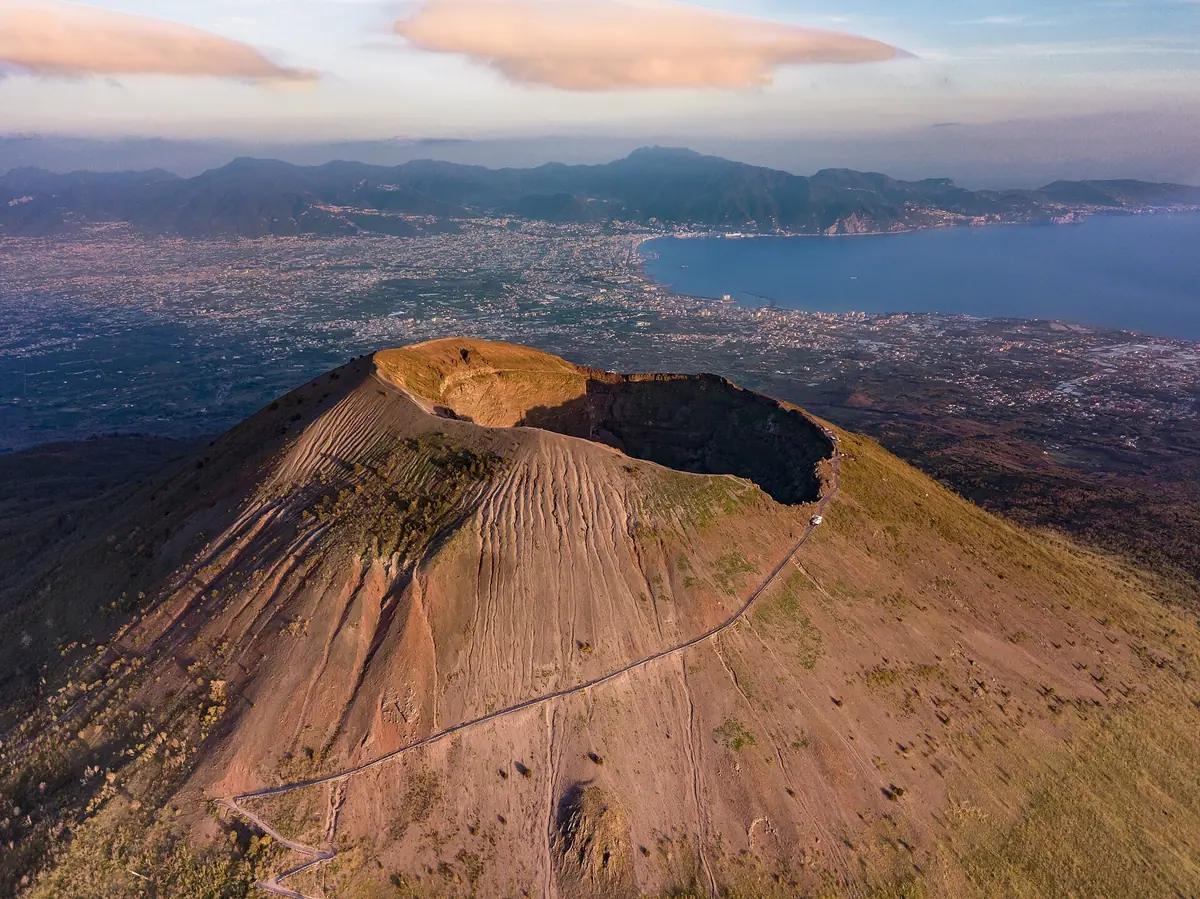
You can walk up to the crater of Mount Vesuvius, the volcano above Naples that buried Pompeii and Herculaneum in AD 79: a 4-kilometre round trip to 1,175 metres, with fumaroles on the walls of a crater 580 metres across and Sorrento and Capri in the view. Vesuvius is quiet but not extinct, and every ticket is for a 10-minute time slot, bought before you go, because there's no ticket office on the mountain.
Before you go
- Time inside2.5–4 h
- OpenEvery day
- EntryTimed slot
TipThere is no ticket office on the mountain, so buy the ticket for a 10-minute time slot online first; from November to February the last entry is at 15:00.


Mount Vesuvius tickets: a 10-minute slot, booked before you go
The park puts the slots on sale 30 days ahead, 50 tickets per slot, up to 2,160 a day from November to February.
Our crater ticket costs €21.60, for the slot you pick as you book, and it can’t be cancelled. At the start of the trail, an automatic turnstile lets you in from 120 minutes before your slot to 120 minutes after it, so the slot is a window rather than a deadline, though the window isn’t guaranteed close to the last access of the day.
The other tickets below add the ride up. The entry with a return trip from Ercolano on the Vesuvio Express costs €31, takes three hours, and can be cancelled up to 24 hours before your slot. From Naples, the entry comes with a return trip and a volcanologist guide, and it can’t be cancelled.


Vesuvius opening hours and the orange-alert closures
Vesuvius has no weekly closing day. The hours below are the times you can start up the crater trail.
Access to the crater
- November to February
- 9:00–15:00
- March and October
- 9:00–16:00
- April to June, and September
- 9:00–17:00
- July and August
- 9:00–18:00
- Closed
- Whenever Italy's Civil Protection issues an orange weather alert
The weather is the thing to watch. When the Civil Protection department puts out an orange alert, the park shuts the trail and stops selling, and in October 2026 that happened from 8 to 10 October and again for the whole of 21 October. On the morning of 25 October it closed for a cycling race. The park posts its closures among its notices, so look there and at the Civil Protection alert the day before you go, and again that morning.
Getting up Vesuvius from Naples, Ercolano or Pompeii
The road stops short of the trail. The car park is at 800 metres, and the crater trail starts at the square at 1,000 metres, called quota 1000, which has no parking and, for now, no public toilets.
The ways up
- 1By car: leave the A3 motorway at Torre del Greco and follow the SP144 for 7.3 kilometres, about 15 minutes, to the municipal car park at 800 metres. Book the parking once you have your crater ticket.
- 2From the car park: walk 1.8 kilometres, about 30 minutes, up to quota 1000, or take the town's shuttle, €1 each way.
- 3By train to Ercolano: the Circumvesuviana, the local railway, stops at Ercolano Scavi, where taxis and shuttles leave for the volcano, among them the Vesuvio Express sold with the entry above.
- 4By train to Pompeii: get off at Pompei Scavi-Villa dei Misteri and take EAV bus 808, the Vesuvio Link, for €2.40 each way.
Walking up to the crater of Vesuvius
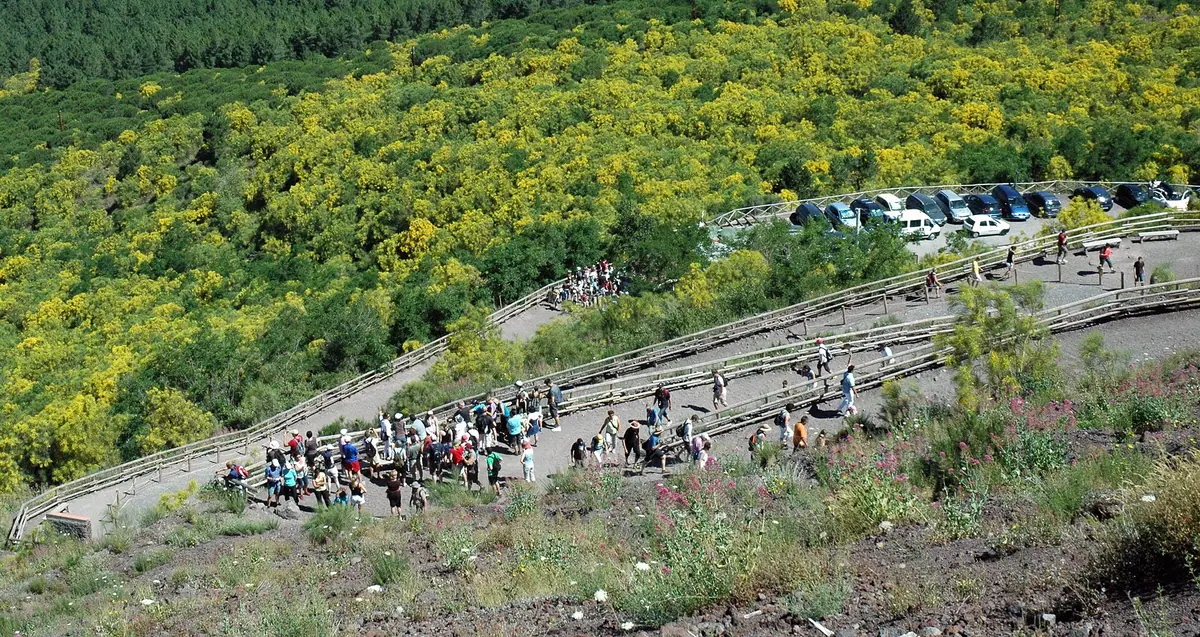
The path to the crater, trail number 5 on the park’s map, starts at 1,000 metres and climbs to 1,175 over 4 kilometres there and back. The park rates it easy and gives it two and a half hours. It rises in wide bends, with Monte Somma, the rim of the older volcano, and the valleys below it, the Valle del Gigante and the Atrio del Cavallo, opening up beside you.
The whole trail is above 1,000 metres, so you walk in groups of 20 with the park’s volcano guides, the Presidio Permanente Vulcano Vesuvio. On the slopes you pass the lava of the 1944 eruption, the last one, now covered in a silvery lichen, Stereocaulon vesuvianum, and broom.
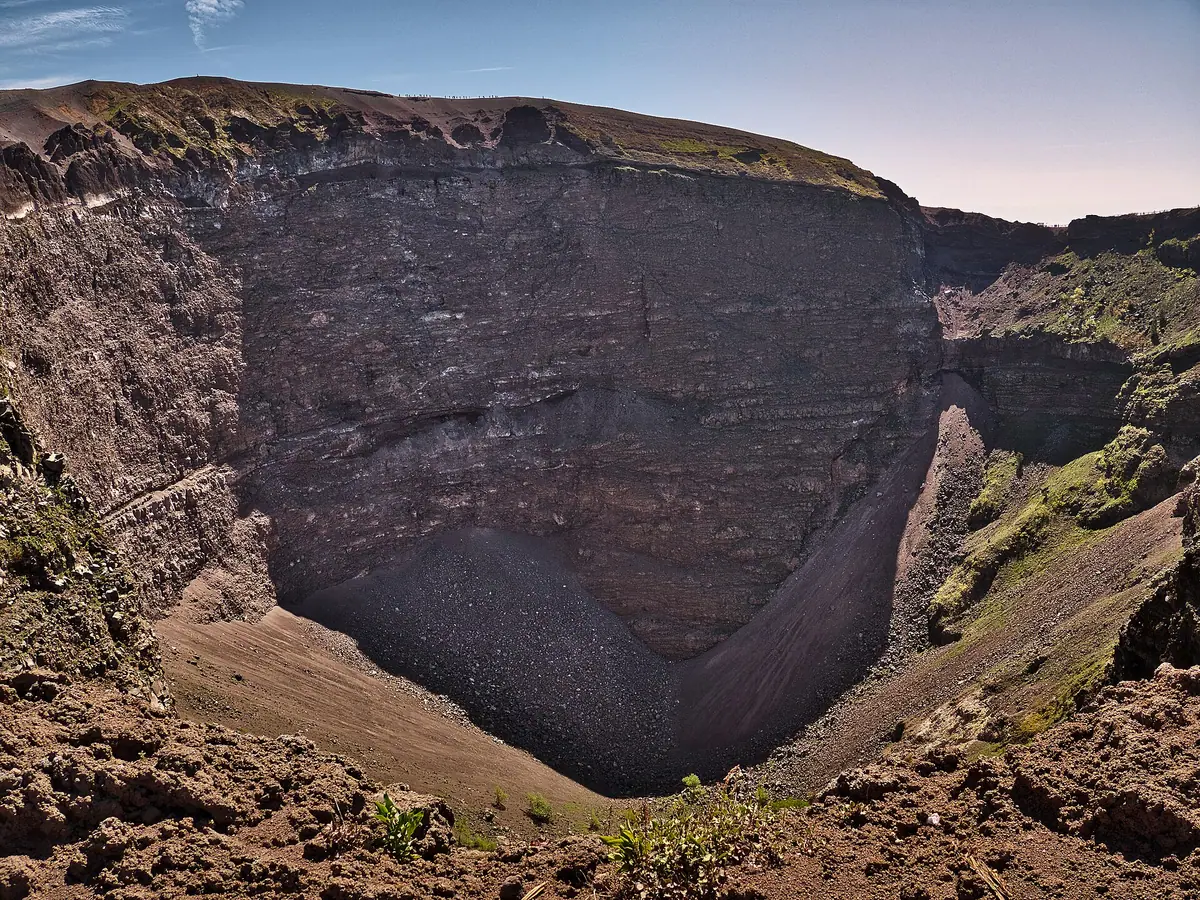
The crater is an ellipse 580 metres across at its widest, with fumaroles, vents of volcanic gas, on its walls. Viewpoints along the rim look down into it, and the Capannuccia, at 1,170 metres, a few metres below the high point, is where you turn back: the path round the north and east rim is closed to visitors. Looking away from the crater, you can see as far as Sorrento and Capri, and on clear days across the Campanian plain.
There’s a guides’ hut and a few concession stands along the trail. The ground is loose cinders and lapilli, the small volcanic stones that cover the cone.
What to bring
- Shoes
- Closed shoes with a good grip: the trail is dust and loose stones, and the last 500 metres are uphill
- A layer
- A light jacket, as the wind on the rim is cold even on hot days
- Walking sticks
- Lent on site, so you needn't bring your own
Vesuvius with Pompeii or Herculaneum on the same day
A day with Vesuvius and one of the buried towns is tight in winter. Count three to four hours for the volcano and the same for Pompeii, whose last entry is at 15:30, so take an early slot and do the volcano first: its last access is at 15:00, and if an alert closes the mountain you still have the ruins. Herculaneum, at two to three hours, leaves more room.
From Pompeii, bus 808 or the return trip in our list takes you up and back. From Herculaneum, the shuttles leave from the same station, Ercolano Scavi, and a day from Naples with Herculaneum and Vesuvius costs €95. For all three in one purchase, the Vesuvius, Herculaneum and Pompeii pass costs €72.50: it holds a flexible Pompeii entry with an audio guide, the Vesuvius entry and Herculaneum.
No city card includes Vesuvius, not even the Campania Artecard. The Artecard does include Pompeii and Herculaneum, though, so it’s worth a look if the ruins are on your list, and the Naples Pass and Naples city passes page covers the rest.

The volcano behind Naples: Somma and the Gran Cono
What people call Vesuvius is two volcanoes in one. Monte Somma, the ridge beside the cone, is what remains of the old outer cone, and its top, Punta Nasone, reaches 1,132 metres. The Gran Cono, the cone you climb, grew inside its old crater, probably in the eruption of AD 79 that buried Pompeii and Herculaneum. It has been quiet since 1944, but it isn’t extinct.
Tickets
Popular tickets around Naples
The ones other visitors book most.


People also ask
Frequently asked questions
Is it free to climb Mount Vesuvius?
No, the crater trail needs a ticket for a 10-minute time slot, bought before you go: ours costs €21.60. The park's Tirone reserve trail, a separate 2.6-kilometre path, is free on Saturdays and Sundays from 9:00 to 16:30 with registration, but it isn't the crater walk.
Should I go to Pompeii or Vesuvius first?
In winter, Vesuvius first. Its last access is at 15:00 from November to February, against 15:30 at Pompeii, and the crater closes on days with an orange weather alert, so a morning slot leaves you the afternoon for the ruins whatever the mountain does. Bus 808 links Pompei Scavi station with the volcano, and we sell a return trip from Pompeii with the entry included.
How long does the Vesuvius walk take?
The trail to the crater is 4 kilometres there and back and takes about two and a half hours. If you drive, add the 30-minute walk up from the car park and back, so count on three to four hours in all.
How much does it cost to visit Pompeii and Vesuvius?
Our Vesuvius ticket costs €21.60 and our Pompeii Express ticket €27.50. The pass with Vesuvius, Herculaneum and Pompeii costs €72.50.
Is Mount Vesuvius included in the Campania Artecard?
No. Vesuvius isn't on any Artecard list, and no other Naples card includes it either. The Artecard does include Pompeii and Herculaneum.