
Naples
Ipogeo dei Cristallini
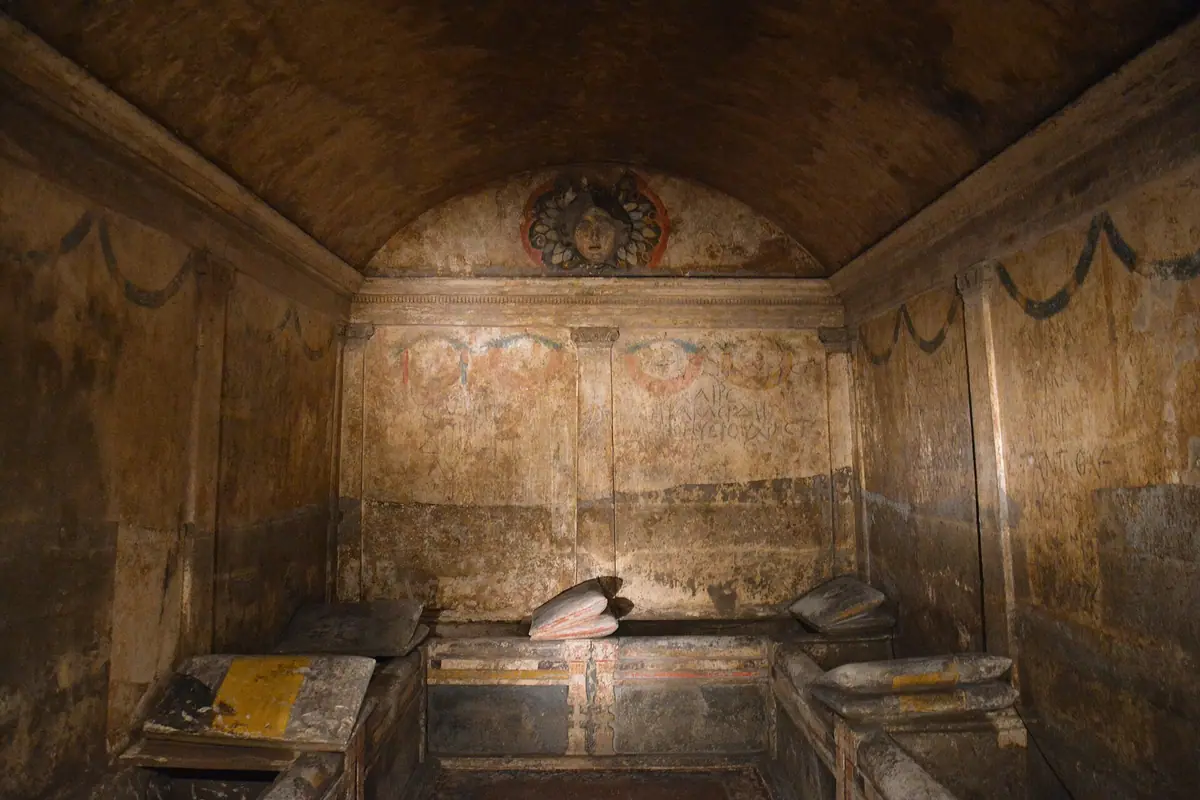
The cushions on the stone funeral couches are still painted yellow, purple, blue and red.
Under a palazzo in Naples's Rione Sanità lie four Greek tombs cut into the rock about 2,300 years ago, still painted with garlands, a Medusa head and stone couches dressed with painted mattresses and cushions, a rare survival of Greek painting. A baron found the first one in 1889 while digging under his family's palace, and the tombs opened to the public for the first time in 2022. You go down in a small group, with an audio guide or a guide in English.
Before you go
- Time inside20–40 min
- ClosedMonday
TipOnly small groups go down at a time and children under 8 are not admitted, so book ahead and take a jacket for the cold and damp.


Ipogeo dei Cristallini tickets: audio guide or guided visit
We sell both ways down: the entry with an audio guide, at €12, and the guided visit, at €18. Only ten people go down at a time and the number of visitors each day is capped, so it’s worth booking ahead. Neither ticket can be refunded or moved to another time, so pick one you’re sure of.
The two tickets
- Entry with audio guide, €12
- About 30 minutes, with a VR video introduction in English or Italian and an audio guide in 15 languages; arrive 5 minutes early
- Guided visit, €18
- About 45 minutes with a guide in English, French, Italian or Spanish; arrive 10 minutes early
- Both tickets
- Include an audio guide to the Rione Sanità, the neighbourhood around the tombs, and have a reduced price at checkout; on the guided visit it's for ages 12 to 26
- Children
- Free from 8 to 12; under-8s can't go down
The guided visit gives you a person to ask, in four languages, and a quarter of an hour longer underground. No city card includes the Ipogeo, so it’s a ticket to buy on its own.


When the Ipogeo is open, and what to wear down there
Visits run from Tuesday to Sunday, in time slots from 10:00 to 15:00, and the Ipogeo is closed on Mondays. Its own site gives no last entry or holiday closures, so go by the times offered when you book.
The way down is a small, steep and narrow staircase, and the Ipogeo warns of architectural barriers: if you use a wheelchair or have trouble with stairs, ring them on +39 344 0725752 before you book. Down in the tombs it’s cold and damp, so bring a jacket and a hat, and leave animals, food and drink outside.
Inside the four Greek tombs under Via dei Cristallini
The entrance is at Via dei Cristallini 133, inside the palazzo of the di Donato family, and the staircase takes you down into the tuff, the volcanic stone of the hill. There are four tombs side by side, each with its own entrance and two chambers, one above the other: a vestibule for the funeral rites, then stairs down to the burial chamber.
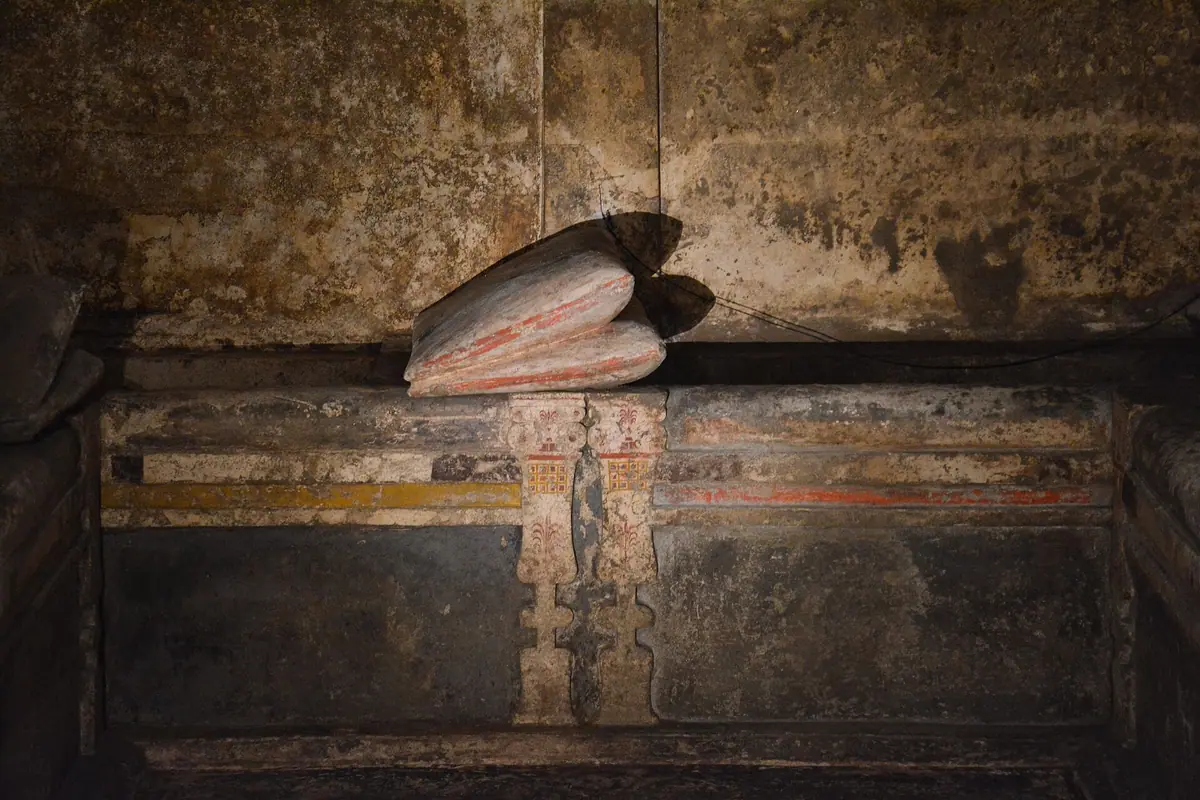
The painters made the walls imitate architecture and expensive furniture. The dead were laid on stone couches carved as klinai, the couches Greeks reclined on at a banquet, with the mattresses and cushions painted on. The restorers of Italy’s Istituto Centrale per il Restauro have identified the pigments: Egyptian blue, cinnabar and red lakes.
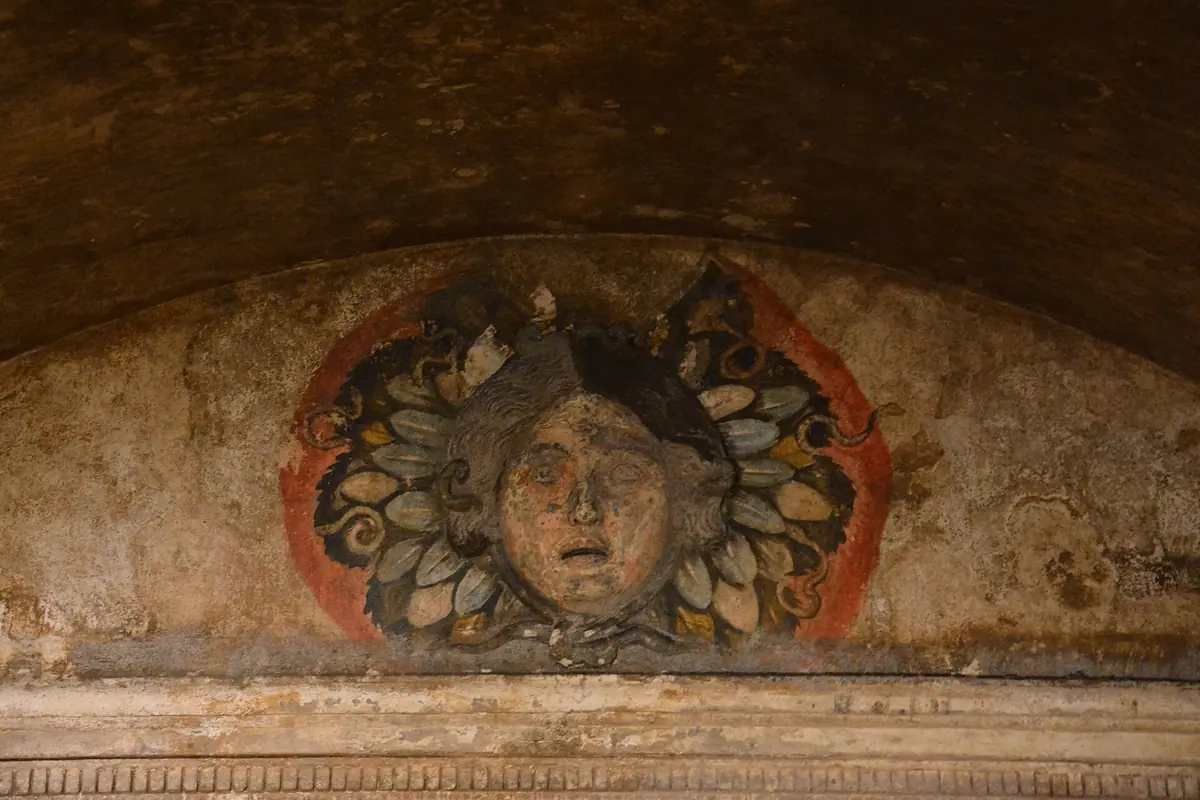
Tomb C is the best preserved: it has garlands, the head of Medusa in the gable at the back, Dionysus, the god of wine, with Ariadne, and an offering dish, a jug and two candelabra. Tomb A is badly damaged, with only one of its eight reliefs left; tomb B has amphorae, urns, altars and frescoes; and tomb D was reworked in Roman times, with niches for burials and a Latin inscription.
How a baron found the tombs in 1889
In the 4th century BC the Greeks of Neapolis, the city that became Naples, buried their dead here, in the Vergini area outside the walls. In 1889 Baron Giovanni di Donato, digging under his family’s palazzo for water or stone, broke into the first tomb, and the digging went on until 1896 and found four.
The tombs stayed closed to the public for more than a century, looked after by the di Donato family and later by the Martuscelli family. Restoration began on 23 September 2020, with the Soprintendenza and the Istituto Centrale per il Restauro, and on 1 July 2022 the tombs opened to the public for the first time since their discovery; the restoration is still going on.
Getting to the Ipogeo in the Rione Sanità
Cavour, on metro line 2, is the nearest station, a few hundred metres away, and line 2 links it to the central station; Museo, on line 1, is a little farther. If you come by car, there’s parking at Vico Arena della Sanità 10.
The Sanità has two more places where Naples buried its dead underground, the Christian Catacombs of San Gennaro and the Fontanelle Cemetery, an ossuary in an old quarry. The Ipogeo’s own site links the three, from the Greek tombs to the catacombs to the ossuary.

Tickets
Popular tickets around Naples
The ones other visitors book most.


People also ask
Frequently asked questions
Where is the Ipogeo dei Cristallini?
At Via dei Cristallini 133, in the Rione Sanità district of Naples, inside the di Donato family's palazzo. The nearest metro station is Cavour, on line 2.
What are the opening hours of the Ipogeo dei Cristallini?
Tuesday to Sunday, with time slots from 10:00 to 15:00. It's closed on Mondays.
Do I need to book the Ipogeo dei Cristallini?
It's recommended, because each day's visitors are capped. Our tickets can't be refunded or moved.
Can children visit the Ipogeo dei Cristallini?
From the age of 8. Children under 8 can't go down, and from 8 to 12 they go in free.
How long is the visit?
About 30 minutes with the audio guide and 45 with a guide.