
Naples
Fontanelle Cemetery
Neapolitans once adopted a skull here, cleaned it and asked it for a favour.
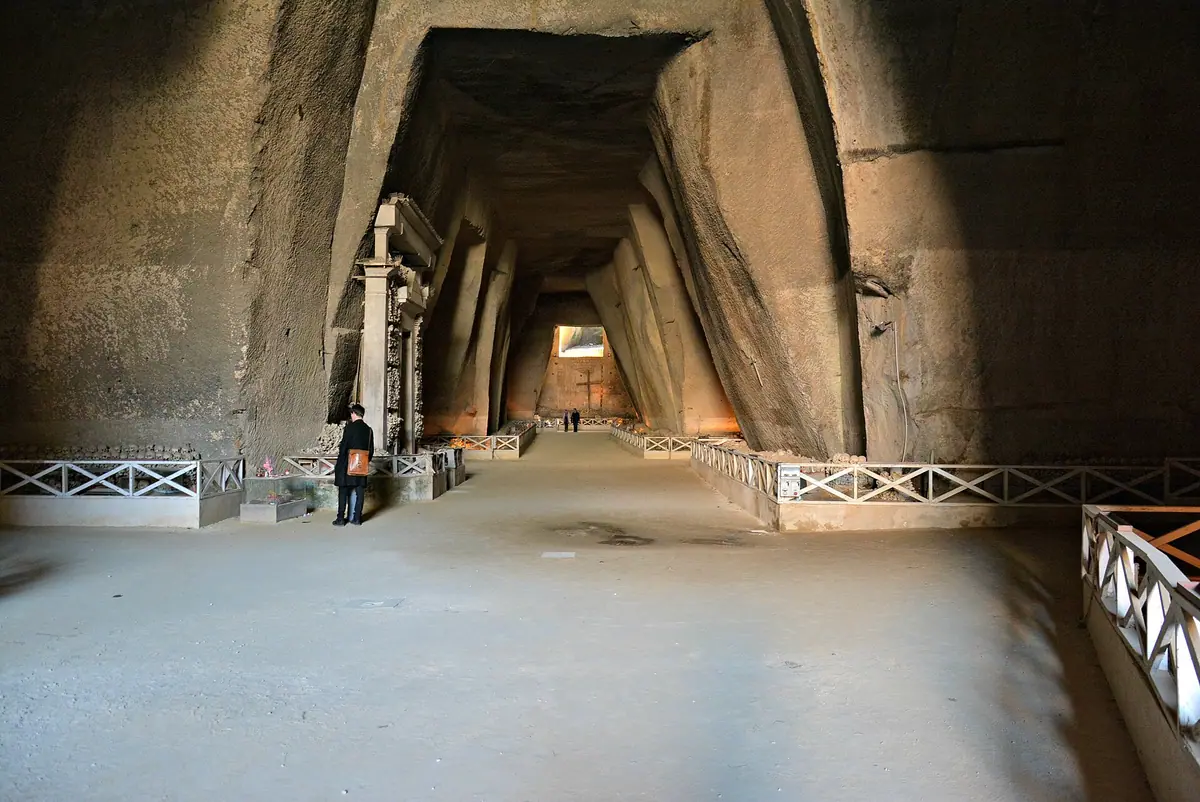
Thousands of skulls and bones line the three galleries of the Fontanelle Cemetery, an old tuff quarry in Naples's Sanità district that became an ossuary for the city's dead, many of them victims of the plague of 1656. Until the Church banned the practice in 1969, Neapolitans adopted skulls here, cleaned them and prayed for their souls in return for favours. Closed for years, the cemetery reopened on 18 April 2026, with entry at a booked time.
Before you go
- Time inside40 min
- ClosedWednesday
- EntryTimed slot
TipYou go in at a booked time, in 15-minute turns, so arrive about 15 minutes early.
Fontanelle Cemetery tickets: a booked time, on its own website
Since the cemetery reopened on 18 April 2026, you pay and you book a time; the free walk-in visits of the past are over. Entries go every 15 minutes, in groups of up to 25, with no more than 75 people inside, and you can stay up to 40 minutes.
You book Fontanelle tickets on the cemetery’s own website. The cemetery is run by La Paranza, a social cooperative from the Sanità, and without a booking you can only try for leftover places at the door, after a long wait. If you miss your time, you lose both the turn and the money.
Two ways in
- With the audio guide
- From €6, up to 40 minutes, on the intoRioneSanità app; download it before you go, because there's no phone signal inside
- Guided visit
- From €8, up to 40 minutes
- Your ticket also gets you
- 15% off at the Sanità's other cultural sites
The guided visits are in Italian; the audio guide is the alternative.
None of the Naples cards we sell lists the Fontanelle. Nearby in the Sanità, though, there are two underground visits we do sell: the catacomb of San Gaudioso, a 15-minute walk away, and the Ipogeo dei Cristallini, four painted Greek tombs.


When the Fontanelle is open, and the rules inside
The cemetery opens every day except Wednesdays and 25 December, from 10:00 to 18:00, with the last entry at 17:15, and the hours don’t change in winter. It’s still a place of worship: on Mondays and Fridays an area is set aside for prayer from 9:00 to 10:00, before the visits begin. Aim to arrive 15 minutes before your slot.
Inside, keep your voice low and your phone on silent. Photos are fine as long as you use some judgement and don’t hold up the people behind you, and it’s colder and damper than outside, so bring a jacket. The route has no architectural barriers, the lighting is soft, with no strong or flashing lights, and the audio guide works for blind visitors.
Inside the ossuary: three galleries and the skulls with names
The cemetery is an old tuff quarry in the Materdei hill, and its three long galleries, the navate, are named after who lies in them: the priests (dei Preti), the plague victims (degli Appestati) and the poor (dei Pezzentelli). The central area is called the Golgotha.
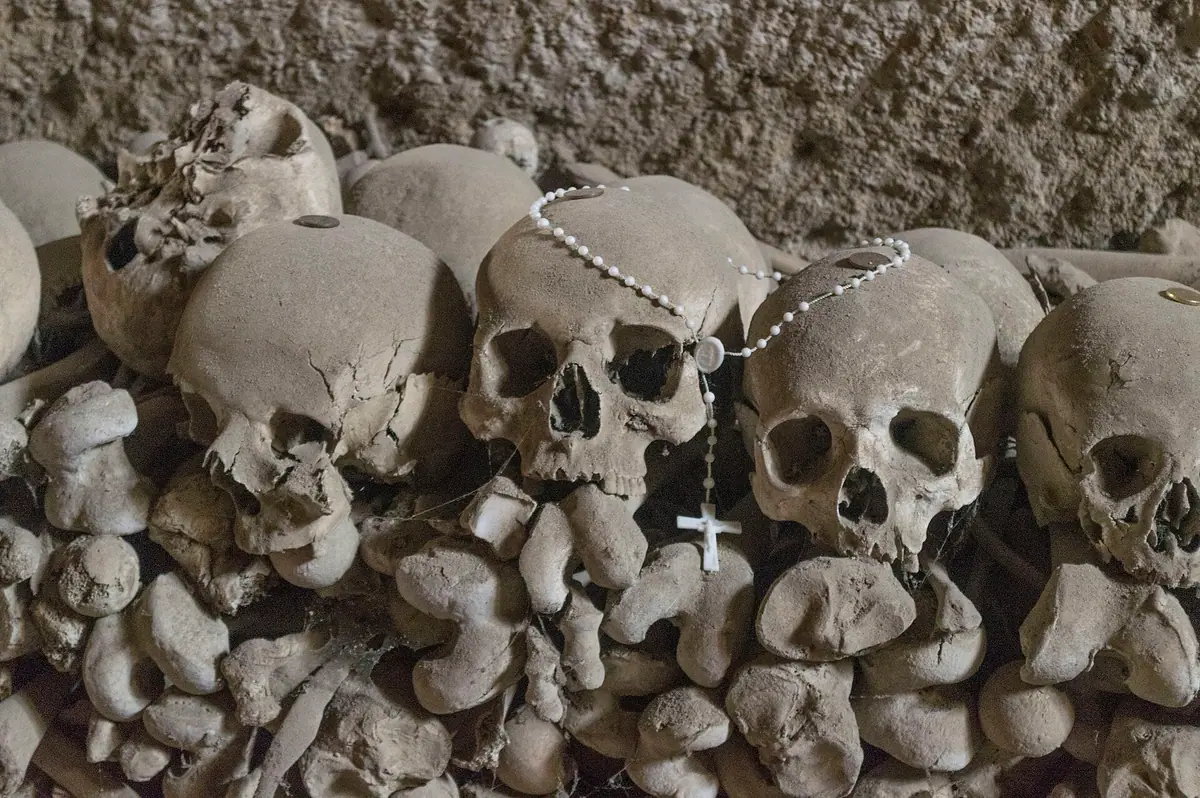
Some of the skulls have names and stories. The Capitano, with his “black eye”, watches over women looking for a husband; in the Tribunale, skulls set out like a jury, the guappi, Naples’s old neighbourhood bosses, swore their oaths; and donna Concetta, nicknamed “‘a capa che suda”, the head that sweats, is the skull that’s always clean, and people ask her for children.
Only two of the dead lie in coffins, a married couple, Filippo Carafa and Margherita Petrucci, and the story goes that she choked on a gnocco, a dumpling. There’s also a statue of don Gaetano Barbati, the canon who arranged the bones.
The cult of the pezzentelle souls, and why the Church banned it
The anime pezzentelle are the souls of the poor dead, from the Latin petere, “to ask”. Neapolitans would adopt one of their skulls, a capuzzella, clean it, pray for its soul and ask for a favour in return. The skull sat on an embroidered handkerchief with candles, flowers and a rosary; if the favour came, it got a cushion and a glass case with the date, and if not, it was turned to face the wall and another one chosen.
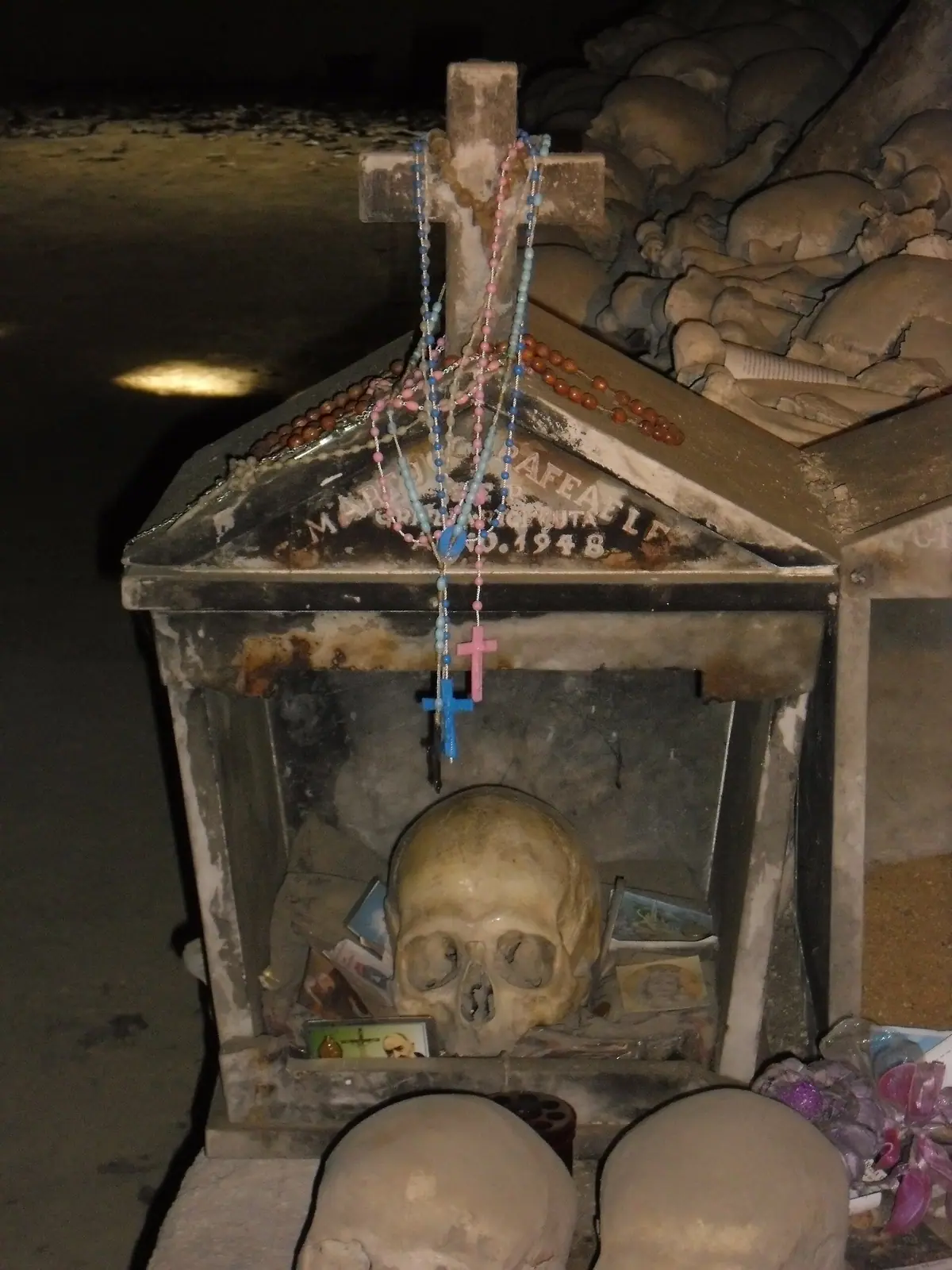
In 1969 a decree of the Church’s tribunal in Naples, under Cardinal Corrado Ursi, closed the ossuary and banned the cult as fetishism and superstition.
How the quarry became an ossuary, and its reopening in 2026
Tuff was quarried here from the 16th century, and when the churches ran out of room to bury the dead, the quarry took them; its name comes from the springs, the fontanelle, that ran down the hill. It received a large share of the victims of the plague of 1656, and more bodies came after the cholera of 1836-37, perhaps including those of the poet Giacomo Leopardi.
In 1872 Barbati and women from the neighbourhood set the bones out in the three galleries you see today. After the 1969 closure, local residents occupied the site in May 2010 and the city reopened it; it shut again for works around 2020, and La Paranza, which has run it since 2023, reopened it in April 2026 with money from private foundations and the city.
Getting to the Fontanelle from Materdei metro
The cemetery is at Via Fontanelle 80, between the Sanità and Materdei districts, and the simplest way there is metro line 1 to Materdei, then a 10-minute walk.
Getting there
- Metro line 1 to Materdei
- Then 10 minutes on foot
- Metro line 2 to Cavour
- Then bus C52, about 27 minutes in all
- From the Sanità's other sites
- 15 minutes on foot from the catacomb of San Gaudioso, 26 from the Catacombs of San Gennaro
The Catacombs of San Gennaro, San Gaudioso and the Ipogeo dei Cristallini are all within walking distance, in the same district.
Tickets
Popular tickets around Naples
The ones other visitors book most.


People also ask
Frequently asked questions
Is the Fontanelle Cemetery free?
Not any more. Since it reopened in April 2026, entry costs from €6 with the audio guide app and from €8 with a guide, and you book a time.
Do you need to book the Fontanelle Cemetery?
Yes, for a time slot, on the cemetery's own website. Without a booking you're left hoping for spare places at the door.
Is the Fontanelle Cemetery open on Wednesdays?
No. It opens every other day from 10:00 to 18:00, with the last entry at 17:15, and closes on Wednesdays and 25 December.
How long is a visit to the Fontanelle Cemetery?
Up to 40 minutes, with the audio guide or with a guide.
Is there a tour in English?
Not as a guided visit, as far as we know: the ones advertised so far are in Italian. The alternative is the audio guide on the intoRioneSanità app, though the cemetery doesn't list its languages.
