
Naples · Campania Artecard
Certosa di San Martino
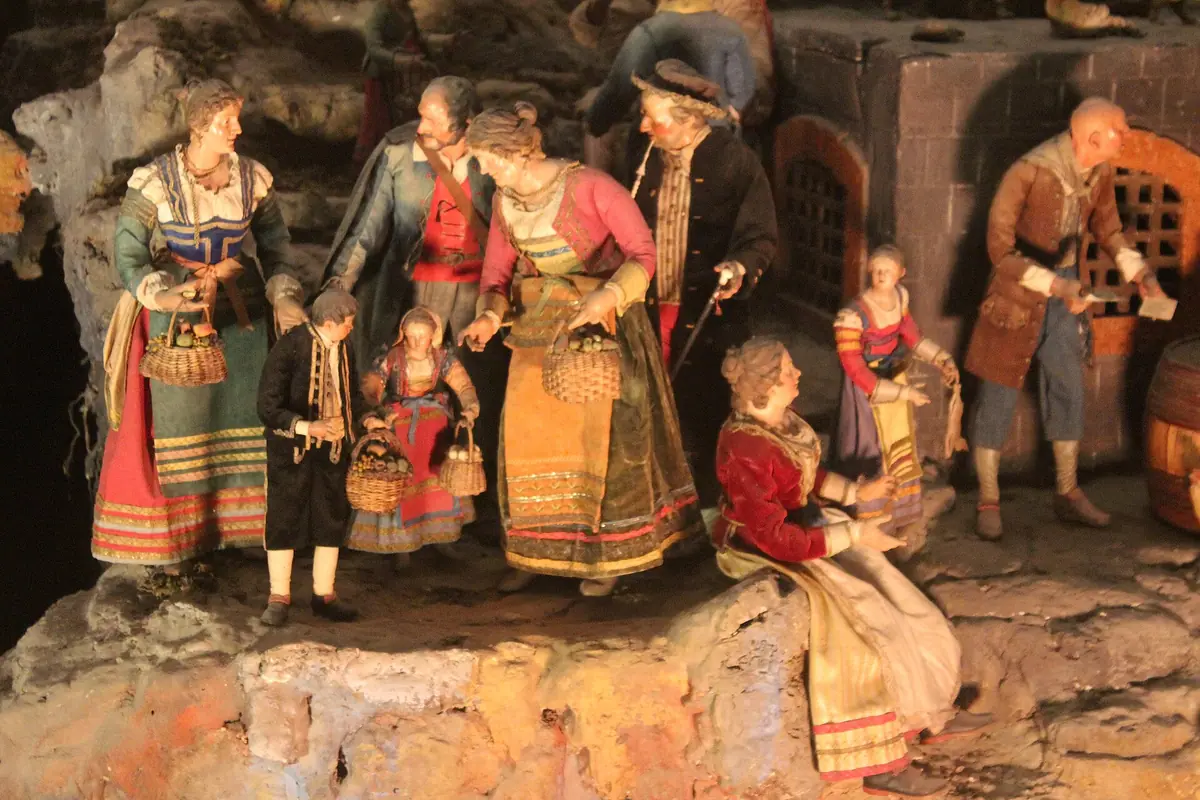
In the Presepe Cuciniello, a Neapolitan nativity scene, the lighting runs from dawn to nightfall over some 800 little figures.
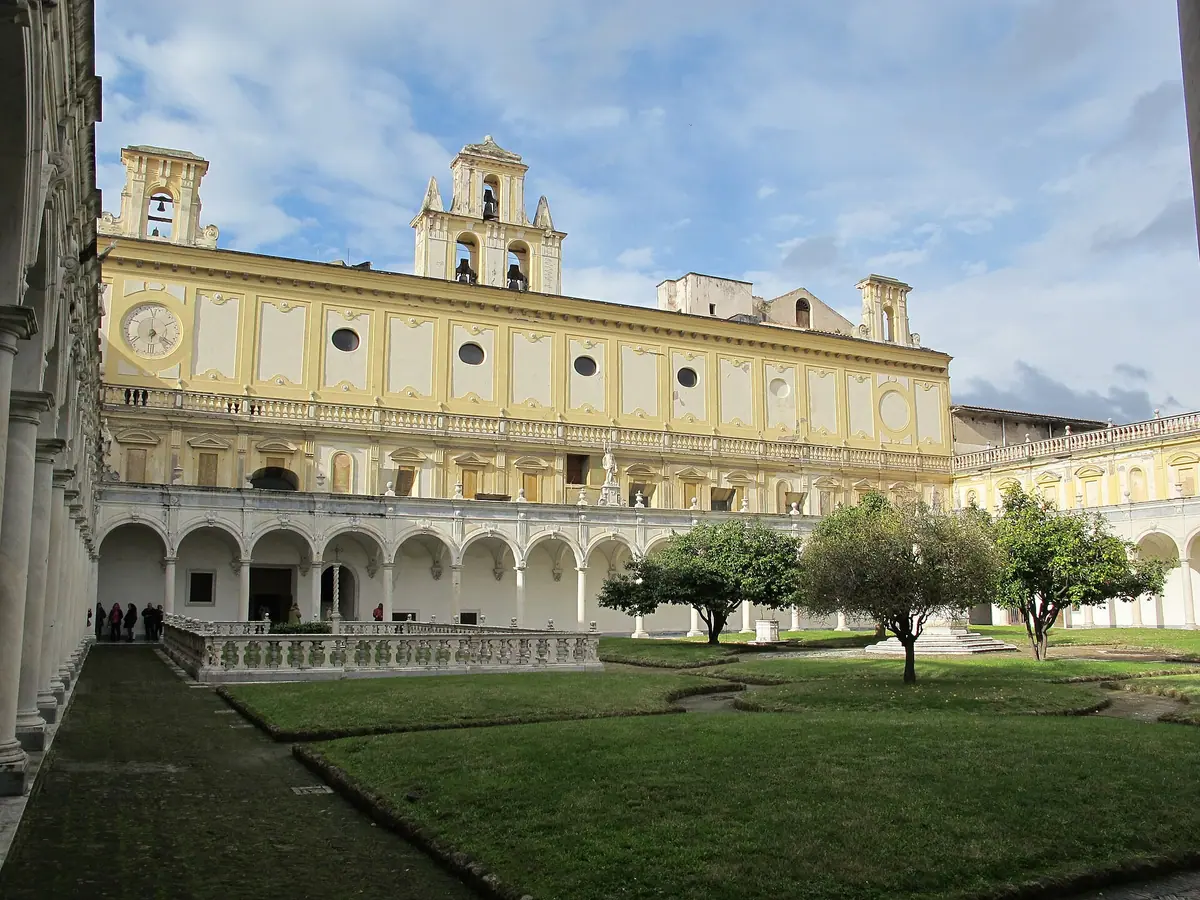
Charles of Calabria, son of King Robert of Anjou, founded the Certosa di San Martino in 1325 as a monastery of Carthusian monks on the Vomero hill above Naples, and since 1867 it has been a museum of the city. Its baroque church is painted by Lanfranco and Ribera, the Prior's loggia looks out over the city and the bay, and the museum holds the Presepe Cuciniello, a nativity scene with some 800 figures, and the Tavola Strozzi, the first painted view of Naples from the sea. Castel Sant'Elmo stands next door, and the Campania Artecard includes both.
Before you go
- Time inside2–3 h
- ClosedTuesday
TipMany sections, such as the Nativity scenes and the Prior's Quarter, only open at 9:30, and the gardens close an hour before the rest, so allow for that if you arrive at opening or late in the day.


Certosa di San Martino tickets: the Artecard, or a guided tour in Italian
We sell the Certosa two ways. For a visit at your own pace, the Campania Artecard includes your entry, as the next section explains; you don’t need to book, and nobody under 18 pays. The Certosa’s entry is its own, separate from Castel Sant’Elmo’s, even though the castle is only a few minutes away.
With a guide, the tour we sell is in Italian and costs €29. In two hours it takes you round the Certosa and Castel Sant’Elmo, with both entries in the price. Arrive 10 minutes early; the tour isn’t suitable for wheelchairs. Under-18s pick their own option at checkout, and cancelling is possible up to a day before your time slot. If Italian isn’t one of your languages, go with the Artecard.

The first Sunday of each month is free for everyone, the next falling on 6 December. The Certosa also opened free on 4 November in 2024 and 2025, but for 2026 it hadn’t announced anything by the end of October.
The Certosa on the Campania Artecard
The Campania Artecard is the card that covers the Certosa: the 365 Lite gives you one entry, the 365 Gold two, and on the 7-day card it can be one of your five included sites. Castel Sant’Elmo is on the same list, so one card takes care of the two visits on the hill, whereas the Naples Museum Card names the castle but leaves out the Certosa.
What else the Artecard includes, and how it compares with the rest, is on Naples Pass and Naples city passes.

Certosa di San Martino hours: closed on Tuesdays, some sections from 9:30
The Certosa opens every day except Tuesday, and not all of it opens at once, so it helps to know which rooms wait until 9:30.
Opening hours
- Every day except Tuesday
- 8:30–18:30, last entry 17:30
- Open from 8:30
- The church, the cloisters, the refectory, the Tavola Strozzi, the Cona dei Lani, the carriages, the Belvedere terrace and the gardens
- Open from 9:30
- The naval section, the Prior's quarters and loggia, the nativity scenes, the choir, Immagini e memorie and the 19th-century paintings
- Gardens
- Close an hour before the rest
Some older sites still give Wednesday as the closing day, but the ministry’s listing of October 2026 says Tuesday. The same listing also gives a second, shorter timetable ending at 17:30 and a 17:00 cut-off, without saying when they apply, so plan to be done by about 17:00. Give the Certosa two to three hours, or half a day with the castle. The main route is accessible, though with some steps.
The view, the church and the Prior’s loggia
The view is half the reason to come up: the Belvedere terrace and the gardens look out over the city and the bay from 8:30, and the Prior’s loggia from 9:30. The Gothic monastery of 1325, designed by the Sienese architect Tino di Camaino, survives only in its underground halls, which the opening times above don’t mention. What you walk through is the work of Giovanni Antonio Dosio, who began enlarging it in 1581, and of Cosimo Fanzago, who from 1623 to 1656 left his mark on every room and turned it baroque.
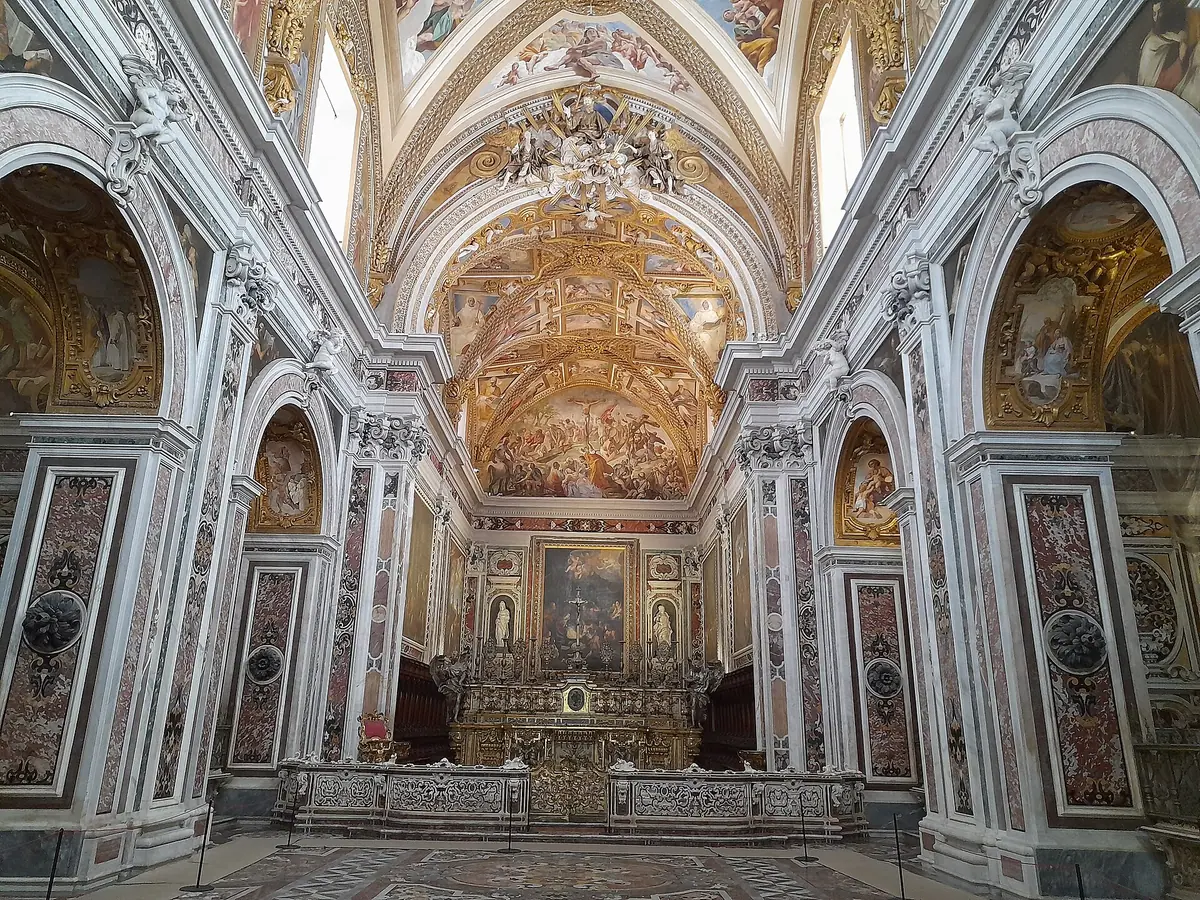
In the church, Fanzago designed the marble floor, which Bonaventura Presti finished in 1665. The Baroque painter Lanfranco frescoed the nave in 1636-39, and Jusepe de Ribera, the Spanish painter who worked in Naples, the Prophets in 1638-43. The sacristy is lined with wood inlay from 1587-1600.
The great cloister is a garden with a well in the middle, a cistern and the monks’ cemetery, which Fanzago added along with its sculptures. Beyond it lie the Prior’s quarters and loggia, the part of the Certosa that won praise from Grand Tour travellers, the Europeans who toured Italy for its art. Inside are a library with a meridian line, a triptych by Jean de Bourdichon from the end of the 15th century and Antonio Corradini’s terracotta model of the Veiled Christ, the statue Giuseppe Sanmartino carved in marble in 1753 for the Sansevero Chapel.
The museum: nativity scenes, the Tavola Strozzi and the royal barges
The old kitchens hold Italy’s largest public collection of Neapolitan nativity scenes. The Presepe Cuciniello, opened in 1879, sets some 800 figures, animals and props in a landscape whose lighting passes from dawn through day and sunset to night.
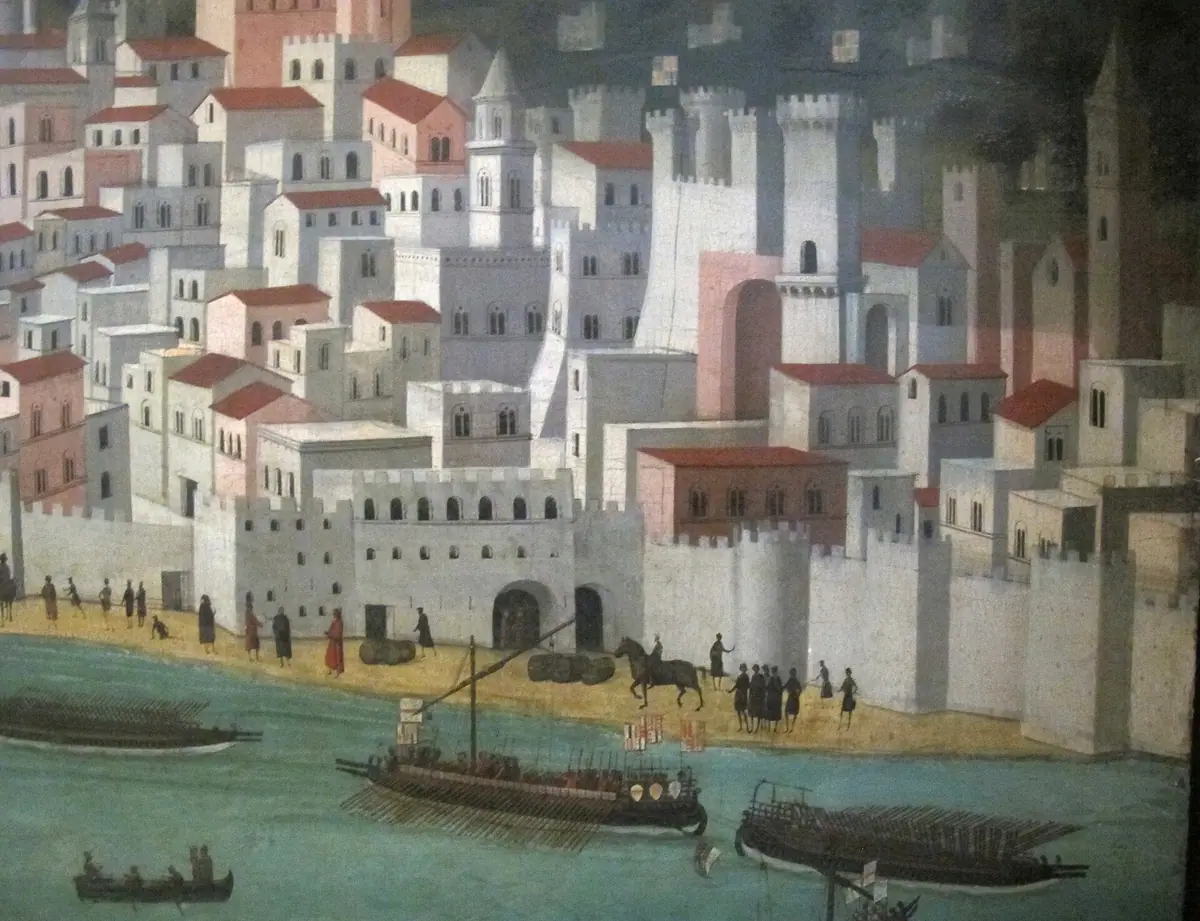
The museum also has the Tavola Strozzi, a tempera panel of 1472-73, 82 by 245 cm, that gives the first view of Naples from the sea, with the Certosa still Gothic on the Vomero. The Cona dei Lani, a painted terracotta altarpiece of 1517, came from the church of Sant’Eligio al Mercato, bombed in 1943.
The naval section keeps royal barges, among them the 24-oar barge the city gave Charles of Bourbon in the 1730s, and the carriage hall has the Berlina degli Eletti, the coach of the city’s elected officials (1698-1700), with Umberto I’s 14-oar barge of 1889. The 19th-century rooms show the School of Posillipo, painters of the bay, and a theatre section covers the San Carlino, the Teatro San Carlo and Pulcinella, the masked character of Neapolitan comedy.
Getting up to the Certosa di San Martino
The Certosa is at Largo San Martino 5, at the top of the Vomero, next to Castel Sant’Elmo. From the centre, the Funicolare Centrale climbs from Via Toledo to Piazza Fuga, a short walk below the Certosa, and metro line 1 to Vanvitelli leaves you about 10 minutes uphill. The Chiaia funicular is running again after an overhaul in early October, while the Montesanto line has been closed since 15 May 2026 and isn’t expected back before around February 2027.
How the Certosa became a museum
The monks had to leave after the revolution of 1799 and the French occupation, came back in 1804, and saw the Certosa turned into a home for war invalids from 1812 to 1831. In 1866 the archaeologist Giuseppe Fiorelli had it made a museum, and it opened to the public in 1867.
Tickets
Popular tickets around Naples
The ones other visitors book most.


People also ask
Frequently asked questions
How long do you need at the Certosa di San Martino?
Two to three hours for the Certosa alone, and half a day with Castel Sant'Elmo next door. Several sections open only at 9:30, so arriving at 8:30 doesn't get you everywhere straight away.
Is the Certosa di San Martino open on Tuesdays?
No. It closes on Tuesdays, like Castel Sant'Elmo, and opens the other days from 8:30 to 18:30, with the last entry at 17:30.
Is the Certosa di San Martino on the same ticket as Castel Sant'Elmo?
No, they're separate visits with separate entries. The Campania Artecard includes both, and so does the guided tour we sell, which is in Italian.
How do you get to the Certosa di San Martino?
On the Funicolare Centrale to Piazza Fuga and a few minutes on foot, or on metro line 1 to Vanvitelli and about 10 minutes uphill. The Montesanto funicular is closed until around February 2027.
Is the Certosa di San Martino free?
For under-18s, always, and for everyone on the first Sunday of the month.
