
Rome
Trevi Fountain
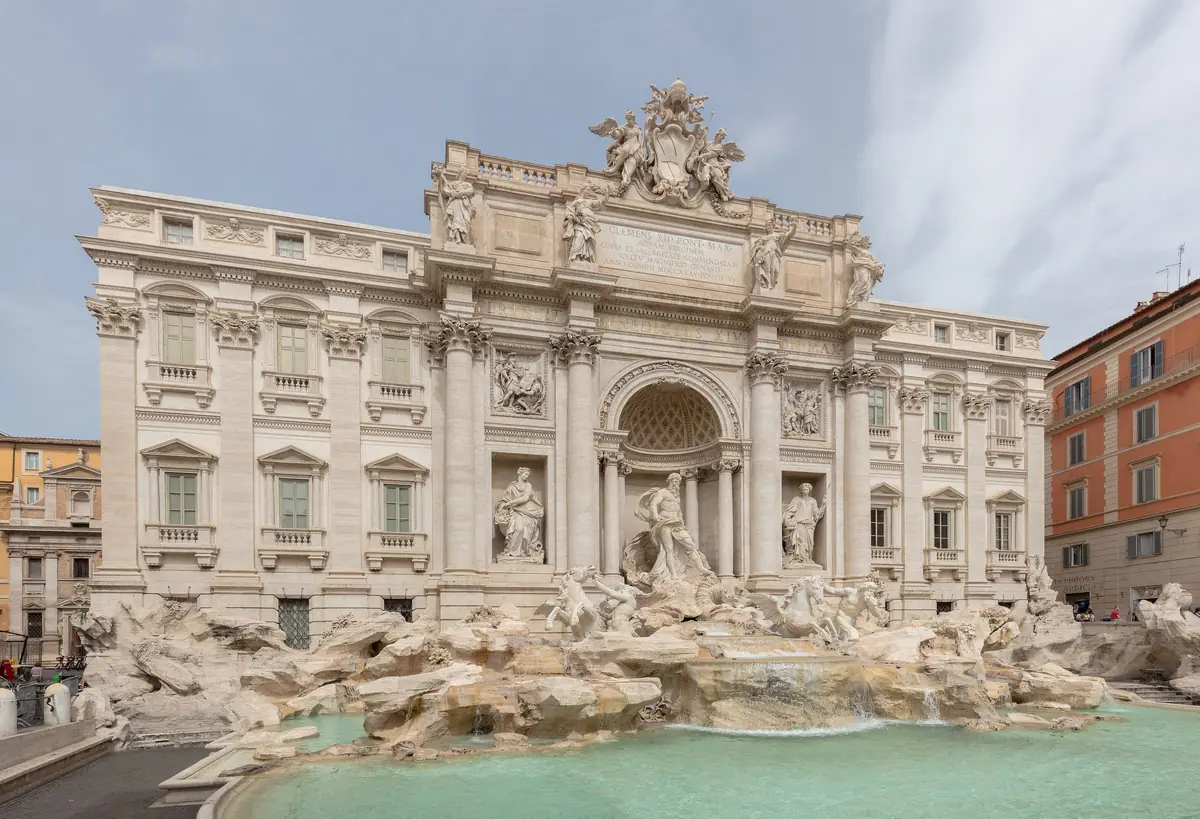
Oceanus drives his shell chariot out of a palace wall, on water first piped into Rome in 19 BC.
Rome's Trevi Fountain is the end of the Aqua Virgo, an aqueduct built in 19 BC and still running, with the sea god Oceanus on a shell chariot in front of a Baroque triumphal arch. You can stand in the square and look at it for nothing, and since February 2026 visitors pay €2 to go down the steps to the basin, a ticket you buy on the spot or online. What we sell are guided tours: one goes underground into the Roman ruins of the Vicus Caprarius, a few metres from the fountain, and the other is a walk that takes the fountain in.


Trevi Fountain tickets: the €2 basin ticket and the tours we sell
You don’t need a ticket to see the Trevi Fountain. The square in front of it is open to everyone, and the fountain stays in view day and night. The ticket is for going down the stone steps to the basin, right at the water’s edge: since 2 February 2026 visitors pay €2 for that, and people who live in Rome don’t.
Free and paid at the Trevi Fountain
- Piazza di Trevi and the view from the square
- Free, at any hour
- The steps and the basin, 9:00–22:00
- €2 for visitors, with no reduced rate
- The basin after 22:00
- No charge
- First Sunday of the month
- €2, as on any other day
- Children up to 5
- Free
The €2 ticket is sold by the city of Rome, not by us. You can buy it at the fountain itself, where it’s card, phone or watch only, or ahead online and at the Musei Civici (the city’s museums) and the Tourist Info Points, with cash or card. Bought ahead, it’s an open ticket with no date or time, and it can’t be refunded or changed.
Entry to the basin is free for residents of Rome and its metropolitan area, people with disabilities and the person with them, licensed tour guides and children up to 5. Bring proof, because without it you pay. The MIC Card gets its holders in free too, but it’s only for people who live or study in Rome, so it’s no use to visitors.
What we sell here are guided tours, and none of them includes the €2 basin ticket. The 40-minute underground tour, at €35, takes you with a live guide into the Vicus Caprarius, Roman ruins excavated beneath the streets a few metres from the fountain, with the entry and a headset included. It runs in English, French and Spanish, children pay €29, and you can cancel up to 24 hours before. A second version, in English only, comes with a skip-the-line ticket for the Vicus Caprarius and an option with a gelato.
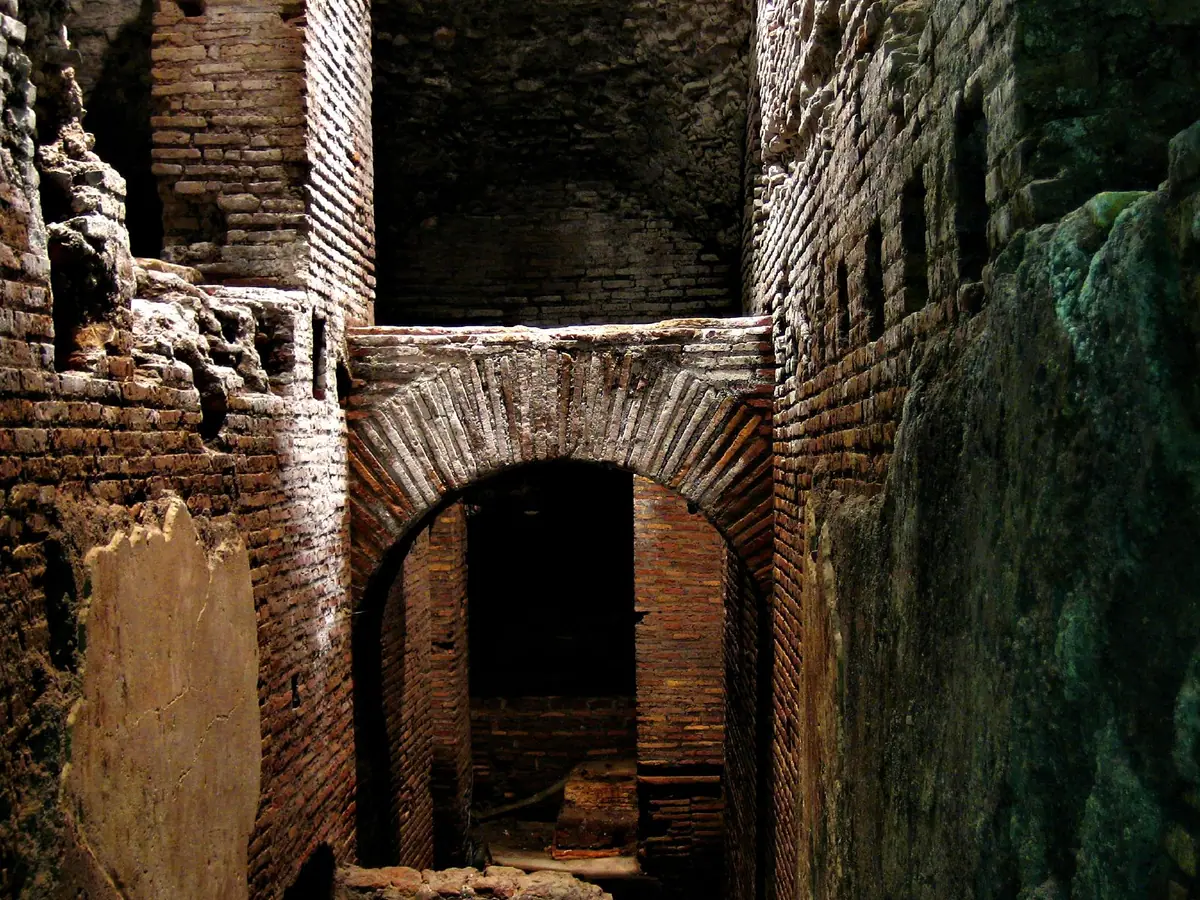
If you’d rather see the fountain as part of a walk, the guided walking tour, at €20, is 90 minutes on foot between Piazza Navona, the Pantheon, the Trevi Fountain and the Spanish Steps, plus a 30-minute 3D video, and the Touristation office in Piazza Navona is there if you need help. Children go along free, and it doesn’t include entry to anything on the route.


Trevi Fountain ticket hours, and the basin after 22:00
The city charges for the basin from 9:00 to 22:00 every day, and warns that the times can change for maintenance or public order. Some guides give a later start on Mondays and Fridays, which we couldn’t confirm, so on those two mornings check at the fountain before you plan around 9:00.
When the basin is charged
- Every day
- 9:00–22:00, €2
- After 22:00
- No charge, and the fountain stays in view for everyone
- First Sunday of the month
- Charged as usual
- Now and then
- Closed for special events
The first Sunday catches people out. It’s the day museums in Rome have their free entry, but the fountain keeps its €2, so there’s no saving to be had by moving your visit to that day.
No Roma Pass discount at the Trevi Fountain
The Roma Pass gives no discount and no free entry here, and we haven’t found the Trevi Fountain on any other Rome pass either. So with or without a card, you buy the €2 basin ticket on its own.
Where a pass saves money is at the sites with a proper entrance ticket, not at a €2 charge like this one. Our comparison of Roma Pass and Rome’s other city passes adds up which of them pays off for your own list.

Going down to the Trevi Fountain basin: where to queue and where to come out
The fountain fills one end of Piazza di Trevi, set against the back of Palazzo Poli, in the old centre, on the classic walk between Piazza Navona, the Pantheon and the Spanish Steps. Without a ticket you watch from the square. The basin is down a flight of stone steps, which is why, according to one guide, it isn’t wheelchair accessible.
Down to the water with the €2 ticket
- 1Queue: at the side ticket office on Via della Stamperia. If you haven't bought ahead, you pay there by card, phone or watch.
- 2Way in: down the central staircase to the basin.
- 3At the water: about 400 people are let in at a time, so you may wait at the gate for others to leave.
- 4Way out: through the gate on the Via dei Crociferi side.
What you see at the Trevi Fountain: Oceanus and his shell chariot
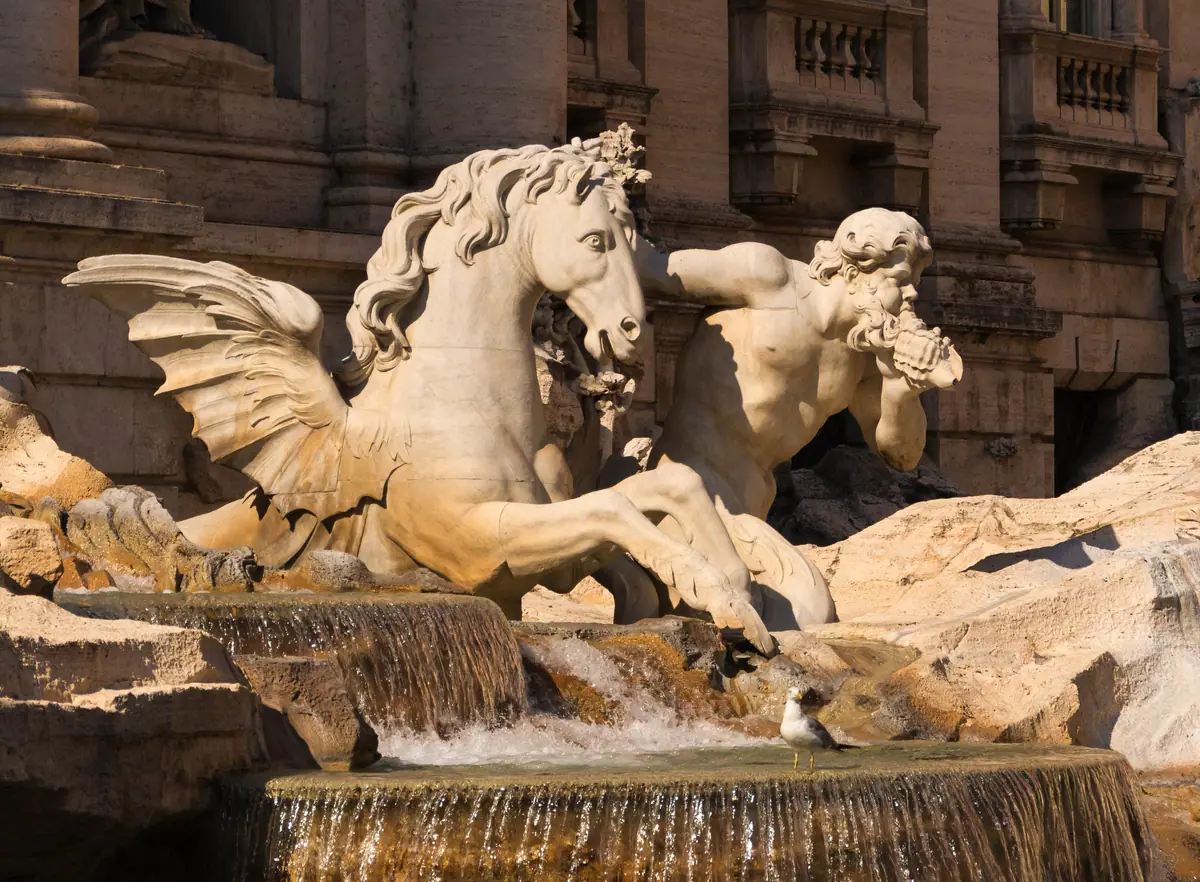
Close up, the fountain is a triumphal arch built against the palace wall, with a deep niche at the centre. In it stands Oceanus, the god of the sea, on a chariot shaped like a shell, pulled by two horses that tritons lead through the water. One horse is wild and the other calm.
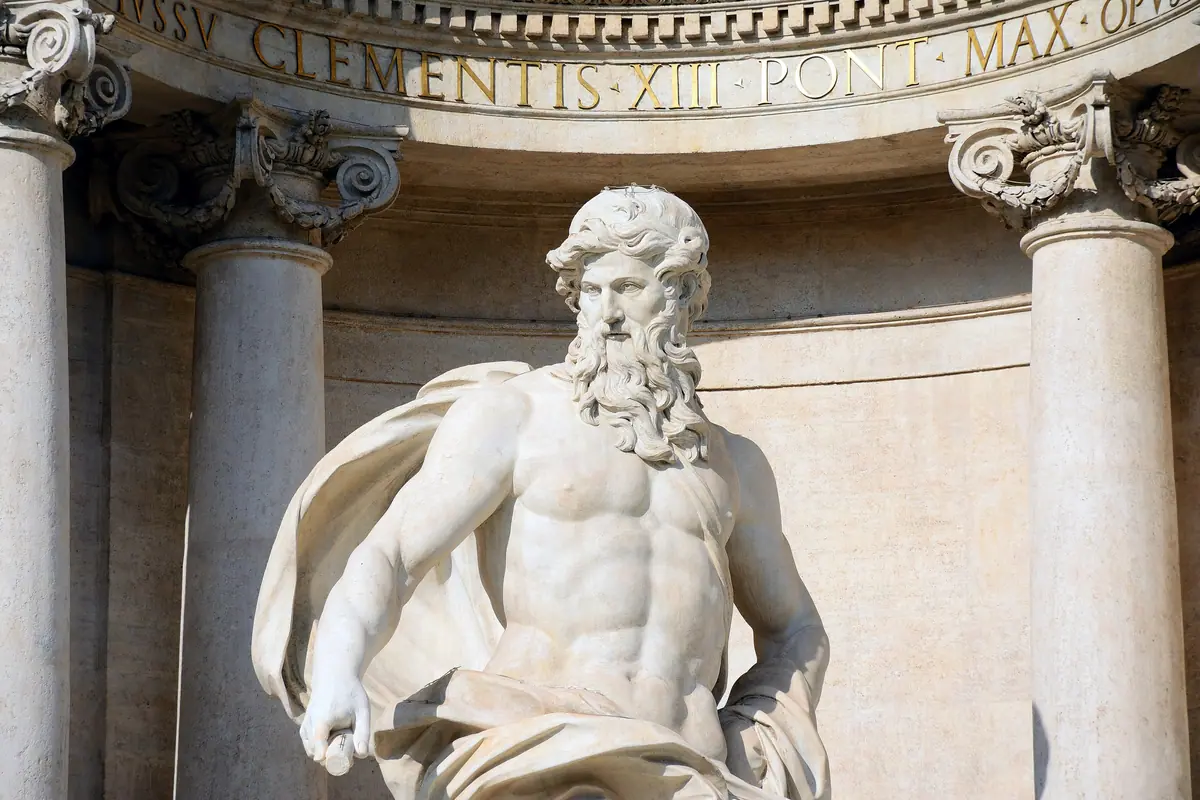
Above them, reliefs tell the story of the aqueduct that feeds the fountain. From the square you take in the whole façade at once, and from the basin you’re down at the level of the water, beside the horses and the tritons.
The Trevi Fountain’s story, from the Aqua Virgo to Nicola Salvi
That aqueduct is the Aqua Virgo, built in 19 BC and in use ever since, and the fountain marks the point where it ends. The name may come from Trivium, a place name recorded here in the 12th century, or from the three outlets of the earlier fountain.
In 1640 Pope Urban VIII asked Bernini, the great sculptor and architect of Baroque Rome, for a new design, but only its base was built. The fountain you see is Pope Clement XII’s: he held a competition in 1732, the architect Nicola Salvi won it, and Giuseppe Pannini finished the work in 1762, after Salvi’s death.
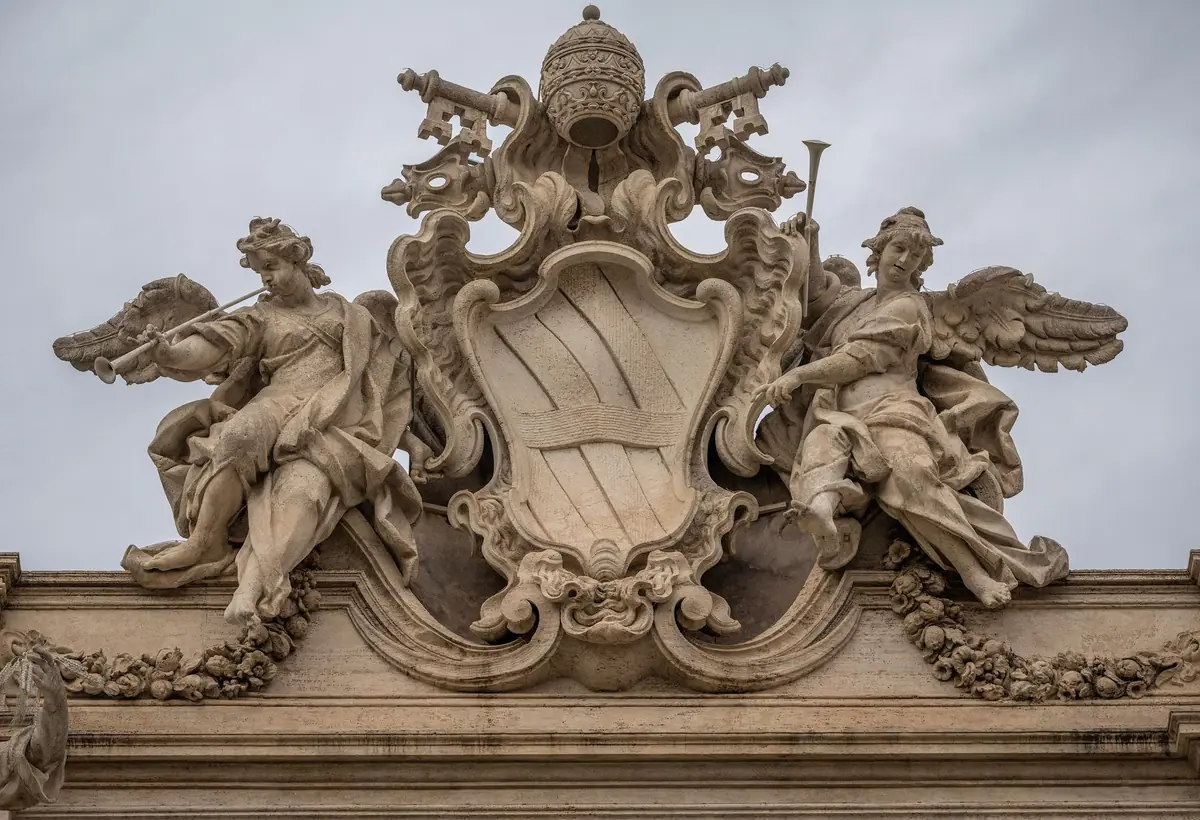
Its last full restoration, paid for by the fashion house Fendi, was unveiled on 3 November 2015, and part of the money from today’s €2 ticket goes on its upkeep.
Tickets
Popular tickets around Rome
The ones other visitors book most.


People also ask
Frequently asked questions
Is the Trevi Fountain free?
Seeing it is. The square is open to everyone and the fountain stays in view at any hour. Going down the steps to the basin costs €2 for visitors between 9:00 and 22:00, a charge in place since 2 February 2026, and after 22:00 there's no charge.
Do I need to book a Trevi Fountain ticket in advance?
No. You can buy the €2 ticket at the fountain, where it's card, phone or watch only, or ahead online and at the city's museums and Tourist Info Points. A ticket bought ahead has no date or time on it, and it can't be refunded or changed.
Who doesn't pay for the Trevi Fountain basin?
Residents of Rome and its metropolitan area, people with disabilities and the person with them, licensed tour guides, holders of the MIC Card and children up to 5. You need to show proof, or you pay. The MIC Card is only for people who live or study in Rome.
Does the underground tour include the Trevi Fountain ticket?
No. The tours we sell go into the Vicus Caprarius, Roman ruins beneath the streets a few metres from the fountain, and none of them includes the €2 basin ticket. Looking at the fountain from the square costs nothing anyway.
Is the Trevi Fountain included in the Roma Pass?
No. The Roma Pass gives no discount and no free entry at the Trevi Fountain, and we haven't found it on any other Rome pass either. The €2 basin ticket is bought on its own.