
Rome · Roma Pass
Spada Gallery
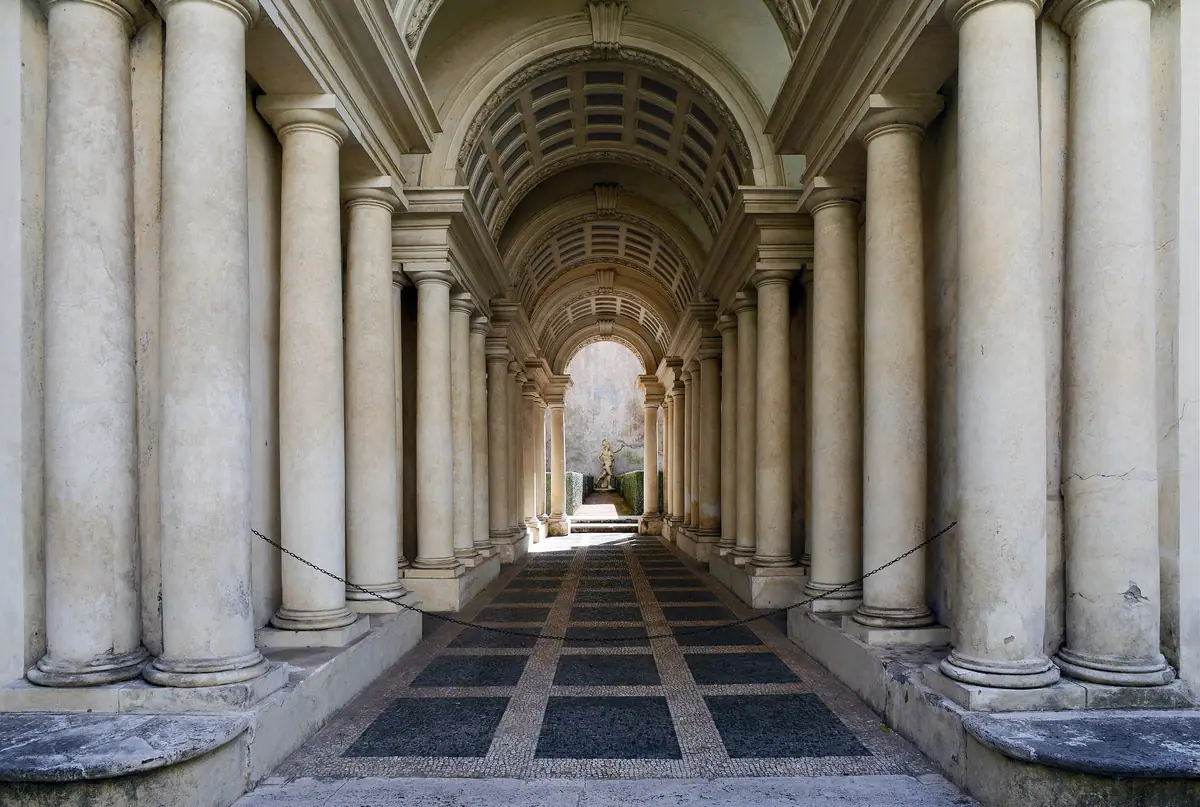
Borromini's colonnade looks more than 30 metres deep, and it's about eight.
Rome's Spada Gallery is the picture collection of two cardinals of the Spada family, still hung in tiers up the walls the way a 17th-century gallery was, inside Palazzo Spada near Campo de' Fiori. In the palace garden is Borromini's forced perspective: a colonnade built to look more than 30 metres long that measures about eight, with a statue at the end about 60 cm tall. The ticket covers the four rooms and the garden, under-18s go in free, and the Roma Pass counts it as an included entry.
Spada Gallery tickets: €6 at the door, no booking needed
The Spada Gallery costs €6 for a full ticket, and individual visitors don’t have to book, so you can turn up at the ticket office in Palazzo Spada and walk in. That ticket covers the four rooms of paintings and the Giardino Segreto, the palace’s “secret garden”, where Borromini’s perspective stands.
We don’t sell a ticket for it, and there’s nothing to buy ahead: these are the prices at the ticket office.
What you pay at the Spada Gallery
- Full ticket
- €6
- EU citizens aged 18 to 25
- €2
- Under-18s
- Free
- First Sunday of the month
- Free for everyone, no bookings
- Groups
- Weekdays only, booked, up to 12 people plus a guide
The free first Sunday has no bookings and no groups, and the number of people inside at once is capped, so you may wait at the door. It tends to be the busiest day of the month.
The Spada Gallery on the Roma Pass, and why we’d save the entry
The Spada Gallery is on the Roma Pass list, so it can take one of the card’s included entries. Our advice is to keep that entry for somewhere dearer: here it saves you €6, while at the Colosseum, Castel Sant’Angelo or Ostia Antica a ticket costs €18. Show the card at the ticket office instead and you pay the reduced ticket it gets you.
Booking with the card is optional. You can reserve through the Roma Pass booking service for a €1 fee per ticket, or by email for free, with a reply within 48 hours on weekdays. If you book, anyone with you who goes in free or at the €2 rate, such as under-18s or EU citizens aged 18 to 25, books on the museum’s own platform.


The 24-hour Omnia Card has no Roma Pass in it, so it doesn’t cover the gallery, and neither do the Rome Tourist Card or the Vatican City Pass. We haven’t found it on the Turbopass or Go City lists either. Our page on Roma Pass and Rome’s other city passes shows where the card’s entries go furthest, and the Omnia Card page has everything the 72-hour version includes.
Spada Gallery opening hours and the Thursday door
The gallery opens from 8:30 to 19:30 every day except Tuesday, with the last entry at 19:00, and it also closes on 25 December and 1 January. There’s no summer or winter timetable in the museum’s information.
The time to plan around is the garden’s, where one guide gives the last access as 18:30. The perspective is the end of the visit, so if you come in at the 19:00 last entry, you’ve missed it by half an hour. Aim to be through the door by 18:00.
The door moves too. On Thursdays you don’t go in from the square but from the alley behind it, and one ticket seller says the alley door is used on other weekdays too, so if one is shut, try the other.
Which door to use
- Most days
- Piazza Capo di Ferro 13
- Thursdays
- Vicolo del Polverone 15
- With the Roma Pass
- Vicolo del Polverone 15/b, the address on the Roma Pass site
Inside, a sensory route for blind visitors runs through the rooms and the garden, with tactile boards, objects and sounds.
Borromini’s perspective in the Spada Gallery’s secret garden
Cardinal Spada, who bought the palace in 1632, asked the Baroque architect Borromini for a gallery in the garden, and Borromini worked on it with the help of a mathematician. What he built is a forced perspective: the columns and the coffered vault of the corridor shrink towards the far end, so your eye reads a short passage as a long one.
From the garden you’d take it for a colonnade more than 30 metres long (Wikipedia gives 37), with a life-size statue at the far end. The statue is what gives the trick away once you know: it’s about 60 cm tall, and the corridor is only about 8 metres.
If the colonnade looks familiar, it may be from La grande bellezza, Paolo Sorrentino’s film set in Rome, which used the perspective gallery as one of its locations.
The Spada Gallery’s paintings, hung in tiers
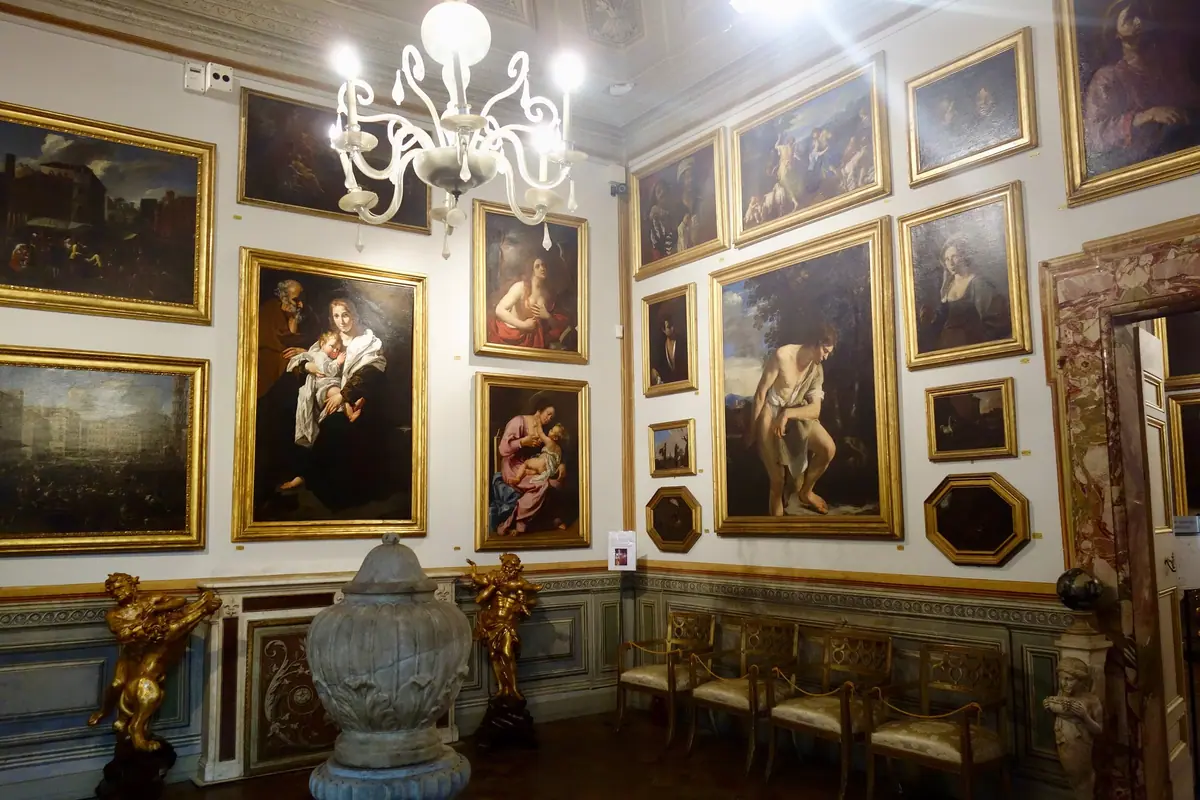
Before the garden come the paintings. The collection belonged to two cardinals of the family, Bernardino and Fabrizio Spada, and it’s still hung the way a 17th-century picture gallery was: frame above frame, in rows up the walls, rather than one painting at eye level.
It fills four rooms, and the names to look for include Titian and Artemisia Gentileschi. It’s a Baroque collection, so expect religious scenes, portraits and the heavy gilded frames you see in the photo.
Palazzo Spada’s stucco courtyard and the Council of State upstairs
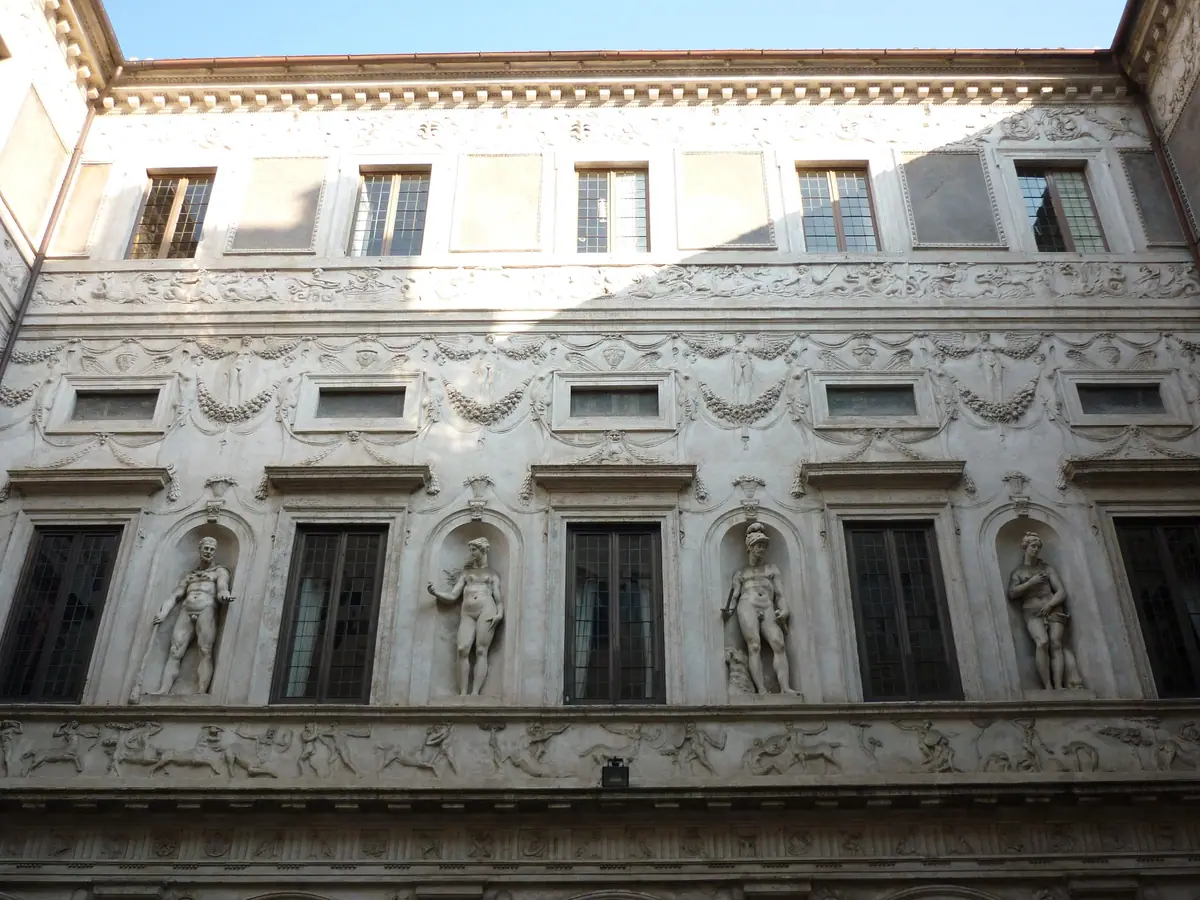
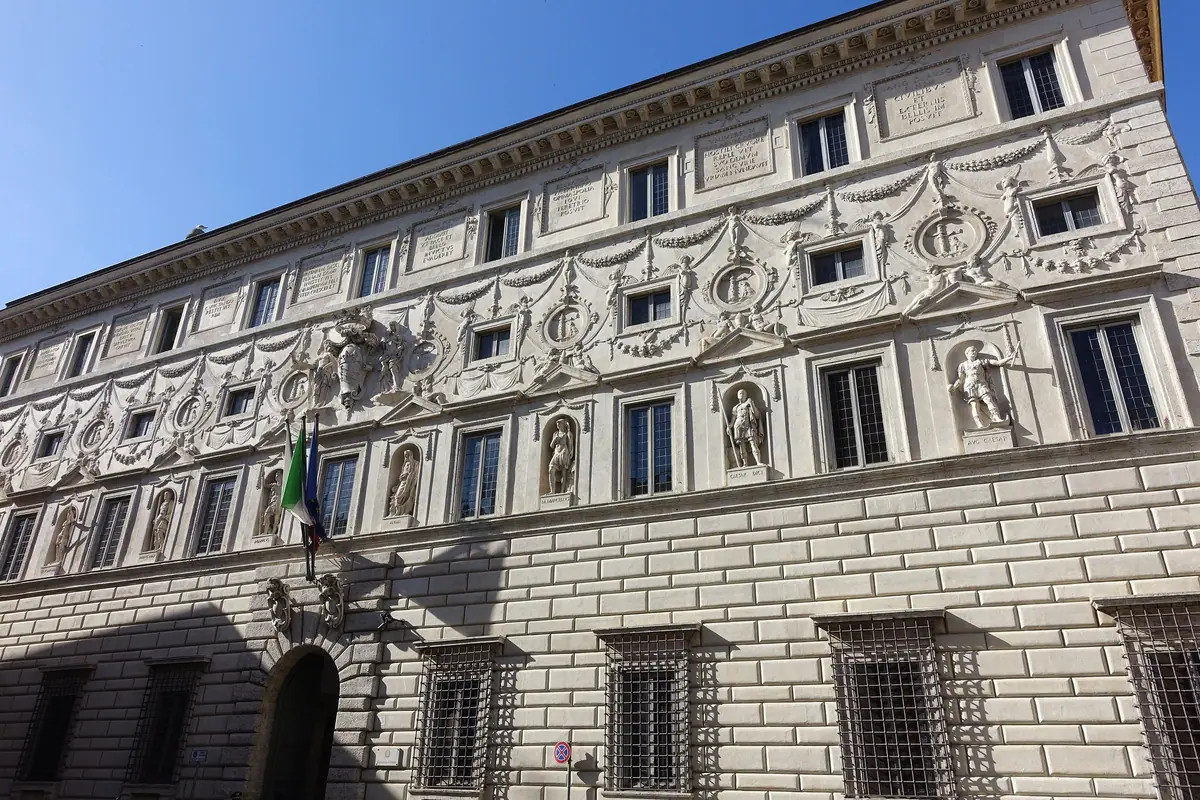
The palace itself is older than the collection. It was built in the middle of the 16th century as Palazzo Capodiferro, designed by Bartolomeo Baronino, and the stuccoes on its facade and courtyard, with statues in niches and garlands between the windows, are by Giulio Mazzoni.
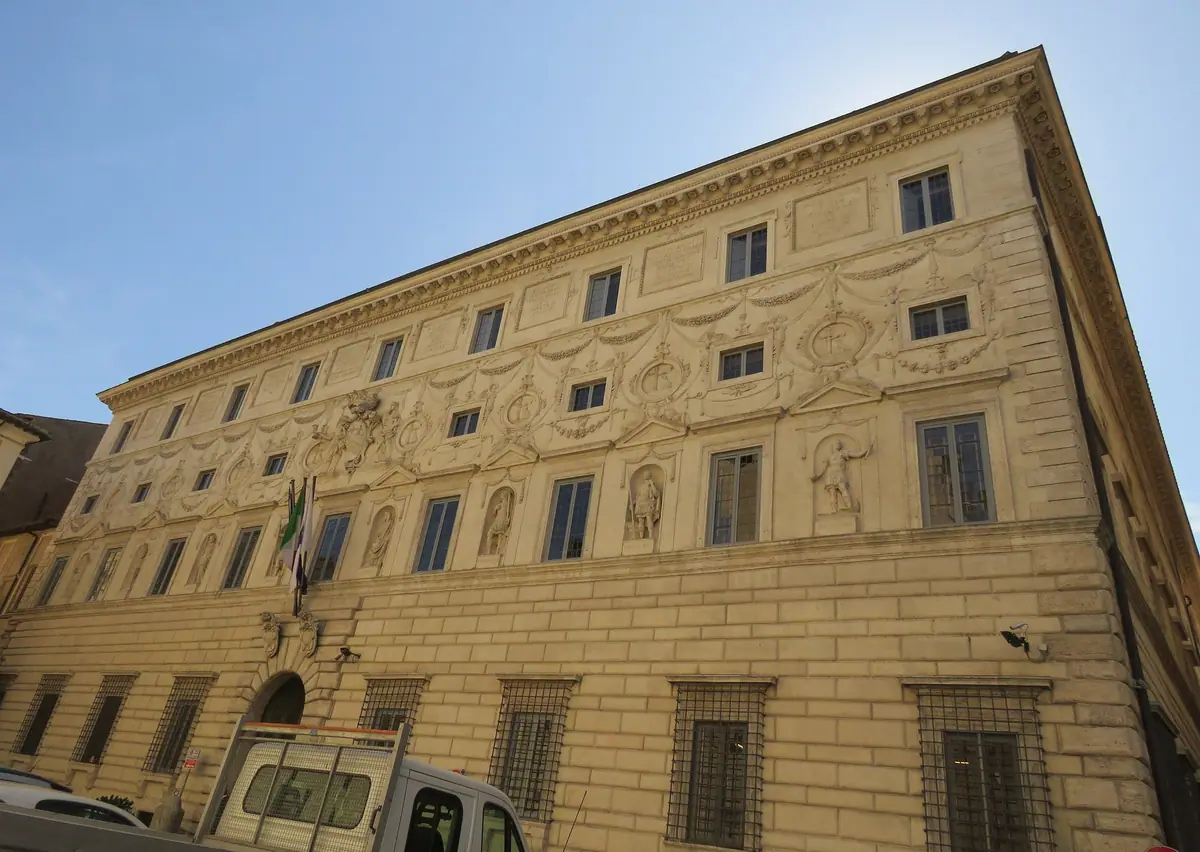
The Italian state bought it in November 1926, and the gallery opened to the public the following year. The palace also houses the Council of State, Italy’s highest administrative court, which is why the piano nobile, the grand first floor with the Council’s hall, isn’t on the normal visit. You see it only on guided visits on set dates, booked ahead, and no city card covers them.
Walking to the Spada Gallery from Campo de’ Fiori
The easiest way is on foot from Campo de’ Fiori, the market square. Take Via dei Balestrari for about 100 metres and turn left into Piazza Capo di Ferro, where the palace’s door is.
The palace sits between Piazza Farnese and Via Arenula, so if you’re coming from the Jewish Ghetto or Trastevere side, Via Arenula is the street to head for.
Tickets
Popular tickets around Rome
The ones other visitors book most.


People also ask
Frequently asked questions
Do I need to book the Spada Gallery in advance?
No. Individual visitors can buy a ticket at the ticket office on the day. Only groups have to book, and they're admitted on weekdays only, up to 12 people plus a guide.
Is Borromini's perspective included in the Spada Gallery ticket?
Yes. It stands in the Giardino Segreto, the palace's secret garden, which is part of the visit. Get there before 18:30: one guide gives that as the garden's last access, half an hour before the museum's last entry at 19:00.
Is the Spada Gallery open on Tuesdays?
No, Tuesday is its closing day, so don't plan a Tuesday visit unless a special opening is announced.
Is the Spada Gallery included in the Roma Pass?
Yes, as one of the card's included entries, and the 72-hour Omnia Card gives you the same through the Roma Pass inside it. The ticket here costs €6, so an included entry is worth more at a dearer site, and you can pay the card's reduced ticket here instead.
When is the Spada Gallery free?
On the first Sunday of every month, for everyone, with no bookings and no groups. Entry is capped, so you may have to wait. Under-18s go in free on any day.
