
Naples
Capri from Naples
To get into the Blue Grotto you lie flat in a rowing boat while the boatman pulls it under a low arch by a chain.
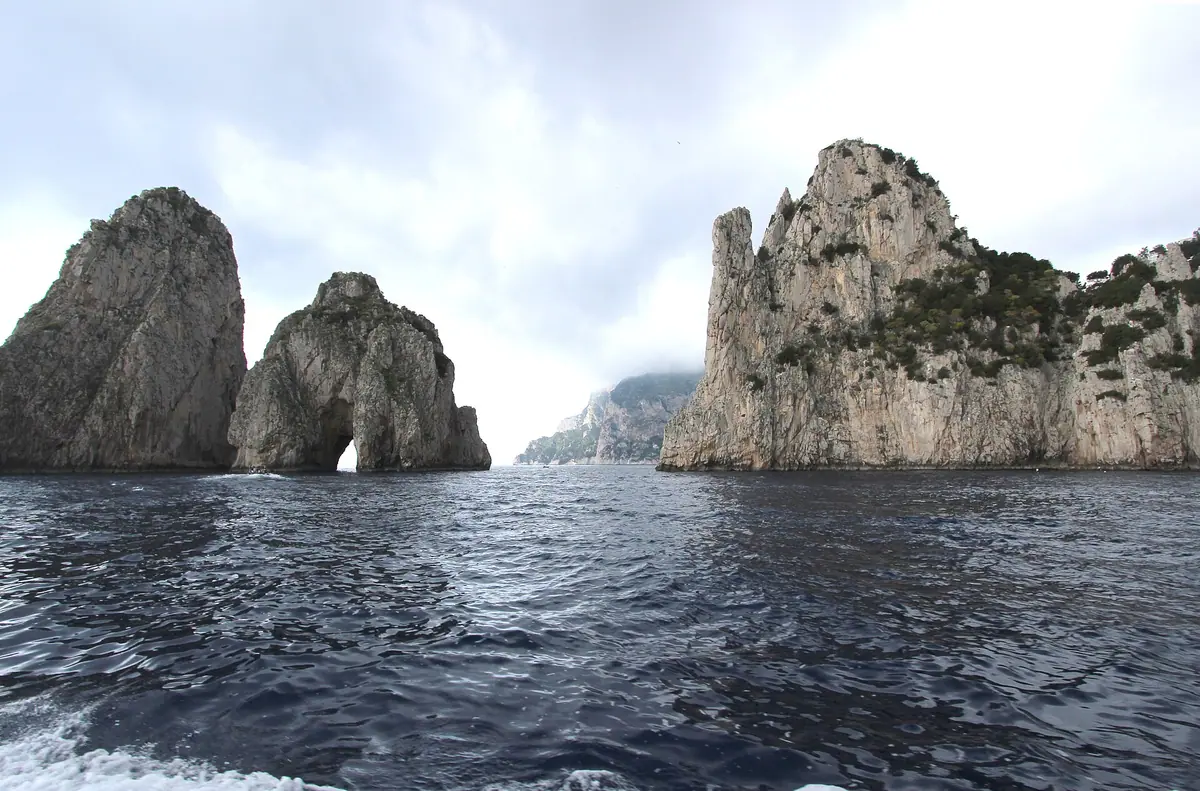
Capri is about 50 minutes from Naples by hydrofoil, with boats all year to Marina Grande. The Blue Grotto, the Faraglioni rock stacks and the Piazzetta are on the island, and so is Villa Jovis, where the emperor Tiberius ruled Rome for the last ten years of his life. Our day trip from Naples includes the crossing and an hour's boat tour round the island.
Before you go
- Time inside9–10 h
- OpenEvery day
TipThe day trip takes care of the crossing and adds an hour's boat tour round the island; the Blue Grotto is on your free time.


Capri day trips from Naples, with and without the Blue Grotto
Our day trip to Capri costs €94 and gives you about five hours of free time on the island, in Capri town and in Anacapri, the island’s other town, plus an hour’s boat tour round it, past the arch in the Faraglioni and the white and green grottoes. A coach leaves Piazza Garibaldi, opposite the central station, at 7:50 for Portici, a town along the bay, where the boat sails from. The guide speaks English, Italian or Spanish, you’re back in Naples around 19:00, and you can cancel up to 24 hours ahead.
The Blue Grotto isn’t part of it, because of the long waits, but you can go in your free time. Neither is the landing tax, the charge Capri makes on everyone who steps off a boat, which you hand to the operator when you travel; the island sets it at €2.50 from November to March and €5 from April to October.
The small-group tour, at €160, is the one that lists Blue Grotto admission. It meets at Molo Beverello at 8:00, keeps to 23 people with an English-speaking guide and takes in Anacapri, Monte Solaro and Villa San Michele as well as Capri town. It can’t be cancelled or changed, though, which matters in winter, when the sea can keep the grotto shut. The €12 rowing boat into the cave isn’t on its list of what’s included.


Ferries from Naples to Capri: hydrofoils from Molo Beverello, ferries from Porta di Massa
Going on your own, every boat from Naples lands at Marina Grande, Capri’s harbour, but they don’t all leave from the same pier. The hydrofoils of SNAV and NLG go from Molo Beverello and take about 50 minutes. The big ferries of Caremar, the region’s public ferry company, go from Calata Porta di Massa, about a kilometre along the port, and take 80 to 85 minutes, while its fast boats take about an hour. The Alibus from the airport stops at both piers.
Caremar’s fares are €14.80 on the ferry and €21.50 on the fast boat, and SNAV’s hydrofoils start at €27.50 (October 2026). On top come the landing tax and, at Caremar, a fee of 12% for buying in advance (at least €1) and €1 for each ticket bought online.
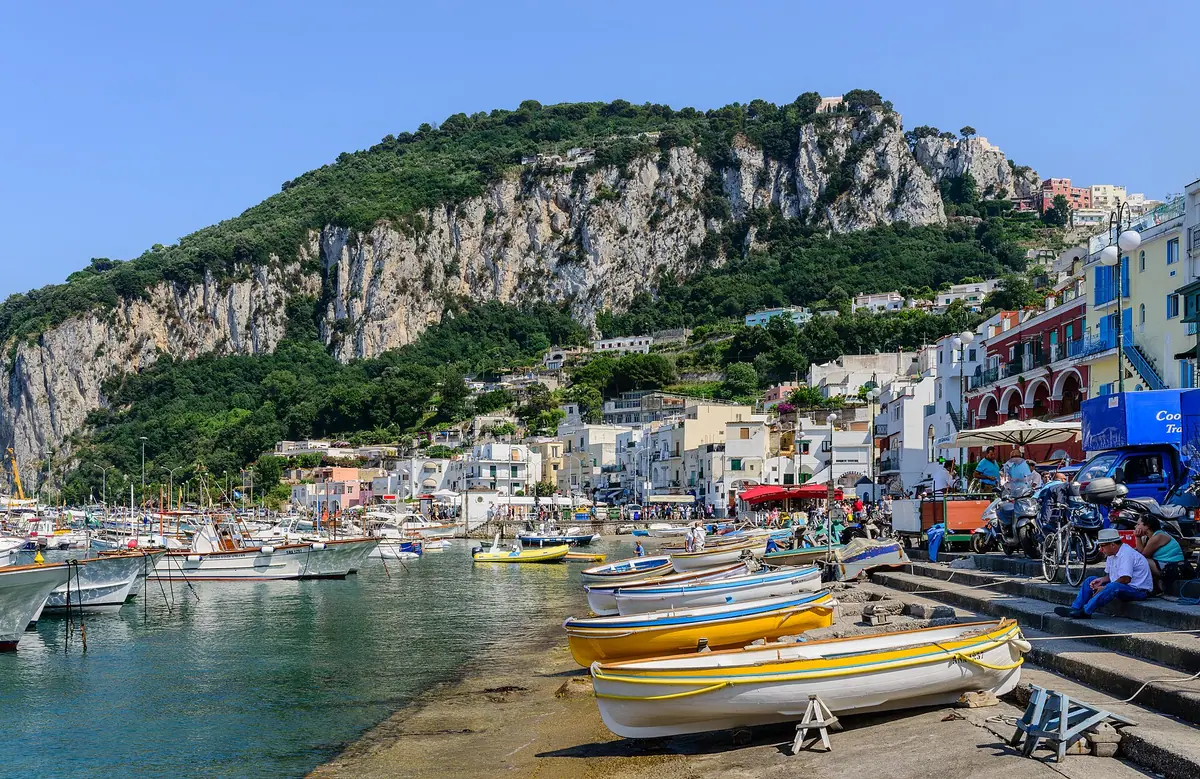
In winter there are about six crossings a day, hydrofoils and ferries together. Rough seas stop the hydrofoils first and, when they’re very rough, the ferries too, though the Caremar ferry almost always sails. In November 2026, SNAV’s hydrofoils leave Molo Beverello at 7:00, 9:30, 12:40 and 14:40, and the last one back from Capri sails at 16:30. Check Caremar’s last boat back before you set off.
If you’re starting from Sorrento instead, boats cross all year in 20 to 30 minutes, and Caremar’s fast boat costs €17.40.
The Blue Grotto in winter: open only on calm mornings
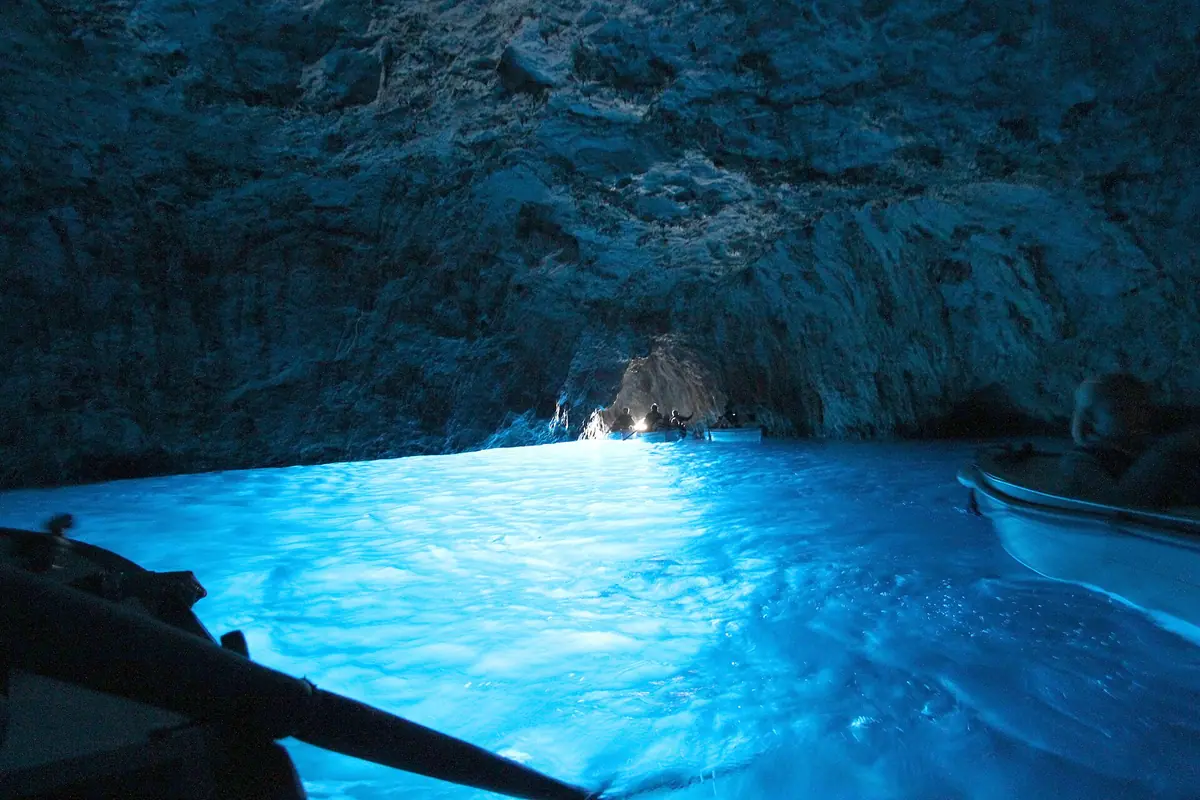
The Blue Grotto lies on Capri’s northwest side, and the blue is daylight coming in through an opening under the water. The Romans used the cave as a nymphaeum, a decorated water grotto, for the imperial villa above it, and some of the statues found inside are now in the museum at the Certosa. The German writer August Kopisch and the painter Ernst Fries, led in by a fisherman, Angelo Ferraro, made it known in 1826, which makes 2026 its bicentenary.
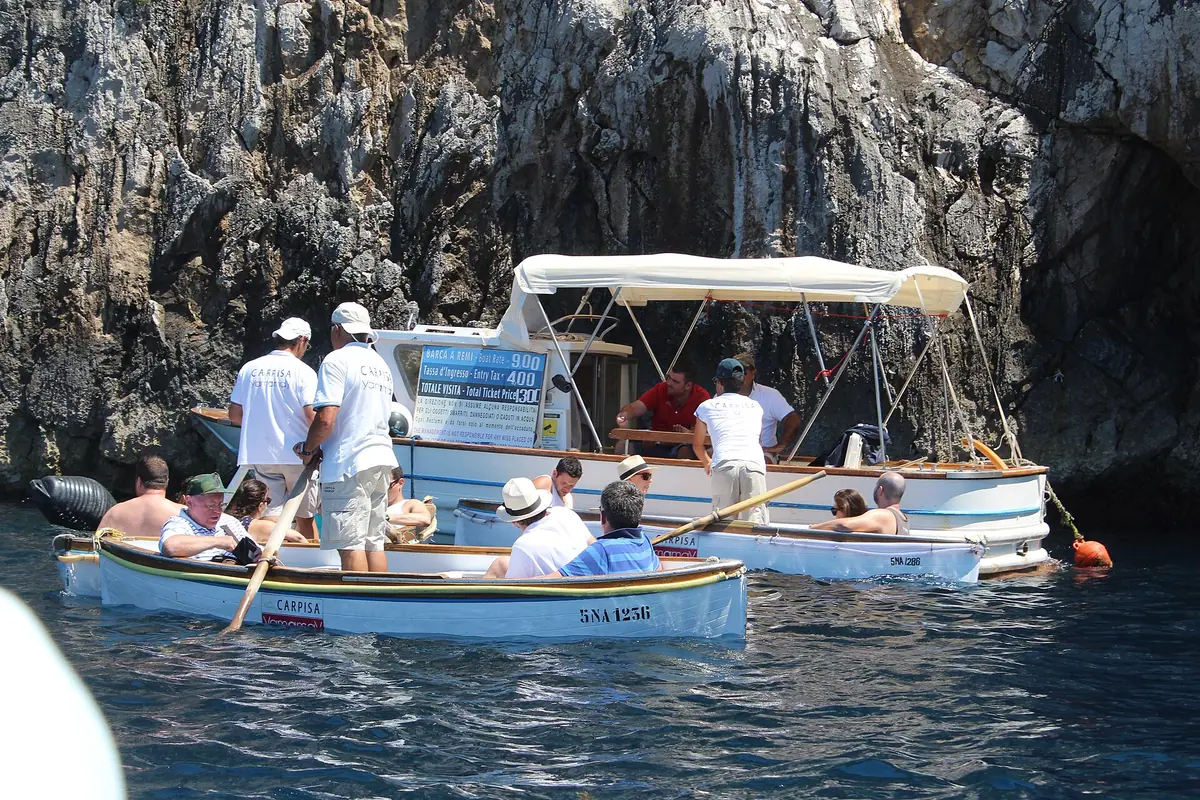
You go in by moving into a small rowing boat, one boatman and up to four passengers, and lying flat on the bottom while the boatman pulls the boat along a chain fixed to the rock, through an arch about two metres wide and a metre high at low tide. Inside you get about five minutes, and swimming, leaning out and dogs aren’t allowed.
From 16 October to 31 March the grotto opens from 9:00 to 14:00, with the last ticket at 13:30, and only when the sea allows. The boatmen judge it around 9:00 each morning and tell the ticket offices at Marina Grande, and the maestrale and tramontana, the northwest and north winds, keep it shut. The Motoscafisti di Capri, the motorboat service at Marina Grande, show the day’s status live on their site, or you can phone 081 8375646. From November to early March an open day isn’t guaranteed, so have a plan B for the morning.
It takes two tickets: €6 for the entry (free for under-18s, €2 for EU citizens aged 18 to 24) and €12 for the rowing boat, paid on the spot. From Marina Grande there are two ways to the mouth of the cave. A motorboat takes about 10 minutes and costs around €25 return; by land you take the bus to Anacapri, change to the grotto line and walk down the steps to the water, which saves the €25 but takes about 45 minutes.
Getting around Capri: the funicular, the buses and the Monte Solaro chairlift
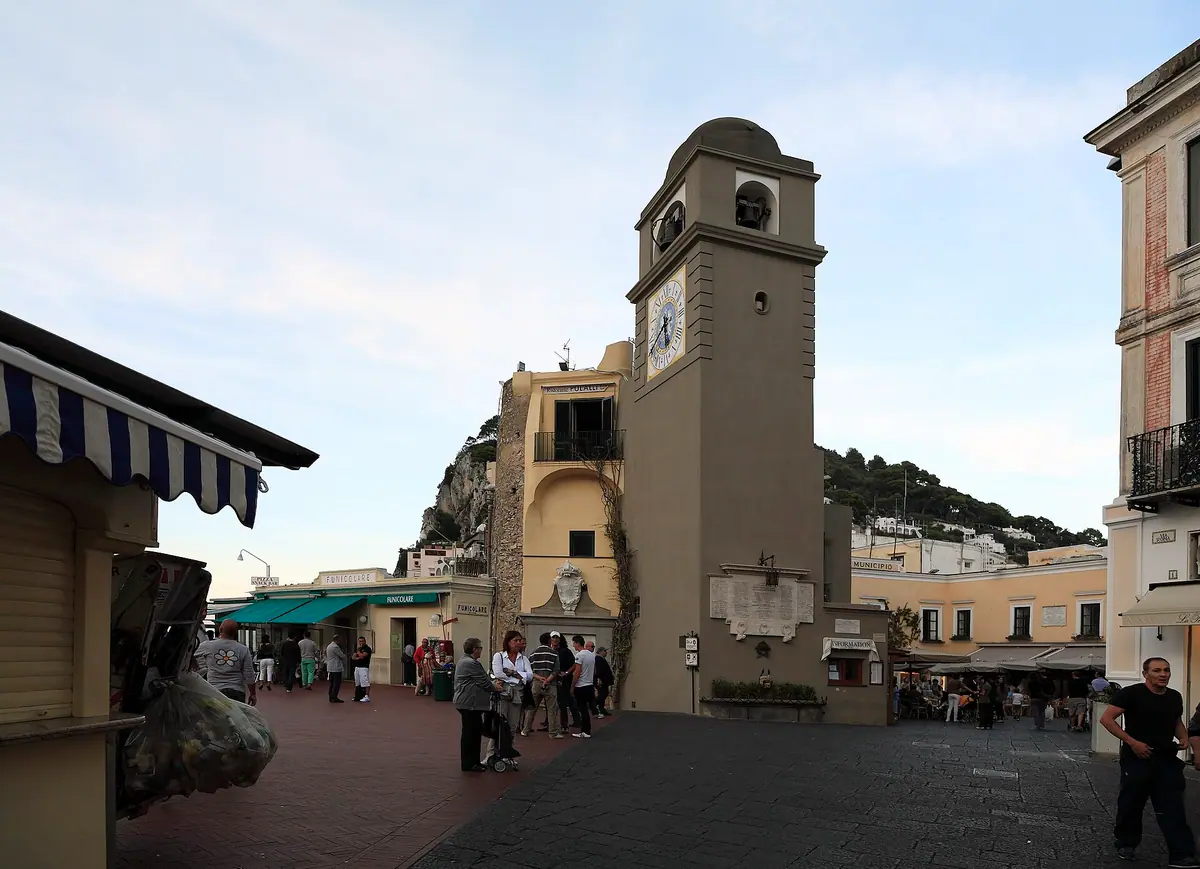
From Marina Grande the funicular climbs to Capri town in about four minutes, for €2.40 a ride (2026 fares). You tap a contactless card at the gates, one card per person, or buy a ticket in front of the ferry ticket offices. It closes for maintenance from January to Easter, and buses from ATC, the Capri bus company, replace it at the same fare. The island’s buses cost €2.50 a ride, or €3 from the driver, by card or phone only, and Anacapri is about 10 minutes from Capri town by bus.
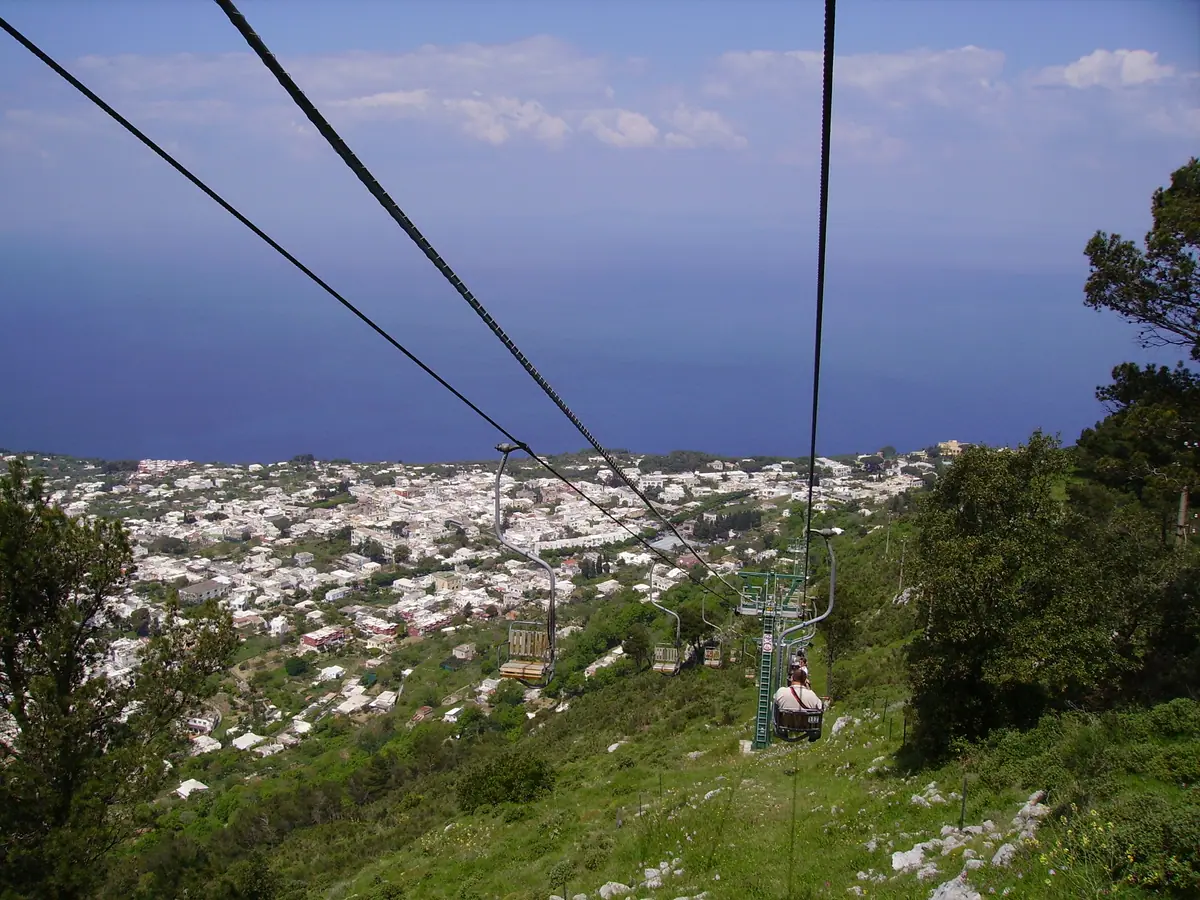
In Anacapri, the chairlift to the top of Monte Solaro, 589 metres up, takes about 12 minutes and costs €15 return or €12 one way. In November, December, February and March it runs from 9:30 to 16:00, with the last ride down at 16:30; January isn’t on its timetable, and strong wind stops it. On foot, the Certosa is 15 to 20 minutes from the Piazzetta, and Villa Jovis about 45.
Villa Jovis, the Certosa and Villa San Michele: Capri’s sights in winter
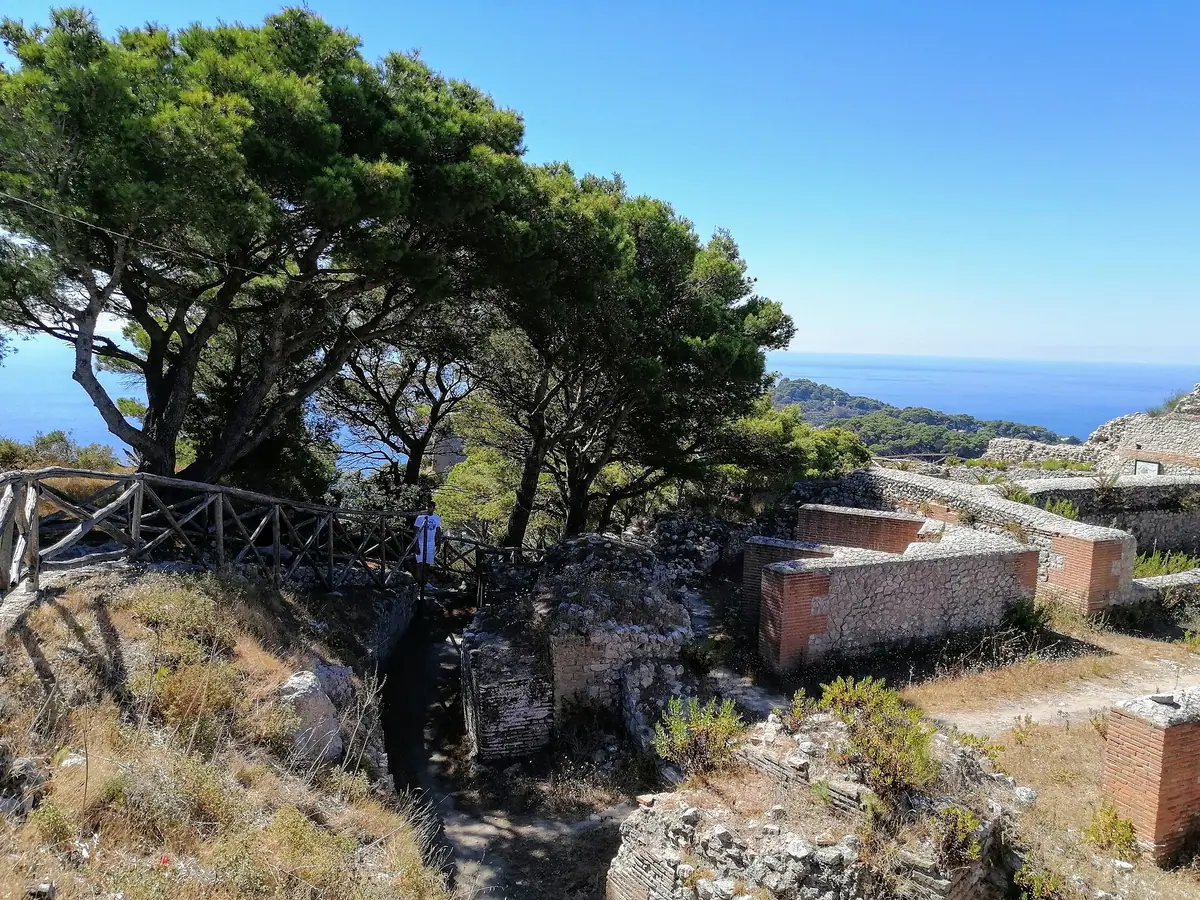
Augustus, the first emperor, made Capri his private retreat, and Tiberius, his successor, moved here in AD 27 and governed the empire from the island until he died in 37. The historian Tacitus counts twelve villas built for him, and Villa Jovis, on Monte Tiberio 334 metres above the sea, is the largest: you walk among its cisterns and baths to the emperor’s private rooms, on the cliff at the north end.
The Certosa di San Giacomo was built as a charterhouse between 1371 and 1374 by Giacomo Arcucci, Grand Chamberlain to Queen Joan I of Naples, and was later a hospice, a prison and a barracks. It now shows the work of Karl Wilhelm Diefenbach, a German painter who spent his last years on Capri, 31 paintings and five sculptures donated in 1971, and since 2024 it has housed Capri’s National Archaeological Museum.
Capri's sights this winter
- Villa Jovis
- 10:00 to 16:00 until the end of February, last entry 30 minutes before; €6
- Certosa di San Giacomo and the archaeological museum
- 10:00 to 16:00 from November to February, last entry 30 minutes before; €10
- One ticket for both, plus the Casa Rossa, a third state site in Anacapri
- €12, valid for 30 days
- Villa San Michele, Anacapri
- 9:30 to 15:00 in November, December and January, closed on Tuesdays; closed all February; €12
Villa San Michele was the home of Axel Munthe, the Swedish doctor who wrote The Story of San Michele (1929). It has an Egyptian sphinx 3,200 years old, and the 900 steps of the Phoenician Stairway link it to the harbour. At Villa Jovis, the Certosa and the grotto, under-18s go in free, and on the first Sunday of the month everyone does, the next ones being 6 December and 3 January, though the rowing boat into the grotto is still paid.
With the sights shut by 16:00, a winter day on Capri starts early and picks one end of the island for the afternoon.
Capri in a winter day: the order that works
- 1Take an early hydrofoil from Molo Beverello: it's about 50 minutes to Marina Grande.
- 2Go to the Blue Grotto first, by motorboat from Marina Grande or by bus via Anacapri, because it closes at 14:00 and only opens if the boatmen give the go-ahead around 9:00.
- 3Then pick a side of the island. In Anacapri, Villa San Michele is open until 15:00 (not on Tuesdays, and not in February) and the Monte Solaro chairlift until 16:00.
- 4Or go to Capri town for the Certosa, 15 to 20 minutes on foot from the Piazzetta, or Villa Jovis, about 45. Both take their last visitors at 15:30, so Villa Jovis fits only if you skip Anacapri.
- 5Head down to Marina Grande on the funicular, or from January the bus that replaces it, for the boat back.
Tours and day trips
More day trips to Capri
The ones other visitors book most.


People also ask
Frequently asked questions
How far is the island of Capri from Naples?
About 50 minutes by hydrofoil from Molo Beverello, or 80 to 85 minutes on the Caremar ferry from Calata Porta di Massa, a little further along the port. Capri lies in the Gulf of Naples, and boats cross all year, with fewer in winter; the hydrofoils are the first to stop when the sea is rough.
What is Capri famous for?
The Blue Grotto, a sea cave lit blue by daylight coming through an opening under the water; the Faraglioni, its rock stacks; the Piazzetta in Capri town; the chairlift up Monte Solaro; and its villas, from Tiberius's Villa Jovis to Villa San Michele, the home of the Swedish doctor and writer Axel Munthe.
Is Capri nicer than Sorrento?
For the sea, the grotto and the Roman villas, Capri; for an easy day on the train, Sorrento. Capri is an island you reach by boat, and in winter the Blue Grotto opens only on calm mornings and the sights close between 14:00 and 16:00. Sorrento is a town at the end of the train line from Naples, and boats link the two all year, so from Sorrento you can be on Capri in 20 to 30 minutes.
Is the Blue Grotto open in winter?
From 16 October to 31 March it opens from 9:00 to 14:00, with the last ticket at 13:30, and only when the sea is calm: the boatmen decide around 9:00 each morning. Entry costs €6, free for under-18s, and the rowing boat that takes you inside €12 more, paid on the spot.
Do you pay a tax to visit Capri?
Yes, a landing tax on everyone who steps off a boat: €2.50 from 1 November to 31 March and €5 from 1 April to 31 October. It's added to the ferry ticket, and on our day trip you pay it to the operator on the day.
