
Naples · Campania Artecard
National Archaeological Museum of Naples
A sundial line laid in 1791 still works in the hall where the Farnese Atlas holds up the sky.
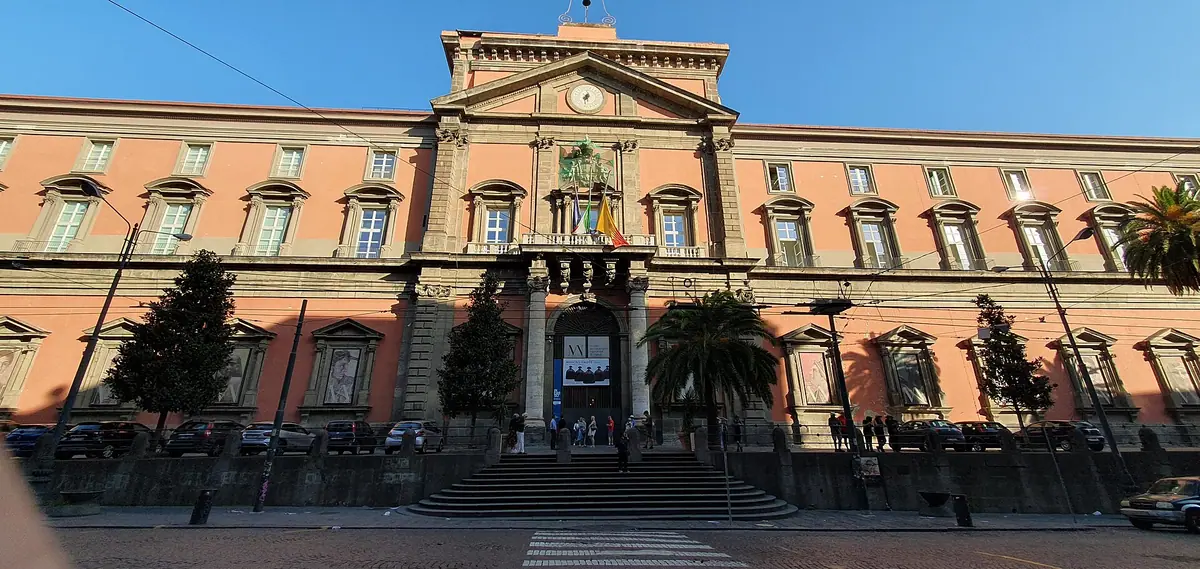
The National Archaeological Museum of Naples holds the finds of Pompeii and Herculaneum alongside the Farnese collection of ancient sculpture, with the Farnese Hercules and the Farnese Bull, both dug up in Rome's Baths of Caracalla. It also has the largest group of Roman bronzes to survive, from the Villa of the Papyri at Herculaneum, and the second Egyptian collection in Italy after Turin's. Four of the Naples cards we sell include it, and under-18s go in free.
Before you go
- Time inside2–3 h
- ClosedTuesday
TipCheck what is open before you go: until at least 30 November 2026 the mosaics (with the Alexander Mosaic) and the Gabinetto Segreto are closed, while the Farnese sculptures stay open.


Naples Archaeological Museum tickets, with an audio guide or a guide
The ticket we sell costs €24 and comes with an audio guide app for Naples, which you download to your phone in English, French, Italian or German; it’s a guide to the city, not one made by the museum. The ticket covers the temporary exhibition and the open collections, apart from the Magna Graecia rooms, lets you in once, and can be cancelled before your visit date.
The Magna Graecia rooms open only in turns anyway, half a day at a time. Under-18s go in free, and on the ticket we sell they and EU citizens aged 18 to 25 have their own options at checkout.
With an archaeologist instead of an app, the guided tour in English costs €44. It lasts two hours, with a priority ticket, meets at the ticket office 20 minutes before the start, and takes in the Farnese Hercules and the Farnese Bull. You can cancel up to 24 hours before, but it isn’t suitable for wheelchairs. The fast-track ticket, at €34, adds a fast entry at a set time and a downloadable audio guide.


Entry is free for everyone on the first Sunday of the month, the next being 6 December. On those days nothing is sold in advance, and the Egyptian collection, the Magna Graecia rooms and the Gabinetto Segreto close.
The Naples Archaeological Museum on the Campania Artecard and other cards
Four cards we sell include the museum, and which one suits you depends on what else is on your list; Naples Pass and Naples city passes sets them side by side. Since under-18s go in free, only the adults need one, and on free days none of them gets you priority.
-
Campania Artecard
One entry on the 365 Lite, two on the 365 Gold, one of five included sites on the 7-day card, with Pompeii, Herculaneum and Caserta on the same list
from €31
Buy pass→ -
Naples City Card
The museum with an audio guide, plus an underground visit of your choice and the Sansevero Chapel
from €72
Buy pass→ -
Naples City Center Pass
The museum, the Lapis Museum and the Treasure of San Gennaro, with an audio guide
from €50.50
Buy pass→ -
Naples Museum Card
Seven days, with the museum, Pompeii, Herculaneum and Caserta, entered with the QR code in the app
from €99.90
Buy pass→


If Pompeii is on your list too, the museum ticket is €24 and Pompeii is €27.50, while the Campania Artecard 365 Lite includes both, plus Herculaneum and Caserta, for €31.
What’s open at the Naples Archaeological Museum until 30 November
Some rooms are being rearranged until the end of November, so check what’s open before you plan around a single piece. The museum lists the Farnese sculptures, the frescoes and the Villa of the Papyri bronzes as open every day.
The collections until 30 November 2026
- Open every day
- Farnese sculptures and gems, Roman Campania, frescoes, objects and furniture from Pompeii's houses, Temple of Isis, model of Pompeii, prehistory (first level), Ischia, and the Egyptian collection, which closes on the free days
- Shorter hours, 10:00–18:20
- Villa of the Papyri and coins
- Magna Graecia
- Monday and Friday afternoons, Wednesday and Saturday mornings
- Prehistory, upper levels
- Monday and Friday mornings, Wednesday and Saturday afternoons
- Closed
- Mosaics and the Gabinetto Segreto to 30 November, or until further notice; epigraphy with no date
On Thursdays and Sundays the museum publishes no timetable for the Magna Graecia and upper prehistory rooms, so don’t plan a day around them.
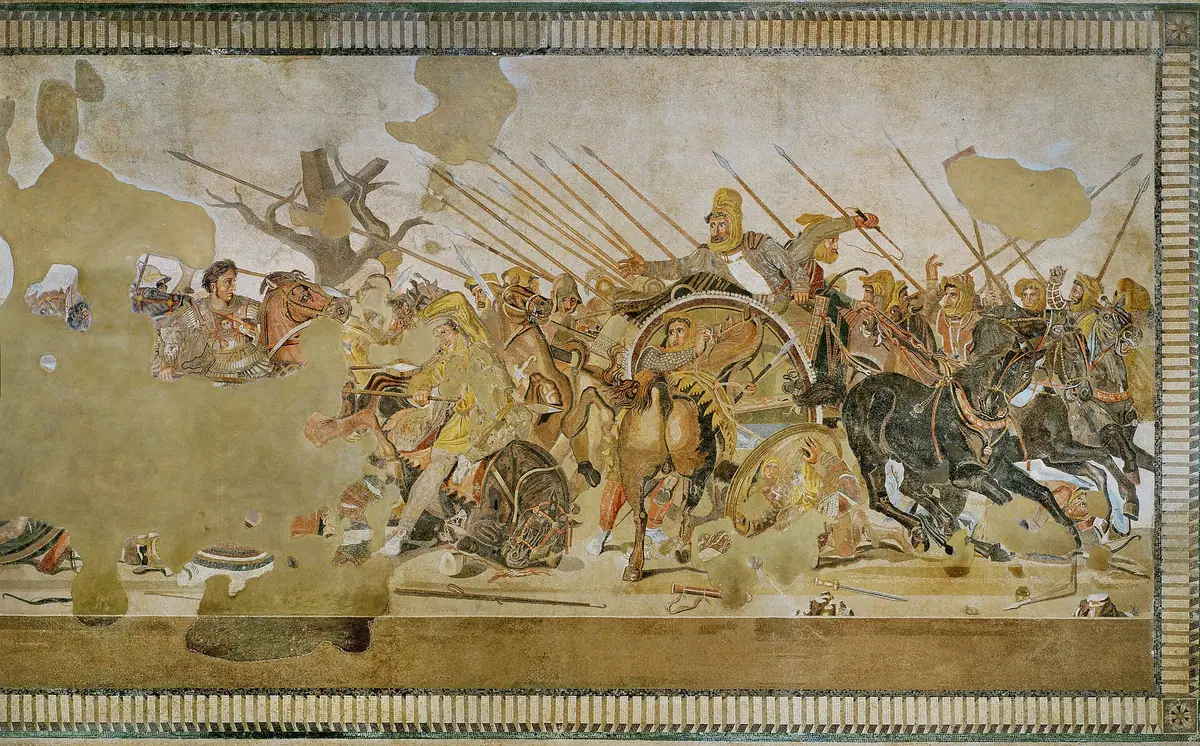
The mosaics section holds the House of the Faun’s finds from Pompeii, with the bronze Dancing Faun and the Alexander Mosaic, more than a million tiny stones showing Alexander the Great against Darius III of Persia. The Alexander Mosaic was taken off the wall in October 2023 and is being restored. The director has spoken of its return in the 2026–27 season, but there’s no date yet.
The Gabinetto Segreto, the secret cabinet, holds about 250 erotic objects, mainly from Pompeii and Herculaneum, which were kept apart from the rest of the collection and censored several times before opening for good in 2000. It’s closed for the same period.
Naples Archaeological Museum opening hours and the way in
The museum closes on Tuesdays and opens every other day from 9:00, with no separate winter timetable.
Opening hours
- Wednesday to Monday
- 9:00–19:30, ticket office until 18:30
- Closed
- Tuesdays, 1 January and 25 December
- December 2026
- Open on Tuesday 8 December, closed on Wednesday 9 December
- Thursday 5 November 2026
- Staff meeting from 13:00 to 15:00: only the ground floor and the Egyptian collection are guaranteed
At the door
- 1The western gate: while the building is being restored, the way in is the western gate, to the right of Museo metro station. Walk up the pavement and turn right at the car entrance. It's also the step-free entrance.
- 2Cloakroom: backpacks, helmets, umbrellas and big bags go in the free self-service lockers, up to 55 × 40 × 20 cm. Coats, food, glass bottles and suitcases aren't accepted, and nor are scooters.
- 3Photos: allowed for personal use, without flash, tripods or selfie sticks.
- 4Lifts and toilets: each lift serves only its own wing, and you cross between wings on the second floor, through the Meridian Hall. Toilets are on levels −2 and +3, reached from the east wing.
The MANNCaffè is open from 9:00 to 19:00, and you can eat in the café and the gardens, nowhere else.
The Farnese Bull, Hercules and the Atlas
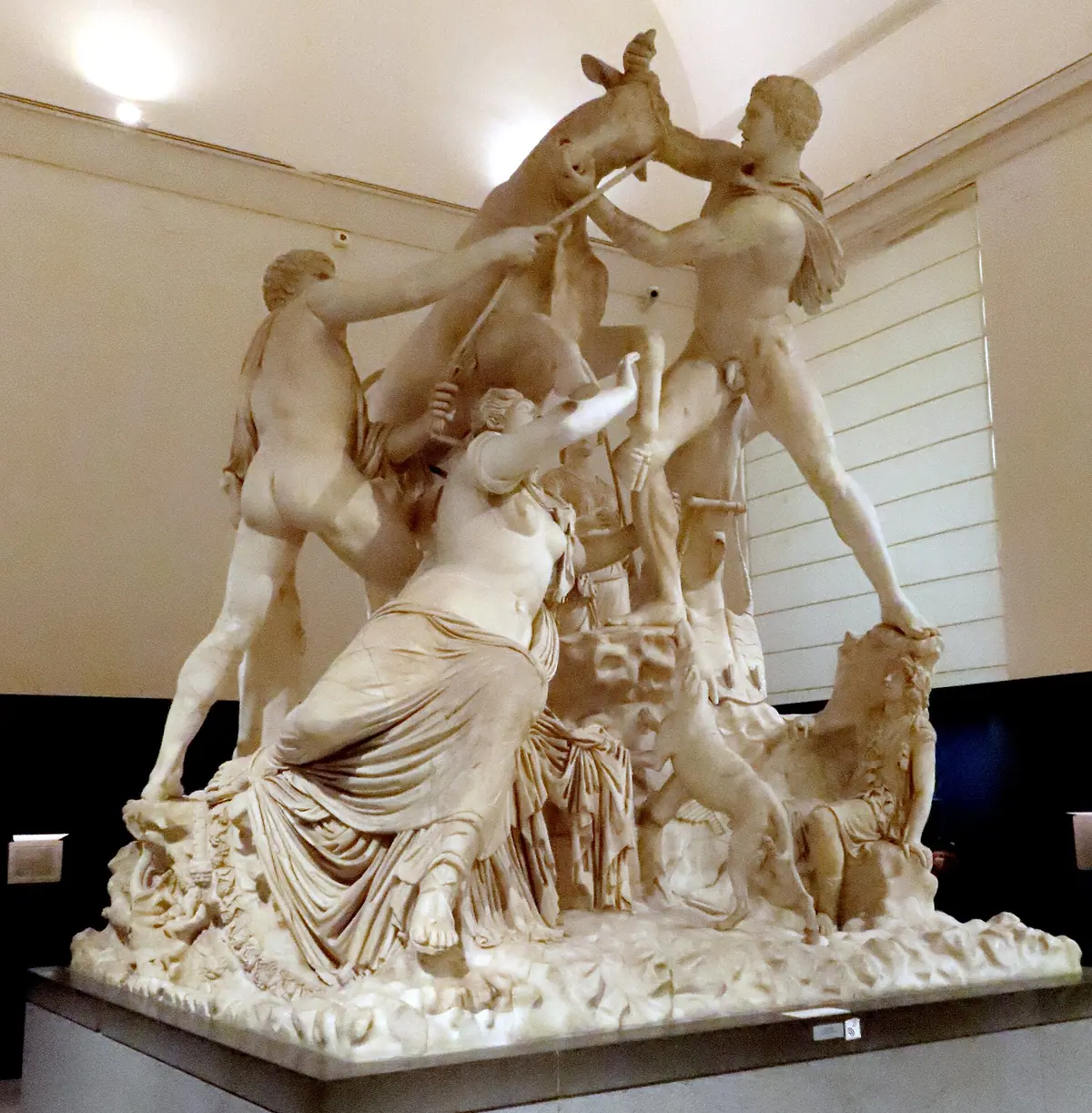
The two giants of the Farnese collection, the Hercules and the Bull, are on the ground floor, among the sculptures the museum lists as open every day. Both were dug out of the Baths of Caracalla in Rome from 1545, for a collection that began with Pope Paul III, himself a Farnese, in 1534, grew under the cardinals Alessandro and Odoardo Farnese and reached Naples through Charles of Bourbon, king of Naples, who inherited it from his mother, Elisabeth Farnese.
The collection also has engraved gems, among them the Farnese Cup, a bowl of sardonyx agate, and portraits and series of philosophers and famous men. The third giant, the Farnese Atlas, carries the heavens on his shoulders upstairs in the Meridian Hall, on the second floor.
The hall belonged to the Royal Library. The Neapolitan painter Pietro Bardellino painted its ceiling in 1781, Piranesi, the engraver of the famous views of Rome, designed its candelabra, and the sundial line laid across it in 1791 still works.
The frescoes, the Villa of the Papyri and the Egyptian collection
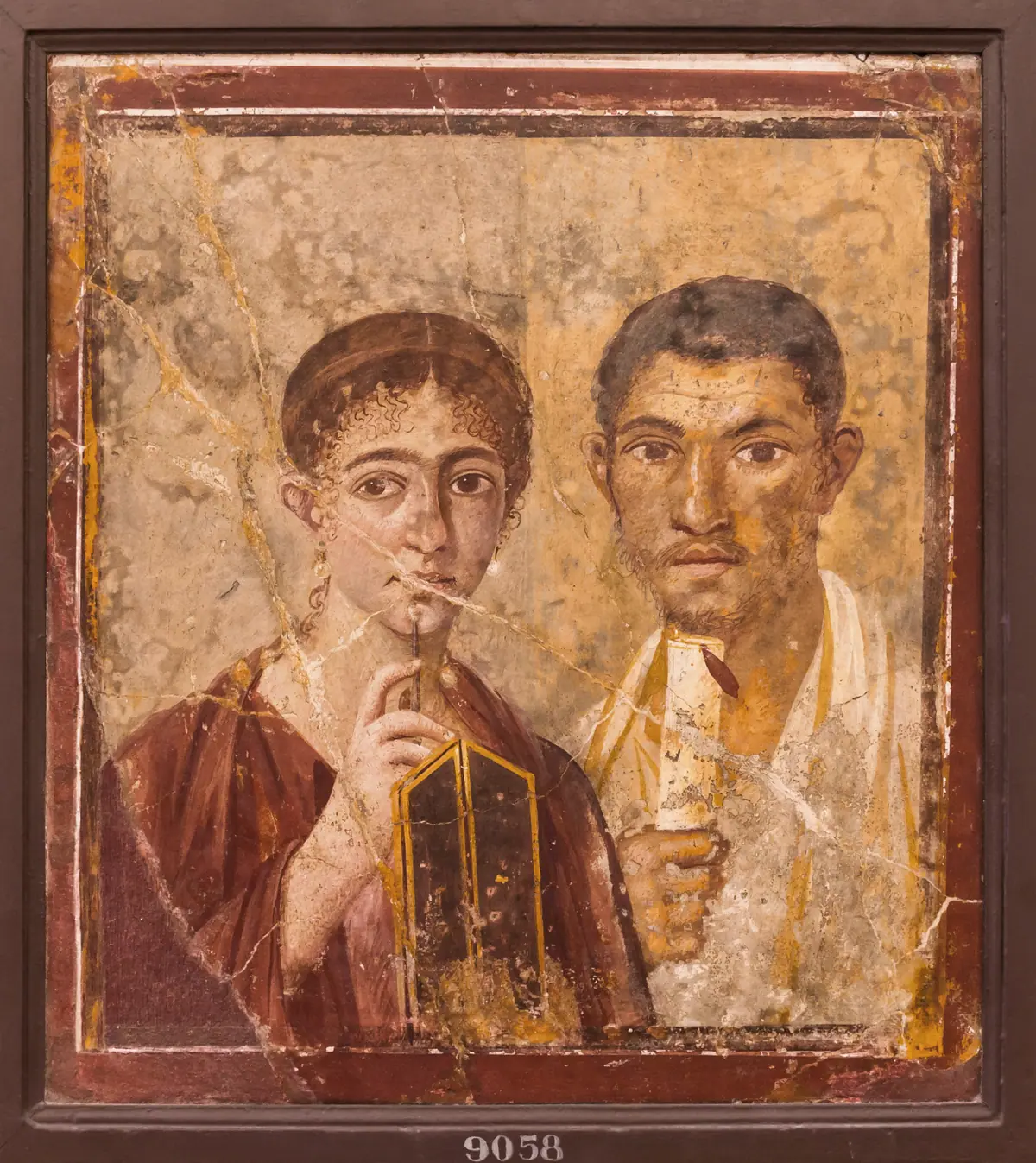
The frescoes, taken from the walls of the Vesuvian towns, are among the rooms open every day. The finds from the Villa of the Papyri, a Roman villa at Herculaneum, fill a section of their own, open from 10:00 to 18:20. Athena Promachos, the goddess as a warrior, stands at the entrance, and inside is the largest group of Roman bronzes that has come down to us: the runners, the Resting Hermes and the Drunken Satyr. More than 1,800 charred papyrus scrolls came from the villa too, though they’re kept at the National Library of Naples.
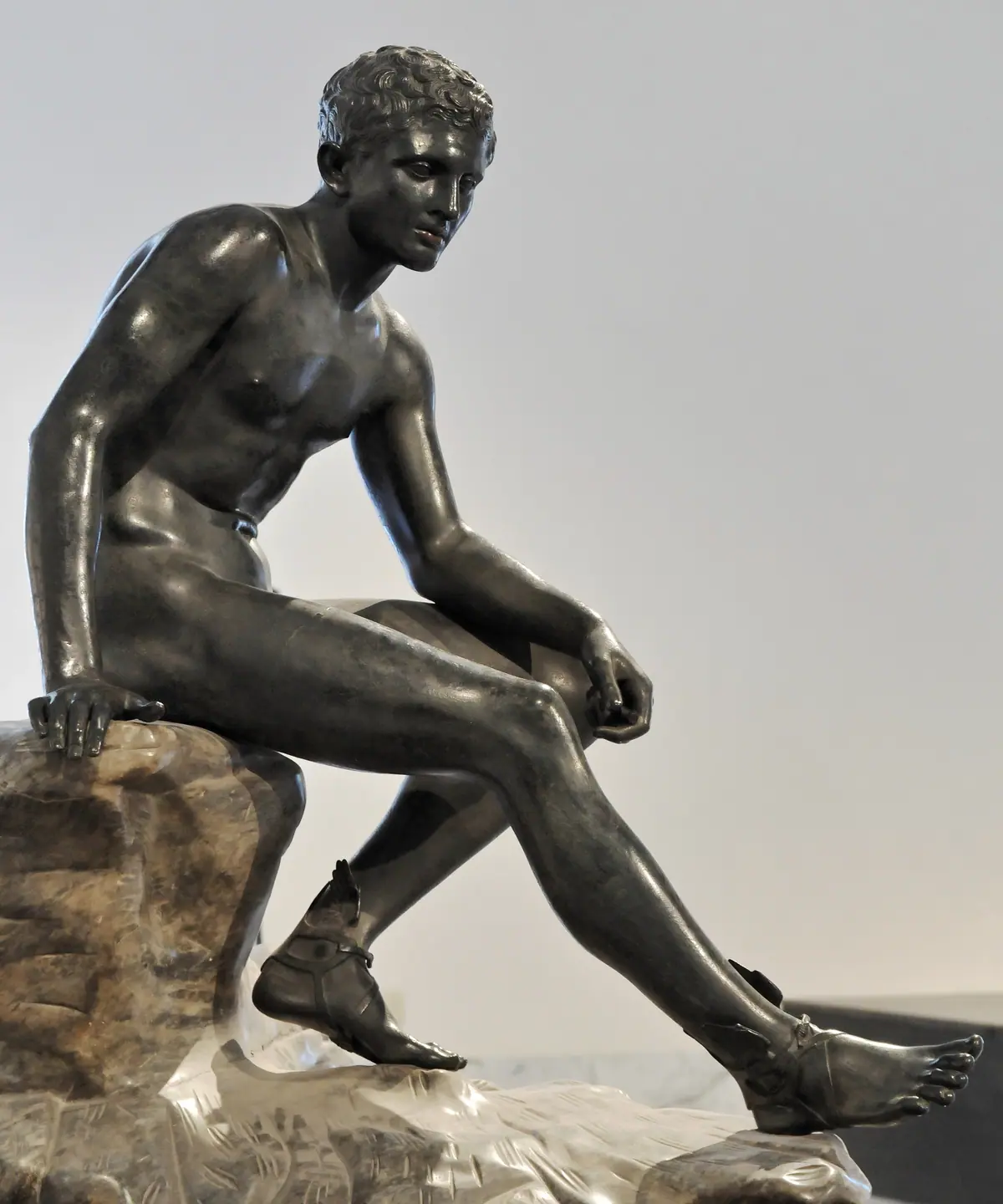
The Egyptian collection, in rooms XVII to XXIII, is the second in Italy after Turin’s, gathered between 1817 and 1821. Look for the statue known as the Lady of Naples, the mummies and three mummified crocodiles sacred to the god Sobek. The Temple of Isis section, in rooms 79 to 82, belongs with the Egyptians, and the model of Pompeii, made of cork in 1879 at a scale of 1:100, shows you the whole town before you see the ruins.
The Magna Graecia rooms, when they’re open, hold thousands of vases and terracottas from the Greek cities of southern Italy, with the Darius Vase from Canosa, the painted slabs of the Tomb of the Dancers from Ruvo and gold from Cumae and Taranto. You need flat shoes with no heels in those rooms, and the museum hands out overshoes.
From cavalry stables to Naples’s archaeological museum
The building went up at the end of the 16th century as cavalry stables, and from 1616 to 1777 it housed the university. Ferdinand IV, king of Naples, then brought the Farnese collection here, together with the finds from Herculaneum, dug since 1738, and Pompeii, dug since 1748, that until then had been shown in a museum at Portici.
It became the Royal Bourbon Museum in 1816 and the National Museum in 1860. The paintings left for Capodimonte in 1957, and that’s when it became the archaeological museum you visit today.
Getting to the Naples Archaeological Museum by metro
Metro line 1 has a station named after the museum, Museo, and it comes up right beside it. Line 1 gets you there from both the central station and the port, and from the station line 2 works too: get off at Cavour, a short walk away.
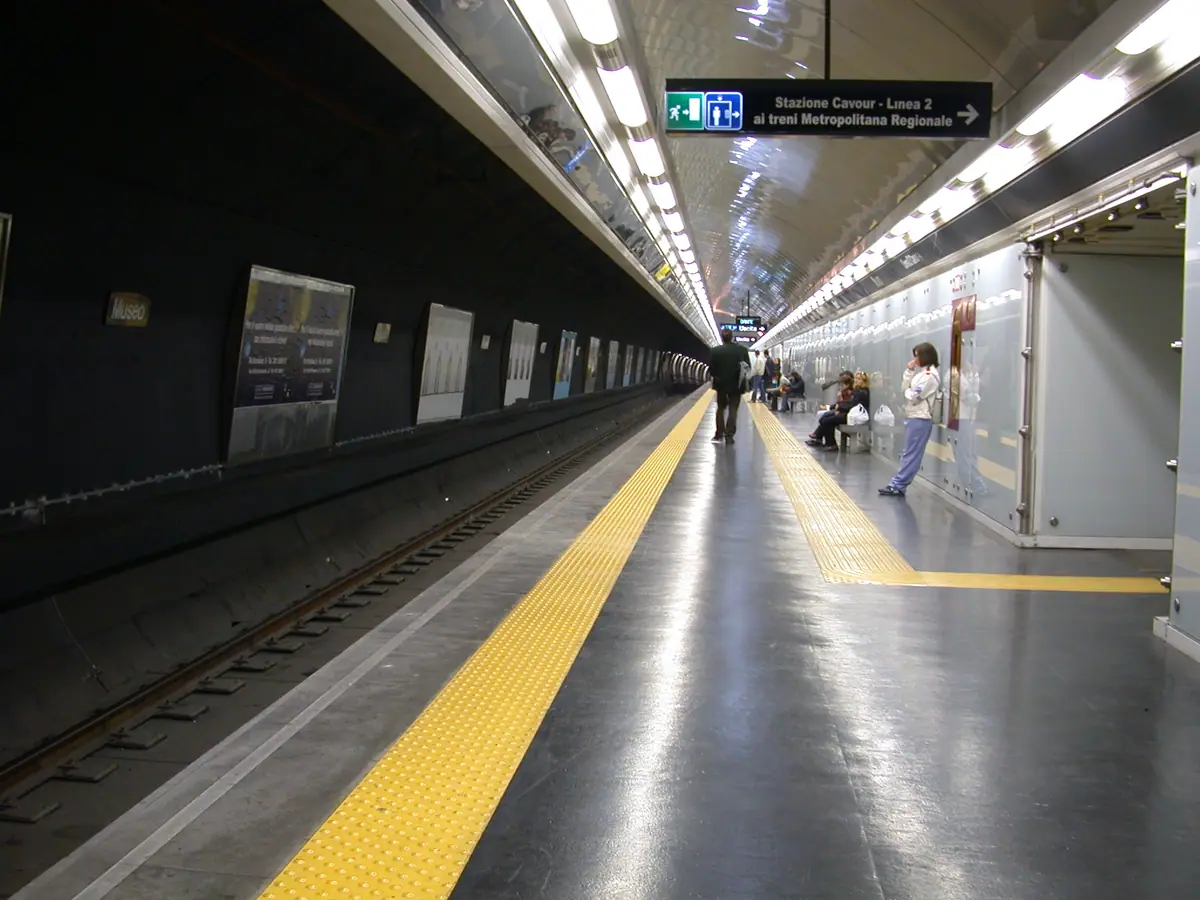
Flying in, take the Alibus to the central station and change to the metro, or a taxi at the fixed fare of €24. From the port there’s also bus R1, from Via Medina to Piazza Museo, and buses 139, 168, C63 and 178 stop nearby. Drivers will find blue-zone parking in the streets around.
City cards
National Archaeological Museum of Naples with a city card
Pick the one that fits your trip. Prices are per adult, and you choose your dates on the next page.


Tickets
Popular tickets around Naples
The ones other visitors book most.


People also ask
Frequently asked questions
How much is entry to the Naples Archaeological Museum?
The ticket we sell costs €24, with an audio guide app for Naples. Under-18s go in free, and on the ticket we sell they have their own option at checkout, as do EU citizens aged 18 to 25. Entry is free for everyone on the first Sunday of the month.
How long does it take to see Naples Archaeological Museum?
Two to three hours for the main collections; the guided tour we sell takes two. Until 30 November 2026 the mosaics and the Gabinetto Segreto are closed, so the Alexander Mosaic is off view, but the Farnese sculptures, the Villa of the Papyri bronzes, the Egyptian collection and the frescoes are open.
Is Naples National Archaeological Museum free?
For under-18s, always. For everyone, on the first Sunday of the month, with nothing to book in advance; on those days the Egyptian collection, the Magna Graecia rooms and the Gabinetto Segreto stay closed. Cards get no priority on free days.
Is the Alexander Mosaic on display?
No. The mosaic of Alexander the Great fighting Darius III was taken off the wall in October 2023 for restoration, and the museum's director has spoken of the 2026–27 season for its return, without a date. The whole mosaics section is closed until at least 30 November 2026.
Is the Naples Archaeological Museum open on Tuesdays?
No, it closes every Tuesday. In 2026 there's one swap: it opens on Tuesday 8 December, a public holiday, and closes on Wednesday 9 December instead.
