
Florence · Firenze Card
Synagogue and Jewish Museum of Florence
The green dome on Florence's skyline began with one man's will.
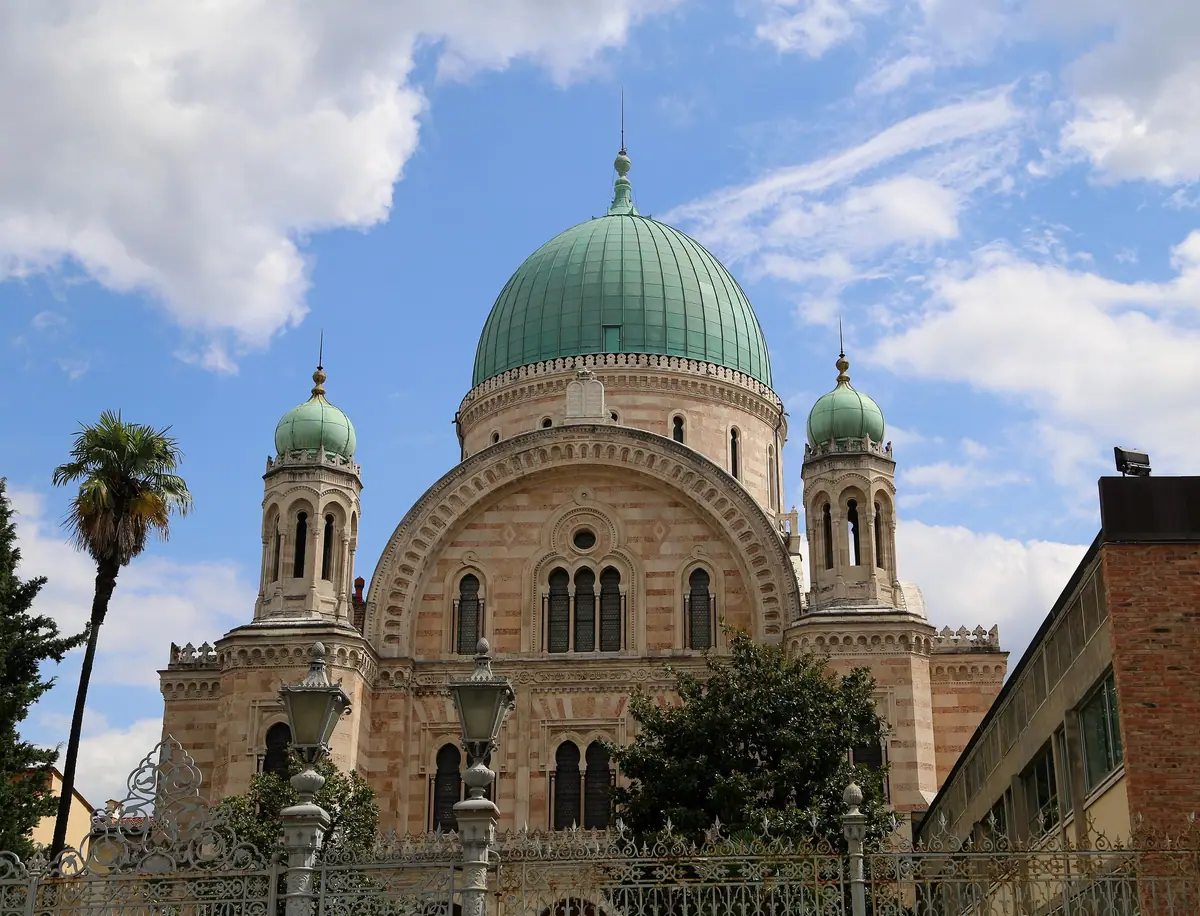
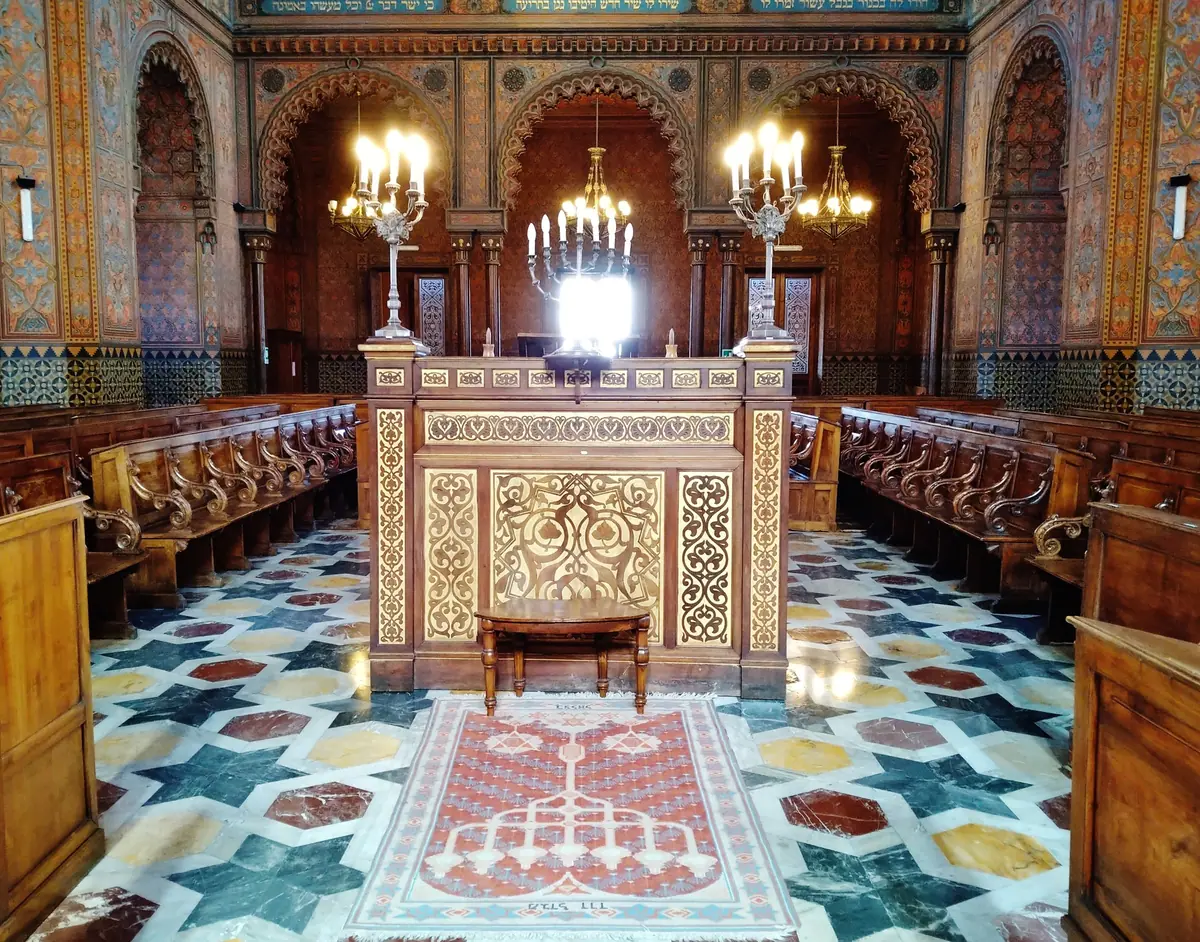
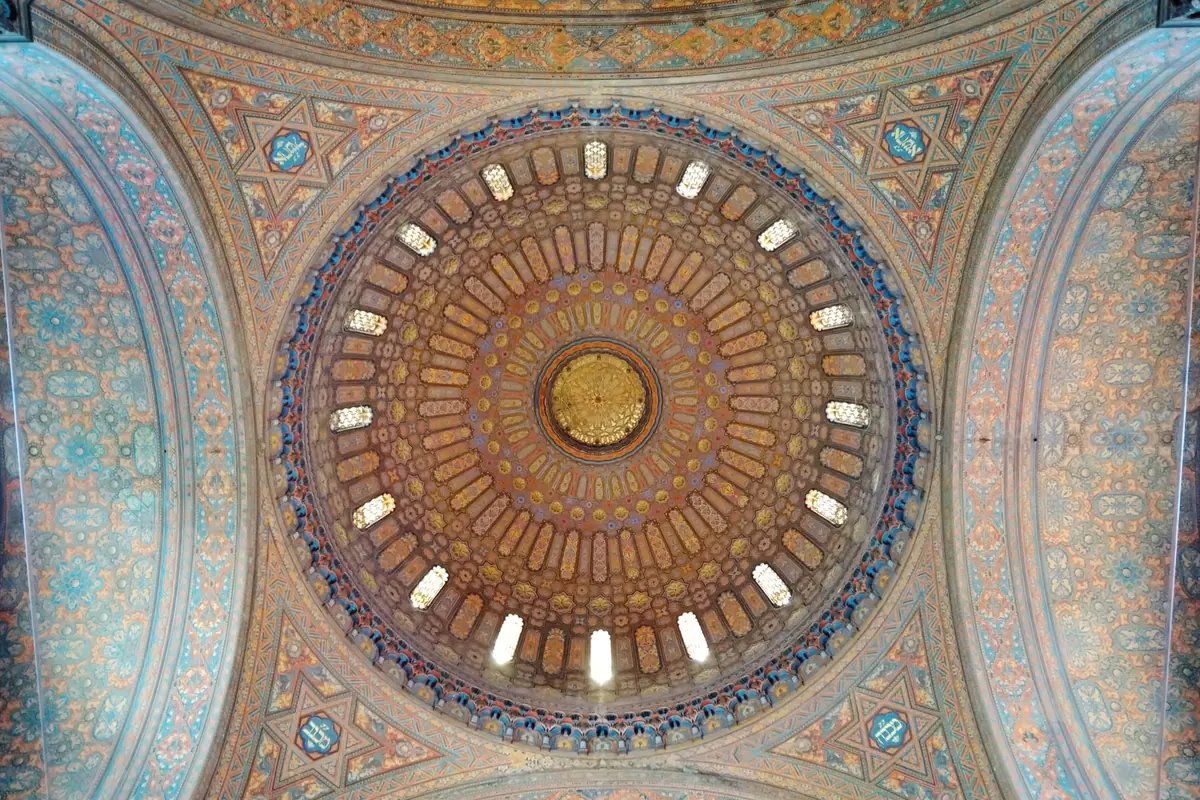
Florence's synagogue is the green copper dome you pick out over the city's rooftops, built in a style called Moorish that blends Moorish, Romanesque and Byzantine elements, and inaugurated in 1882. Inside, the walls are painted with arabesques picked out in gold that lead your eye up to the great dome, and the Jewish Museum fills the two floors above the prayer hall with the silver and textiles of the old ghetto. One ticket covers the synagogue and the museum, and the Firenze Card counts it as an included entry with no booking.


Florence synagogue tickets, and who pays less
The Florence synagogue is the green copper dome you see over the city’s rooftops, and inside, its walls are painted with arabesques picked out in gold, all the way up to that dome. One ticket covers the prayer hall on the ground floor and the Jewish Museum on the two floors above it, so it’s a single visit through a single door, at Via Farini 6.
Our ticket costs €13, with the booking costs included, and it covers the synagogue, the museum and whatever temporary exhibition is on. Individual visitors don’t have to book a time. Groups are asked to.
Who pays less
- Reduced ticket, with proof
- €8.50 on our ticket, for ages 6 to 14, students aged 15 to 26, journalists, and holders of a ticket for the Synagogue and Jewish Museum of Siena
- Free
- Under-6s, disabled visitors and a companion, Firenze Card holders
The synagogue belongs to Florence’s Jewish Community, which runs it with Opera Laboratori, so it isn’t one of the state museums, and the free first Sunday at the state museums doesn’t apply here.
The museum also runs guided tours in Italian on some Sundays, at €10 a person, for up to 30 people. They have to be booked by phone, on +39 055 2989879, any day from 9:00 to 18:00. The last series it announced ran until April 2026, so ring to ask whether one falls during your stay.
The Florence synagogue on the Firenze Card: walk in, no booking
The Firenze Card, Florence’s official museum card, gets you into about 60 museums once each over 72 hours, and the synagogue is one of its included entries. Here it’s also one of the simplest to use: no booking and no phone call. You show the card at the ticket desk and go in on the next visit slot available, and under-18s in the cardholder’s family come in with you.
-
Firenze Card
Included, with no booking: show the card at the desk on Via Farini 6 and take the next visit slot
from €94
Buy pass→
The entry the card covers here is worth €13, so the synagogue won’t be what makes the card pay for itself. That takes four or more of the big paid museums, and with the Uffizi and the Accademia alone the card loses money. It’s a cheap stop to fit in between the bigger museums on a card day. Because the 72 hours run without a break, keep it off Saturday, when it’s closed, and off Friday afternoon, when it shuts at 15:00 in the cooler months.
The Uffizi Passepartout and the Duomo’s passes don’t include it, and our page on the Firenze Card and Florence’s other passes sets them all side by side. The card itself is sold through GetYourGuide.
Florence synagogue opening hours, the Sabbath and the Jewish holidays
The synagogue keeps two timetables, summer and winter, and both are built around the Sabbath: open on Sundays, short on Fridays, closed on Saturdays. The ticket desk closes 45 minutes before the doors do.
Opening hours
- 1 October to 31 May, Sunday to Thursday
- 10:00–17:30
- 1 October to 31 May, Friday
- 10:00–15:00
- 1 June to 30 September, Sunday to Thursday
- 10:00–18:30
- 1 June to 30 September, Friday
- 10:00–17:00
- Saturday
- Closed
- Also closed
- Jewish holidays and 25 December
The museum publishes its holiday closures for the year, and the 2026 list ended with Simchat Torah on 3 and 4 October. Between now and the end of the year, the only closure is 25 December. The 2027 dates aren’t out yet, so if you’re coming in spring or early autumn, when the big holidays fall, check the museum’s calendar before you plan around it.
Services are a separate matter from the tourist visit. To attend one, you ask for permission at least a week ahead, through a form on the Jewish Community’s site.
Inside the Florence synagogue: the painted prayer hall under the dome
From the street you go in through a cast-iron gate into a garden, with the building in front of you: a facade of white travertine and pink stone, and the dome above it. The style is called Moorish, though it blends Moorish, Romanesque and Byzantine elements, and Lonely Planet compares the building to Hagia Sophia in Istanbul.
The prayer hall is the ground floor. Up close, the gold arabesques share the walls with geometric patterns, and the great dome they lead to sits over the point where the arms of the hall cross. Light comes in through stained glass in several colours, and the floor is laid in marble mosaic.
Upstairs in the Jewish Museum of Florence: ghetto silver and family rites
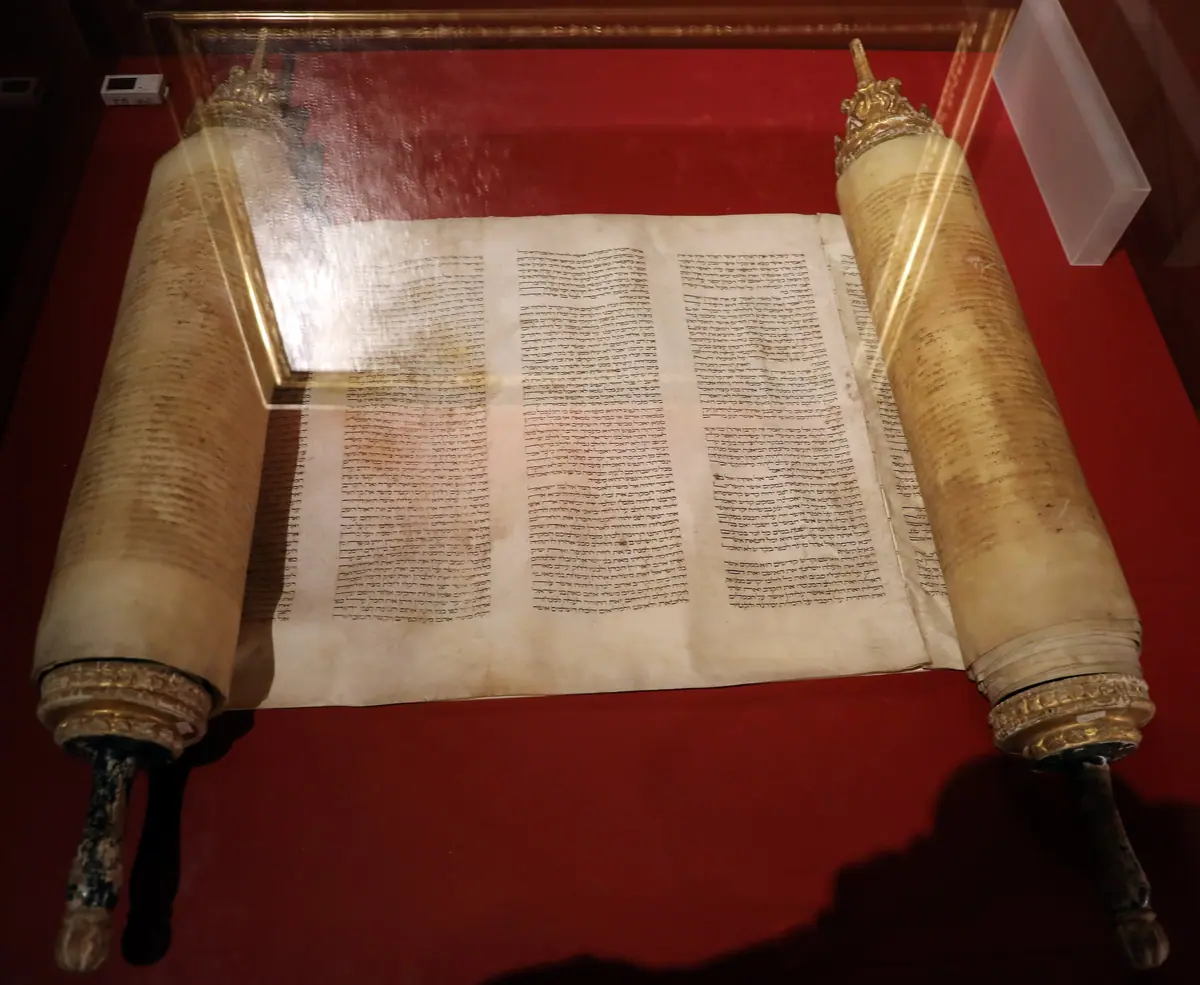
Stairs and a lift take you up to the museum. The first-floor room tells the story of Florence’s Jews through ceremonial textiles and silver from the late 16th to the 19th century. Many of the pieces come from the two synagogues of the old ghetto, the Italian and the Spanish or Levantine, along with ornaments for the Sefer Torah, the handwritten scroll of the five books of Moses.
The second floor moves from the synagogue to the home, with objects for the rites of family life: birth, marriage and a child’s coming of age in the faith. From this floor you also get a view down into the prayer hall.
Two more rooms that tell the story
- 1In Il racconto del Tempio, an immersive room, life-size figures of David Levi, who paid for the synagogue, the architect Marco Treves and the rabbi Samuel Margulies tell how it was built.
- 2The Stanza della Memoria follows Florence's Jews from their emancipation through the Resistance and the Shoah, the Holocaust, to the community's rebirth after the war.
How Florence’s synagogue was built, and how it survived 1944
The silver upstairs comes from a ghetto set up in 1571, where Florence’s Jews lived with their two synagogues. In 1848 Tuscany granted them civil equality, and in 1861 full citizenship came with the new kingdom of Italy. The ghetto itself was demolished in the 1890s, which is why its synagogues survive only as the objects in the museum.
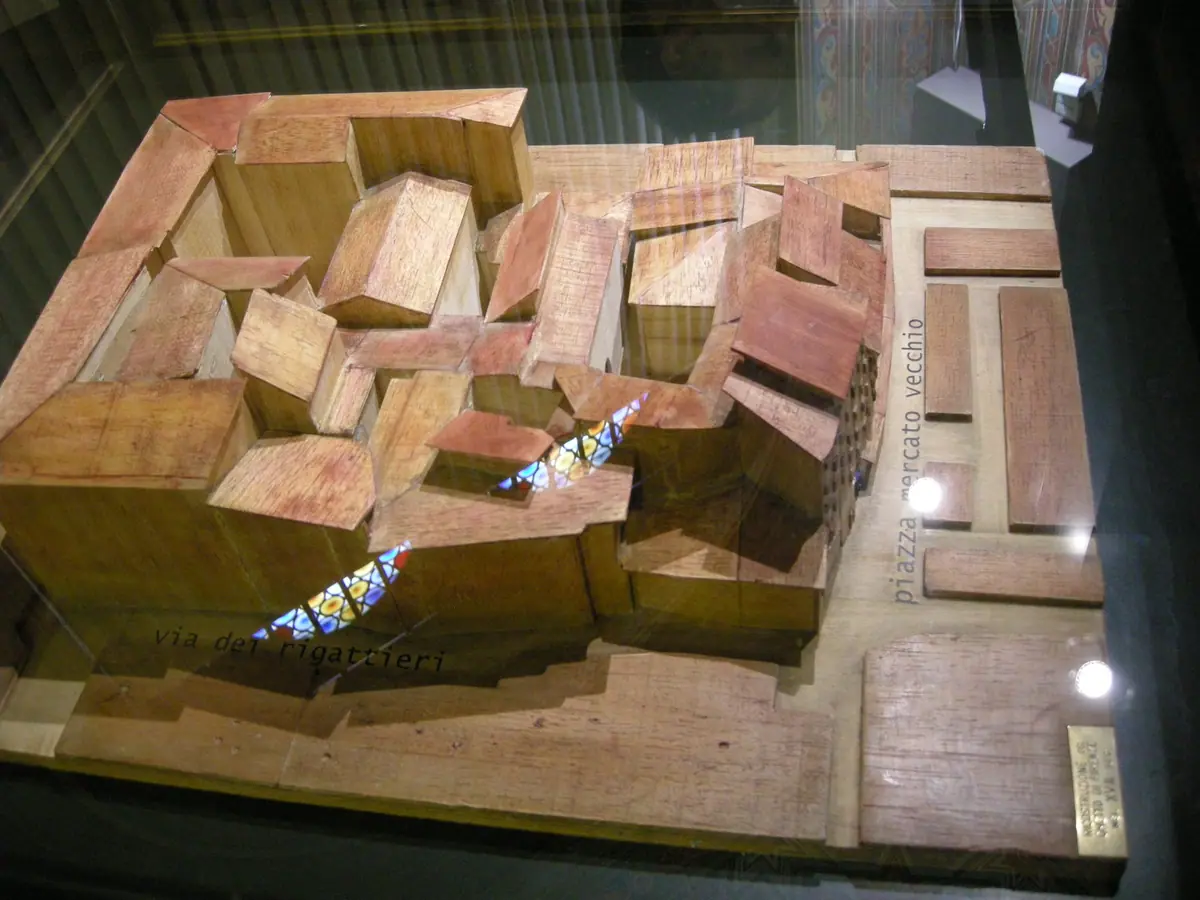
David Levi, a cavaliere, roughly the Italian equivalent of a knight, left his estate for “a monumental temple worthy of the city”. Marco Treves designed it with Mariano Falcini and Vincenzo Micheli, and it was inaugurated in 1882. It’s one of the largest synagogues in Southern Europe, and among the most important built in the years after emancipation.
In August 1944, German troops pulling out of Florence, with Italian fascists, laid explosives in the building. The Italian resistance defused most of them, and the damage was limited. It was restored after the war and again after the Arno flood of 1966. Today the community has about 1,400 members, and the synagogue follows the Sephardic, Orthodox rite.
Finding the Florence synagogue entrance on Via Farini
Some maps put the synagogue at number 4, but the door you want is number 6, in the Mattonaia district, where the museum and the ticket desk are. If you arrive with the Firenze Card, that’s also the desk where you show it. Inside, the synagogue and the first floor are fully accessible and the second floor partly, with a lift and an adapted toilet.
Tickets
Popular tickets around Florence
The ones other visitors book most.


People also ask
Frequently asked questions
Is the Florence synagogue open on Saturdays?
No. The synagogue and the Jewish Museum close every Saturday, the Sabbath, and on Jewish holidays. On Fridays they close early: at 15:00 from October to May and at 17:00 from June to September.
How much does it cost to visit the Florence synagogue?
Our ticket costs €13, booking included, with a reduced option at €8.50 for children aged 6 to 14, students aged 15 to 26, journalists and anyone with a ticket from the Synagogue and Jewish Museum of Siena, with proof. Under-6s, disabled visitors and a companion, and Firenze Card holders go in free.
Is the Florence synagogue included in the Firenze Card?
Yes, as an included entry, and there's nothing to book. You show the card at the ticket desk on Via Farini 6 and go in on the next visit slot available.
Do I need to book the Florence synagogue in advance?
Not as an individual visitor: there's no time slot, and you go in on the next visit with your ticket. Booking is asked of groups, and the guided tours, at €10 a person, have to be booked by phone.
Is the Florence synagogue wheelchair accessible?
The synagogue and the first floor of the museum are fully accessible, and the second floor partly. There's a lift and an adapted toilet.