
Florence · Firenze Card
Santa Croce
Michelangelo and Galileo are buried here, and Dante's tomb is still waiting for him.
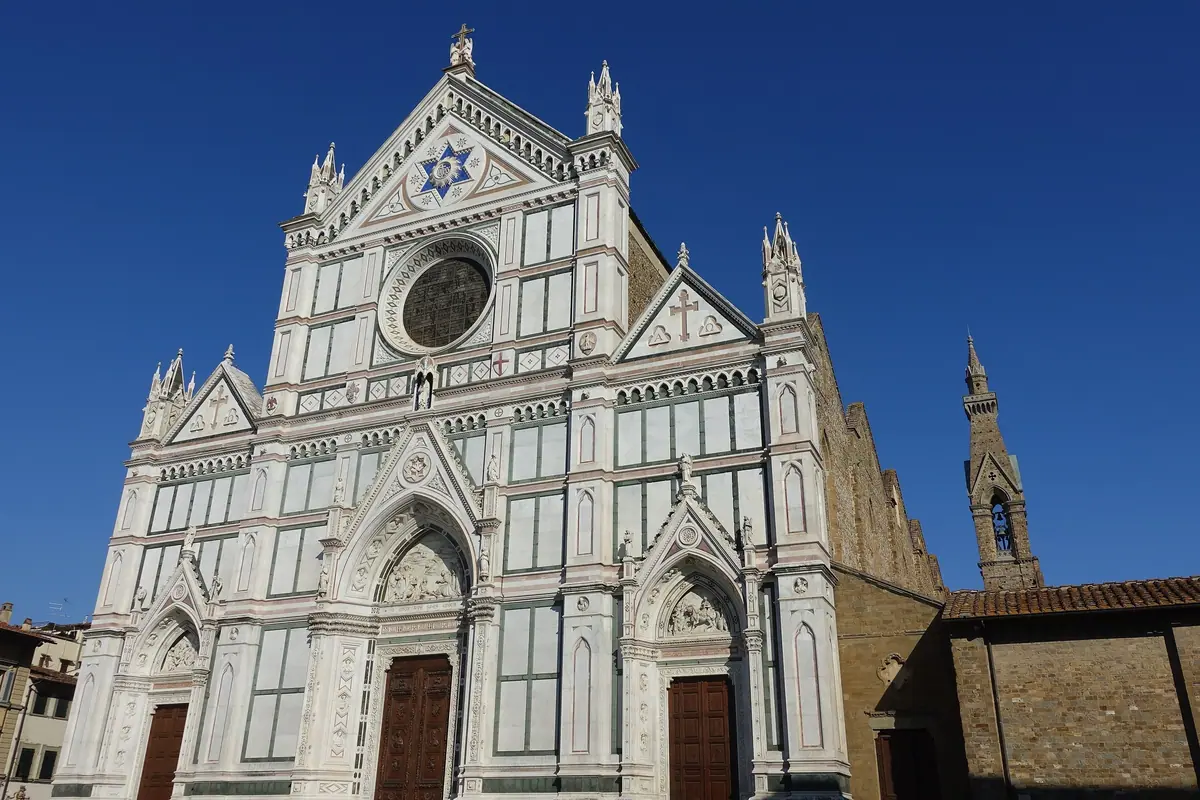
Santa Croce, in Florence, is the basilica where Michelangelo and Galileo are buried, along with Machiavelli and Rossini, and where Dante has a monument but no grave. Giotto painted the frescoes in two of its chapels, and Brunelleschi built the Pazzi Chapel at the end of its first cloister. One ticket covers the basilica, the cloisters, the Pazzi Chapel and the museum with Cimabue's Crucifix, the tour we sell adds a guide in English or Italian, and the Firenze Card includes the entry.


Santa Croce tickets: one paid entry for the whole complex, or a guided tour
Santa Croce is a working church, but going in is paid, and one ticket opens the whole complex: the basilica, the cloisters, Brunelleschi’s Pazzi Chapel and the museum in the old refectory, where Cimabue’s Crucifix hangs. Children aged 11 and under go in free, and so do Florence residents, disabled visitors with a companion and Firenze Card holders.
The ticket we sell is a guided visit with the entry included: Santa Croce entry and guided tour, from €49.90. A guide takes you round in English or Italian, and you hear them through headphones. Children pay €19.90, infants go free, and you can cancel up to 24 hours before your time.

The plain entry ticket, with no guide, is sold by the Opera di Santa Croce, which runs the complex, at its ticket office and online. Individual visitors don’t have to book a time, so what our ticket gives you is the guide: someone to tell you whose tomb is whose and which chapels Giotto painted.
Santa Croce on the Firenze Card, the only pass that covers it
Santa Croce is one of about 60 museums on the Firenze Card, Florence’s official city card, which costs €94 and runs for 72 hours from your first entry, with one visit to each museum. The card’s rules ask you to book only at a handful of places, among them the Uffizi, the Accademia and the Palazzo Vecchio, and Santa Croce isn’t one of them. Under-18s in the cardholder’s family go in free with the card.
The Firenze Card is the only pass in Florence that covers Santa Croce: the Uffizi passes and the Duomo passes leave it out. The card starts paying off at five or six paid museums, and Santa Croce can be one of them. A trip built around the Uffizi and the Accademia alone still comes out cheaper on single tickets. The Firenze Card is sold through GetYourGuide, and Firenze Card and Florence’s other passes sets it against the alternatives.
Santa Croce opening hours: afternoons only on Sundays, and the dress code
From Monday to Saturday Santa Croce opens at 9:30, Mondays included, which helps in a city where plenty of museums close that day. Sundays are the catch: the complex opens only at 14:00, and the same goes for the religious holidays of 6 January, 1 November and 8 December.
Opening hours
- Monday to Saturday
- 9:30–17:30, last entry 17:00
- Sundays
- 14:00–17:30, last entry 17:00
- 6 January, 1 November and 8 December
- 14:00–17:30, as on a Sunday
- The basilica
- Starts closing at 17:20, so visitors can make their way out
A few dates this autumn are different. The Opera has posted notices for 8 November and for 20 and 26 December, which Florence’s tourist information lists as closed days. Check before you build a day around any of them. Santa Croce isn’t a state museum, so the free first Sunday of Florence’s state museums doesn’t apply here.
Because it’s still a church, the route can change during services and celebrations. Knees and shoulders must be covered, and staff check at the door: a visitor has reported being turned away.
Inside the basilica of Santa Croce: Michelangelo, Galileo and Dante’s empty tomb
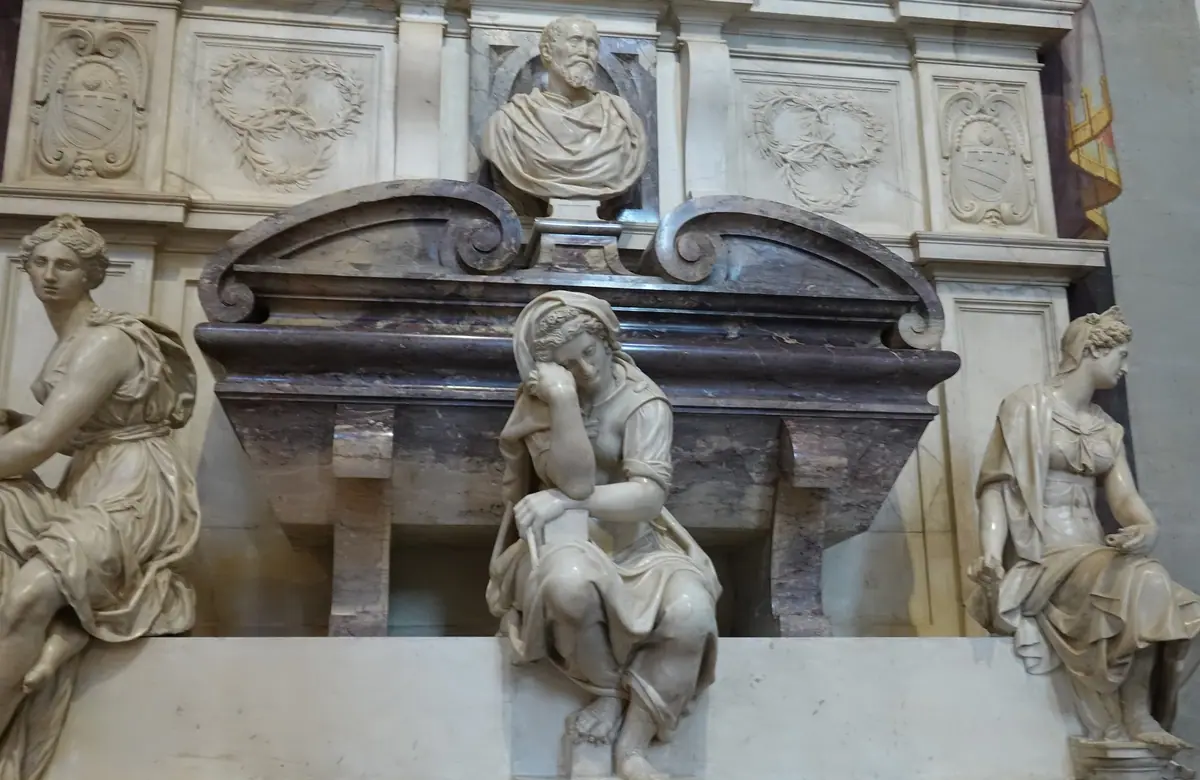
The tombs line the walls of the nave. Michelangelo died in Rome in 1564, and his body was brought back to Florence to be buried here. Galileo, condemned by the Church in 1633, waited until 1737 for a Christian burial, and Santa Croce is where he got it. Machiavelli, Rossini and Ugo Foscolo lie here too.
Dante’s monument is the odd one out. It’s a cenotaph, an empty tomb: Dante is buried in Ravenna, and the Florentine memorial to him has nobody in it.
Between the tombs, look for Donatello’s Cavalcanti Annunciation, carved in stone on the wall of the nave. Then walk up towards the main altar, where Giotto painted the frescoes in the Bardi and Peruzzi chapels.
Santa Croce’s cloisters, the Pazzi Chapel and Cimabue’s Crucifix
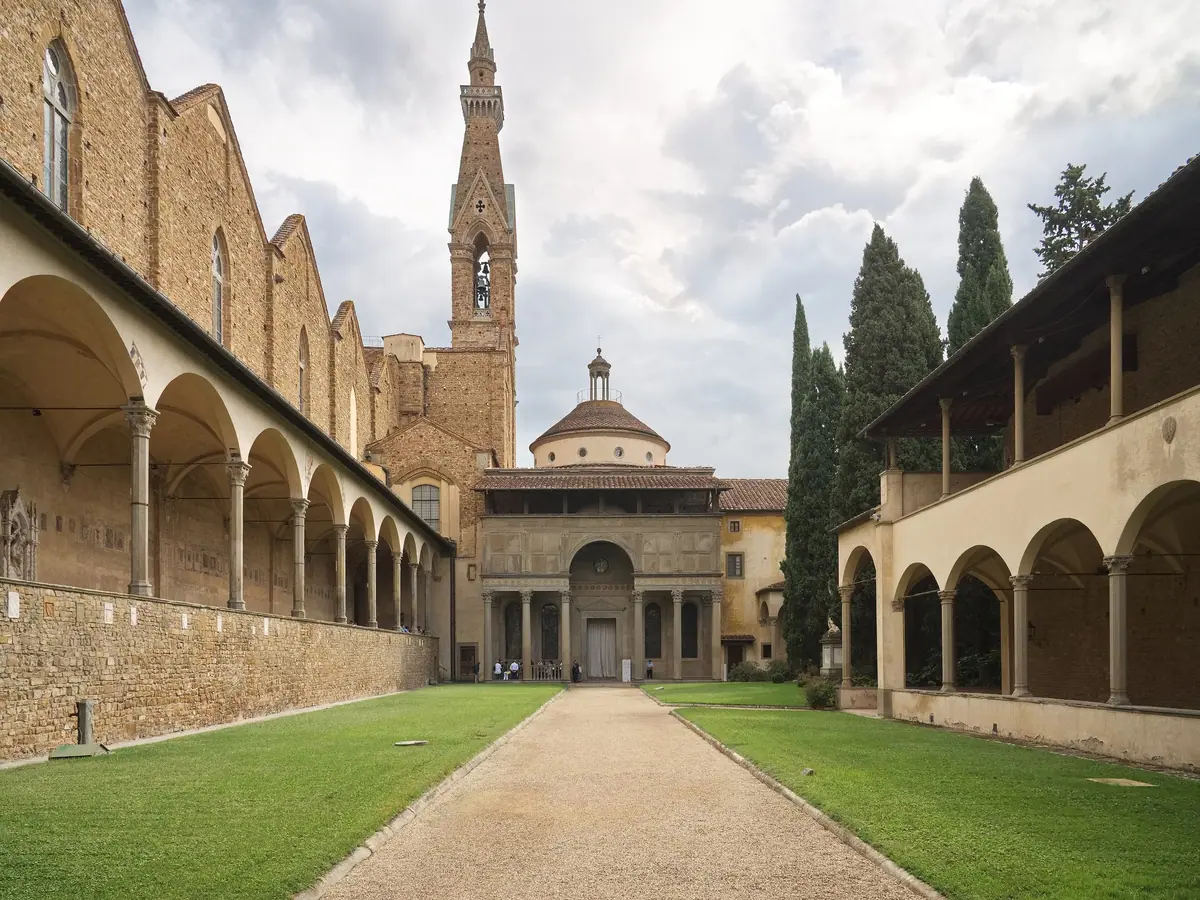
From the basilica you go out into the two cloisters, and at the end of the first stands the Pazzi Chapel, which Brunelleschi designed.
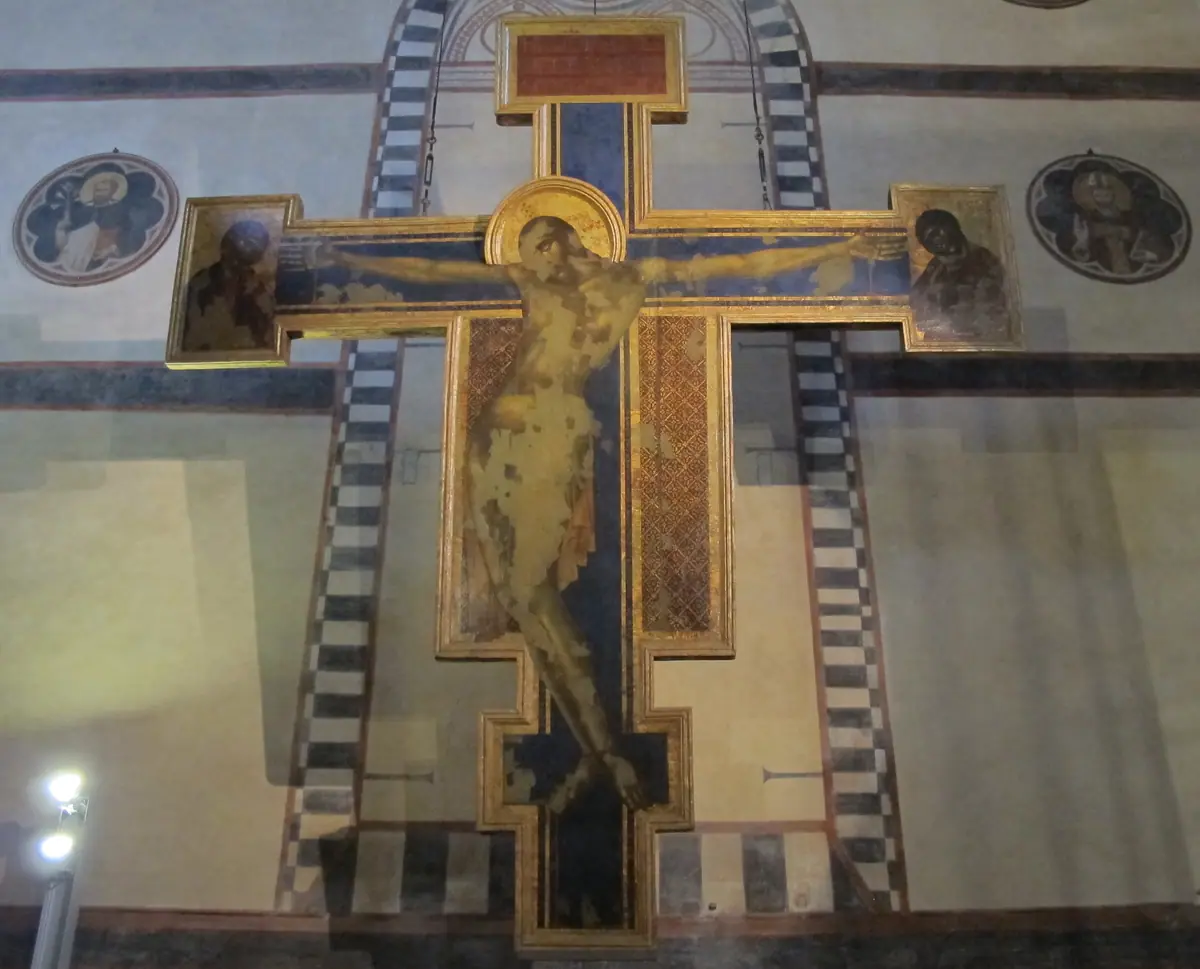
The museum fills the old refectory, the friars’ dining hall, and its centrepiece is Cimabue’s Crucifix. It became the symbol of Florence’s 1966 flood, and it’s the reason to leave time for the museum once you’ve seen the church.
The church you’ve just walked through goes back to 1294, possibly to a design by Arnolfo di Cambio, and was finished in 1442. The marble facade you see from the square is far younger, built between 1854 and 1863 by Niccolò Matas, and the bell tower is 19th century too. With so many great Italians buried inside, Santa Croce earned the name the Temple of the Italian Glories, which is credited to Foscolo.
Walking to Santa Croce from Piazza della Signoria
Santa Croce is about 10 minutes on foot from Piazza della Signoria and 8 from the Bargello, at the far end of the long Piazza Santa Croce. You go in through the basilica, at Piazza Santa Croce 16.
Tickets
Popular tickets around Florence
The ones other visitors book most.


People also ask
Frequently asked questions
Is Santa Croce free to enter?
No. Santa Croce is still a working church, but going in is paid, and one ticket covers the basilica, the cloisters, the Pazzi Chapel and the museum. Children aged 11 and under, Florence residents, disabled visitors with a companion and Firenze Card holders go in free.
Is Santa Croce open on Sundays?
Only in the afternoon, from 14:00 to 17:30, with last entry at 17:00. The same hours apply on the religious holidays of 6 January, 1 November and 8 December, so on those days you can't get in during the morning.
Is Santa Croce included in the Firenze Card?
Yes, it's one of the card's included museums, and it uses up the card's one entry there. Santa Croce isn't on the card's list of museums that need a booking, which covers places such as the Uffizi, the Accademia and the Palazzo Vecchio.
What is the dress code at Santa Croce?
Cover your knees and shoulders. The rule is checked at the entrance, and a visitor has reported being turned away for it, so bring a scarf or a layer if you're out in shorts or a vest top.
Is Dante buried in Santa Croce?
No. Dante's monument in Santa Croce is a cenotaph, an empty tomb. He is buried in Ravenna.