
Florence · Firenze Card
Museo Galileo
The lens that found Jupiter's moons sits in the same museum as the finger of the man who looked through it.
Florence's Museo Galileo, beside the Uffizi on the Arno, keeps the only two telescopes of Galileo's that survive, the framed lens he used to discover the moons of Jupiter, and the middle finger of his right hand in a gilded glass egg. Around them, 18 rooms hold the globes, clocks and scientific instruments collected by the Medici and then the Lorraine grand dukes. A ticket costs €14 with nothing to book, and the Firenze Card includes entry.
Before you go
- Time inside1–2 h
- OpenEvery day
TipTuesday is the short day, with the museum open only from 9:30 to 13:00, while on the other days it stays open until 18:00, Monday included.
Museo Galileo tickets: €14, nothing to book and no time slot
The Museo Galileo keeps the only two telescopes of Galileo’s that survive, and you can walk in to see them without booking anything. Individual visitors buy a ticket at the desk or from the museum’s own online ticket office, and either way there’s no time slot. The ticket is good for the whole day, so if you step out for lunch you can come back in. We don’t sell this one, so these are the museum’s own prices for 2026.
Museo Galileo prices in 2026
- Full ticket
- €14
- Ages 6 to 18
- €7
- Under 6
- Free
- Family
- €32, for 2 adults and up to 2 children under 18, or 1 adult and up to 3
- Reduced, with a Santa Croce ticket
- €10
- Visitors with a disability
- Free, with one companion
Buying online adds €1 per ticket, and moving an online ticket to another date costs €0.50. A ticket bought at the desk is only valid on the day it’s issued. Whichever way you buy, the museum doesn’t take tickets back: it excludes the right to cancel that normally comes with buying online.
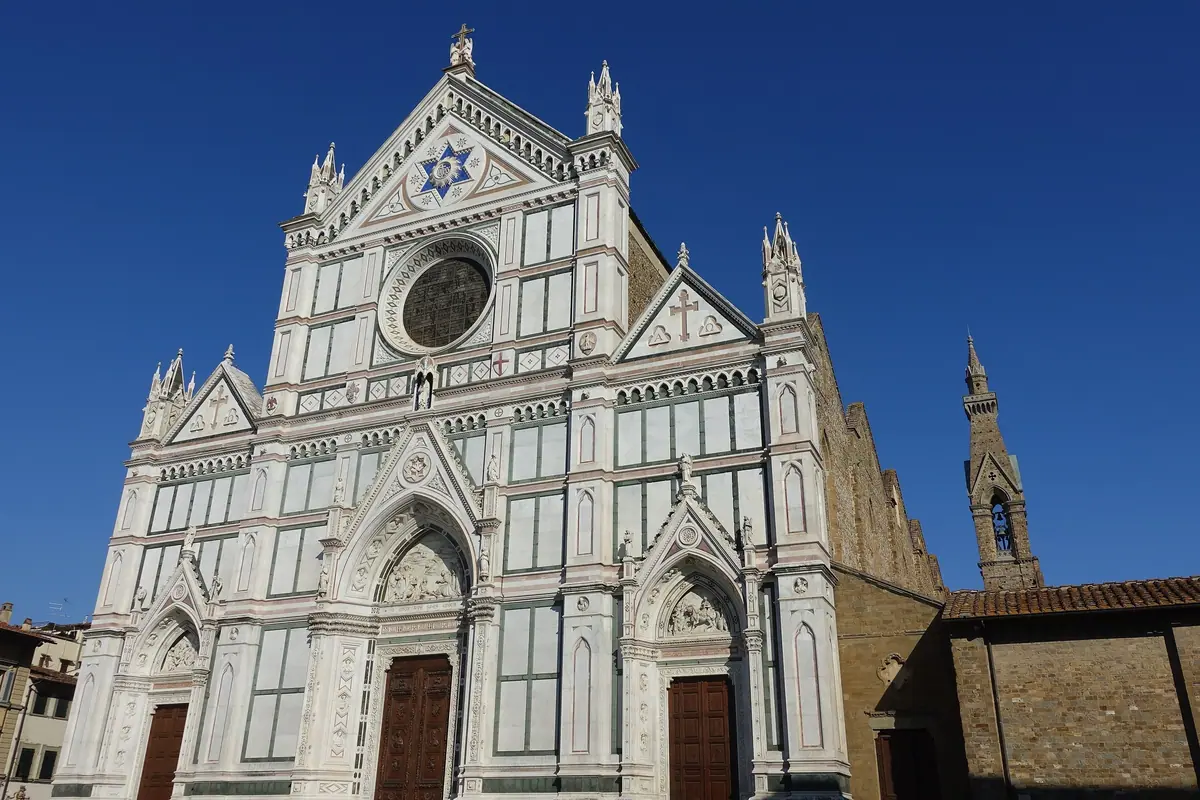
A ticket for Santa Croce, the church where Galileo is buried, saves you money here. Show one for the Santa Croce complex from this year at the desk and you pay the reduced €10, though it doesn’t combine with other discounts.
What you won’t find here is a free first Sunday. The museum is private, run by the Istituto e Museo di Storia della Scienza, so it stays out of the free Sundays of Italy’s state museums and of Florence’s city museums alike.
The Museo Galileo with the Firenze Card: included, and open on Mondays
The Firenze Card, Florence’s official museum card at €94 for 72 hours from your first entry, includes the Museo Galileo, one visit like every museum on it. The museum isn’t on the card’s list of places you have to book, and individual visitors don’t book here either.
-
Firenze Card
Entry included, once. Not on the card's list of museums that need a reservation
from €94
Buy pass→
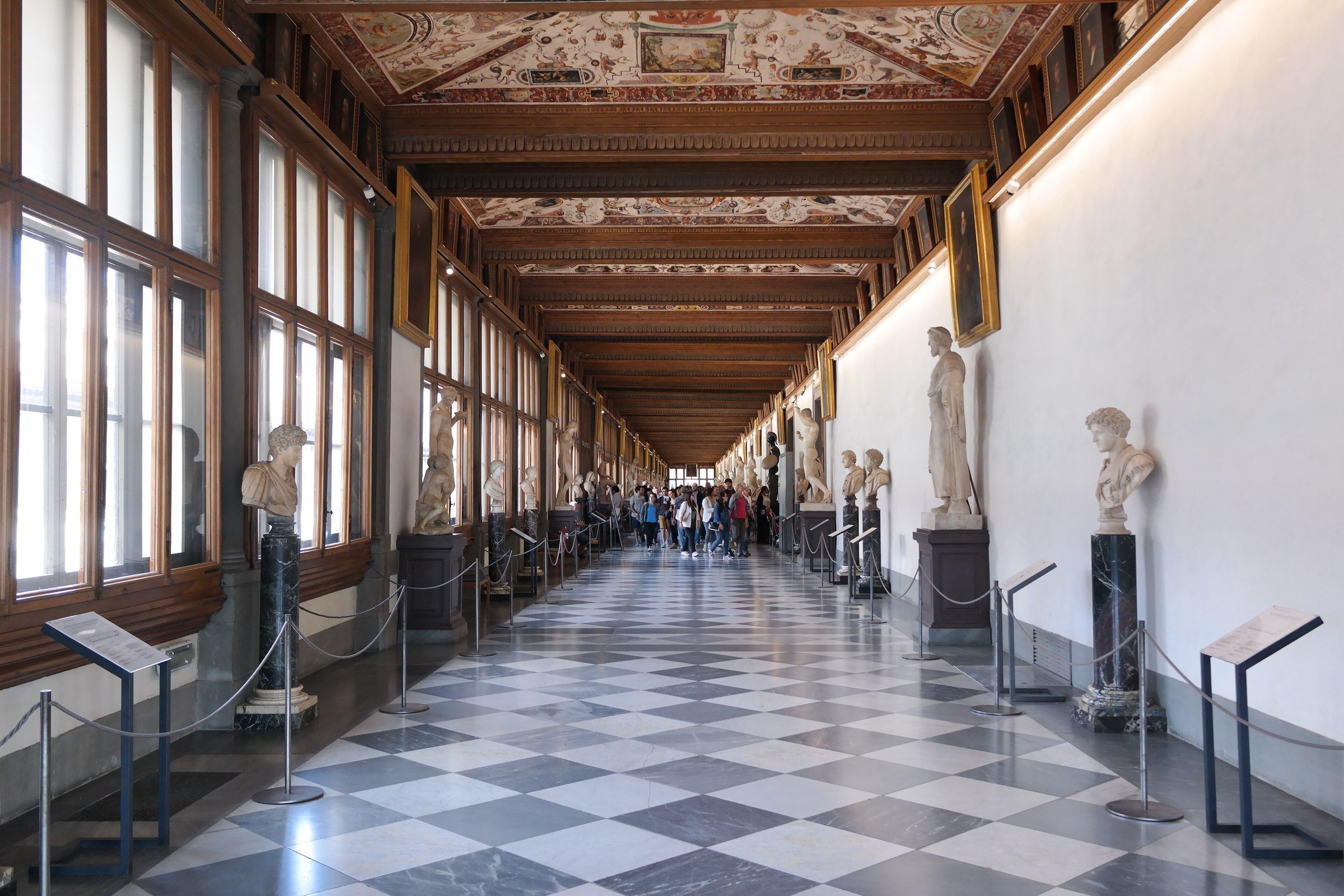
Monday is the best day to use the card here. Florence’s big state museums close that day, while the Galileo stays open from 9:30 to 18:00, so a card you start on a Friday can finish here. Tuesday is the other way round: the doors close at 13:00.
At €14 it’s one of the mid-priced entries that help the card earn back what it costs. The card starts to pay off from five or six paid museums, and with only the Uffizi and the Accademia it loses.
Under-18s in the cardholder’s family go in with the card; otherwise 6 to 18-year-olds pay €7 here. Florence’s other passes, the Uffizi’s PassePartout and the Duomo passes, don’t include the Galileo, and Firenze Card and Florence’s other passes sets them side by side.
Galileo’s telescopes and the Medici instruments: what you see in the Museo Galileo
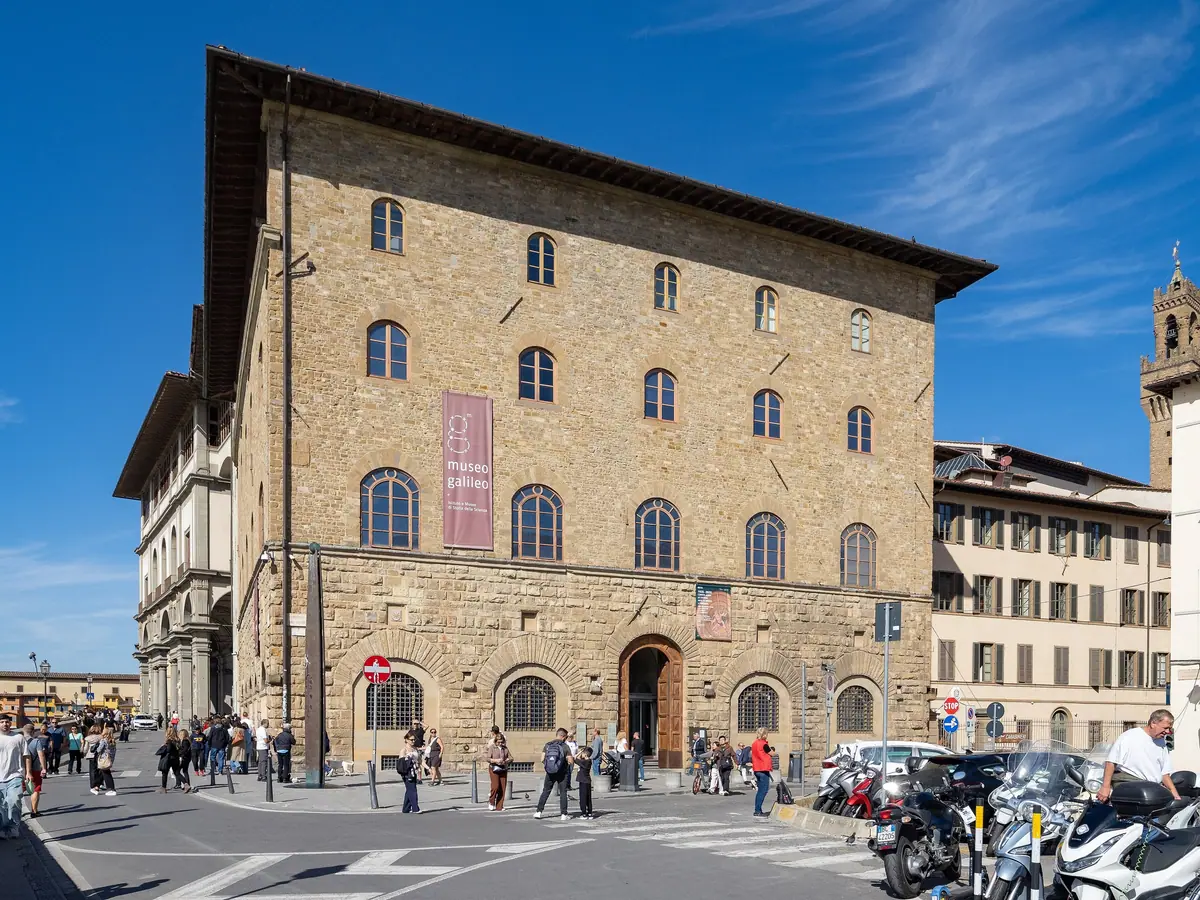
The museum fills two floors of Palazzo Castellani, the old palace on the Arno beside the Uffizi. On the first, nine rooms hold the Medici collections, from the 15th to the 18th century, and on the second, nine more hold those of the Lorraine dynasty, who ruled Tuscany after the Medici, through the 18th and 19th centuries.
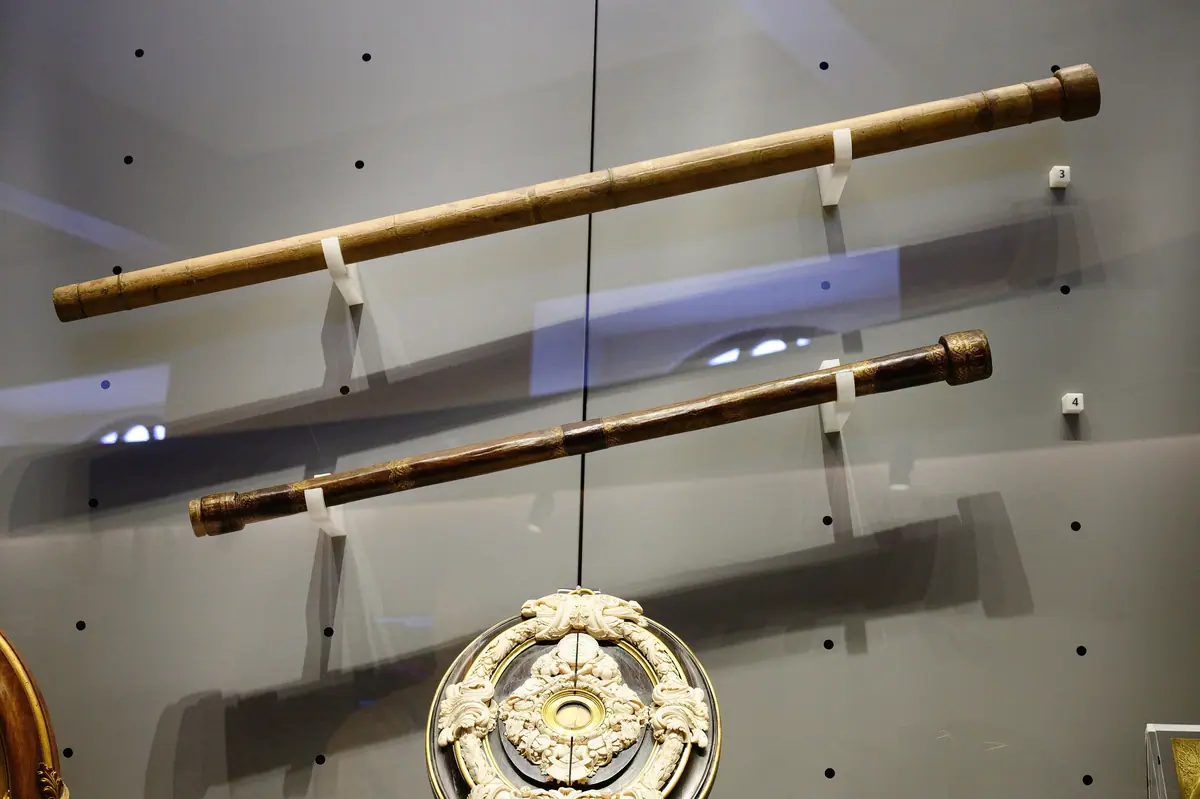
The two telescopes are long wooden tubes, mounted one above the other in their case. Near them is the framed objective lens from the telescope Galileo used to discover the moons of Jupiter. The museum has the lens, not the whole instrument it came from.
From there the collections spread out into painted globes, clocks and barometers, and a giant armillary sphere, a model of the heavens built from rings, by Antonio Santucci. There are instruments from the Accademia del Cimento, the Florentine academy of experiments, and upstairs the Lorraine rooms move on to machines for electricity. There’s also an interactive area where you can try historic instruments.
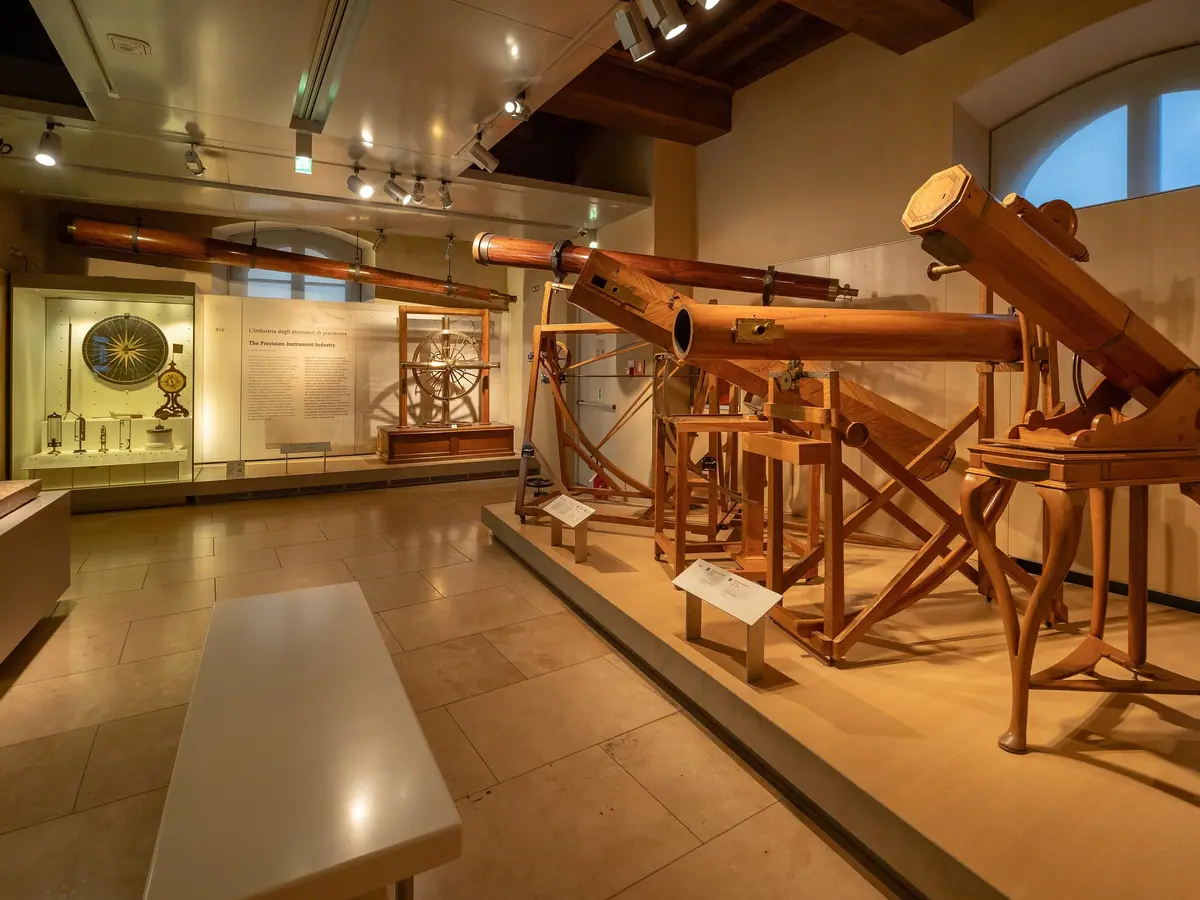
Visitors have complained that the labels beside the objects explain little, so the free app is worth having. It covers about 80 instruments and needs headphones and an internet connection, and the museum has free wifi. A visit takes one to two hours. It’s a museum of historic instruments rather than a hands-on science centre, and the museum itself says children under 7 or 8 may find it hard going.
Before you go in
- 1Download the app on iOS or Android and bring headphones: without them the audio doesn't work.
- 2Leave your bag: lockers at the entrance are free, and two large boxes with padlocks take school backpacks and big suitcases.
- 3No café inside: your ticket is valid all day, so eat outside and come back.
- 4Dogs: small ones only in your arms or in a carrier; guide and assistance dogs on a lead.
Galileo’s finger at the Museo Galileo, and the relics that came back in 2009
One case holds something you don’t expect in a museum of instruments: the middle finger of Galileo’s right hand, standing in a gilded glass egg. It was taken in 1737, when his body was moved to a tomb in Santa Croce, along with other fingers, a tooth and a vertebra.
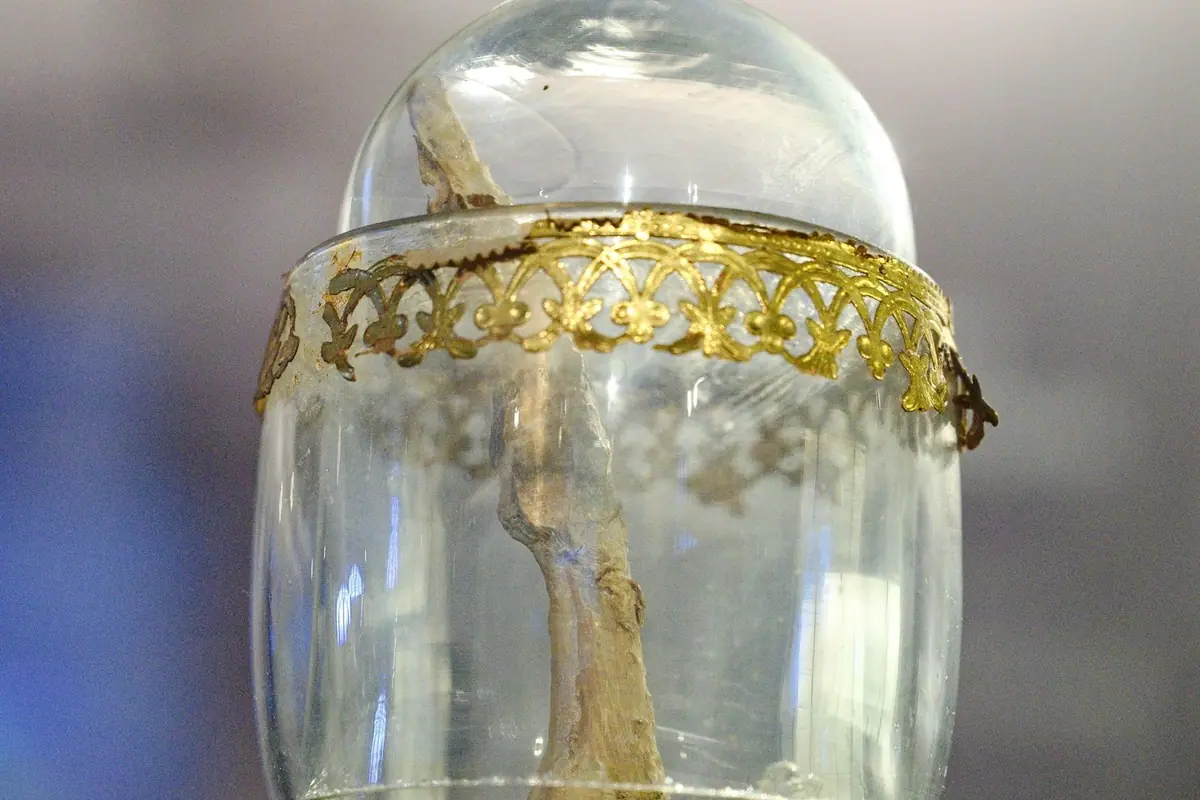
Those other relics had a stranger road. A thumb, an index finger and the tooth went missing in 1905 and turned up at an auction in 2009, more than a century later, and they were handed to the museum. The vertebra is in Padua.
How the Medici instruments reached the Museo Galileo in Palazzo Castellani
Galileo’s link to this collection goes back to the family who gathered it. Cosimo I and later Medici collected instruments from 1562, and in 1610 they invited Galileo to their court. The Lorraine grand dukes kept collecting, and in 1925 the Medici and Lorraine collections passed to the university and then to the museum.
The museum has been in Palazzo Castellani since 1930. The building dates back to the end of the 11th century, and in Dante’s time it was called the Castello d’Altafronte. From 1574 to 1841 it was the seat of the Giudici di Ruota, a court of magistrates, and the square outside is still Piazza dei Giudici, the judges’ square.
Museo Galileo opening hours: Mondays open, Tuesdays only until 13:00
Opening hours
- Monday, Wednesday to Sunday
- 9:30–18:00
- Tuesday
- 9:30–13:00
- Tuesday 8 December 2026
- 9:30–18:00
- Last tickets
- 30 minutes before closing
- Closed
- 1 January and 25 December
If you’re choosing a season, the museum recommends autumn or winter. In March and April it fills with school groups, and in summer with tourists, so autumn and winter are the quieter months.
Getting to the Museo Galileo from the Uffizi
Florence has no metro, and you won’t need one: the museum is in the historic centre at Piazza dei Giudici 1, by the Arno and right next to the Uffizi. Walk round from the Uffizi to the river and look down at the door, where a sundial is set into the paving.
If you’re driving, the centre is a ZTL, a limited traffic zone, so leave the car outside it. The nearest car park the museum suggests is Sant’Ambrogio, at Piazza Annigoni 9, and from there you walk in.
Step-free into the Museo Galileo
- 1Go to the step-free entrance, a separate door with a ramp on the Lungarno, the riverside street, at Lungarno Anna Maria Luisa de' Medici 2.
- 2Ask for help on the intercom.
- 3Inside, the museum is fully accessible, with two lifts, two lifting platforms that take up to 325 kg, accessible toilets and a free manual wheelchair.
Blind visitors have tactile maps, a 3D model of the palace, a tactile audio guide and braille guides. Tactile visits cost €3 and are booked on 055 2653174, and for deaf visitors there are videos in Italian Sign Language.
Tickets
Popular tickets around Florence
The ones other visitors book most.


People also ask
Frequently asked questions
Do I need to book the Museo Galileo in advance?
No, not as an individual visitor. You buy a ticket at the desk on the day or online from the museum, where €1 per ticket is added. There's no time slot: the ticket is valid all day, and you can leave and come back. Only groups of 15 or more, guided visits and workshops have to be booked.
Is the Museo Galileo included in the Firenze Card?
Yes, entry is included, once, like every museum on the card. The Museo Galileo isn't on the card's list of museums that need a reservation, and since it opens on Mondays, when Florence's big state museums are closed, it's a good place to use the card that day.
Is the Museo Galileo open on Mondays?
Yes, from 9:30 to 18:00, like every day except Tuesday, when it closes at 13:00. Tuesday 8 December 2026 is the exception, with the full day to 18:00. The last tickets are sold 30 minutes before closing, and the museum closes only on 1 January and 25 December.
Is the Museo Galileo free on the first Sunday of the month?
No. The museum is private, so it doesn't take part in the free Sundays of Italy's state museums or of Florence's city museums. Children under 6 go in free on any day, 6 to 18-year-olds pay €7, and a family ticket costs €32.
Is Galileo's finger really at the Museo Galileo?
Yes. The middle finger of his right hand, taken when his body was moved to Santa Croce in 1737, is on show in a gilded glass egg. A thumb, an index finger and a tooth removed at the same time went missing in 1905, turned up at an auction in 2009 and were handed to the museum.
Is the Museo Galileo good for children?
It's a museum of the history of science, with cases of historic instruments, not a hands-on science centre, and the museum itself says children under 7 or 8 may find it hard going. There is an interactive area with historic instruments, and a baby-changing room on the second floor.