
Florence · Firenze Card
La Specola
About 1,400 wax bodies and organs, made in the museum's own workshop, still lie in their glass cases.
Florence's La Specola, the University of Florence's zoology museum on Via Romana, keeps about 1,400 anatomical wax models made in its own workshop from 1771, among them Clemente Susini's Venus, a figure that comes apart in layers. The €10 ticket covers 23 rooms of animals from all over the world, the minerals and the botanical waxes, a guided visit to the anatomical wax rooms costs €3 more, and the Firenze Card includes the entry.
La Specola tickets: €10 for the museum, €3 more for the anatomical waxes
La Specola is famous for its anatomical waxes, about 1,400 human bodies and organs in wax, and the €10 ticket alone doesn’t take you into them. That ticket covers the 23 zoology rooms, the minerals and the rooms of botanical waxes. The anatomical rooms are shown on a guided visit, for €3 more.
We don’t sell La Specola tickets. The museum sells them on Vivaticket, its ticketing partner, and at the ticket office, which only has what’s left after the online sales. Since it can sell out, the museum strongly recommends buying online.
Since 1 September 2026 the reduced ticket has cost €5, for ages 6 to 19, over-65s and residents of the Florence metropolitan area, and under-6s and disabled visitors with a companion go in free. The two €3 extras, the wax visit and the Sunday tower, are paid at the ticket office and nowhere else, so even if you buy online you stop at the desk to show your ticket, and any proof of a reduced price, and add the wax visit there. Children under 12 have to be with an adult.
The University also has its own ticket for its four natural history museums, at €24, €12 reduced or €40 for a family, valid for three months. Besides La Specola it covers the botanical garden, the geology and palaeontology museum and the anthropology museum, which are at different addresses in Florence, each a visit of its own.
The anatomical wax rooms at La Specola, on a guided visit
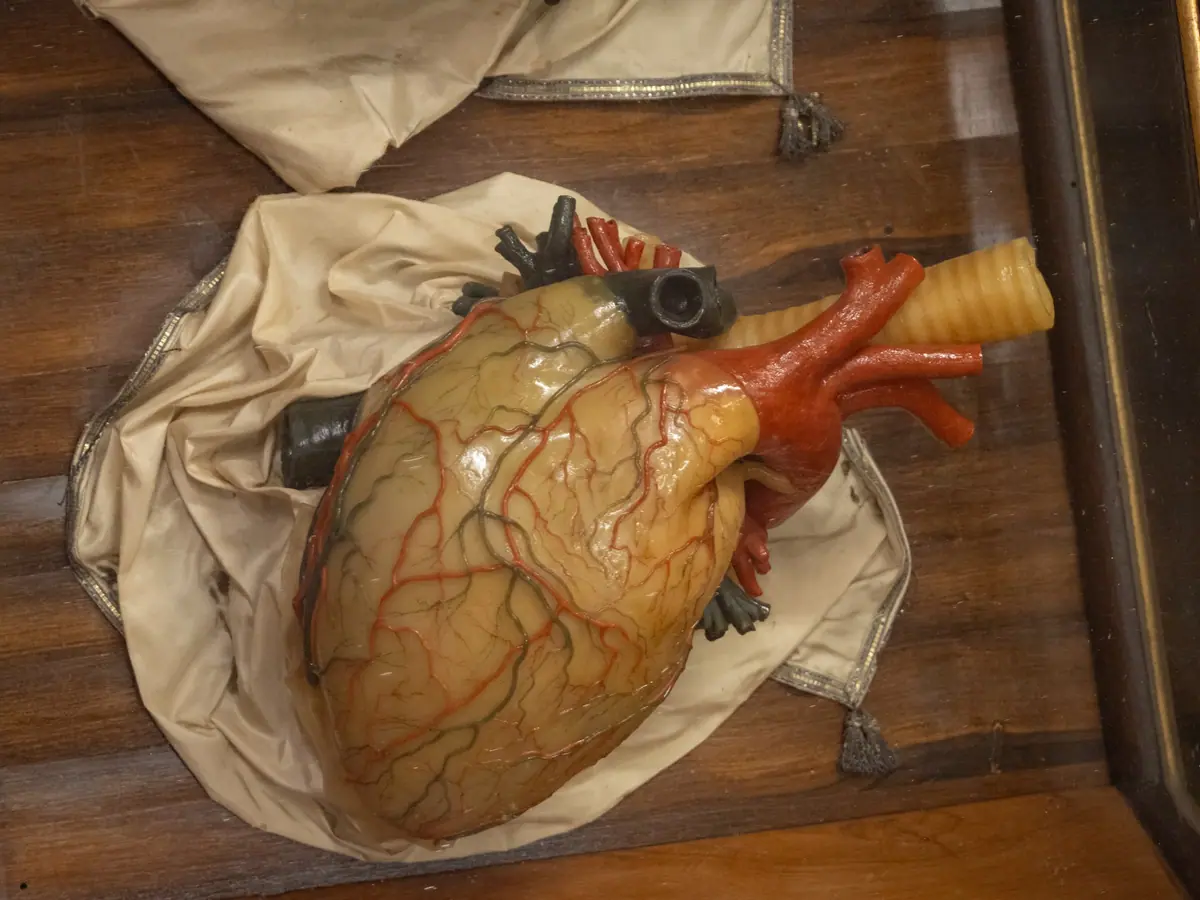
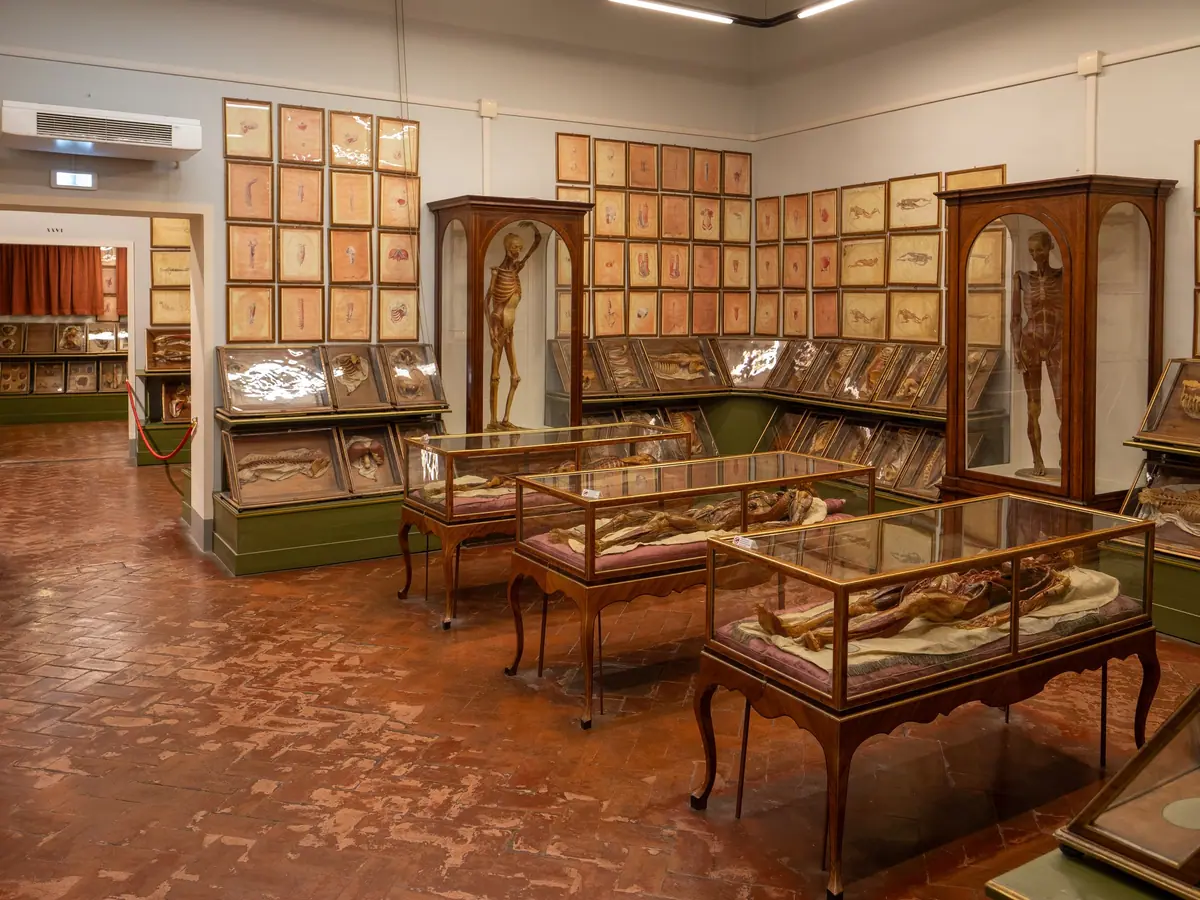
The waxes fill eight rooms, one of comparative anatomy and seven of the human body, with the models laid out in 562 glass cases. They came out of the Officina di Ceroplastica, the wax-modelling workshop set up at the museum in 1771, which went on working for about a century. Its best-known modellers were Clemente Susini, Francesco Calenzuoli, Luigi Calamai and Egisto Tortori.
The figure people ask for is the Venus, Susini’s reclining woman, made to come apart so the organs inside can be seen. Among the 26 whole bodies there’s also Lo Spellato, the flayed man. On the walls around the cases hang more than 800 drawings, copies of the anatomical plates that went with the models.
The guides speak Italian and English and take up to 15 people each time, so we’d pay for your place as soon as you reach the ticket office. If none of the three times suits you, the museum does private visits, booked ahead.
On the day, with the wax visit
- 1Before you go: buy the €10 ticket online on Vivaticket, since the museum warns it can sell out.
- 2At the ticket office, on the ground floor: show your ticket, pay the €3 and take a place on the 11:00, 12:00 or 15:00 visit.
- 3Before your visit starts: take the lift up to the zoology and mineral rooms.
Two of the wax rooms are step-free. The others have three steps with no ramp. Lonely Planet doesn’t recommend the waxes for young children or anyone easily upset, and the animal rooms are a gentler visit for small children.
La Specola with the Firenze Card: included, no booking
The Firenze Card includes La Specola’s entry, and you don’t book it: you go straight to the ticket office with the card. The card’s listing doesn’t say whether the €3 for the guided wax visit or the tower is covered, so have the money ready.
-
Firenze Card
Entry included, once, with no booking: go straight to the ticket office. Keep €3 to hand for the guided wax visit
from €94
Buy pass→
The card costs €94 and runs for 72 hours from your first entry, with about 60 museums included once each. La Specola’s €10 counts towards it, and the card pays off once you have five or six paid museums on your list. You buy it through GetYourGuide.
The Uffizi and Accademia combo, the Uffizi PassePartout and the Pitti and Boboli pass don’t include La Specola. Our page on the Firenze Card and Florence’s other passes sets them side by side.
La Specola opening hours: Tuesday to Sunday, last entry at 16:00
La Specola keeps the same hours all week, Tuesday to Sunday, and the ticket office stops letting people in an hour before closing.
Opening hours
- Tuesday to Sunday
- 9:00–17:00, last entry 16:00
- Mondays
- Closed
- Also closed
- 1 January, Easter, 1 May, 15 August and 25 December
- The museum garden
- Closed when Florence has an orange or red weather alert for wind and storms
If you go this autumn, two exhibitions are on as well: Le Pietre dormono all’aperto, photographs by Carlotta Valente, until 3 January 2027, and Geografia dei piccoli mondi, a show of engravings, open since 3 October. On 7 November and 5 December, from 10:30 to 12:30, the museum holds talks on arthropods, the insects, spiders and their relatives.
Away from the wax rooms, the museum is easy to get around. The ticket office is on the ground floor, and the zoology, mineral and botanical wax rooms on the first and second floors have a lift and no barriers. There are accessible toilets on the ground floor, through the courtyard, and on the first floor, and the routes are planned to avoid sudden lights and noises.
Zoology, minerals and wax fruit: the rest of La Specola
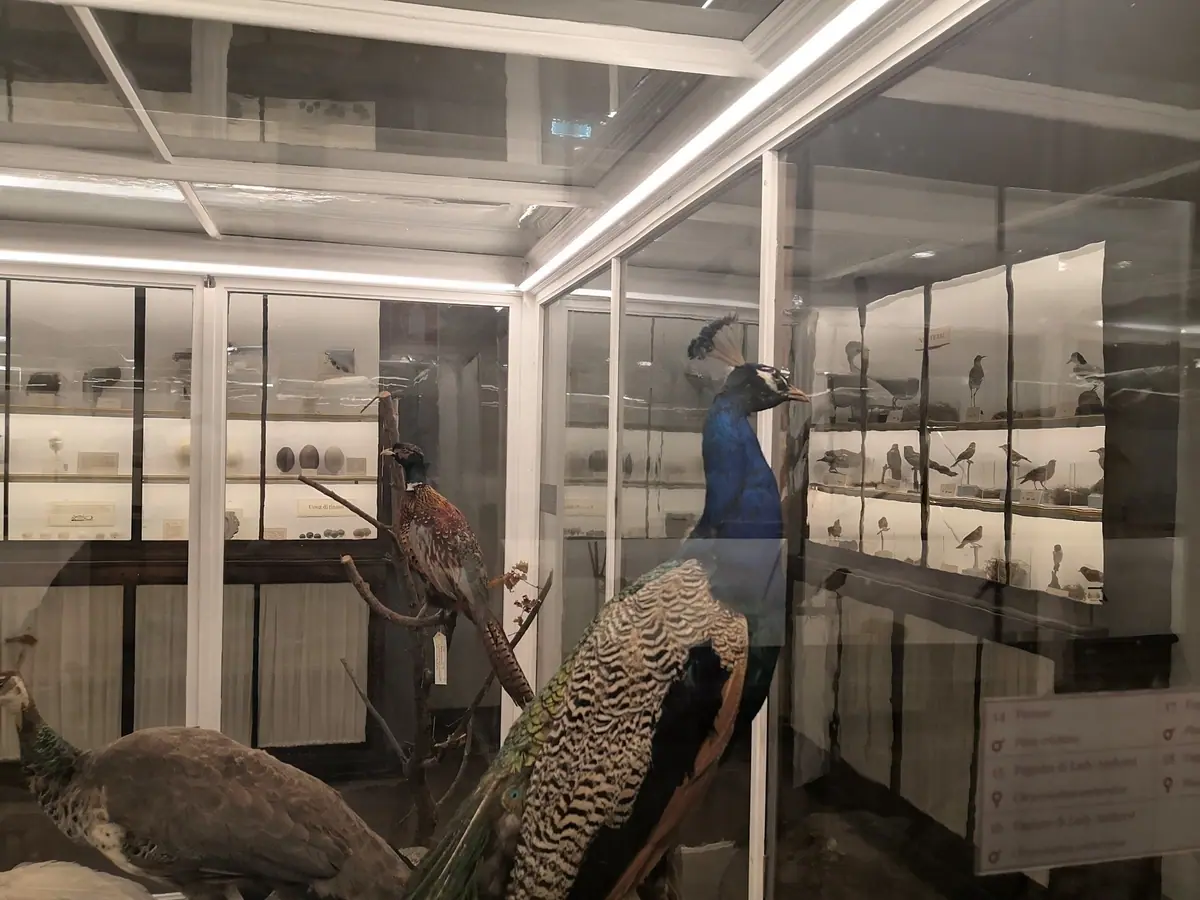
Upstairs from the ticket office, 23 zoology rooms hold animals from all over the world, including species that are now extinct or endangered. What you see is a small share of the collections: more than 4 million pieces are kept in storage, and about 5,000 are on display.
The six mineral rooms came back to La Specola in 2024, after more than a century elsewhere. They have meteorites, hardstones that belonged to the Medici, Florence’s ruling family, and the 17th-century collection of Niels Stensen, known in Italy as Niccolò Stenone, along with crystals of topaz, aquamarine and tourmaline from Elba and Brazil.
On the second floor, the seven rooms of Arte e Scienza show wax plants and fruit made in Florence for teaching, Zumbo’s wax work, enlarged models and still lifes by the painter Bartolomeo Bimbi. Like the zoology and the minerals, they’re part of the standard visit.
The Salone degli Scheletri, the hall of skeletons on the ground floor, opens only for private guided visits booked ahead. Its 120 cases hold about 3,000 pieces, among them the Asian elephant that reached Florence alive in 1655 and that Linnaeus, the Swedish naturalist, used in the 18th century when he described the species.
Galileo’s Tribune and La Specola’s tower, on Sunday mornings
The name La Specola means “the observatory”, and it comes from the astronomical tower on the roof. You can go up on a guided visit on Sunday mornings.
Up the tower on a Sunday
- 1At the ticket office, pay the €3 for the 10:00 visit, which takes up to 10 people.
- 2A lift takes you to the lowest floor of the tower, and from there it's a narrow staircase.
The tower, the Torrino, was built by Gasparo Maria Paoletti at the end of the 18th century. Inside is the Sala della Meridiana, also called the room of the storks, where a meridian line laid in 1784 still marks noon, and the octagonal room at the top looks out over the whole of Florence.
The same visit takes in the Tribuna di Galileo, a hall opened in 1841 to a design by Giuseppe Martelli, with a statue of Galileo by Aristodemo Costoli.
La Specola’s history, from a grand duke’s museum to Napoleon’s order
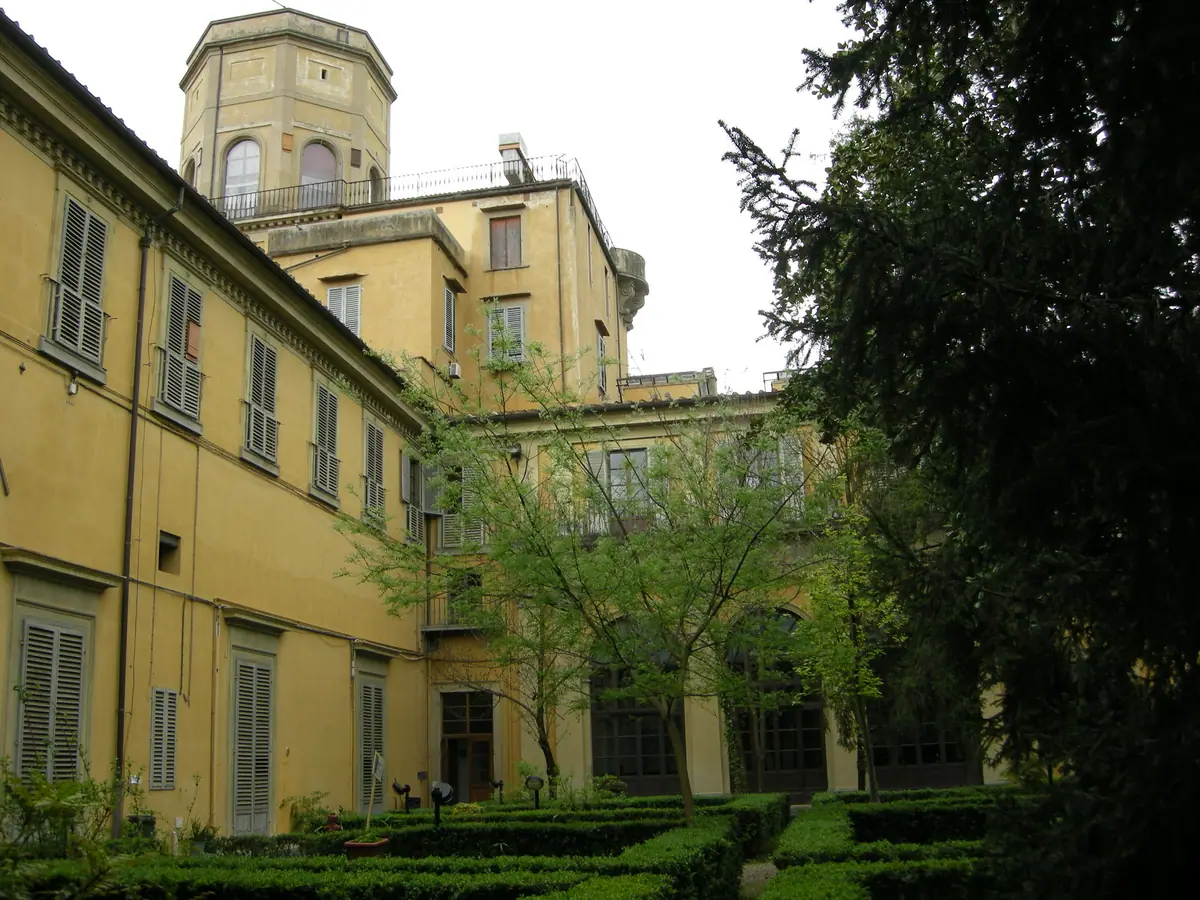
The museum grew out of a catalogue. In 1763 Giovanni Targioni Tozzetti listed the natural specimens kept in the Uffizi, and the idea of bringing them together under one roof took hold. In 1771 the palace on Via Romana, Palazzo Torrigiani, was bought, and Paoletti spent four years remodelling it.
What each date left at La Specola
- 1771
- The palace is bought and the wax workshop opens: the anatomical waxes start here
- 1775
- The museum opens to the public
- 1784
- The meridian in the tower, still marking noon
- 1841
- Galileo's Tribune opens
- 2024
- The minerals come back to Via Romana
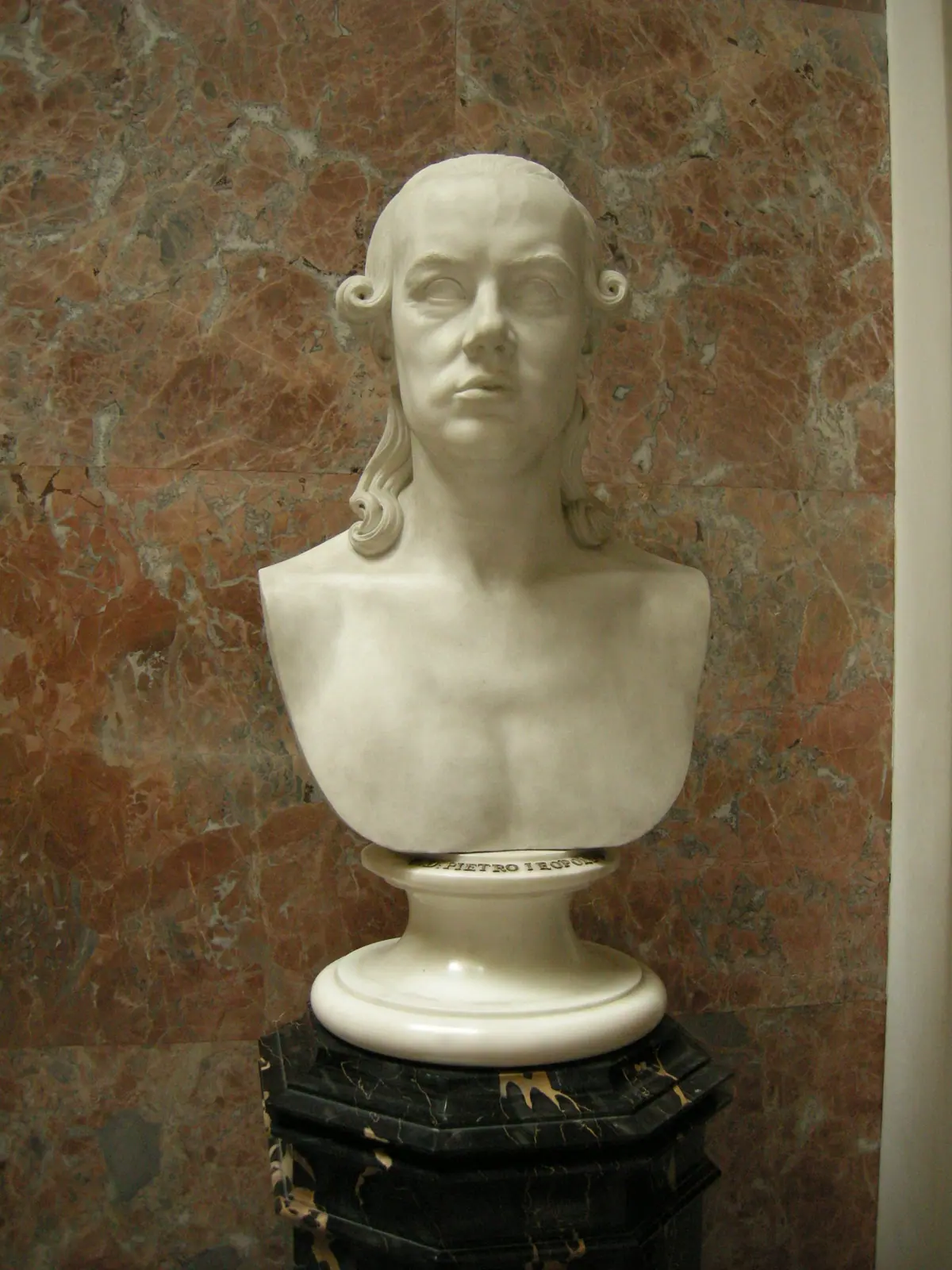
On 21 February 1775 Peter Leopold of Lorraine, then Grand Duke of Tuscany, opened it as the Imperial and Royal Museum of Physics and Natural History. The museum calls it the first natural history museum open to the public, and the first to show nature as a whole, from the minerals in the ground to the stars, which is why a tower for astronomy sits on top of a museum of animals.
The waxes made the museum’s name abroad. Napoleon visited La Specola and ordered 40 cases of wax models and a wooden statue for Paris, which never got there and are in Montpellier today. In 1807 the museum was tied to a science school and the collections were divided by subject, and the University’s other natural history museums now stand at other addresses in the city.
Getting to La Specola on Via Romana
La Specola is at Via Romana 17, near Palazzo Pitti, and the easiest way there is on foot: about 20 minutes from the Duomo or from Santa Maria Novella station, and about 8 minutes from Piazzale di Porta Romana. By bike it’s about 6 minutes from the station, with bike parking at the entrance.
The museum is inside the ZTL, the restricted traffic zone, so don’t drive to the door. The nearest paid car parks outside it are at Piazzale di Porta Romana and on Viale Petrarca. From Peretola airport, take tram T2 to the Unità stop and walk about 20 minutes from there.
Tickets
Popular tickets around Florence
The ones other visitors book most.


People also ask
Frequently asked questions
Are the anatomical waxes included in the La Specola ticket?
Not on their own. The €10 ticket covers the zoology rooms, the minerals and the botanical waxes. The anatomical wax rooms are shown on a guided visit, in Italian and English, for €3 more, paid only at the ticket office, from Tuesday to Sunday at 11:00, 12:00 and 15:00, with up to 15 people each time.
Is La Specola included in the Firenze Card?
Yes, the entry is included and there's nothing to book: you go straight to the ticket office with the card. The card's listing doesn't say whether the €3 for the guided wax visit is covered too, so have it ready.
Is La Specola open on Mondays?
No. La Specola opens Tuesday to Sunday from 9:00 to 17:00, with last entry at 16:00, and also closes on 1 January, at Easter, on 1 May, on 15 August and on 25 December.
Is La Specola suitable for children?
The animal rooms suit any age, and under-6s go in free. The anatomical waxes are real-size human bodies and organs, and Lonely Planet doesn't recommend them for young children or anyone easily upset. Children under 12 have to be with an adult.
How much is a La Specola ticket?
€10 full price and €5 reduced, for ages 6 to 19, over-65s and residents of the Florence metropolitan area, at the prices in force since 1 September 2026. Under-6s go in free. The guided visits of the anatomical waxes and of the tower each cost €3 more.