
Florence · Firenze Card
Forte Belvedere
Built to shelter a grand duke's court and his treasure, it now opens in summer for art and a view over Florence.
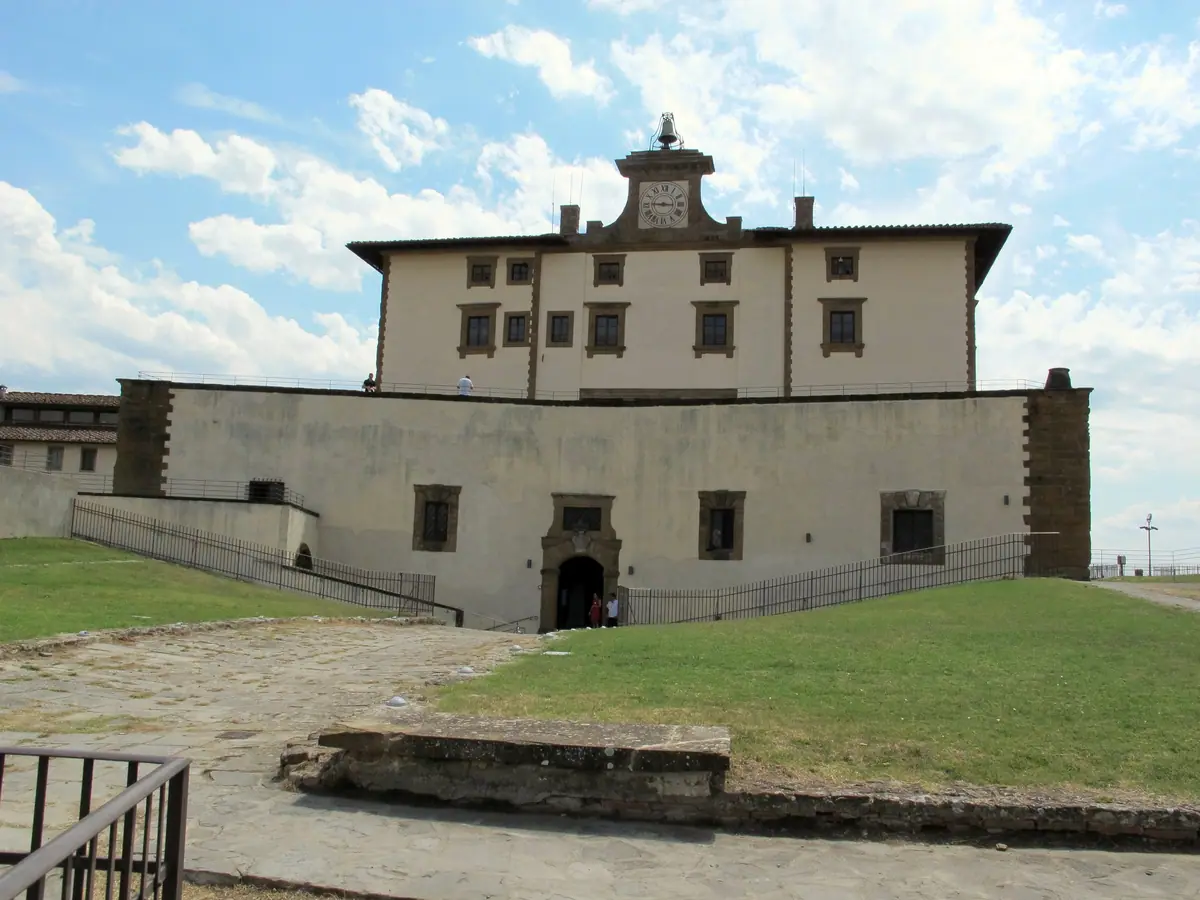
Florence's Forte Belvedere is the fortress the architect Bernardo Buontalenti built for Grand Duke Ferdinando I de' Medici in the 1590s, on the hill above the Boboli Gardens, and its ramparts look out over the city. At its centre stands the Palazzina, an older villa with two loggias, where a contemporary art exhibition opens during the summer season. The ticket gets you onto the ramparts and terraces and into the exhibition, and the Firenze Card includes it with no booking.
Is Forte Belvedere open? A summer season that ended on 16 October
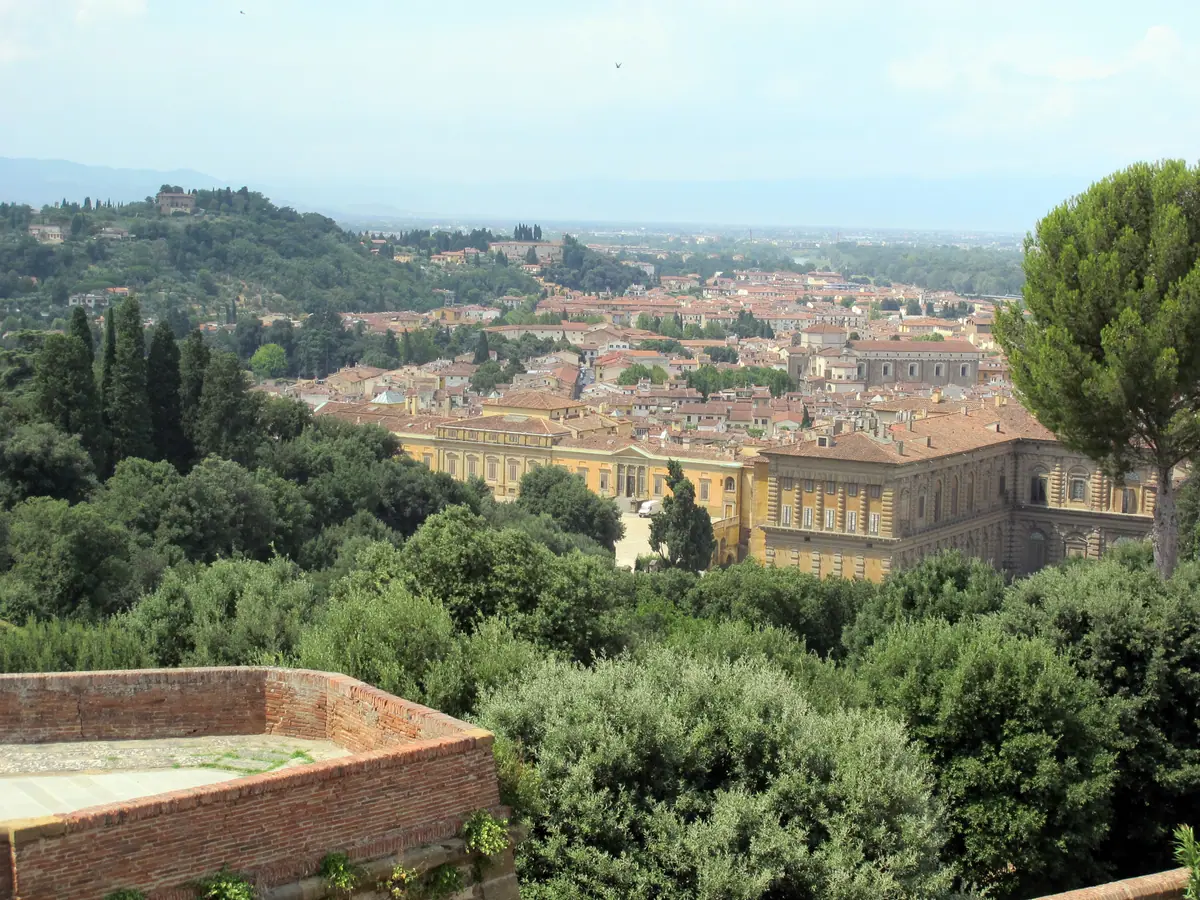
Forte Belvedere is the Medici fortress on the hill above the Boboli Gardens, and from its walls Florence is laid out below you. It opens for a season, though, built around a contemporary art exhibition, and the 2026 season ended on 16 October. The fort is closed now, and the 2027 dates haven’t been announced.
In both 2025 and 2026 the full season started on 24 June and ran into mid-October. That’s a pattern, not a promise, so check before you plan a day around it. This year the terraces opened a little earlier, on 6 June, ahead of the full opening.
In 2026 the fort opened Tuesday to Sunday, 10:00 to 20:00 until late September, with the last entry at 19:00, and closed at 18:00 for the rest of the season. Those summer evenings put you up on the walls in the last hours of daylight over the city, and evening is also the time to go in a heatwave: on days with a red heat alert, the outdoor spaces close from 12:30 to 16:00. With an orange storm alert it’s the green areas that close.
Forte Belvedere tickets: €8 at the gate, free under 18
You buy your Forte Belvedere ticket at the fort’s own ticket office, and plain entry needs no booking. The ticket is for the exhibition, and in 2026 it cost €8 for anyone who doesn’t live in the Metropolitan City of Florence, the city and the towns around it.
Forte Belvedere ticket prices in 2026
- Full price
- €8
- Aged 18 to 25, and university students
- €5
- Entry with a guided visit
- €16, or €13 reduced
- Under 18
- Free, with the age rules for children further down
- Also free
- Residents of the Metropolitan City of Florence, visitors with disabilities and a companion, guides and interpreters, journalists, ICOM members
Older reviews and some websites still call the fort free, or put it at €10. The free visits date from the years when the terraces were open without a ticket, and the price went up from €5 to €8 on 1 February 2026.
Forte Belvedere on the Firenze Card: included, with no booking
The Firenze Card, Florence’s official museum card, includes Forte Belvedere, and here it couldn’t be simpler: there’s no reservation to make, you show the card at the ticket office and go in. At the Uffizi, the Accademia or the Palazzo Vecchio the card still needs a booked time, free of charge.
The Firenze Card costs €94 and runs for 72 hours from the first museum you go into, with about 60 museums included once each. It comes out ahead from five or six paid museums, while with only the Uffizi and the Accademia it loses, so the fort is a good extra stop on a full card rather than the reason to buy one. It only counts if your 72 hours fall inside the summer season.
The Uffizi Passepartout leaves the fort out, like every other pass. Our page on the Firenze Card and Florence’s other passes weighs them up against the rest of your list.
Walking up to Forte Belvedere from the Ponte Vecchio
From the Ponte Vecchio, cross to the Oltrarno, the south bank of the Arno, and walk up Costa San Giorgio, the lane that climbs to the Porta San Giorgio beside the fort. On the way you pass the entrance to the Bardini garden, at Costa San Giorgio 2, and the fort’s own entrance is at Via di San Leonardo 1.
It’s uphill all the way, so give yourself time. If you’re carrying on to the Piazzale Michelangelo viewpoint afterwards, one visitor timed it at about 20 minutes on foot, steep in places.
Inside Forte Belvedere: the ramparts, the Palazzina and the summer exhibition
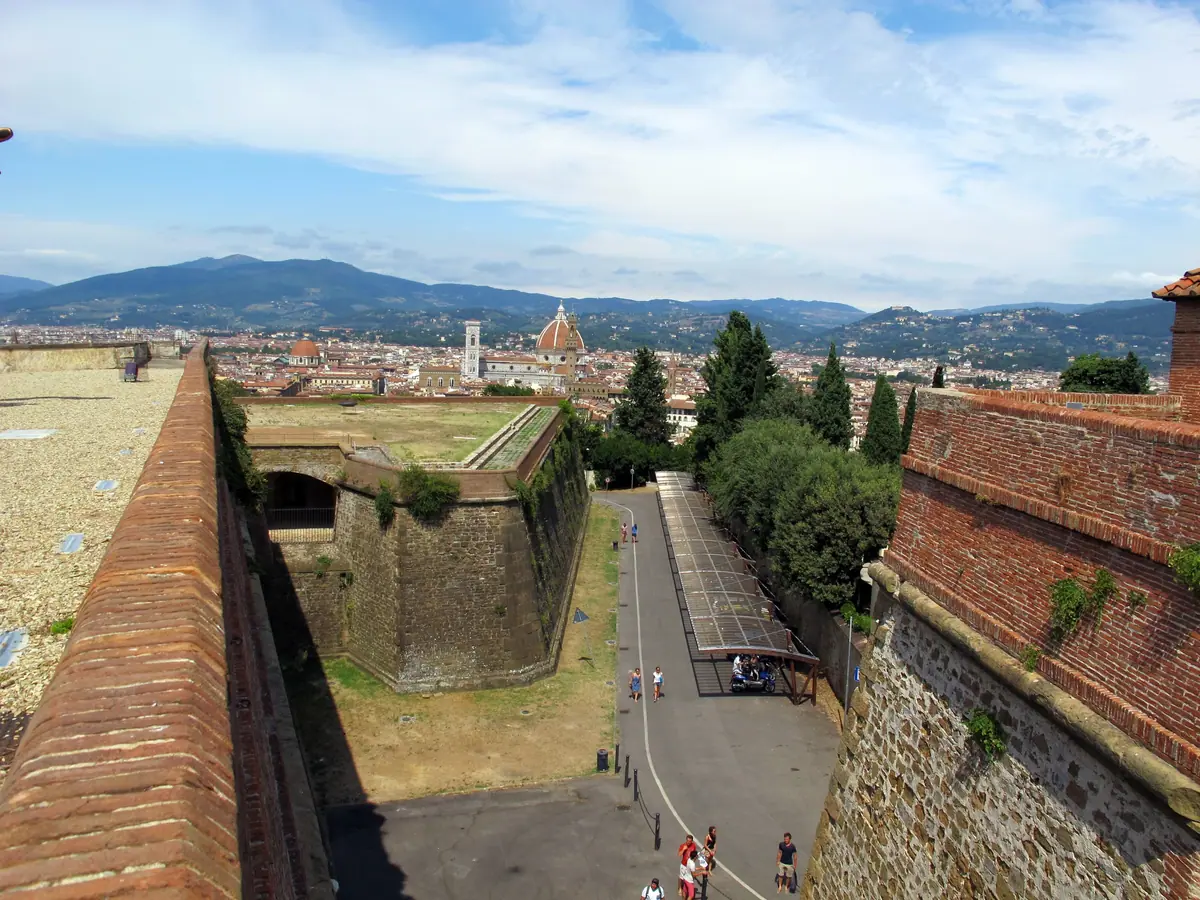
Up the entrance ramp you come out on the ramparts, the sloping bastion walls that wrap the hilltop. From the top you look straight down to the road under the walls, and across the rooftops to the Duomo’s dome.
In the middle stands the Palazzina, the villa in the photo at the top of this page. It’s older than the fort and attributed to the architect Ammannati, and its two matching loggias look out over the city and the countryside. The exhibition is on its first floor.
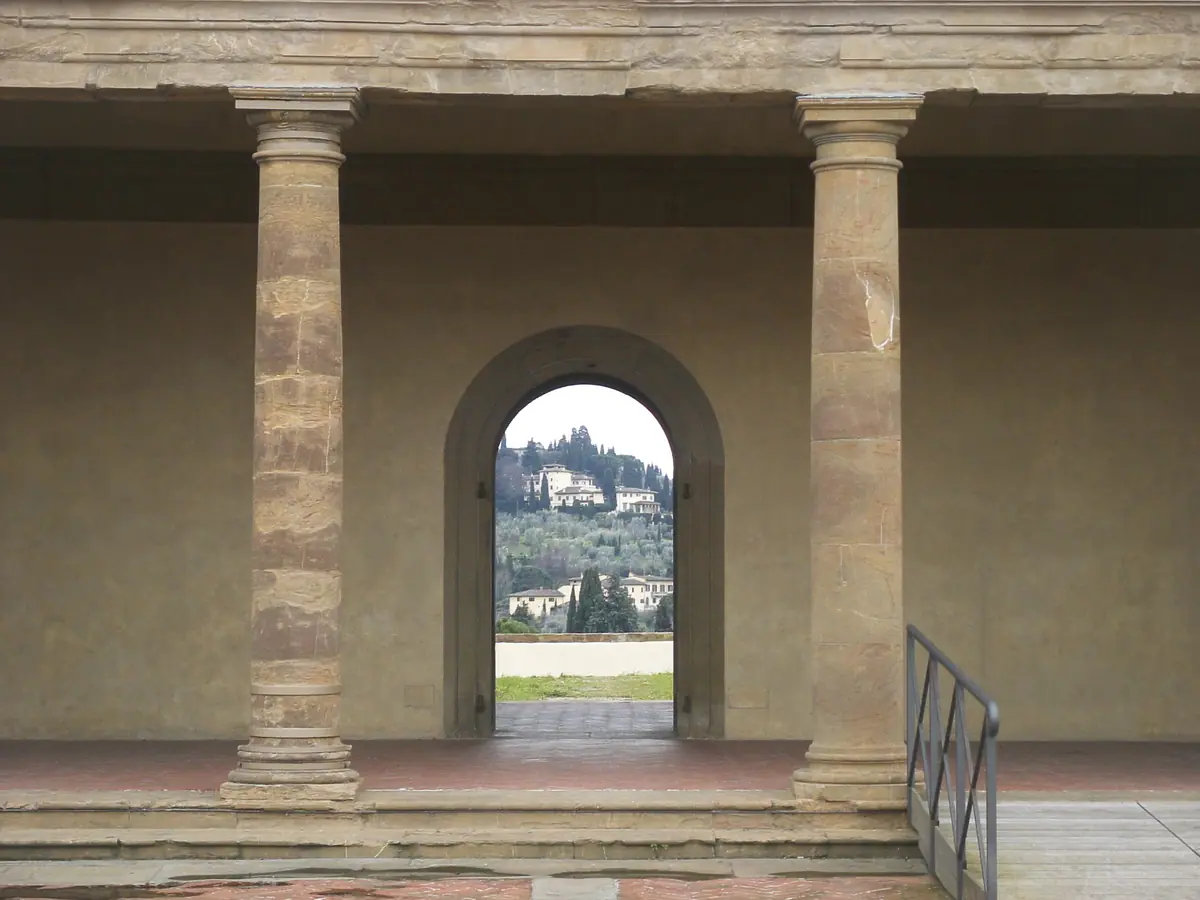
In 2026 that exhibition was a cycle called Drama: Four Acts, curated by Sergio Risaliti. Paolo Canevari’s God Year came first, then work by Marino Marini from 16 July and by Per Barclay from September.
If you’d rather sit with the view, Café Belvedere is open to anyone, ticket or not. In 2026 it opened on Tuesdays from 10:00 to 20:00 and from Wednesday to Sunday until 23:00. One visitor last year said the terrace and the café, with no crowds, were what they enjoyed most.
If you’re coming with children, the rules depend on their age and on which part of the fort you’re in.
Children at Forte Belvedere
- Ramparts, under 8
- Not allowed
- Ramparts, 8 to 18
- Only with an adult
- Palazzina and terraces, under 12
- Only with an adult
The guided visits take you into parts of the fort that are closed otherwise: the casemates, the vaulted gun rooms inside the walls, and the treasure room under the Palazzina. In 2026 they ran on Fridays, Saturdays and Sundays at 17:00 and 18:30, and you book them with MUS.E, the foundation that runs the fort, at info@musefirenze.it or on 055 0541450.
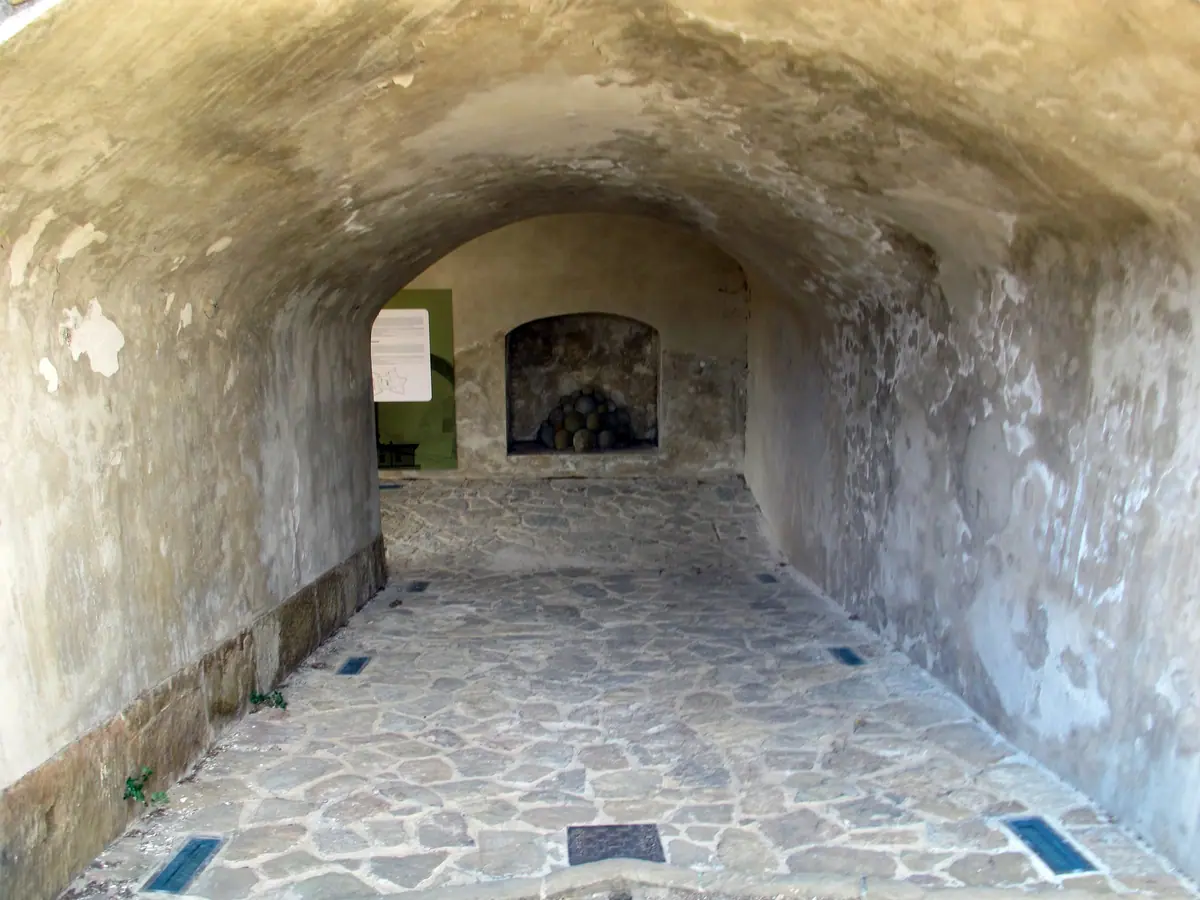
The city lists the fort as accessible, and there’s a ramp up to it. It’s built on several levels with green areas between them, though, and one Florence guide says wheelchair users will need someone to help. Only guide dogs and certified assistance animals are allowed in, with 15 days’ notice to the city museums.
Why the Medici built Forte Belvedere, and how it became an art venue
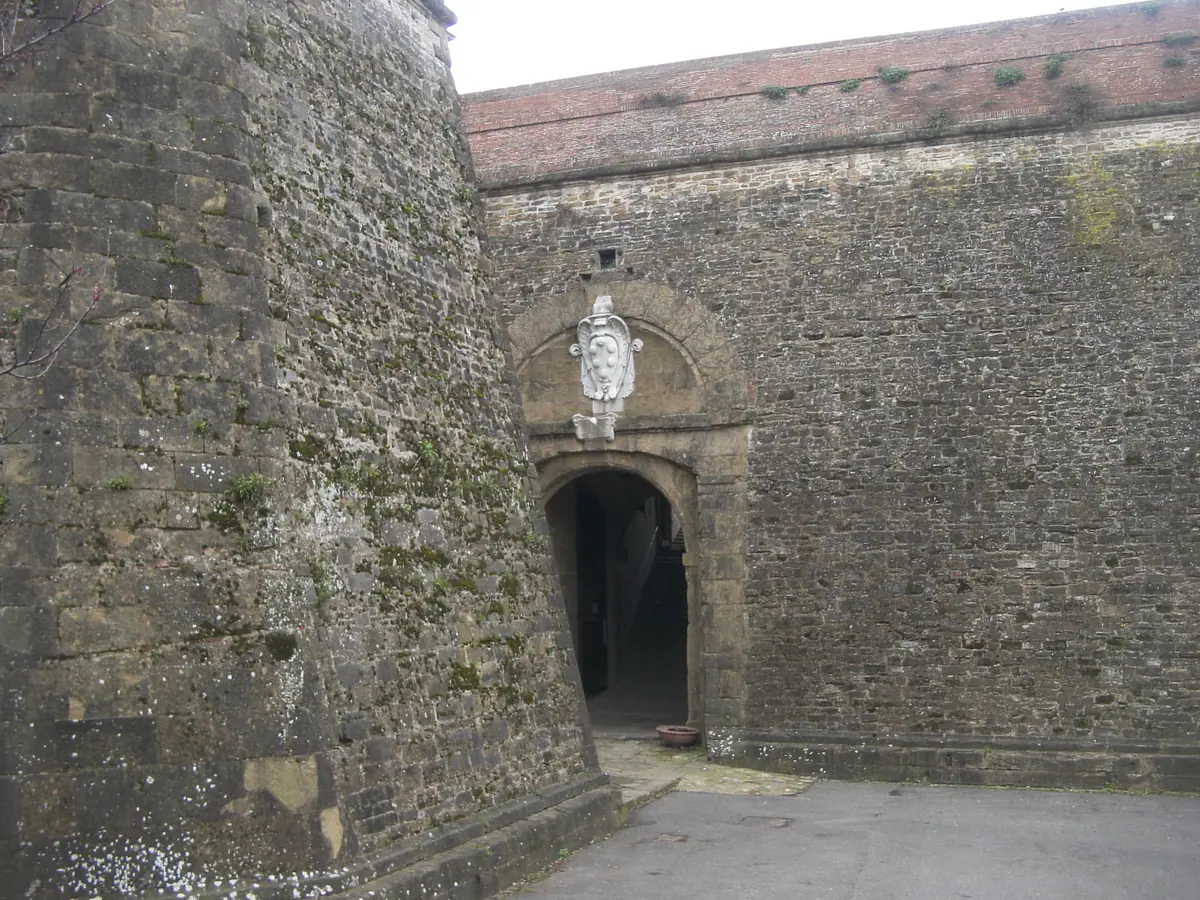
The first stone went down on 28 October 1590, on the orders of Ferdinando I de’ Medici, the Grand Duke of Tuscany. Buontalenti designed it with Don Giovanni de’ Medici, the grand duke’s half-brother, and Alessandro Pieroni, and by 1595 the pentagonal fortress and its bastions crowned the highest point of the defences on this side of the river.
It had three jobs. It guarded the city and the Palazzo Pitti below it, it was a refuge for the grand duke and his court if trouble broke out inside Florence, and under the Palazzina it hid an armoured chamber for the state treasure. Nobody ever attacked it, from outside or from within.
The army handed it over to the city in 1954, and the restoration that followed, led by the superintendent Nello Bemporad, turned it into an exhibition space, with shows of Henry Moore in 1972 and Botero in 1991. After a long closure and building works it reopened in 2013 with Zhang Huan, and since 2025 MUS.E has run it as Belvedere Firenze, the name the fort goes by today.
Tickets
Popular tickets around Florence
The ones other visitors book most.


People also ask
Frequently asked questions
Is Forte Belvedere open in winter?
No. It opens for a summer season and closes in the autumn: in 2026 the season ran from June to 16 October, and in 2025 it closed on 15 October. The 2027 dates haven't been announced yet.
How much does Forte Belvedere cost?
€8 in 2026, or €5 for 18- to 25-year-olds and university students, sold at the ticket office on site. Under-18s and residents of the Metropolitan City of Florence go in free. Entry with a guided visit is €16, or €13 reduced.
Is Forte Belvedere included in the Firenze Card?
Yes, and there's nothing to book: you show the card at the ticket office and go in. It only counts if your 72 hours on the card fall inside the fort's summer season.
Is Forte Belvedere free?
Not for adult visitors any more. Older reviews call it free, from the years when the terraces were open without a ticket. In 2026 entry was €8, though under-18s go in free and Café Belvedere is open to anyone, ticket or not.
Can children visit Forte Belvedere?
Yes, and under-18s go in free, but the rules go by age. Children under 8 can't go onto the ramparts, and 8- to 18-year-olds go up only with an adult. In the Palazzina and on the terraces, under-12s have to be with an adult.
How do you get to Forte Belvedere?
On foot from the Ponte Vecchio: cross to the south bank of the Arno and walk up Costa San Giorgio to the Porta San Giorgio. The entrance is at Via di San Leonardo 1, and the walk is uphill all the way.