
Florence · Firenze Card
Casa Buonarroti
The marble Michelangelo carved at about fifteen, in houses he bought and never settled in.
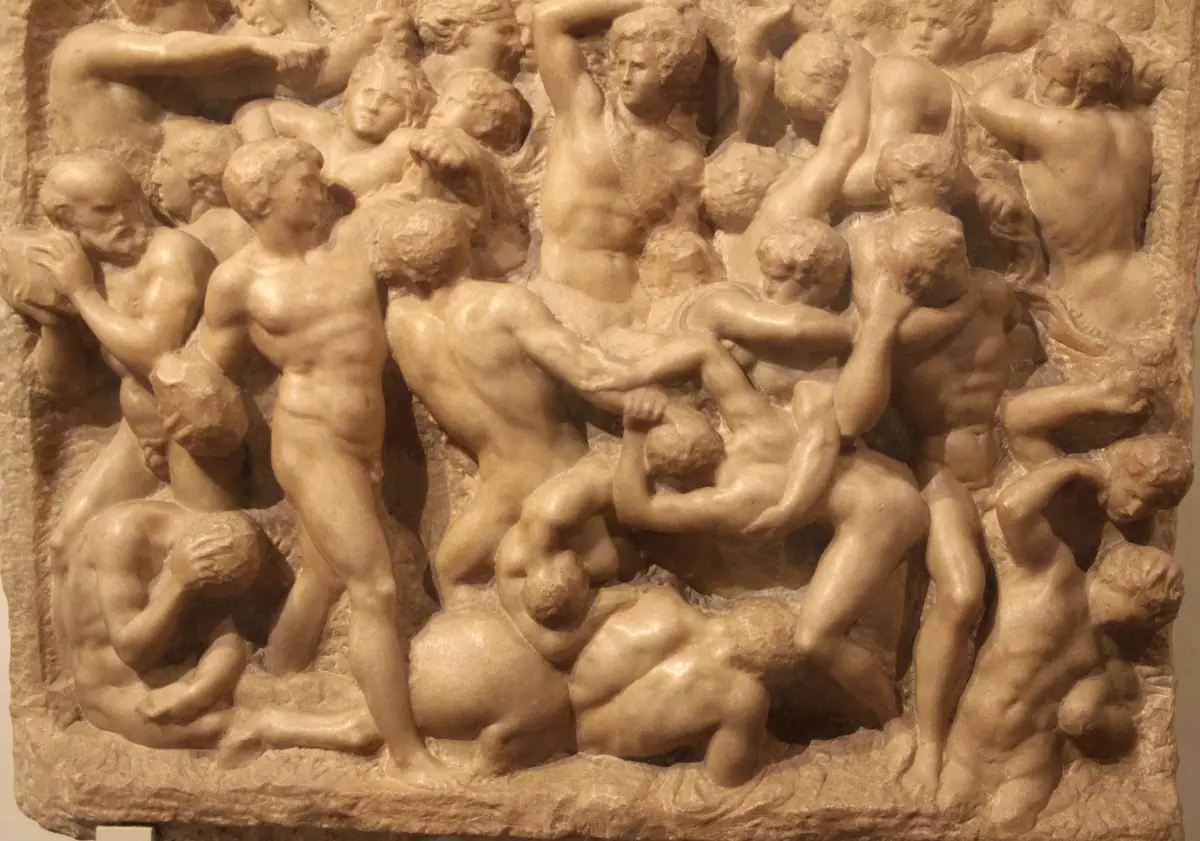
The two marble reliefs Michelangelo carved as a teenager, the Madonna of the Stairs and the Battle of the Centaurs, are in Florence at Casa Buonarroti, along with his drawings and the rooms his family later painted in his honour. The building grew out of houses he bought on Via Ghibellina, which his heirs turned into a palace and then a museum. Entry costs €8, and the Firenze Card includes it.
Casa Buonarroti tickets: €8, and booking isn’t compulsory
A Casa Buonarroti ticket costs €8, or €5 reduced, and you can buy it at the ticket office on Via Ghibellina when you arrive. The museum also sells tickets ahead on its own online ticket office, with a €2 fee on each one. Booking isn’t compulsory, and the museum only recommends it for groups.
The free list is shorter than at the big museums. Casa Buonarroti belongs to the Fondazione Casa Buonarroti, not to the state or the city, so children go in free only under the age of 6, not under 18 as at the Uffizi or the Accademia.
Casa Buonarroti ticket prices
- Full price
- €8
- Reduced
- €5: students up to 26, over-65s, groups of 10 or more, Santa Croce ticket holders, FAI, Touring Club, Unicoop and CTG members
- Workshop participants
- €6
- Free
- Under-6s, visitors with disabilities and their companions, authorised guides, accredited journalists
- Buying online
- €2 fee per ticket
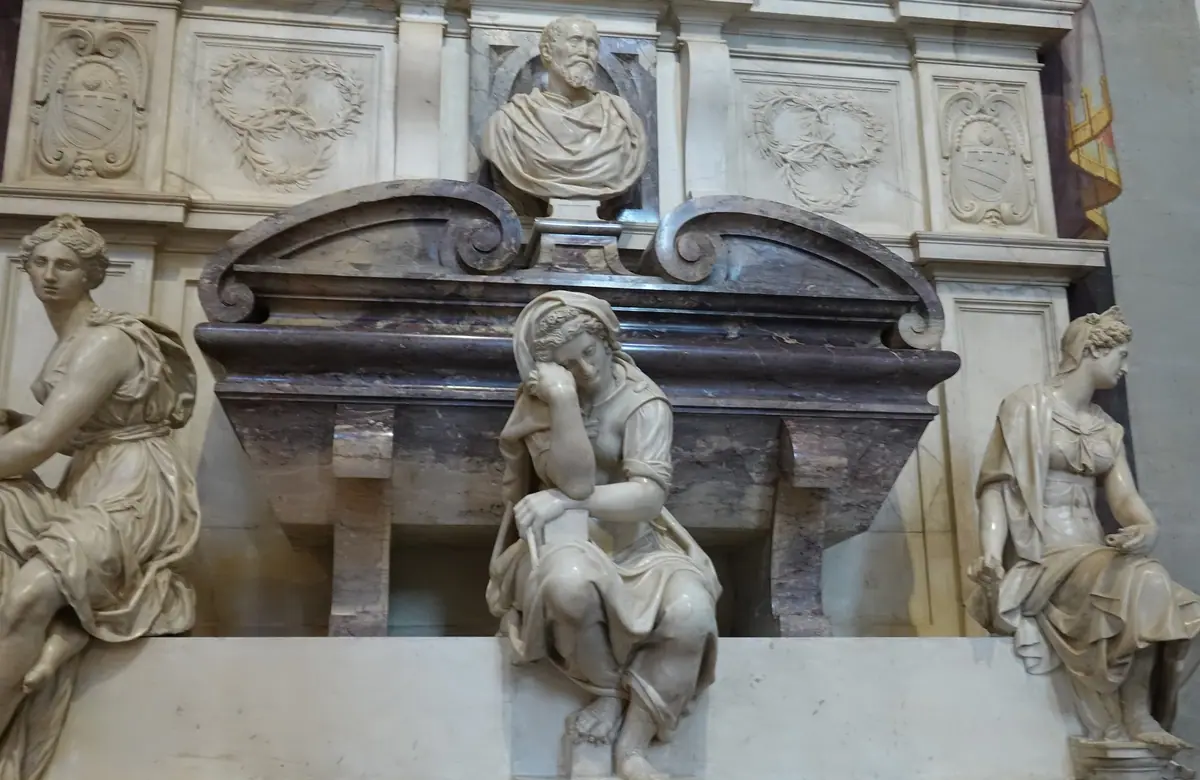
The Santa Croce reduction is the one to keep in mind. Santa Croce is the Franciscan basilica a short walk away where Michelangelo is buried, and a ticket for its monumental complex brings this one down to €5. The museum itself ties the two together, as the route “from the masterpieces of early youth to the burial place, always desired by the Artist”, so keep your Santa Croce ticket and show it at the desk.
Casa Buonarroti on the Firenze Card
The Firenze Card, Florence’s official museum card, includes Casa Buonarroti. It also isn’t on the card’s list of places where you have to book a time, which covers the Uffizi, the Accademia, the Palazzo Vecchio, the Tower of Arnolfo and the Brancacci Chapel.
At €8, this is one of the lighter entries on the card, which costs €94 for 72 hours and starts paying for itself at about four of the big paid museums. Where Casa Buonarroti helps is on a Monday. The Uffizi, the Accademia, the Pitti and the Bargello all close that day, and this museum stays open, so a card day that falls on a Monday still has somewhere to go.
The Uffizi’s five-day Passepartout doesn’t include it. Our page on the Firenze Card and Florence’s other passes sets out what each one covers.
Casa Buonarroti opening hours: open Mondays, closed Tuesdays
Casa Buonarroti keeps one timetable all year, and its closing day is Tuesday, not Monday as at Florence’s state museums.
Opening hours
- Wednesday to Monday
- 10:00–16:30
- Last tickets
- 16:00
- Tuesday
- Closed
- Also closed
- 1 January, Easter Sunday, 15 August, 25 December
With the doors shutting at 16:30 and the ticket office half an hour earlier, this is a morning or early-afternoon visit. Some websites give other hours, such as 8:15 to 14:00 or a Tuesday opening, and they’re wrong. If you want to check a particular day, call the museum on +39 055 241752.
How Michelangelo’s houses on Via Ghibellina became Casa Buonarroti
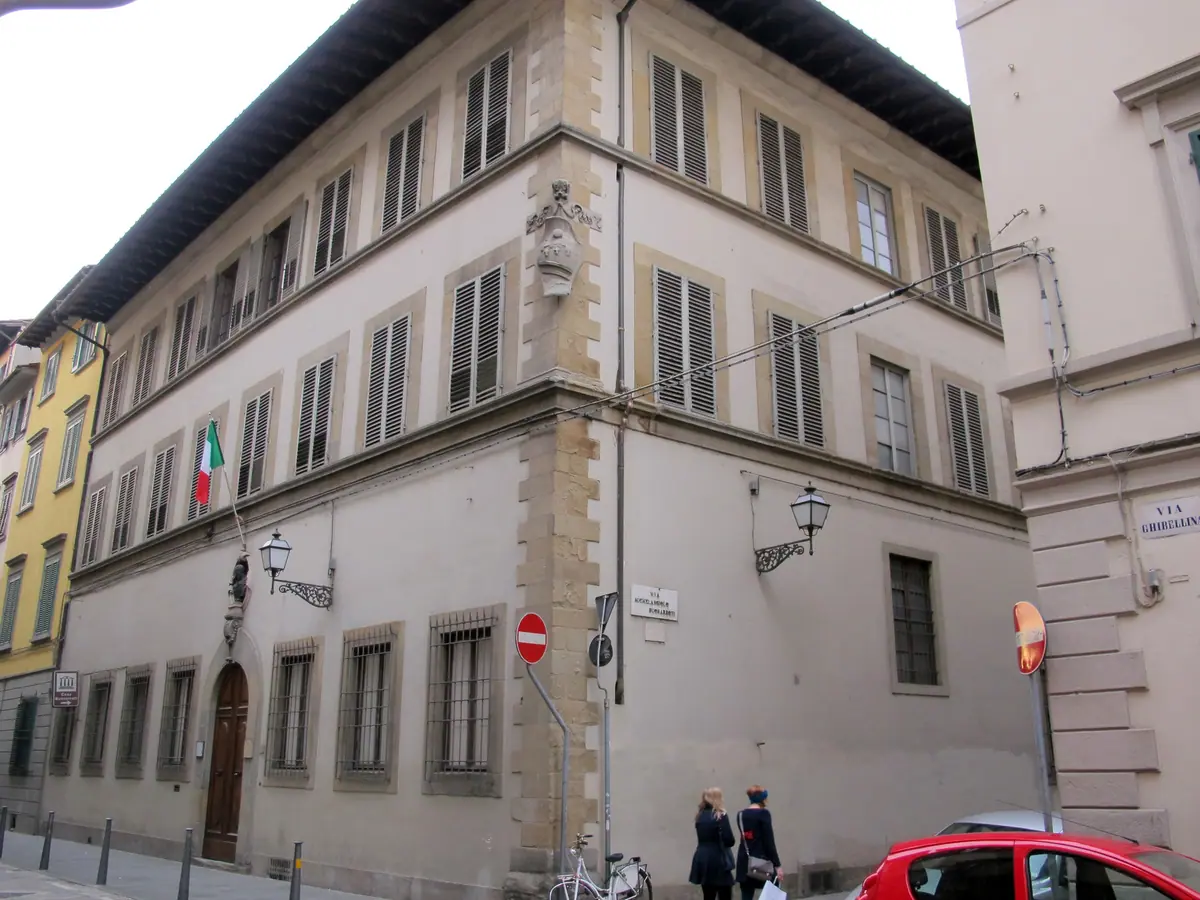
The name says Michelangelo’s house, and the story is a little different. Michelangelo Buonarroti, the sculptor of the David and painter of the Sistine Chapel ceiling, bought several houses here on Via Ghibellina, roughly between 1508 and 1514. He spent those years working in Rome and never settled in them.
After he died in 1564, his nephew Lionardo inherited the houses and began turning them into a palace. A later member of the family, Michelangelo the Younger, finished the job in the 17th century, and the last of the Buonarroti, Cosimo, left the building and its collections to the city. The Fondazione Casa Buonarroti runs the museum today.
Michelangelo’s Madonna of the Stairs and Battle of the Centaurs
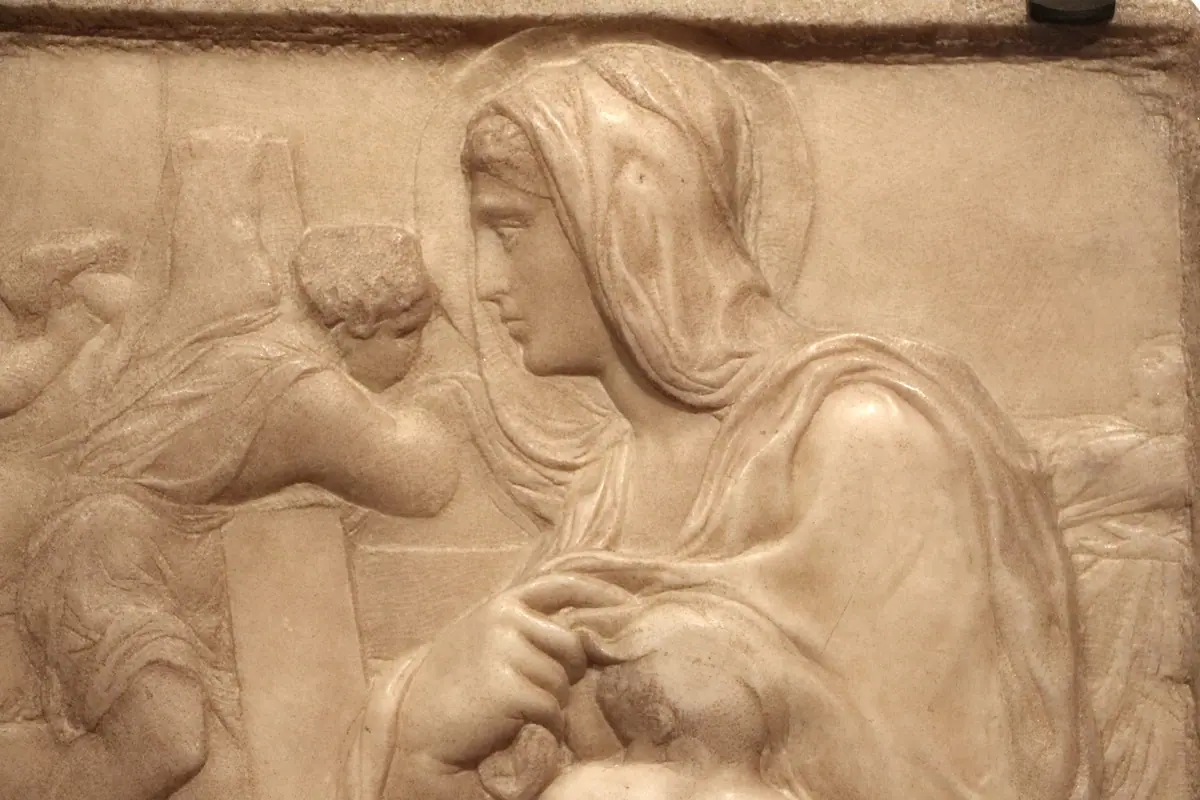
The reason to come is two marble reliefs from the very start of Michelangelo’s career. The Madonna of the Stairs dates from around 1490 to 1491, when he was about fifteen, and its first written mention is in the 1568 edition of the Lives by Giorgio Vasari, the painter who wrote the biographies of Renaissance artists.
The Virgin sits in profile with the child, and the staircase that gives the relief its name rises beside her. The Battle of the Centaurs comes from the same years, and it couldn’t look more different: a crowd of nude figures fighting the centaurs, the half-horse men of Greek myth, packed edge to edge in the marble.
Michelangelo’s drawings are shown in groups that change over time, so what’s on the walls depends on when you go. His work on San Lorenzo, the Medici family church across the centre, has a section of its own, next to a room of models connected with his projects.
The painted rooms of Michelangelo the Younger at Casa Buonarroti
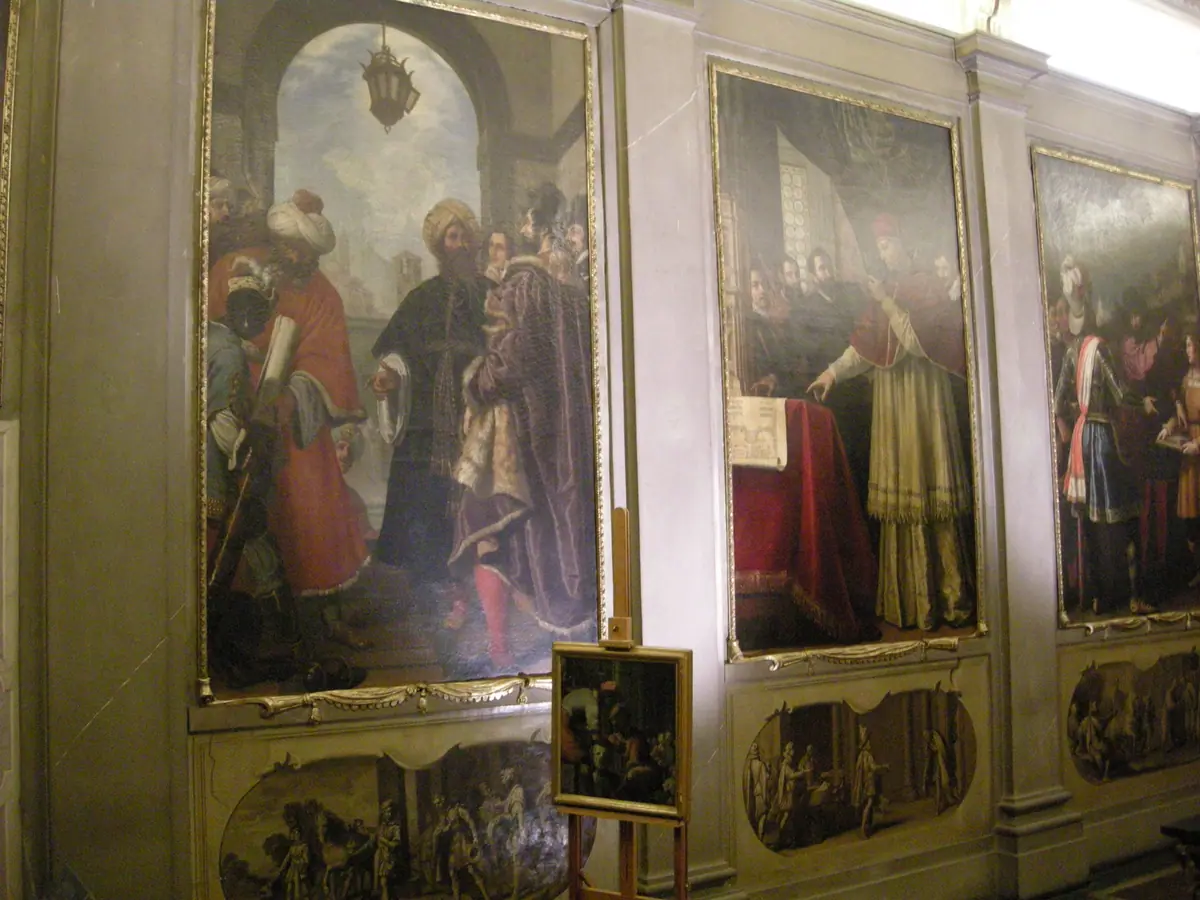
Around the marbles, the house turns into a monument to the man himself. Michelangelo the Younger had Florentine painters of the 17th century decorate a series of rooms with scenes celebrating the artist and the Buonarroti family, and you walk through them as part of the route.
The Galleria is the room where the celebration starts, and the Camera della Notte e del Dì, the Room of Night and Day, takes its name from the figures of Night and Day that Jacopo Vignali painted on its ceiling in 1625. Elsewhere in the house you’ll find the family’s own collections, with an archaeological room, and a few rooms on Michelangelo’s legacy, from works derived from his to Michelangelo in the nineteenth century. There’s also an exhibition space for temporary shows.
Getting to Casa Buonarroti from the Bargello or Santa Croce
Casa Buonarroti stands in the historic centre, on Via Ghibellina between the Bargello and Santa Croce, so you’ll walk there whichever way you come. The only tricky part is spotting the door.
Finding the door
- 1Head for Via Ghibellina: Casa Buonarroti is a few minutes' walk from the Bargello, and close to Santa Croce.
- 2Look for number 70 and the brown cultural-interest sign by the door, which is easy to walk past.
With Santa Croce that close, the two fit easily into the same day, and the basilica ticket gets you the €5 entry here.
Tickets
Popular tickets around Florence
The ones other visitors book most.


People also ask
Frequently asked questions
How much is a Casa Buonarroti ticket?
€8 full price and €5 reduced, for students up to 26, over-65s, groups of ten or more and anyone holding a Santa Croce ticket, among others. Buying online adds a €2 fee per ticket. Children under 6 go in free.
Did Michelangelo live in Casa Buonarroti?
No. He bought the houses on Via Ghibellina, roughly between 1508 and 1514, but never settled there. After his death in 1564 his nephew Lionardo began turning them into a palace, and in the 17th century Michelangelo the Younger had the rooms painted to celebrate the artist and the family.
Is Casa Buonarroti included in the Firenze Card?
Yes, entry is included. Casa Buonarroti isn't on the Firenze Card's list of museums where cardholders have to book, which names the Uffizi, the Accademia and the Palazzo Vecchio, among others.
Is Casa Buonarroti open on Mondays?
Yes. It's open every day except Tuesday, from 10:00 to 16:30, and the last tickets are sold at 16:00. It also closes on 1 January, Easter Sunday, 15 August and 25 December.
Do children go free at Casa Buonarroti?
Only under-6s. Casa Buonarroti is run by a foundation, not the state or the city, so the free entry for under-18s at Florence's state and city museums doesn't apply here.